
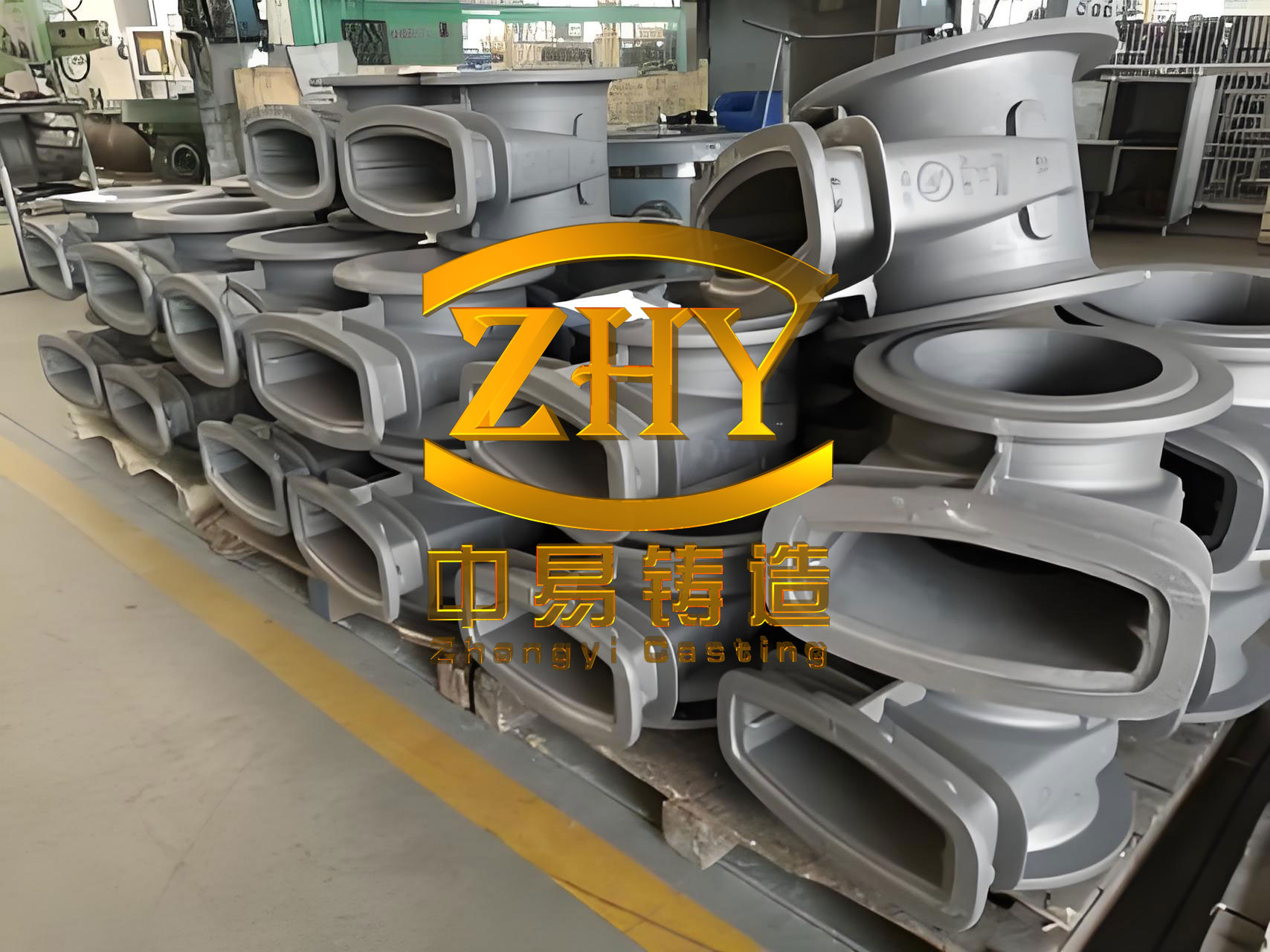
The production of high-quality gray iron castings remains a cornerstone of modern manufacturing, essential for applications ranging from automotive engine blocks to heavy machinery components. The defining characteristic of these gray iron castings is the presence of graphite flakes within a ferrous matrix, which imparts excellent machinability, damping capacity, and thermal conductivity. However, achieving a consistent and desirable graphite structure is not a trivial matter. The as-cast microstructure is highly sensitive to the chemical composition, cooling rate, and most critically, the nucleation events during solidification. Uncontrolled solidification can lead to the formation of undercooled graphite (D-type), carbides (chill), or undesirable eutectic cell structures, directly compromising the mechanical properties and increasing the propensity for casting defects such as shrinkage porosity. It is here that the practice of inoculation becomes paramount. Inoculation is the deliberate addition of small amounts of specific materials to the molten iron just before casting to enhance graphite nucleation, thereby refining and homogenizing the microstructure. This article delves into the scientific principles behind inoculation, presents a detailed methodological framework for evaluating inoculant efficacy—exemplified by a comparative study—and expands on the industrial implications for producing superior gray iron castings.
Fundamental Metallurgy of Gray Iron Solidification
To appreciate the role of inoculation, one must first understand the solidification mechanics of hypoeutectic gray iron castings. The process occurs in two distinct stages:
1. Primary Austenite Precipitation: As the temperature falls below the liquidus line, primary austenite dendrites begin to form. The dendrite arm spacing and morphology influence the final strength and the distribution of micro-shrinkage.
2. Eutectic Transformation: Upon reaching the eutectic temperature, the remaining liquid undergoes the coupled growth of austenite and graphite. This is the most critical phase for determining the quality of gray iron castings. The reaction can be represented as:
$$ L \rightarrow \gamma + Gr $$
Where \(L\) is the liquid, \(\gamma\) is austenite, and \(Gr\) is graphite. The nucleation rate of graphite directly dictates the number of eutectic cells and the graphite morphology. A high nucleation rate promotes the growth of well-dispersed, Type A graphite flakes, while insufficient nucleation leads to undercooling, resulting in Type D graphite and/or carbide formation.
The driving force for nucleation is the degree of undercooling, \(\Delta T\). The heterogeneous nucleation rate, \(N\), can be conceptually described by an Arrhenius-type equation:
$$ N = k \cdot \exp\left(-\frac{\Delta G^*}{k_B T}\right) $$
Where \(\Delta G^*\) is the activation energy barrier for nucleation, which is significantly reduced by the presence of suitable substrates (inoculants), \(k_B\) is Boltzmann’s constant, and \(T\) is temperature. Effective inoculants provide substrates that minimize the lattice mismatch with graphite, thereby lowering \(\Delta G^*\) and dramatically increasing \(N\) at a given undercooling.
The Science of Inoculation: Mechanisms and Key Elements
Inoculants are typically ferroalloys based on silicon, containing small but potent additions of active elements. Their function is multifactorial:
1. Nucleant Provision: Elements like Ca, Sr, Ba, and the rare earths (e.g., La, Ce) form high-melting-point compounds (e.g., sulfides, oxy-sulfides, aluminates) in the melt. These compounds, such as (Ca,Mn)S or Ce2O2S, possess crystal lattices with a close epitaxial match to the basal plane of graphite (hexagonal structure). This match reduces the interfacial energy, facilitating graphite nucleation.
2. Growth Modification and Impurity Neutralization: Certain elements segregate at the advancing graphite-liquid interface, altering growth kinetics. For instance, elements like Sr and Ba are known to suppress the formation of twin-related growth sites that lead to undercooled graphite morphologies. Furthermore, active inoculant elements can combine with detrimental trace elements like Pb, Bi, or Ti (which promote undercooled graphite) to form harmless compounds, effectively “cleansing” the melt.
3. Fading: A critical challenge in the production of gray iron castings is inoculant “fade”—the time-dependent loss of potency due to the dissolution, agglomeration, or oxidation of nucleating particles. The fade resistance varies significantly among inoculant types, impacting the window for effective casting.
The effectiveness of different inoculant elements can be summarized in the following table:
| Active Element | Primary Compounds Formed | Mechanism | Typical Concentration in Inoculant | Fade Resistance |
|---|---|---|---|---|
| Calcium (Ca) | CaS, (Ca,Mn)S, Calcium Aluminates | Strong sulfide/oxide former, classic nucleant. | 0.5 – 2.0% | Low to Moderate |
| Strontium (Sr) | SrS, SrO·Al2O3 | Excellent for reducing chill, promotes Type A graphite. Effective at low sulfur. | 0.6 – 1.2% | Moderate |
| Barium (Ba) | BaS, BaO·Al2O3 | Provides potent nucleation, enhances eutectic cell count, good fade resistance. | 0.8 – 6.0% | High |
| Rare Earths (La, Ce) | Oxysulfides (e.g., Ce2O2S), Sulfides | Powerful nucleants, strong deoxidizers, neutralize trace elements. | 0.5 – 3.0% (as Mischmetal) | Moderate to High |
| Aluminum (Al) | Al2O3, Spinels | Deoxidizer, can form nucleating oxides. Must be controlled to avoid pinholes. | 0.5 – 1.5% | Low |
Methodology for Comparative Evaluation: Thermal Analysis as a Core Tool
Evaluating inoculant performance requires a methodology that links rapid, process-relevant measurement with definitive microstructural and defect analysis. Thermal analysis is an indispensable tool in this regard for optimizing gray iron castings. The system captures the cooling curve of a small sample of molten iron in a standardized, instrumented cup. Key thermal parameters derived from the curve and its derivative are directly correlated with metallurgical events.
The following derivative curve parameters are particularly diagnostic for gray iron castings:
$$ \frac{dT}{dt} = f(T) $$
Where \(T\) is temperature and \(t\) is time.
Key Parameters:
- TL (Liquidus Temperature): Indicates carbon equivalent.
- TEU (Eutectic Undercooling): The minimum temperature before recalescence. Lower undercooling indicates better nucleation. \( \Delta T_{EU} = T_{Eutectic Equilibrium} – T_{EU} \).
- ΔtG (Secondary Graphite Plateau Time): The duration of the quasi-isothermal plateau after recalescence during the eutectic reaction. A longer ΔtG suggests more abundant and well-developed Type A graphite growth.
- Thermal Conductivity Coefficient (K): A computed parameter based on the shape of the cooling curve, often proportional to the quantity and morphology of graphite. Higher K-values typically correlate with better graphite structure and lower shrinkage tendency.
Experimental Design for Comparison: A robust comparison involves simultaneous testing of multiple inoculants under identical base iron conditions. The procedure is:
- Prepare a single heat of base iron with target composition (e.g., Hypoeutectic for HT300 grade).
- Prepare multiple thermal analysis cups, each pre-loaded with a precise, equal mass of a different inoculant (e.g., 0.2-0.7mm granular, addition rate ~0.12%).
- Prepare corresponding test castings (like the wedge blocks described in the source) with a design prone to shrinkage, using the same inoculants added via the running system.
- Pour all samples and test castings from the same ladle in quick succession to minimize base iron variation.
- Analyze: a) Thermal curves from the cups, b) Microstructure from the cup samples, c) Shrinkage cavity/porosity in sectioned test castings.
Results and In-Depth Analysis of a Four-Inoculant Study
Applying the above methodology to compare four common inoculants—Pure Lanthanum (La), Strontium-bearing Silicon (SrSi), Barium-bearing Silicon (BaSi, 4-6% Ba), and standard 75% Ferrosilicon (FeSi)—yields comprehensive data. The thermal analysis parameters and corresponding macro/micro results can be synthesized as follows:
| Inoculant Type | ΔtG (s) | Thermal Conductivity Coefficient (K) | Graphite Morphology (Cup Sample) | Shrinkage in Test Casting | Interpretation |
|---|---|---|---|---|---|
| Pure La | 43 | 24 | Type A, Size 5 | Pronounced Shrinkage Cavity, Minimal Porosity | Moderate nucleation. Good graphite type but limited cell count, leading to directional solidification and a concentrated pipe. |
| SrSi | 43 | 22 | Type A, Size 5 | Pronounced Shrinkage Cavity, Slight Porosity | Similar to La, but slightly lower K indicates marginally less favorable graphite for feeding. |
| BaSi (4-6% Ba) | 58 | 28 | Type A, Size 5 | No Major Cavity, Slight Porosity | Superior nucleation. Long ΔtG indicates sustained graphite growth. High K suggests excellent graphite formation, promoting more isotropic solidification and better feeding. |
| 75% FeSi | 43 | 23 | Type A, Size 5 (finer) | Pronounced Shrinkage Cavity, Clear Porosity | Weakest inoculation. Fine graphite but high undercooling, leading to poor feeding and significant shrinkage defects. |
Scientific Interpretation: The data reveals a clear hierarchy. The BaSi inoculant’s performance is exceptional under these test conditions. The significantly longer secondary graphite time (ΔtG) can be related to a higher density of eutectic cells growing simultaneously, which slows the overall release of latent heat, extending the plateau. This is a direct consequence of a higher nucleation rate, \(N\).
The thermal conductivity coefficient, K, is an indirect measure of the graphite network’s effectiveness in conducting heat during solidification. It can be conceptually linked to the graphite surface area or the solidification model. A simple relationship for the cooling rate during the eutectic plateau can be approximated by:
$$ \frac{dT}{dt}_{plateau} \approx -\frac{(hA)_e}{m C_p} $$
Where \((hA)_e\) is the effective heat transfer coefficient (influenced by mold and graphite structure), \(m\) is sample mass, and \(C_p\) is specific heat. A more interconnected, well-formed graphite flake network (from good inoculation) increases the effective thermal conductivity of the solidifying mass, altering the heat extraction dynamics and resulting in a higher computed K-value. This correlates with a more uniform temperature field, reducing thermal gradients that drive shrinkage porosity.
The poor showing of standard FeSi and the modest results from SrSi and La at this low addition rate (0.12%) highlight the concept of “inoculation efficiency.” The active element concentration in the inoculant and its ability to form stable nucleants are crucial. At 4-6%, the Ba content in the BaSi inoculant is an order of magnitude higher than the typical Ca, Sr, or La levels (~0.5-1%) in the others. This provides a much greater reservoir of active element to form nucleation sites, overcoming fade and ensuring sufficient potency even at this low treatment level. The results suggest that for the SrSi and standard FeSi to achieve similar effects, a higher addition rate would be necessary, impacting the cost-effectiveness of producing gray iron castings.
Industrial Application and Selection Strategy for Gray Iron Castings
Translating laboratory findings to the foundry floor requires a strategic approach. The choice of inoculant for gray iron castings is not one-size-fits-all but depends on multiple process variables:
| Process Condition / Requirement | Recommended Inoculant Type | Rationale |
|---|---|---|
| Long pouring times, ladle transfer (High Fade Risk) | Ba-bearing inoculants, Rare Earth inoculants | Superior fade resistance maintains nucleation potential throughout the casting window. |
| Low Sulfur Base Iron (<0.05% S) | Sr-bearing inoculants, Ba-bearing inoculants | Effective at forming stable nucleants even with low S availability; FeSi-Ca may be less effective. |
| High-Density Molding (e.g., Green Sand, High Pressure) | Strong inoculants (Ba, Sr+Ba, RE) with higher addition rate | Fast cooling rates demand maximum nucleation to prevent chill and undercooled graphite. |
| Complex, Thin-Sectioned Castings | Potent, fast-acting inoculants (Sr, Ba). Often used with late stream inoculation. | Minimizes chill risk in rapidly cooling sections. |
| Cost-Sensitive, High-Volume Production with Stable Process | Standard FeSi-Ca (with optimized addition rate) | Adequate for controlled, high-speed operations with minimal fade time if addition rate is sufficient. |
| Presence of Carbide-Promoting Elements (Cr, V) or Trace Elements (Ti, Pb) | Rare Earth-bearing inoculants | Powerful neutralization of carbide formers and harmful trace elements. |
Implementation via Thermal Analysis: A modern foundry producing gray iron castings should integrate thermal analysis as a process control tool. By establishing correlation curves between thermal parameters (like K or ΔtG) and key outcomes (tensile strength, shrinkage defect rate), acceptable control limits can be set. For example, a minimum K-value or a maximum allowable undercooling (\(\Delta T_{EU}\)) can be defined for a given grade of gray iron castings. If a ladle’s sample falls outside the limit, corrective actions—such as a remedial inoculation—can be taken before pouring, drastically reducing scrap.
Future Perspectives and Advanced Concepts
The pursuit of optimal gray iron castings continues to drive innovation. Future directions include:
1. Nano-Inoculation: Research into engineered nanoparticles (e.g., specific oxides, nitrides) that act as perfect substrates for graphite nucleation, potentially at dramatically lower addition weights.
2. Hybrid and Composite Inoculants: Blends of traditional elements (e.g., Sr+Ba, RE+Ba) designed to synergistically combine the benefits of each—for instance, the immediate potency of Sr with the fade resistance of Ba.
3. Integrated Process Modeling: Coupling thermal analysis data with computational solidification simulation. The measured nucleation density (from thermal analysis) could be used as a direct input parameter for microstructural simulation software, allowing for predictive modeling of graphite structure and shrinkage risk in complex gray iron castings.
4. Inoculation for High-Strength Gray Irons: Tailoring inoculants for the challenging production of high-strength, low-cementite gray iron castings with high carbon equivalents, where maximizing graphite count and avoiding shrinkage is exceptionally difficult.
Conclusion
The inoculation of molten iron is a critical and sophisticated metallurgical intervention essential for manufacturing reliable, high-performance gray iron castings. It transcends mere alloy addition, functioning as a precise means of controlling nucleation kinetics during the eutectic solidification event. As demonstrated through comparative thermal analysis, the efficacy of inoculants varies significantly, with elements like barium offering superior performance in terms of enhancing graphite formation, extending the eutectic growth period, and reducing the shrinkage defect propensity in gray iron castings. The integration of real-time thermal analysis into foundry process control provides a powerful quantitative link between the molten metal treatment and the final casting quality. By understanding the underlying science, strategically selecting inoculants based on process needs, and employing modern monitoring tools, foundries can consistently achieve the desired microstructure, maximize yield, and ensure the mechanical integrity of their gray iron castings. The ongoing development of advanced inoculant technologies promises further gains in the consistency and properties of this versatile and indispensable engineering material.