
As a practitioner deeply involved in the field of wear-resistant materials, I recognize that under high-impact working conditions, the application scope for castings made from high manganese steel and super-high manganese steel is exceptionally broad. However, many foundries lack a comprehensive understanding of the essential production techniques for these steel grades. This discourse aims to provide a detailed, first-person perspective on the critical operational points, serving as a reference for producers dedicated to achieving excellence in manganese steel casting foundry operations.
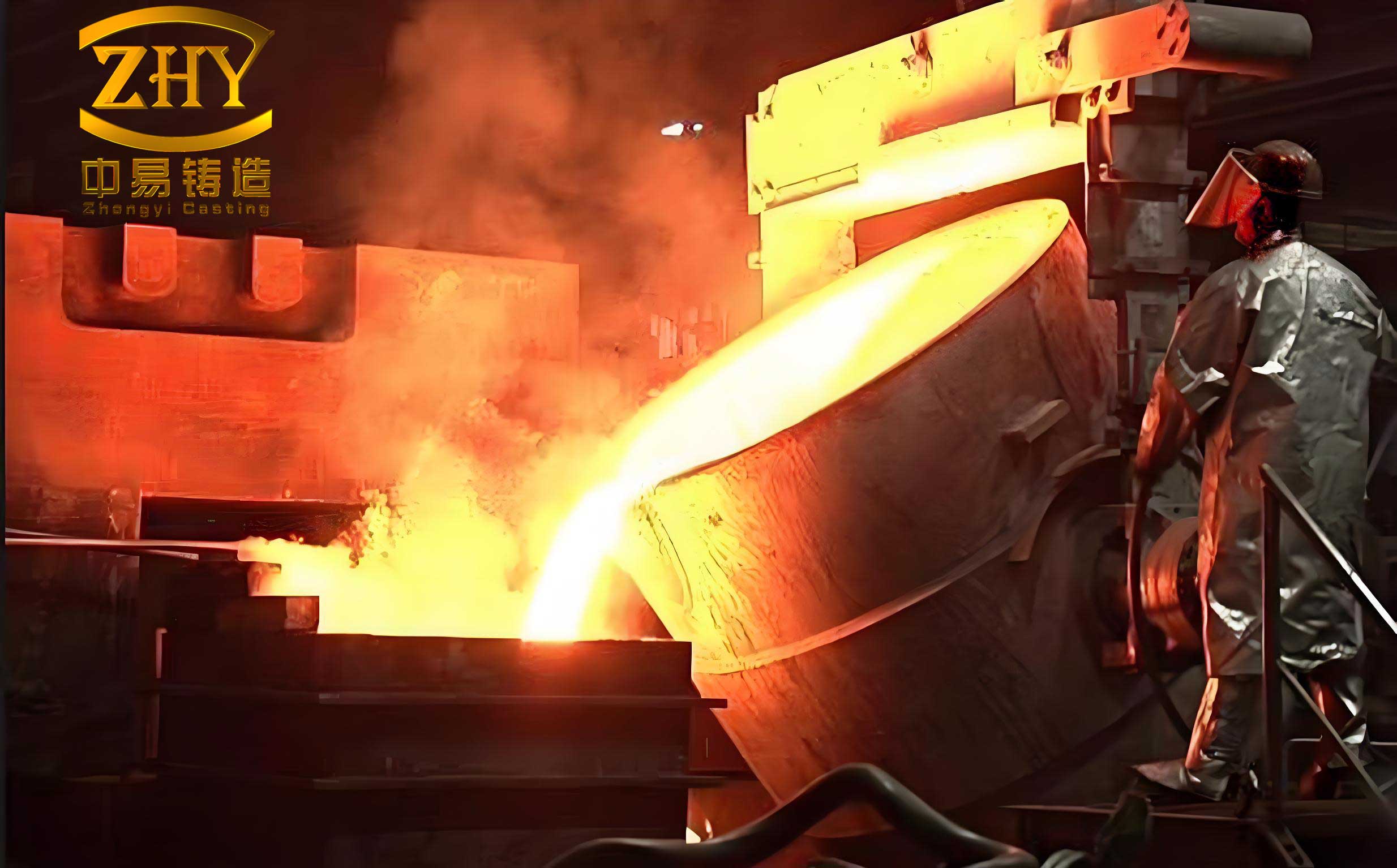
1. Foundational Chemistry: Composition Design
The performance journey of a manganese steel casting begins with its chemical blueprint. Standard high manganese steels are classified into grades primarily based on carbon content, which directly influences the balance between hardness and toughness. Super-high manganese steel, while not yet standardized, pushes the manganese content to higher levels for enhanced work-hardening capacity. The interaction between key elements is paramount in a successful manganese steel casting foundry.
| Steel Type | C (%) | Mn (%) | Si (%) | Cr (%) | P (max, %) | S (max, %) |
|---|---|---|---|---|---|---|
| Standard High Mn Steel (e.g., GBT 5680) | 0.75 – 1.45 | 11.0 – 14.0 (≥13.0 rec.) | ≤0.50 | 1.5 – 2.5 | 0.070 | 0.035 |
| Super-High Manganese Steel | 0.9 – 1.2 | >18.0 | ≤0.40 | 2.0 – 3.0 | 0.045 | 0.025 |
The carbon content is selected based on impact severity: lower carbon for greater impact resistance. Manganese should generally not fall below 13% to ensure full austenitization. Silicon, detrimental to impact toughness, must be kept at a lower limit. While high manganese content naturally aids in desulfurization, controlling phosphorus is critical; striving for levels below 0.07% is a key target. Chromium is added to improve wear resistance, typically around 2.0%. The fundamental relationship governing the austenite stability can be simplified as requiring a sufficient Mn/C ratio, often expressed empirically as:
$$ \text{Mn}_{\text{min}} \approx 10 \times \text{C} + 1 $$
where a higher ratio promotes greater stability and toughness.
2. The Charge: Raw Material Philosophy
The charge makeup is dictated by the target chemistry. Primary materials include high-quality carbon steel scrap or ingot, high-carbon ferromanganese, medium-carbon ferromanganese, high-carbon ferrochromium, and internal returns (gates, risers, scrap castings). A crucial, often overlooked principle in a quality-focused manganese steel casting foundry is the strict limitation on returns usage. While it may seem economical to maximize returns, this practice is detrimental to final mechanical properties and consistency. Returns should ideally not exceed 25% of the total metallic charge. The solution to surplus returns is not to increase their use in prime castings but to relentlessly drive down the scrap rate through improved process control, thereby naturally limiting return generation.
3. The Heart of the Process: Melting and Metallurgy
Melting practice, whether in coreless induction or electric arc furnaces, is where chemistry is realized and liquid metal quality is established. The sequence of additions is critical for yield and homogeneity.
- Charge Melting: Begin by melting the carbon steel base. This forms the liquid bath.
- Alloy Addition: Additions of ferromanganese, ferrochromium, and other bulk alloys should be made in multiple, small batches to promote dissolution and minimize segregation. Charge pieces should be sized between 50-80mm.
- Superheating and Refining: Once fully molten, superheat the bath to 1580-1600°C. This is the critical stage for deoxidation, dehydrogenation, and denitrification. Using aluminum wire, Si-Ca alloy, or SiC, the deoxidizer must be plunged deep into the bath, not merely sprinkled on the surface. Immediately after plunging, the bath surface must be sealed with a suitable cover flux to isolate it from the atmosphere.
- Adjustment and Holding: A deliberate holding or “soaking” period is essential. This allows non-metallic inclusions and oxides to float out. During this time, final adjustments to manganese and carbon are made using medium-carbon ferromanganese.
- Inoculation: Just prior to tapping, a final modification treatment is highly beneficial. Additions of V-Fe, Ti-Fe, or rare earth elements act as potent grain refiners, significantly enhancing the as-cast microstructure and, consequently, the casting’s properties. This step is vital for achieving a fine primary crystallization.
- Tapping: The ladle must be preheated to a minimum of 400°C to prevent thermal shock and metal temperature loss.
4. The Mold: Linings and Molding Materials
The choice of refractory materials must align with the chemical nature of the metal. Manganese steels are basic, necessitating the use of basic refractories for furnace linings. Magnesia-based ramming mixes or pre-formed crucibles are the standard in a modern manganese steel casting foundry. Proper installation and baking are essential for lining life. Molding sands and core materials should ideally be neutral or basic to avoid metal-mold reactions. For superior surface finish and to promote a finer as-cast structure by rapid heat extraction, high-heat-capacity sands like chromite or zircon are highly recommended, especially in investment casting or for heavy-section castings.
5. Giving It Form: Casting Process Design
The high manganese steel’s characteristics—significant solidification shrinkage and poor thermal conductivity—dictate a specialized approach to gating, risering, and chilling.
- Shrinkage Allowance: A patternmaker’s contraction allowance of 2.5% to 2.7% is standard, with the upper limit used for longer, larger castings.
- Mold Yield: The molding sand and cores must exhibit excellent collapsibility to avoid hot tearing during cooling.
- Gating System: An open, pressurised system is not suitable. Instead, use a naturally pressurized, wide-and-thin gating approach with multiple, dispersed ingates placed at the casting’s thinner sections. The ingate cross-section at the casting should be slightly larger than its connection to the runner to ensure smooth, rapid filling and minimize temperature gradients across the mold cavity.
- Risering: Risers must be hot and large. Riser diameter should exceed the thermal node diameter, be placed adjacent to the hot spot, and have a height-to-diameter ratio of 2.5 to 3.0. Gating through the riser (feed-up) is an excellent practice to ensure it remains hottest. Positioning sprue and risers at the highest point of a slightly tilted mold (5-8°) aids feeding.
- Pouring Practice: Aim for “low” temperature (relative to the steel’s fluidity) and fast pouring to minimize oxidation and temperature loss.
- Chilling: Strategic use of internal and external chills is the mark of an experienced designer. Chills refine the grain structure, help eliminate shrinkage porosity, and improve yield. Internal chills must be clean, small, and of a compatible material. The dimensions of an external chill should relate to the section it is cooling. A general rule is:
$$ D_{\text{chill}} \approx (0.6 \text{ to } 0.7) \times T_{\text{casting}} $$
where $D_{\text{chill}}$ is the chill’s dominant dimension and $T_{\text{casting}}$ is the casting section thickness. An undersized chill is ineffective; an oversized one can cause cracking.
- Shakeout: Manganese steel castings must be cooled in the mold to below 200°C before shakeout to prevent distortion and cracking.
6. Unleashing the Properties: Heat Treatment (Water Quenching)
The legendary toughness and work-hardening ability of manganese steel are not inherent in the as-cast state but are imparted through a precise solution heat treatment followed by rapid quenching, known as water toughening. The process is delicate, and deviations lead to scrap.
| Temperature Range | Heating Rate | Rationale & Notes |
|---|---|---|
| Room Temp. to 350°C | < 80°C / hour | Critical for preventing thermal shock and cracking. The steel has low thermal conductivity and is brittle in this range. |
| 350°C to 750°C | < 100°C / hour | Plasticity increases slowly. Continued caution is needed. |
| Holding at ~650°C | Soak for 1-2 hours | Allows temperature equalization, especially for complex or heavy sections. |
| 750°C to 1050°C | Can be rapid (>150°C/hr) | The steel is now fully plastic. Fast heating minimizes grain growth. |
| Holding at 1050-1100°C | 1 hour per 25mm of section | Critical soaking period to dissolve all carbides (esp. cementite) into the austenite matrix. Undissolved carbides embrittle the final casting. |
| Quenching | Rapid transfer to water tank | Time from furnace to water must be < 60 seconds. Delay causes precipitation of embrittling carbides. |
The quenching medium is as important as the heating cycle. Water temperature should be below 30°C at the start. The water volume must be sufficient—at least 8 times the weight of the charge. Agitation is mandatory; castings should be moved in three dimensions within the tank. Quenching should raise the bulk water temperature to no more than 50°C. Cold water is introduced at the tank bottom, and warm water overflows at the top.
For super-high manganese steels, a more complex cycle involving a controlled furnace cool from the solution temperature followed by a re-heat may be employed to achieve optimal carbide dissolution and grain refinement.
The transformation from a brittle, carbide-ridden structure to a tough, austenitic one can be conceptualized by the driving force for carbide dissolution, which is maximized at the solution temperature and followed by rapid cooling to “freeze” the supersaturated austenite:
$$ \text{Carbide Dissolution Rate} \propto \exp\left(-\frac{Q}{RT}\right) \cdot (C_{\text{eq}} – C_{\text{matrix}}) $$
where $Q$ is the activation energy, $R$ the gas constant, $T$ the absolute temperature, $C_{\text{eq}}$ the equilibrium carbon in austenite, and $C_{\text{matrix}}$ the instantaneous carbon in the matrix. The quench must be rapid enough to prevent the reverse reaction (precipitation) during cooling.
7. Finishing Touches: Cutting, Welding, and Quality
The poor thermal conductivity of manganese steel makes post-heat treatment operations like gate removal and weld repair challenging.
- Cutting: Avoid thermal cracking by cutting risers and gates under water whenever possible, leaving a small stump to be ground off after cutting. This localizes the heat input.
- Welding/Repair: Welding is often necessary for joining or repairing defects. Use an austenitic, manganese-nickel electrode (e.g., AWS EFeMn-A). Electrodes should be small diameter (e.g., 3.2mm) with a basic coating. The technique is paramount:
- Use low current, a short arc, and stringer beads.
- Employ a multi-pass technique with low heat input per pass.
- Peen each weld bead immediately while it is still hot to relieve stresses.
- Allow the weld area to cool sufficiently between passes.
For critical castings, non-destructive testing (NDT) of welds is mandatory.
8. Performance Outcomes: Expected Mechanical Properties
A well-executed process in a competent manganese steel casting foundry yields castings with exceptional combination of strength, ductility, and work-hardening capacity. The final properties are a direct result of the practices outlined above.
| Property | Standard High Mn Steel | Super-High Mn Steel | Notes |
|---|---|---|---|
| Yield Strength (0.2% Offset) | 350 – 450 MPa | 400 – 500 MPa | Highly dependent on final carbon and micro-alloying. |
| Tensile Strength | 700 – 900 MPa | 800 – 1000 MPa | Increases significantly with work-hardening in service. |
| Elongation | 35 – 55 % | 40 – 60 % | Indicator of excellent toughness and energy absorption. |
| Hardness (As-Quenched) | 200 – 230 HB | 210 – 250 HB | Can exceed 500 HB or more at the surface after severe work-hardening in service. |
| Impact Energy (Charpy, 20°C) | > 100 J | > 120 J | Exceptionally high, even at sub-zero temperatures. |
The work-hardening behavior, the hallmark of this material, is often described by a power-law relationship where the flow stress increases with strain, $\epsilon$:
$$ \sigma = K \epsilon^n $$
where $K$ is the strength coefficient and $n$ is the work-hardening exponent, which is very high for austenitic manganese steels (often >0.4), explaining their extraordinary increase in surface hardness under impact or abrasion.
Conclusion: A Philosophy of Foundry Practice
Mastering manganese steel casting foundry production is not merely about following a recipe; it is about understanding the interconnectedness of metallurgy, thermodynamics, and mechanics at every stage. The primary consideration for a producer must shift from a narrow focus on lowering unit cost to a holistic commitment to eliminating defects and maximizing the output of premium-quality castings. This approach—meticulous control of charge materials, disciplined melting and deoxidation, intelligent mold design, precise heat treatment, and careful finishing—may appear slower and more costly in the short term. However, it is, in reality, the fastest and most economical path to success. It builds a reputation for reliability, minimizes waste and rework, and ultimately secures a dominant position in the market for high-performance wear components. The true cost is not in the extra care taken during production but in the loss of opportunity and reputation that comes from producing inferior castings.