
In recent years, I have witnessed a remarkable evolution in manufacturing technologies, particularly in the realm of additive manufacturing, commonly known as 3D printing. This technology, which builds objects layer by layer from digital models, has permeated various industries, from aerospace to medical devices. However, its integration into the foundry sector has been particularly profound, revolutionizing how we conceive and produce sand casting products. As someone deeply involved in advancing casting methodologies, I believe that 3D sand printing represents a paradigm shift, enabling the creation of complex geometries with unprecedented efficiency and precision. This article delves into the principles, applications, and benefits of this technology, with a focus on enhancing the production of high-quality sand casting products like automotive engine blocks.
The core of 3D sand printing lies in the binder jetting process, where a liquid binder is selectively deposited onto a powder bed to solidify layers of sand. From my experience, the process begins with preparing a mixture of foundry sand and a catalyst, which is then fed into a hopper. The printer’s spreader evenly distributes a thin layer of sand across the build platform, typically with a thickness ranging from 0.2 to 0.4 mm, depending on the desired resolution. A print head, guided by computer-aided design (CAD) data, then jets a binder resin onto specific areas, triggering a chemical reaction with the catalyst to form solid bonds. This cycle repeats, layer by layer, until the entire sand mold or core is fabricated. The absence of traditional tooling, such as patterns and cores boxes, eliminates design constraints like draft angles, allowing for intricate internal passages and optimized geometries that were previously unattainable in sand casting products.
To quantify the layer formation process, consider the relationship between layer thickness (L_t) and printing resolution (R). In ideal conditions, the resolution is proportional to the layer thickness, but factors like binder penetration and sand particle size affect accuracy. A simplified model can be expressed as:
$$ R = k \cdot L_t + \epsilon $$
where k is a constant dependent on printer parameters, and ε represents error terms from diffusion or mechanical settling. This equation underscores the precision achievable in producing molds for sand casting products. Moreover, the bonding strength (σ_b) between layers is critical for mold integrity during casting. It can be approximated by the formula:
$$ \sigma_b = \frac{F_b}{A_c} $$
where F_b is the binding force and A_c is the cross-sectional area of the bonded region. In practice, we optimize these parameters to ensure that sand casting products exhibit minimal defects like veining or erosion.
The advantages of 3D sand printing over conventional methods are substantial. Traditional sand casting often requires numerous cores and molds, leading to extended lead times and higher costs for complex sand casting products. With 3D printing, we can consolidate multiple cores into a single printed piece, drastically reducing assembly steps and human error. For instance, in a typical engine block project, traditional approaches might necessitate 30 to 40 separate cores, whereas 3D printing enables integration into just 3 primary segments. This consolidation not only streamlines production but also enhances dimensional accuracy, as error accumulation from multiple core assemblies is mitigated. Below is a table summarizing the key differences:
| Aspect | Traditional Sand Casting | 3D Sand Printing |
|---|---|---|
| Number of Cores/Molds | 30-40 pieces | 3-5 integrated pieces |
| Lead Time for Mold Making | 45-60 days | 5-10 days |
| Design Flexibility | Limited by draft angles and tooling | High, enabling complex internal features |
| Dimensional Accuracy (mm) | ±2.0 | ±0.35 |
| Surface Roughness (μm) | Ra 100 | Ra 25 |
| Sand-to-Metal Ratio | 15:1 | 2.5:1 |
| Defect Rate in Sand Casting Products | Up to 50% | Below 2% |
This table illustrates how 3D printing elevates the quality and efficiency of sand casting products, making it a cornerstone for modern foundries. In my work, applying this technology to automotive engine blocks has yielded exceptional results. An engine block, with dimensions of 649 mm × 98 mm and a minimum wall thickness of 4 mm, poses significant challenges due to its thin-walled, multi-cavity structure. Using 3D sand printing, we reimagined the entire casting process. The design phase involved topological optimization to merge multiple cores into unified components, leveraging the freedom from traditional constraints. This approach not only simplified logistics but also improved the mechanical properties of the final sand casting products by reducing stress concentrations and ensuring uniform cooling.
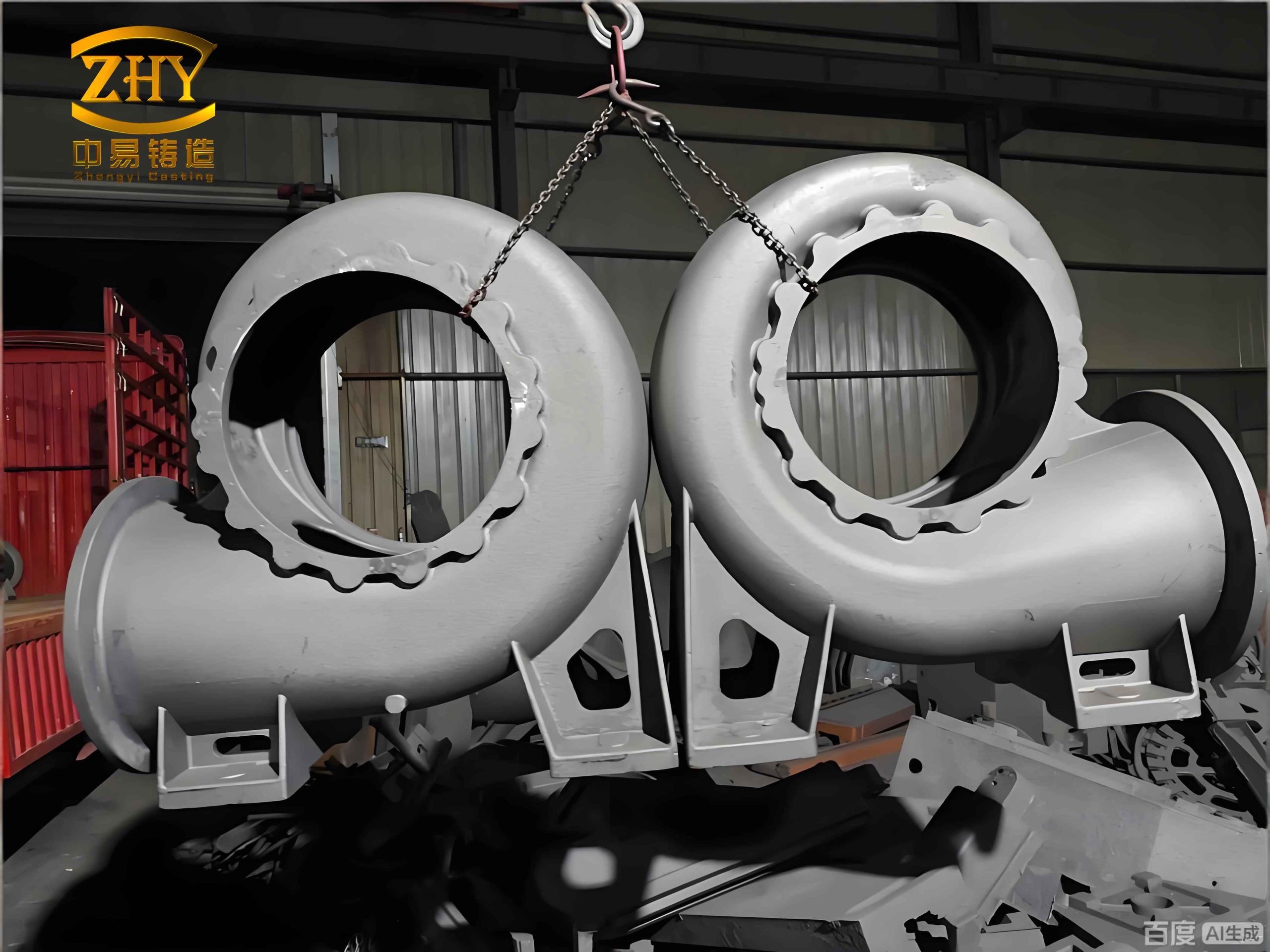
The image above showcases the intricate details achievable with 3D printed sand molds, highlighting the precision that benefits sand casting products. In practice, the process begins with meticulous process design. For the engine block, we employed a bottom-gating system to ensure smooth metal flow and minimize turbulence. The gating ratio was set at 1:2:2 (sprue:runner:ingate), calculated using fluid dynamics principles to optimize fill time and reduce slag inclusion. The velocity of molten metal (v) at the ingate can be derived from Bernoulli’s equation:
$$ v = \sqrt{2gH} $$
where g is gravitational acceleration and H is the effective head height. By controlling this velocity, we prevent erosion of the delicate sand cores, crucial for maintaining the integrity of sand casting products. Additionally, risers were placed at strategic hotspots to compensate for shrinkage, ensuring sound casting without porosity.
Core design is another critical facet. In 3D printing, we create a digital master mold encompassing the entire part, then partition it into segments based on functional and assembly considerations. For the engine block, we divided it into three primary cores: one for the cylinder banks, another for the water jacket, and a third for the crankcase. Each core incorporates alignment features like pins and sockets to facilitate precise assembly. The bonding strength between these segments is verified through simulation, ensuring they withstand the thermal stresses of pouring. To quantify the assembly accuracy, we use statistical process control, where the clearance fit (C_f) between cores is given by:
$$ C_f = D_{core} – d_{cavity} $$
with Dcore being the core dimension and dcavity the cavity dimension. We maintain C_f within ±0.1 mm to achieve near-net-shape sand casting products. Below is a table detailing the core design parameters for the engine block:
| Core Segment | Function | Dimensions (mm) | Printing Time (hours) | Binder Usage (ml) |
|---|---|---|---|---|
| 1# Core | Cylinder banks and main structure | 650 × 100 × 300 | 12 | 450 |
| 2# Core | Water jacket and cooling passages | 600 × 90 × 250 | 10 | 380 |
| 3# Core | Crankcase and oil galleries | 620 × 110 × 280 | 11 | 420 |
These parameters are optimized iteratively to balance strength, cost, and print speed for mass-producing sand casting products. Once printed, the cores are assembled on a flat surface using alignment rods inserted through designed holes. We then measure critical dimensions, such as bore spacing and deck height, to ensure conformity before securing them with clamps. The entire assembly is placed in a molding box, and resin sand is poured around it to provide additional support during pouring. This method reduces sand usage significantly, as reflected in the low sand-to-metal ratio, which is economically and environmentally beneficial for sand casting products.
The practical outcomes of adopting 3D sand printing have been transformative. In the engine block project, we achieved a lead time reduction from 60 days to just 10 days, while the defect rate plummeted from 50% to below 2%. Dimensional accuracy improved to ±0.35 mm, and surface roughness reached Ra 25 μm, eliminating extensive post-processing. These metrics underscore the technology’s potential to enhance the competitiveness of sand casting products in demanding markets. To further illustrate, consider the economic impact: the total cost per unit for sand casting products can be modeled as:
$$ C_{total} = C_{material} + C_{labor} + C_{overhead} $$
With 3D printing, Clabor and Coverhead decrease due to automation and reduced waste, while Cmaterial is optimized through lightweight designs. For high-value sand casting products like engine blocks, this translates to a cost saving of up to 30%, making additive manufacturing a viable option even for medium-volume production runs.
Looking ahead, I am convinced that 3D sand printing will continue to redefine the landscape of sand casting products. Its ability to produce complex, customized components on-demand aligns with trends toward Industry 4.0 and sustainable manufacturing. Future research may focus on developing new binder systems for improved recyclability or integrating real-time monitoring sensors into printed molds to enhance process control. As we push the boundaries, sand casting products will become lighter, stronger, and more efficient, cementing 3D printing’s role as a cornerstone of modern foundry practice. In conclusion, embracing this technology is not merely an upgrade but a necessity for anyone committed to advancing the art and science of sand casting products.