
In the context of global industrial advancement and the pressing need for sustainable manufacturing, the foundry industry stands at a pivotal crossroads. Traditional sand casting, while versatile and capable of producing large, complex metal parts, is often burdened by lengthy lead times, high costs for low-volume production, environmental concerns, and limitations in manufacturing geometrically intricate components. The emergence of Additive Manufacturing (AM), or 3D printing, presents a paradigm-shifting solution, particularly through Binder Jetting technology applied directly to foundry sands. From my perspective as an observer and participant in this technological evolution, the adoption of 3D Printing, specifically the Three-Dimensional Printing (3DP) process for sand casting molds and cores, is not merely an incremental improvement but a foundational change redefining the principles of design, production, and supply chain in metal casting.
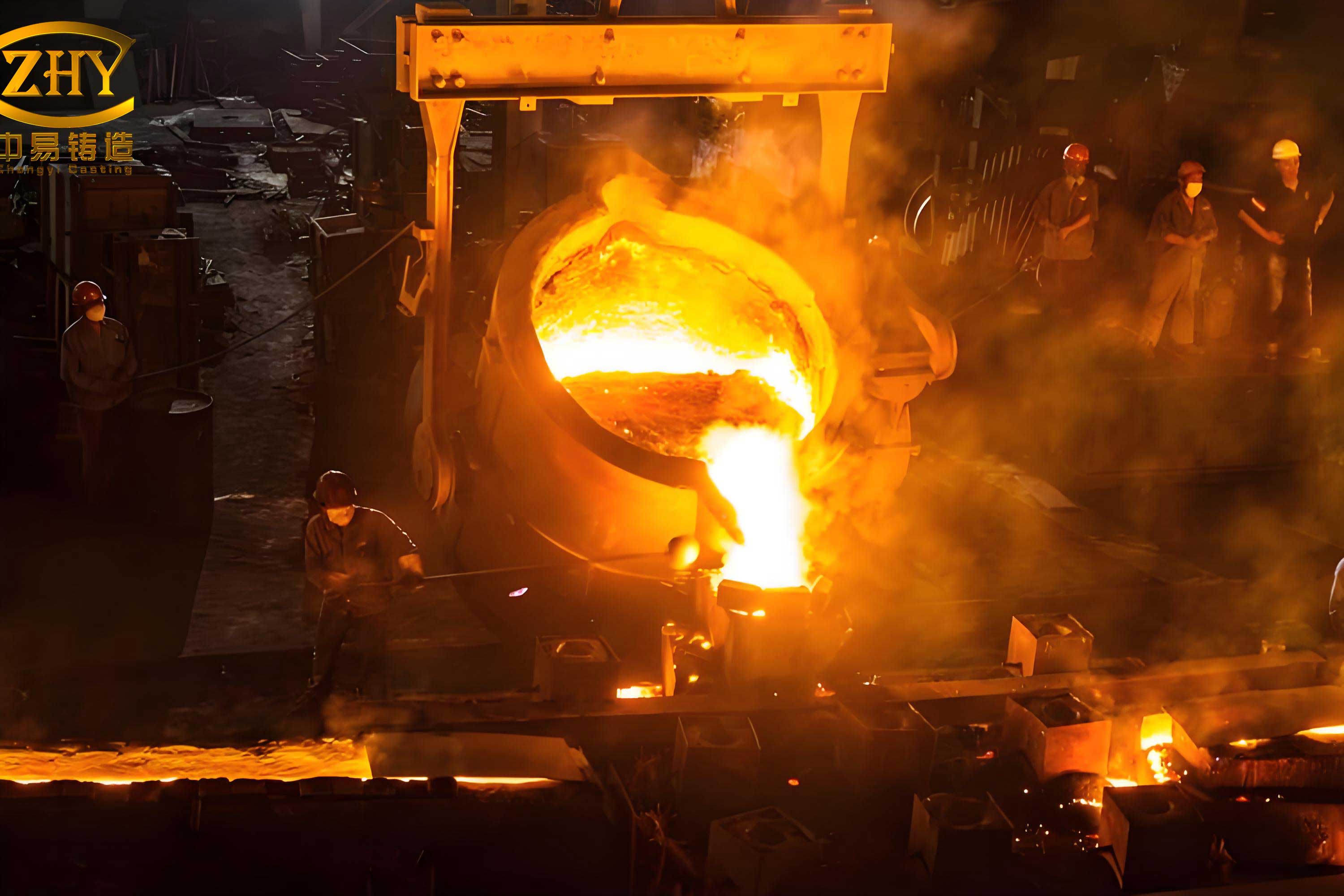
The traditional sand casting workflow is a multi-step, tooling-dependent process. It begins with the design and fabrication of a physical pattern and core boxes, typically from wood, metal, or plastic. These tools are then used in molding and core-making processes—often manual, labor-intensive, and skill-dependent—to create the negative cavity and internal geometries in sand bonded with chemical or clay binders. The molds and cores are assembled, molten metal is poured, and after cooling, the casting is shaken out from the sand mold. Finally, extensive cleaning and finishing operations are required. This process chain, while proven, introduces several critical bottlenecks: the high cost and long lead time for patternmaking make small batches and prototypes economically challenging; the geometric complexity is constrained by the need to extract patterns and cores from boxes; and the process generates significant waste sand, consumes substantial energy, and often operates in demanding environmental conditions.
The 3DP process for sand casting tooling elegantly bypasses these constraints. The core principle is analogous to a high-precision, layer-wise inkjet printing process, but instead of paper and ink, the medium is a fine, recyclable foundry sand and the “ink” is a liquid chemical binder. The technical workflow can be succinctly described as follows:
- Digital Model Preparation: A 3D CAD model of the desired mold or core is digitally “sliced” into thin horizontal cross-sections.
- Layer Deposition: A recoating mechanism spreads a thin, uniform layer of sand across a build platform.
- Selective Binding: A multi-channel printhead traverses the powder bed, depositing droplets of binder onto the sand in the exact pattern defined by the current digital slice. The binder initiates a rapid chemical reaction, solidifying the sand in that specific area.
- Iterative Building: The build platform descends by one layer thickness, a new layer of sand is spread, and the printing process repeats, bonding each new layer to the one beneath it.
- Post-Processing: Once the build is complete, the loose, unbonded sand surrounding the printed structure is removed, typically via vacuum or mechanical means, revealing the fully consolidated sand mold or core ready for pouring after potential drying or curing.
The fundamental advantage lies in its digital and additive nature. The formula governing the creation of geometry shifts from a physical tool to a digital file. The process freedom can be conceptually represented as a function where the final geometry \(G\) is a direct product of the digital model \(M\) and the printing parameters \(P\), independent of traditional tooling constraints \(T\):
$$ G = f(M, P) $$
where traditional constraints \(T\) (like draft angles, parting lines, core box complexity) are significantly reduced or eliminated.
Disruptive Advantages of 3DP in Sand Casting
The implementation of 3DP technology induces a cascade of transformative benefits across the entire sand casting value chain, fundamentally altering its economic and operational landscape.
| Aspect | Traditional Sand Casting | 3DP-Enabled Sand Casting |
|---|---|---|
| Tooling & Lead Time | Weeks to months for pattern/core box fabrication. | Hours to days; lead time reduced by 50-80%. No physical tooling required. |
| Geometric Freedom | Limited by pattern extraction and core assembly. | Near-unlimited complexity; internal channels, conformal cooling, topology-optimized structures are feasible. |
| Economic Batch Size | High-cost sensitivity for prototypes and small batches (<100 pieces). | Ideal for prototypes, small batches, and mass customization; cost per part is largely geometry-agnostic. |
| Process Steps | Pattern making → core making → molding → assembly → pouring → cleaning. | Digital design → 3D printing → (curing) → pouring → cleaning. Multiple steps consolidated. |
| Dimensional Accuracy | Tolerance typically around ±1.0 mm or larger, influenced by pattern wear and manual processes. | Tolerance can be controlled within ±0.3 mm, offering higher precision and repeatability. |
| Environmental & Labor Impact | High waste sand, dust, emissions, and heavy manual labor. | Near-zero waste sand (high reclamation rate), minimal dust in enclosed printers, improved working conditions (“air-conditioned factory”). |
The consolidation of the process flow is perhaps the most visually striking change. The lengthy, sequential chain of traditional sand casting is collapsed into a dramatically simplified digital-to-physical pipeline. This simplification directly translates to the celebrated benefits of “zero-time delivery” for digital designs, elimination of assembly for complex cores, and the ability to manufacture parts “on-demand.” In high-mix, low-volume sectors like aerospace, heavy machinery, and premium automotive, these advantages are revolutionary. Engineers can iterate designs rapidly, test functional prototypes in the actual casting alloy within days, and produce spare parts without maintaining costly inventory or obsolete tooling.
Furthermore, 3DP unlocks design innovations previously impossible in sand casting. Conformal cooling channels can be printed directly into sand cores for die-casting molds, drastically reducing cycle times and improving part quality. Lightweight, topology-optimized structures with internal lattices can be cast, contributing to part performance and material savings. The integration of functional elements like filters or chills within the mold body itself becomes straightforward.
The Evolving 3DP Ecosystem for Sand Casting
The successful industrialization of sand casting 3DP relies on a mature and synergistic ecosystem. This ecosystem can be segmented into upstream, midstream, and downstream components, each experiencing rapid development.
Upstream: Materials and Digital Foundation
The upstream segment provides the essential “ingredients” for the process:
- Materials: Specialized foundry sands (silica, chromite, zircon) with specific grain size distributions and reactivity are crucial. Similarly, the chemical binders (furan resins, phenolic resins, inorganic binders) are continuously refined for improved strength, curing speed, environmental friendliness, and casting finish.
- Software & Control: This includes advanced slicing and print preparation software capable of handling large, complex files and optimizing support structures and printing parameters. Equally important is the control software and electronics governing the precise motion of printheads and recoater, as well as the jetting of millions of binder droplets per second.
Historically, high-end components like precision linear motion systems and specialized printheads were import-dependent. However, significant progress is being made in localizing these supply chains, which is critical for reducing cost and ensuring technological sovereignty.
Midstream: Equipment Manufacturing
This segment represents the core of the industry, involving companies that design, integrate, and manufacture industrial-grade 3DP systems for sand casting. The market has evolved from single, large-format machines to a diversified portfolio addressing different needs:
- Build Volume: Machines now range from small-format (e.g., 800 x 500 x 400 mm) for R&D and small cores to very large-format (exceeding 4000 x 2000 x 1000 mm) for full-size engine blocks or turbine housings.
- Productivity Architectures: To address the central challenge of productivity, manufacturers have developed various solutions:
- Multi-Station/Continuous Printing: Systems with dual or multiple build chambers allow one chamber to be printing while another is being unloaded and prepared, maximizing machine uptime.
- Multi-Printhead Arrays: Integrating several printheads in parallel significantly increases the area printed per pass, directly boosting print speed. The theoretical maximum print speed \(V_{max}\) for a multi-head system can be expressed as:
$$ V_{max} = N_h \cdot W_h \cdot f_j $$
where \(N_h\) is the number of printheads, \(W_h\) is the effective print width per head, and \(f_j\) is the jetting frequency. - High-Speed Motion Systems: Optimizing the dynamic performance of the gantry or printhead carriage reduces non-printing time (acceleration, deceleration, turning), making the print cycle more efficient.
The competition and innovation in this midstream sector are driving down the cost-per-printed-liter, making the technology accessible to a broader range of foundries.
Downstream: Application and Service Integration
The true value of 3DP is realized in its application. Downstream integration involves service bureaus and forward-thinking foundries that leverage the technology to solve real-world manufacturing challenges. Key application areas include:
- Rapid Prototyping and Development: Accelerating the design-validation-test cycle for new engines, pumps, and structural components.
- Low-Volume Production: Manufacturing legacy parts, specialized machinery components, and high-value parts for aerospace and defense without tooling investment.
- Manufacturing Aids: Printing composite tooling like core packages for gravity and low-pressure permanent mold casting, or inserts for injection molds with conformal cooling.
- Digital Foundries: The most advanced application is the creation of fully digital, smart foundries. Here, clusters of 3D printers are integrated with automated sand handling, mold conveying, robotic pouring, and digital process control, creating a flexible, green, and highly efficient production cell for the future of sand casting.
Strategic Pathways for Enhancing 3DP Productivity in Sand Casting
While the benefits are clear, the widespread adoption of 3DP for sand casting hinges on its economic viability for larger production volumes. Therefore, a central research and development focus is on enhancing the overall productivity of the printing process. This is a multi-faceted challenge addressed through hardware, software, and process innovations.
| Focus Area | Current Challenge | Optimization Strategy | Impact on Efficiency |
|---|---|---|---|
| Printhead Technology | Limited jetting frequency and reliability; clogging. | Development of high-frequency, durable piezo-electric jetting modules; advanced nozzle plate materials; integrated recirculation and maintenance systems. | Directly increases material deposition rate (ml/s) and reduces downtime. |
| Motion System Dynamics | Time lost in acceleration/deceleration and non-printing travel moves. | Lightweight, stiff gantry designs; high-torque direct-drive motors; optimized motion control algorithms for smoother, faster trajectories (e.g., S-curve acceleration). | Minimizes “dead time,” increasing net printing time per layer. |
| Process Integration & Parallelization | Sequential steps (recoating, printing, leveling) create idle time. | Design of dual or rotary build chambers; implementation of “print-on-the-fly” or continuous recoating mechanisms that operate simultaneously with printing where possible. | Maximizes machine utilization by overlapping process steps. |
| Material & Binder Chemistry | Slow curing or hardening times can bottleneck the cycle. | Formulation of fast-curing binders (e.g., UV-curable, catalytic) that achieve handling strength rapidly post-printing, enabling faster post-processing. | Reduces post-print curing/drying dwell time, speeding up the total job cycle. |
| Software Intelligence | Suboptimal print path planning and lack of adaptive control. | AI-driven slicing software that optimizes print paths for speed and quality; in-process monitoring and closed-loop control of binder saturation and layer quality. | Improves first-pass yield, reduces waste, and allows for faster but reliable printing parameters. |
The pursuit of higher productivity is not about speeding up one parameter in isolation but optimizing the entire system synchronously. A holistic efficiency metric \(E\) for a sand casting 3DP system could be conceptualized as a function of multiple variables:
$$ E = \frac{V_{build}}{T_{cycle}} \cdot \eta_{yield} $$
where \(V_{build}\) is the net build volume, \(T_{cycle}\) is the total cycle time (including printing, recoating, and platform indexing), and \(\eta_{yield}\) is the process yield (successful prints). Efforts across all focus areas aim to maximize \(V_{build}\) and \(\eta_{yield}\) while minimizing \(T_{cycle}\).
Future Trajectories and Concluding Perspective
The trajectory of 3DP technology within sand casting points toward deeper integration, broader accessibility, and smarter operations. Several key trends are shaping its future:
- Full Supply Chain Localization: The ongoing development of domestic, high-performance printheads, control systems, and specialty materials will reduce costs, increase supply chain resilience, and foster further innovation tailored to regional market needs.
- Standardization and Qualification: As the industry matures, the establishment of material standards, process qualification procedures (especially for safety-critical aerospace and automotive components), and machine performance benchmarks will be crucial. This will build confidence and facilitate the technology’s adoption in highly regulated industries.
- Hybrid and Smart Manufacturing Cells: The future foundry floor will feature 3D printers not as standalone islands but as integrated nodes within a digital network. They will be connected to automated sand recycling units, coordinate-measuring machines (CMM) for in-line inspection, and robotic systems for handling and pouring, all governed by a Manufacturing Execution System (MES).
- Sustainability as a Core Driver: The innate advantages of 3DP—near-total sand reclamation, reduction in energy-intensive patternmaking, and the elimination of physical storage for patterns—align perfectly with the goals of the circular economy and green manufacturing. This will increasingly become a primary motivation for adoption.
In conclusion, the integration of 3DP technology into sand casting represents one of the most significant advancements in the centuries-old art of metal casting. It is dismantling long-standing barriers related to cost, time, complexity, and environment. By shifting the foundational constraint from physical tooling to digital information, it empowers designers, accelerates innovation, and enables a more responsive, sustainable, and humane manufacturing paradigm. The transformation from the traditional “job shop” to the “digital smart foundry” is already underway, led by the layer-by-layer deposition of binder onto sand. This technological convergence is not just changing how we cast metal; it is fundamentally redefining what is possible to manufacture, ensuring that the vital industry of sand casting remains competitive and innovative in the 21st century and beyond.