
As an industry insider, I have observed the dynamic evolution of sand casting manufacturers firsthand. These entities are the backbone of global manufacturing, producing critical components for sectors ranging from automotive to construction. The relentless pursuit of efficiency, precision, and sustainability drives innovation among sand casting manufacturers. In recent years, the integration of advanced molding technologies, such as horizontal and vertical molding lines, has redefined production paradigms. Sand casting manufacturers are not merely foundries; they are hubs of engineering excellence where tradition meets cutting-edge technology. This article delves into the technical, economic, and environmental aspects that shape modern sand casting manufacturers, employing mathematical models and comparative analyses to elucidate key trends.
The core competence of sand casting manufacturers lies in their ability to mold metal using sand molds. The process, while ancient, has been refined through automation and digitalization. For instance, the adoption of high-speed molding lines exemplifies how sand casting manufacturers enhance throughput. Consider the production rate of a molding line, which can be expressed as:
$$ P = \frac{N}{t} $$
where \( P \) is the production rate in molds per hour, \( N \) is the total number of molds produced, and \( t \) is the operating time in hours. Leading sand casting manufacturers have achieved rates exceeding 200 molds per hour, significantly reducing lead times. Moreover, the overall equipment effectiveness (OEE) is a vital metric for sand casting manufacturers, calculated as:
$$ \text{OEE} = A \times P \times Q $$
where \( A \) is availability (operating time/planned time), \( P \) is performance (actual output/theoretical output), and \( Q \) is quality (good castings/total castings). Sand casting manufacturers strive for OEE values above 85% to maximize ROI.
Technological diversification is a hallmark of progressive sand casting manufacturers. Traditionally, vertical molding dominated high-volume production, but horizontal molding has emerged for complex, low-volume parts. This shift allows sand casting manufacturers to cater to diverse client needs. The table below contrasts these technologies, highlighting how sand casting manufacturers optimize for different scenarios.
| Technology | Production Speed | Tooling Cost | Suitability for Parts | Flexibility |
|---|---|---|---|---|
| Vertical Molding | High (e.g., 300+ molds/hour) | Moderate to High | Large batches, simpler geometries | Low |
| Horizontal Molding | Moderate to High (e.g., 200 molds/hour) | Lower for small batches | Complex designs (e.g., housings, turbo bearings) | High |
Sand casting manufacturers leverage horizontal lines for parts with intricate core assemblies, reducing tooling expenses by up to 40%. The economic advantage can be modeled using a cost function:
$$ C_{\text{total}} = C_{\text{fixed}} + C_{\text{variable}} \times Q $$
where \( C_{\text{total}} \) is the total cost, \( C_{\text{fixed}} \) includes tooling and setup, \( C_{\text{variable}} \) is per-unit cost, and \( Q \) is quantity. For small \( Q \), horizontal molding minimizes \( C_{\text{fixed}} \), making sand casting manufacturers more competitive. Additionally, the integration of 3D sand printing for cores enables sand casting manufacturers to produce prototypes rapidly, with lead times shortened by 70%.
The environmental footprint of sand casting manufacturers is increasingly scrutinized. Sustainable practices, such as sand reclamation and energy-efficient melting, are paramount. The carbon emissions reduction from lightweighting in automotive castings can be quantified. If a sand casting manufacturer produces aluminum components instead of iron, the weight savings \( \Delta W \) translates to fuel savings. For internal combustion engines, the relationship is approximated by:
$$ \Delta E = k \cdot \Delta W \cdot D $$
where \( \Delta E \) is energy saved, \( k \) is a constant (typically 0.03-0.05 MJ/kg·km), and \( D \) is distance traveled. Sand casting manufacturers contributing to electric vehicle (EV) components further mitigate emissions. The table below summarizes environmental initiatives among sand casting manufacturers.
| Practice | Impact on CO₂ Emissions | Adoption Rate | Cost Implication |
|---|---|---|---|
| Sand Reclamation Systems | Reduces waste by 90% | High in developed regions | Initial high investment, long-term savings |
| Electric Induction Melting | Lowers emissions by 30-50% vs. cupola | Growing globally | Moderate increase in energy cost |
| Lightweight Material Use (e.g., Aluminum) | Indirect reduction via fuel efficiency | Rapid in automotive sectors | Higher material cost, offset by performance |
Globalization has reshaped sand casting manufacturers, with Asia emerging as a powerhouse. In China, sand casting manufacturers combine scale with innovation, driving down costs while advancing automation. These sand casting manufacturers often lead in adopting robotic pouring and AI-driven quality control. For example, the defect rate in castings can be minimized using statistical process control (SPC), where control limits are defined as:
$$ \text{UCL} = \bar{x} + 3\sigma, \quad \text{LCL} = \bar{x} – 3\sigma $$
with \( \bar{x} \) as the mean and \( \sigma \) as the standard deviation of a critical dimension. Sand casting manufacturers employing SPC achieve defect rates below 0.5%, enhancing reliability.
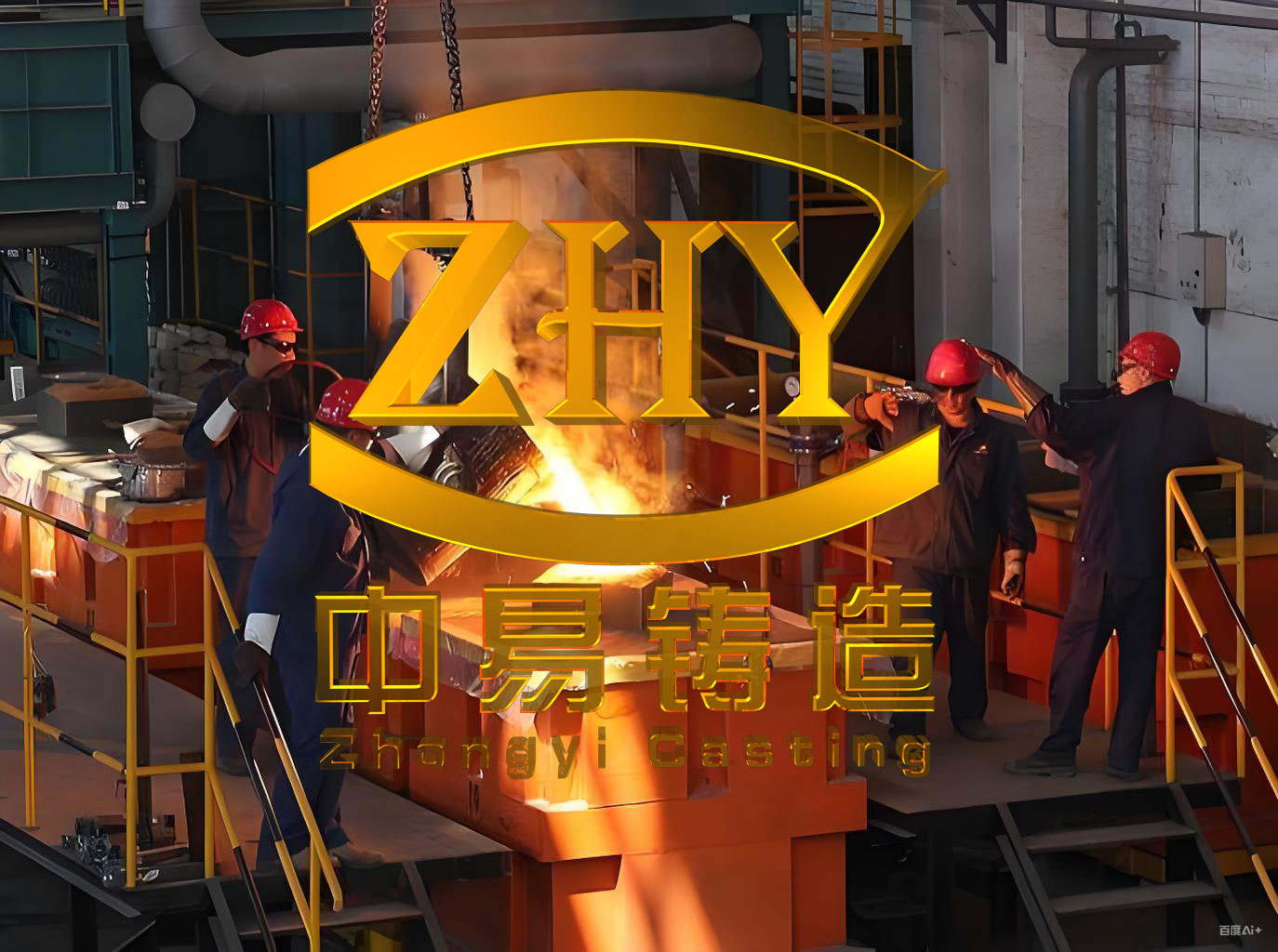
The image above illustrates a modern facility typical of sand casting manufacturers in Asia, showcasing automated lines and clean environments. Such investments enable sand casting manufacturers to meet stringent international standards. Moreover, collaborative ventures between Western and Eastern sand casting manufacturers foster technology transfer, accelerating the adoption of smart foundry concepts. For instance, the use of IoT sensors in molding machines allows sand casting manufacturers to predict maintenance needs, reducing downtime by 20%.
Material science is another frontier for sand casting manufacturers. The mechanical properties of cast irons and aluminum alloys determine application suitability. The tensile strength \( \sigma_t \) of gray iron, for example, depends on carbon equivalent (CE), given by:
$$ \text{CE} = \%C + \frac{\%Si + \%P}{3} $$
where higher CE reduces \( \sigma_t \) but improves castability. Sand casting manufacturers optimize CE for balance, often targeting 3.8-4.2 for engine blocks. For ductile iron, the nodule count per unit area \( N_n \) influences durability:
$$ \sigma_t \propto \sqrt{N_n} $$
implying that sand casting manufacturers controlling nucleation achieve strengths exceeding 900 MPa. The table below details common materials processed by sand casting manufacturers.
| Material | Typical Composition | Tensile Strength (MPa) | Elongation (%) | Primary Applications |
|---|---|---|---|---|
| Gray Iron | Fe-3.5C-2Si-0.8Mn | 150-400 | <1 | Brake discs, manifolds |
| Ductile Iron | Fe-3.6C-2.5Si-0.04Mg | 400-900 | 5-25 | Crankshafts, gears |
| Austenitic Ductile Iron | Fe-2.8C-2Si-20Ni | 500-800 | 10-30 | Heat-resistant parts |
| Aluminum A356 | Al-7Si-0.3Mg | 200-280 | 3-10 | Wheels, engine blocks |
Innovation in sand casting manufacturers extends to logistics and supply chain management. Just-in-time (JIT) production requires precise scheduling, modeled using queueing theory. The average waiting time \( W_q \) for a casting order in a foundry system is:
$$ W_q = \frac{\lambda}{\mu(\mu – \lambda)} $$
where \( \lambda \) is arrival rate and \( \mu \) is service rate. Sand casting manufacturers reduce \( W_q \) by increasing \( \mu \) via automation, thus enhancing customer satisfaction. Furthermore, digital twins simulate entire production lines, allowing sand casting manufacturers to optimize layout and resource allocation before physical implementation.
The competitive landscape for sand casting manufacturers is fueled by mergers and joint ventures. These partnerships pool expertise, enabling sand casting manufacturers to offer end-to-end solutions from design to machining. For example, a European-Asian alliance might combine precision engineering with cost-effective production, benefiting global clients. Financial performance of sand casting manufacturers correlates with technology adoption; a regression model could show:
$$ \text{Profit Margin} = \alpha + \beta_1 \cdot \text{R&D Investment} + \beta_2 \cdot \text{Automation Index} $$
where \( \beta_1 \) and \( \beta_2 \) are positive coefficients. Thus, sand casting manufacturers investing in R&D and automation tend to outperform peers.
Looking ahead, sand casting manufacturers will embrace Industry 4.0 wholeheartedly. Cyber-physical systems will enable real-time monitoring of sand moisture, temperature, and compaction, critical for mold quality. The relationship between sand properties and casting defects is nonlinear, often described by empirical equations. For instance, the green strength \( S_g \) of sand mixtures varies with clay content \( C_c \) and water content \( C_w \):
$$ S_g = a \cdot C_c^b \cdot e^{-c \cdot C_w} $$
where \( a, b, c \) are constants. Sand casting manufacturers using AI can adjust \( C_c \) and \( C_w \) dynamically to maintain \( S_g \) within optimal ranges, minimizing scrap.
In conclusion, sand casting manufacturers are undergoing a renaissance driven by technological integration and sustainability mandates. From horizontal molding lines to 3D-printed cores, these manufacturers demonstrate remarkable adaptability. The mathematical frameworks and tables presented herein underscore the sophistication inherent in modern sand casting manufacturers. As global demand for lightweight, durable components grows, sand casting manufacturers will continue to innovate, solidifying their role as indispensable partners across industries. The journey of sand casting manufacturers is far from over; it is accelerating toward a smarter, greener future, where every casting tells a story of precision and progress.