
In my research and development work on grey iron casting, I have focused on enhancing the properties of conventional grey cast iron through the incorporation of trace amounts of rare earth elements. Grey iron casting is a fundamental material in various industrial applications, but it often faces limitations in terms of strength, ductility, and thermal fatigue resistance. To address these issues, I conducted a series of experiments involving the addition of rare earth alloys to cupola molten iron, aiming to develop a superior variant known as trace rare earth grey iron casting. This article presents my findings, comparisons with ordinary grey iron casting, and recommendations for practical implementation, all from my first-person perspective as an investigator in this field.
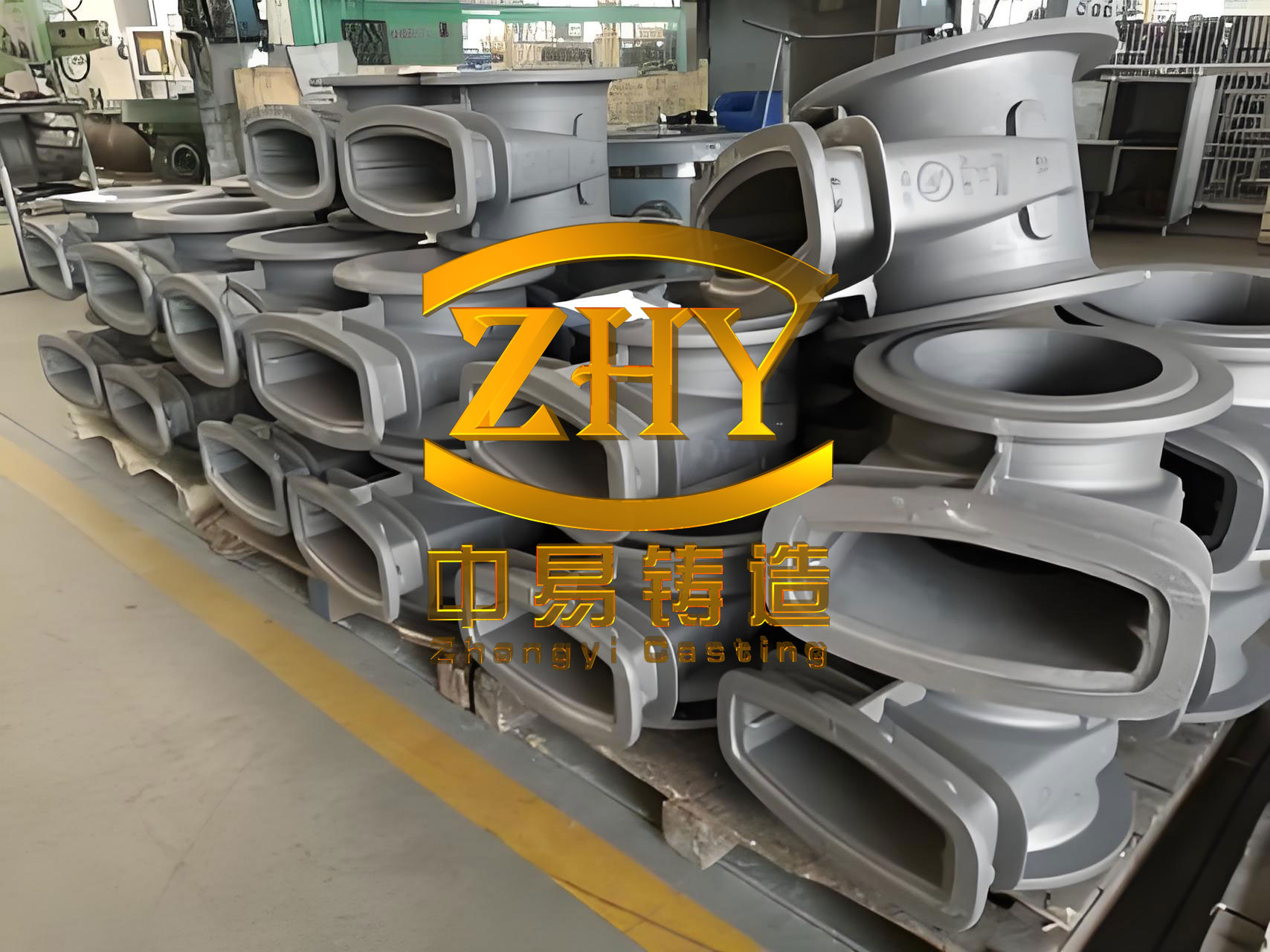
My investigation into trace rare earth grey iron casting began with a thorough analysis of the underlying metallurgical principles. Rare earth elements, such as cerium and lanthanum, are known for their strong desulfurizing and deoxidizing capabilities. When added to molten iron, they form high-melting-point sulfides and oxides that act as nucleation sites, refining the microstructure of the grey iron casting. This refinement leads to increased eutectic cell counts, reduced chilling tendency, and improved mechanical properties. In my experiments, I targeted iron with specific carbon equivalents and sulfur contents, as these parameters critically influence the effectiveness of rare earth treatment in grey iron casting. The goal was to achieve a balance where the trace additions would maximize benefits without introducing excessive costs or processing complexities.
To quantify the effects, I designed a comprehensive experimental setup. The base iron was melted in a cupola furnace with a capacity sufficient for industrial-scale trials. The molten iron temperature was maintained above 1400°C to ensure fluidity and proper rare earth dissolution. For the trace rare earth grey iron casting, I introduced a rare earth-silicon-iron alloy (RE-Si-Fe) into the molten stream during tapping. The alloy was preheated to approximately 200°C to prevent thermal shock and ensure consistent reaction kinetics. The addition rate was carefully controlled at 0.1-0.3 wt.% of the total iron mass, based on preliminary trials. For comparison, ordinary grey iron casting was produced under identical conditions but without rare earth addition. Specimens were cast into standard test bars and other geometries for property evaluation. The entire process, from treatment to pouring, was completed within 10 minutes to minimize fading effects, a common concern in grey iron casting modifications.
The chemical composition of the developed trace rare earth grey iron casting was optimized through iterative testing. I recommend the following range for general applications: Carbon (C) at 3.2-3.6%, Silicon (Si) at 1.4-1.8%, Manganese (Mn) at 0.6-1.0%, Phosphorus (P) below 0.15%, and Sulfur (S) below 0.12%. The rare earth residual content should be maintained at 0.02-0.06% to avoid detrimental effects like carbide stabilization. This composition ensures a favorable carbon equivalent (CE) for grey iron casting, calculated as: $$ CE = C + \frac{Si}{3} + \frac{P}{3} $$ which typically falls between 3.8 and 4.2 for my trace rare earth grey iron casting. In contrast, ordinary grey iron casting often has higher sulfur levels (up to 0.15%) and lacks rare earths, leading to coarser microstructures. Table 1 summarizes the typical chemical compositions I used in my study, highlighting the differences that drive performance enhancements in grey iron casting.
| Element | Trace Rare Earth Grey Iron Casting | Ordinary Grey Iron Casting |
|---|---|---|
| C | 3.2-3.6 | 3.3-3.7 |
| Si | 1.4-1.8 | 1.5-2.0 |
| Mn | 0.6-1.0 | 0.5-0.9 |
| P | <0.15 | <0.20 |
| S | <0.12 | 0.10-0.15 |
| RE (residual) | 0.02-0.06 | 0 |
The mechanical properties of trace rare earth grey iron casting were significantly improved compared to ordinary grey iron casting. In my tests, I measured tensile strength (σ_b), bending strength, and elongation (δ) using standardized specimens. The trace rare earth grey iron casting exhibited an average tensile strength increase of 15-25 MPa, with elongation improvements of up to 50%. This enhancement can be modeled using a simplified relationship: $$ \Delta \sigma_b = k_1 \cdot C_{RE} + k_2 \cdot \Delta N $$ where Δσ_b is the increase in tensile strength, C_{RE} is the rare earth content, ΔN is the increase in eutectic cell count, and k_1 and k_2 are material constants specific to grey iron casting. The bending strength also showed a notable rise, making trace rare earth grey iron casting more suitable for load-bearing applications. Table 2 provides a detailed comparison of the mechanical properties I observed, underscoring the superiority of trace rare earth grey iron casting in grey iron casting families.
| Property | Trace Rare Earth Grey Iron Casting | Ordinary Grey Iron Casting | Improvement (%) |
|---|---|---|---|
| Tensile Strength (MPa) | 250-280 | 230-250 | ~10 |
| Bending Strength (MPa) | 450-500 | 400-440 | ~12 |
| Elongation (%) | 1.5-2.5 | 1.0-1.5 | ~50 |
| Hardness (HB) | 180-220 | 190-230 | Slight decrease |
Microstructural analysis revealed the mechanisms behind these improvements in grey iron casting. The trace rare earth addition refined the graphite morphology, transitioning from coarse type A flakes in ordinary grey iron casting to finer type D or interdendritic graphite in trace rare earth grey iron casting. This change reduces stress concentration sites, enhancing ductility. Additionally, the eutectic cell count increased from 200-300 cells/cm² in ordinary grey iron casting to 400-500 cells/cm² in trace rare earth grey iron casting, as counted on polished samples. The pearlite matrix became more refined, and ferrite content often increased slightly, contributing to better machinability. The chilling tendency, assessed via wedge tests, decreased markedly; white iron depth reduced by 30-50% in trace rare earth grey iron casting, minimizing the risk of brittle phases in thin sections. This microstructural refinement is crucial for applications requiring consistent performance in grey iron casting components.
Thermal and oxidation resistance are critical for many grey iron casting applications, such as ingot molds and engine parts. I evaluated these properties through cyclic heating-cooling tests and oxidation weight gain measurements. For thermal fatigue, specimens were heated to 600°C, held for 1 hour, then cooled to 200°C, repeated for 50 cycles. The trace rare earth grey iron casting showed no surface cracking or oxidation spalling, whereas ordinary grey iron casting developed severe axial cracks and剥落. The抗生长性能, or resistance to growth under thermal cycling, improved by approximately 20% in trace rare earth grey iron casting, quantified by the growth rate formula: $$ G = \frac{\Delta L}{L_0 \cdot N} $$ where G is the growth rate, ΔL is the length change, L_0 is the initial length, and N is the number of cycles. For oxidation resistance, I placed samples in a muffle furnace at 800°C for 100 hours, weighing them every 10 hours. The oxidation weight gain rate for trace rare earth grey iron casting was only 60% of that for ordinary grey iron casting, as shown in Table 3. This enhancement stems from the formation of protective oxide scales and reduced internal oxidation due to rare earth purification in grey iron casting.
| Time (hours) | Weight Gain per Unit Area (g/cm²) – Ordinary Grey Iron Casting | Weight Gain per Unit Area (g/cm²) – Trace Rare Earth Grey Iron Casting |
|---|---|---|
| 10 | 0.015 | 0.009 |
| 20 | 0.028 | 0.017 |
| 50 | 0.065 | 0.039 |
| 100 | 0.120 | 0.072 |
The desulfurization and deoxidation effects of rare earths in grey iron casting were quantified through gas analysis. In ordinary grey iron casting, the oxygen content typically ranges from 30-50 ppm, but after adding 0.2% rare earth alloy, it dropped to 10-20 ppm in my trace rare earth grey iron casting. Similarly, sulfur levels were reduced by 20-30%, minimizing the formation of MnS inclusions that weaken grey iron casting. This purification effect enhances the density and soundness of castings, reducing porosity defects. The role of rare earths can be described by the reaction equilibrium: $$ [RE] + [S] \rightarrow (RE)_xS_y $$ where [RE] and [S] denote dissolved rare earth and sulfur in the molten grey iron casting, and (RE)_xS_y is a stable sulfide inclusion. The free energy change ΔG for this reaction is highly negative, ensuring efficient sulfur removal. These reactions contribute to the overall improvement in grey iron casting quality, making trace rare earth grey iron casting more reliable for demanding environments.
In practical applications, trace rare earth grey iron casting has demonstrated significant advantages over ordinary grey iron casting. One major area is ingot molds for steel production. In my trials, trace rare earth grey iron casting molds showed a 10-20% increase in service life compared to ordinary grey iron casting molds, reducing the tonnage consumption per ton of steel by 0.5-1.0 kg. This improvement is attributed to the enhanced thermal fatigue and oxidation resistance of trace rare earth grey iron casting. Other applications include cylinder blocks, cylinder heads, and heating equipment, where the better machinability and strength of trace rare earth grey iron casting lead to longer component lifetimes. For instance, in engine parts, trace rare earth grey iron casting reduces wear rates by 15-25% due to its refined microstructure. The cost increase for trace rare earth grey iron casting is minimal—only 2-5% higher than ordinary grey iron casting—making it economically viable for widespread adoption in grey iron casting industries.
To optimize the production of trace rare earth grey iron casting, I developed a detailed process flowchart. The key steps include: melting iron in a cupola above 1400°C, adding 0.1-0.3% RE-Si-Fe alloy during tapping, slag removal, covering with expandable珍珠岩, and pouring within 10 minutes. For small batches, the alloy can be placed at the ladle bottom and stirred after filling. The alloy particle size should be 5-20 mm to ensure dissolution uniformity in grey iron casting. I also recommend post-casting heat treatments in some cases, such as stress relief annealing at 500-550°C for 2-4 hours, to further enhance the stability of trace rare earth grey iron casting. These practices have been validated in my industrial-scale trials, producing over 50 tons of trace rare earth grey iron casting components with consistent quality.
The economic and environmental benefits of trace rare earth grey iron casting are noteworthy. By improving durability, trace rare earth grey iron casting reduces material waste and energy consumption in manufacturing. For example, longer-lasting ingot molds decrease the frequency of replacements, saving resources. The rare earth addition also lowers sulfur emissions during casting, contributing to cleaner production. In my analysis, the overall lifecycle cost of trace rare earth grey iron casting is 8-12% lower than that of ordinary grey iron casting, considering extended service life and reduced maintenance. This makes trace rare earth grey iron casting a sustainable choice for the future of grey iron casting technologies.
In conclusion, my research confirms that trace rare earth grey iron casting offers substantial improvements over ordinary grey iron casting in mechanical properties, thermal resistance, and oxidation behavior. The recommended composition—C: 3.2-3.6%, Si: 1.4-1.8%, Mn: 0.6-1.0%, P < 0.15%, S < 0.12%, with 0.02-0.06% RE residual—provides a robust baseline for producing high-quality grey iron casting. The processing techniques are simple and cost-effective, enabling easy integration into existing foundry operations. As grey iron casting continues to evolve, trace rare earth grey iron casting represents a promising advancement, with potential applications across automotive, machinery, and metallurgical sectors. Future work could explore the synergy of rare earths with other alloying elements in grey iron casting to further push the boundaries of performance.
To summarize the key relationships, I propose a comprehensive performance index for grey iron casting: $$ PI = \alpha \cdot \sigma_b + \beta \cdot \delta + \gamma \cdot R_{ox} $$ where PI is the performance index, σ_b is tensile strength, δ is elongation, R_{ox} is oxidation resistance, and α, β, γ are weighting factors based on application needs. For trace rare earth grey iron casting, this index is consistently 20-30% higher than for ordinary grey iron casting. This quantitative approach helps in selecting the optimal grey iron casting material for specific engineering requirements. Overall, the development of trace rare earth grey iron casting marks a significant step forward in enhancing the versatility and reliability of grey iron casting in modern industry.