
In the field of manufacturing, gray iron castings have long been valued for their excellent material properties, such as good machinability, damping capacity, and wear resistance. These characteristics make them indispensable in automotive components and machine tool structures, contributing significantly to industrial economies. By the end of 2020, global production of castings reached millions of tons, with gray iron castings accounting for a substantial portion, highlighting their enduring relevance. However, with the ongoing trends toward lightweight automotive designs and high-precision machinery, there is a growing demand for gray iron castings with enhanced strength. Traditionally, improving the strength of gray iron castings has involved optimizing elemental ratios, adding alloying elements like niobium or rare earths, or using specific inoculants. While these methods yield higher strength, they often increase production costs, impacting large-scale manufacturing and cost-control efforts.
An alternative approach involves the incorporation of nitrogen into gray iron castings. Nitrogen, as an abundant non-metallic element, offers potential for cost reduction and energy savings. Research has shown that nitrogen addition can significantly enhance the tensile strength of gray iron castings, making nitrogen-type gray iron castings a promising material for high-performance applications. For instance, studies have reported that nitrogen content around 0.012% can achieve tensile strengths up to 395 MPa, with improved graphite morphology and refined pearlite microstructure. This microstructure refinement, characterized by shorter, blunter graphite flakes and reduced pearlite lamellar spacing, contributes to the superior mechanical properties of high-strength nitrogen-type gray iron castings. However, despite advancements in material development, the machining performance of these nitrogen-enhanced gray iron castings remains underexplored. As milling is a critical process for shaping gray iron castings from rough blanks to finished parts, understanding tool wear mechanisms during milling is essential for optimizing machining parameters and extending tool life.
This study aims to investigate the wear mechanisms of coated carbide tools when milling high-strength nitrogen-type gray iron castings. I focus on comparing two common coating technologies: Physical Vapor Deposition (PVD) and Chemical Vapor Deposition (CVD). By conducting orthogonal milling experiments under dry cutting conditions, I analyze tool wear patterns on both the rake face and flank face, evaluate the influence of cutting parameters on wear band width, and examine elemental distributions in wear zones to elucidate underlying wear mechanisms. The insights gained will contribute to the development of efficient machining strategies for nitrogen-type gray iron castings, supporting their broader industrial adoption.
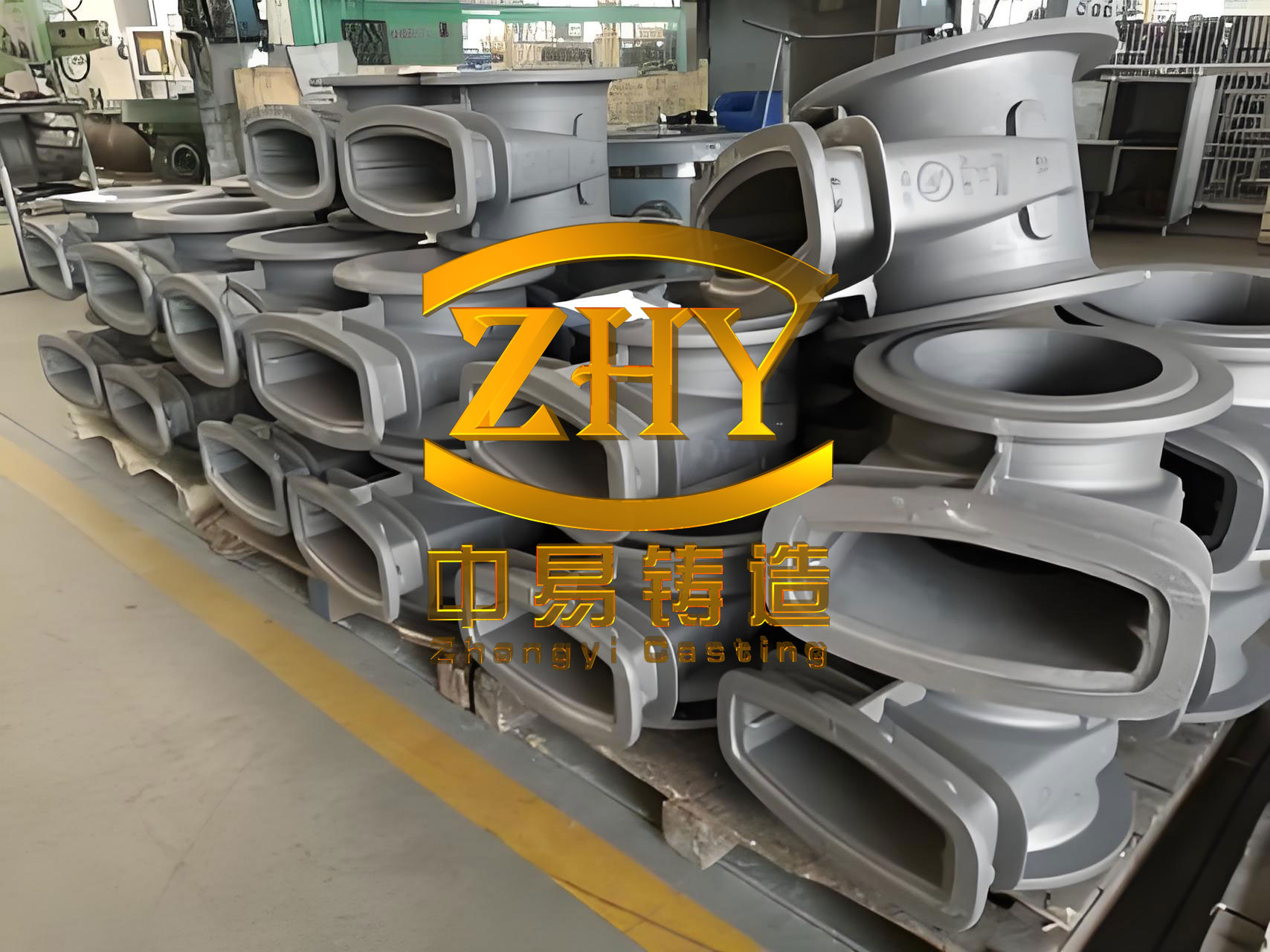
The workpiece material used in this study is a high-strength nitrogen-type gray iron casting designated as HT350. This material exhibits a tensile strength of 374 MPa, a hardness of 232 HBW, and a graphite morphology characterized by type A flake graphite with rounded ends and short, slightly curved structures. The refined pearlite matrix, resulting from nitrogen addition, enhances its mechanical properties. The chemical composition of the HT350 gray iron castings is summarized in Table 1, highlighting key elements such as carbon, silicon, manganese, and nitrogen, which play crucial roles in determining material behavior during machining.
| Element | Content Range |
|---|---|
| C | 3.15–3.25 |
| Si | 1.5–1.6 |
| Mn | 0.15–0.25 |
| P | ≤0.07 |
| S | 0.06–0.08 |
| Cu | 0.35–0.45 |
| Cr | 0.25–0.3 |
| N | 0.017 |
For the milling experiments, I selected two types of coated carbide square shoulder milling inserts: one with a PVD coating (TiAlN) and another with a CVD coating (thick TiC and Al2O3 layers). The tool parameters are detailed in Table 2. These coatings were chosen due to their widespread use in industrial applications and their distinct properties; for example, PVD coatings like TiAlN offer high hardness and good adhesion, while CVD coatings provide excellent wear resistance through multilayer structures. The tool holder used was a standard straight-shank type, ensuring consistent clamping during tests.
| Coating Type | Insert Model | Coating Structure | Chamfer r (°) | Lead Angle κr (°) | Dimensions (mm) |
|---|---|---|---|---|---|
| PVD | APKT 11T308-PM | Fine-grained alloy substrate + TiAlN coating | 0.8 | 90 | 12.24×6.64×3.6 |
| CVD | APKT 11T308-PM | Wear-resistant substrate + thick TiC and Al2O3 coatings | 0.8 | 90 | 12.24×6.64×3.6 |
The milling tests were designed using an orthogonal experimental approach with an L9(34) array, incorporating three factors: cutting speed (Vc), feed per tooth (fz), and depth of cut (ap). Each test was conducted for 15 minutes under dry cutting conditions to simulate environmentally friendly machining practices. The experimental levels and scheme are presented in Table 3. This design allows for efficient analysis of parameter effects on tool wear while minimizing the number of trials. The machining was performed on a vertical machining center, and tool wear was assessed using a deep-field 3D microscope and scanning electron microscopy (SEM) coupled with energy-dispersive X-ray spectroscopy (EDS) for elemental analysis.
| Test No. | Cutting Speed Vc (m/min) | Feed per Tooth fz (mm/rev) | Depth of Cut ap (mm) | Empty Column |
|---|---|---|---|---|
| 1 | 150 | 0.10 | 0.4 | 1 |
| 2 | 150 | 0.14 | 0.8 | 2 |
| 3 | 150 | 0.18 | 1.2 | 3 |
| 4 | 200 | 0.10 | 0.8 | 3 |
| 5 | 200 | 0.14 | 1.2 | 1 |
| 6 | 200 | 0.18 | 0.4 | 2 |
| 7 | 250 | 0.10 | 1.2 | 2 |
| 8 | 250 | 0.14 | 0.4 | 3 |
| 9 | 250 | 0.18 | 0.8 | 1 |
In analyzing the rake face wear, also known as crater wear, I observed distinct differences between the PVD and CVD coated tools when milling the high-strength nitrogen-type gray iron castings. Under identical cutting conditions, the PVD-coated tools exhibited more severe rake face wear compared to the CVD-coated tools. Specifically, the PVD tools showed noticeable crescent-shaped craters, particularly at higher cutting speeds, whereas the CVD tools displayed minimal crater formation. This can be attributed to the higher temperatures generated at elevated speeds, which accelerate wear on the rake face due to increased friction and thermal softening. The wear area on the PVD tools was larger, indicating greater material loss. To quantify this, I considered the wear volume, which can be modeled using the Archard wear equation:
$$ V = K \frac{F_n L}{H} $$
where \( V \) is the wear volume, \( K \) is the wear coefficient, \( F_n \) is the normal force, \( L \) is the sliding distance, and \( H \) is the hardness of the tool material. For gray iron castings, the presence of hard inclusions and graphite flakes influences \( F_n \) and \( H \), leading to varying wear rates between coatings. As cutting speed increased from 150 to 250 m/min, the wear area on both tools decreased slightly, but the wear depth intensified due to thermal effects. Conversely, increasing the depth of cut from 0.4 to 1.2 mm resulted in a proportional increase in wear area and severity, as larger engagement areas raise mechanical loads. Feed rate showed negligible correlation with rake face wear, suggesting that it plays a secondary role in crater formation for these gray iron castings.
The flank wear band width (VB) was measured after each milling test to assess tool degradation on the clearance face. The results, along with range analysis, are summarized in Table 4. The data reveal that the PVD-coated tools generally had slightly lower VB values than the CVD-coated tools, but the differences were marginal. Range analysis indicated that cutting speed (Vc) had the greatest influence on VB, followed by depth of cut (ap), and then feed per tooth (fz), which had the least effect. This trend held for both coating types, emphasizing the critical role of speed in tool wear when machining gray iron castings. The optimal parameter combinations for minimizing wear were identified as Vc = 150 m/min, fz = 0.10 mm/rev, ap = 0.4 mm for PVD tools, and Vc = 150 m/min, fz = 0.14 mm/rev, ap = 0.4 mm for CVD tools. These findings align with wear models that incorporate speed-dependent thermal activation, such as:
$$ VB = A \exp\left(-\frac{Q}{RT}\right) t^n $$
where \( A \) is a constant, \( Q \) is the activation energy for wear, \( R \) is the gas constant, \( T \) is the temperature at the tool-workpiece interface, and \( t \) is time. For gray iron castings, the increased nitrogen content may alter \( Q \) and \( T \), affecting wear rates.
| Test No. | Vc (m/min) | fz (mm/rev) | ap (mm) | Empty | VB for PVD (μm) | VB for CVD (μm) |
|---|---|---|---|---|---|---|
| 1 | 150 | 0.10 | 0.4 | 1 | 18 | 27 |
| 2 | 150 | 0.14 | 0.8 | 2 | 27 | 31 |
| 3 | 150 | 0.18 | 1.2 | 3 | 35 | 40 |
| 4 | 200 | 0.10 | 0.8 | 3 | 46 | 53 |
| 5 | 200 | 0.14 | 1.2 | 1 | 55 | 57 |
| 6 | 200 | 0.18 | 0.4 | 2 | 44 | 48 |
| 7 | 250 | 0.10 | 1.2 | 2 | 68 | 77 |
| 8 | 250 | 0.14 | 0.4 | 3 | 60 | 63 |
| 9 | 250 | 0.18 | 0.8 | 1 | 65 | 69 |
| K1 (PVD/CVD) | 26.67/32.67 | 44.00/52.33 | 40.67/46.00 | 46.00/51.00 | ||
| K2 (PVD/CVD) | 48.33/52.67 | 47.33/50.33 | 46.00/51.00 | 46.33/52.00 | ||
| K3 (PVD/CVD) | 64.33/69.67 | 48.00/52.33 | 52.67/58.00 | 47.00/52.00 | ||
| Range R (PVD/CVD) | 37.67/37.00 | 4.00/2.00 | 12.00/12.00 | 1.00/1.00 |
To delve deeper into the wear mechanisms, I conducted SEM and EDS analyses on the tool surfaces after milling the gray iron castings. The wear mechanisms identified include abrasive wear, adhesive wear, diffusion wear, and oxidation wear, each predominating under specific cutting conditions. At low cutting speeds (Vc = 100–200 m/min), abrasive and adhesive wear were dominant. Abrasive wear occurred due to hard inclusions in the gray iron castings, such as carbides and oxides, which plowed grooves into the tool surface. The CVD-coated tools showed more pronounced abrasive grooves than the PVD-coated tools, as seen in SEM images, indicating that the hard inclusions in nitrogen-type gray iron castings effectively abrade the coating layers. This can be described by a modified abrasive wear model:
$$ W_a = k_a \frac{P v t}{H_t} $$
where \( W_a \) is the abrasive wear volume, \( k_a \) is an abrasive coefficient, \( P \) is the pressure, \( v \) is the sliding velocity, \( t \) is time, and \( H_t \) is the tool hardness. For gray iron castings, the presence of silicon and titanium compounds increases \( k_a \), accelerating wear.
Adhesive wear was observed through material transfer from the workpiece to the tool. EDS analysis of adhered material revealed high concentrations of carbon, iron, and oxygen, suggesting that iron-based materials and graphite from the gray iron castings bonded to the tool surface. At low speeds, this adhesion was more evident on PVD tools, where Fe and O distributions were irregular, compared to CVD tools where FeO layers formed uniformly, providing some protective effect. The adhesive wear rate can be expressed as:
$$ W_{ad} = k_{ad} \frac{F_n}{H_t} L $$
where \( W_{ad} \) is the adhesive wear volume and \( k_{ad} \) is the adhesive wear coefficient. In gray iron castings, the graphite flakes may act as solid lubricants, but under pressure, they can also contribute to adhesion.
At high cutting speeds (Vc = 200–250 m/min), diffusion and oxidation wear became predominant. Diffusion wear involved the migration of elements like manganese, silicon, and sulfur from the gray iron castings into the tool matrix, as detected by EDS. The PVD-coated tools exhibited more significant elemental changes than CVD-coated tools, indicating greater diffusion susceptibility. This diffusion process can be modeled using Fick’s law:
$$ J = -D \frac{\partial C}{\partial x} $$
where \( J \) is the diffusion flux, \( D \) is the diffusion coefficient, \( C \) is the concentration, and \( x \) is the distance. For nitrogen-type gray iron castings, the refined microstructure may enhance diffusion rates due to higher interfacial activity.
Oxidation wear was particularly severe for PVD-coated tools. The TiAlN coating reacted with atmospheric oxygen to form Al2O3, which is softer and less wear-resistant. EDS showed a substantial increase in oxygen content on PVD tools after milling, whereas CVD tools, with pre-existing Al2O3 layers, experienced less oxidation. The oxidation reaction can be represented as:
$$ 2 \text{TiAlN} + \frac{3}{2} \text{O}_2 \rightarrow \text{Al}_2\text{O}_3 + 2 \text{TiO}_2 + \text{N}_2 $$
However, the Al2O3 film on PVD tools was continuously removed by hard inclusions from the gray iron castings, exposing fresh TiAlN to further oxidation. This cyclic process accelerated wear on PVD tools, despite their higher initial hardness. In contrast, the CVD tools’ thick Al2O3 layer provided better oxidation resistance, contributing to their superior performance in high-speed milling of gray iron castings.
The interplay of these wear mechanisms can be summarized using a comprehensive wear model that integrates multiple factors. For gray iron castings, the total wear volume \( W_{\text{total}} \) can be expressed as:
$$ W_{\text{total}} = W_a + W_{ad} + W_d + W_o $$
where \( W_d \) is diffusion wear volume and \( W_o \) is oxidation wear volume. Each component depends on cutting parameters and material properties. For instance, \( W_o \) increases exponentially with temperature, which is a function of cutting speed, as shown by:
$$ T = T_0 + \alpha V_c^\beta $$
where \( T_0 \) is the ambient temperature, and \( \alpha \) and \( \beta \) are constants related to the gray iron castings’ thermal properties.
In conclusion, this study on milling high-strength nitrogen-type gray iron castings reveals that tool wear is a complex phenomenon influenced by coating technology and cutting parameters. The PVD-coated tools suffered more severe rake face wear compared to CVD-coated tools under the same conditions, primarily due to oxidation and diffusion mechanisms exacerbated by high speeds. Cutting speed had the greatest impact on flank wear band width, followed by depth of cut, with feed rate being least influential. At low speeds, abrasive and adhesive wear dominated, while at high speeds, diffusion and oxidation wear prevailed. The oxidation of TiAlN in PVD coatings to form Al2O3, coupled with continuous removal by hard inclusions from gray iron castings, led to accelerated wear. These insights highlight the importance of selecting appropriate coatings and optimizing cutting parameters for machining nitrogen-enhanced gray iron castings. Future work could explore advanced coating architectures or cooling strategies to further improve tool life and machining efficiency for these high-performance gray iron castings.