
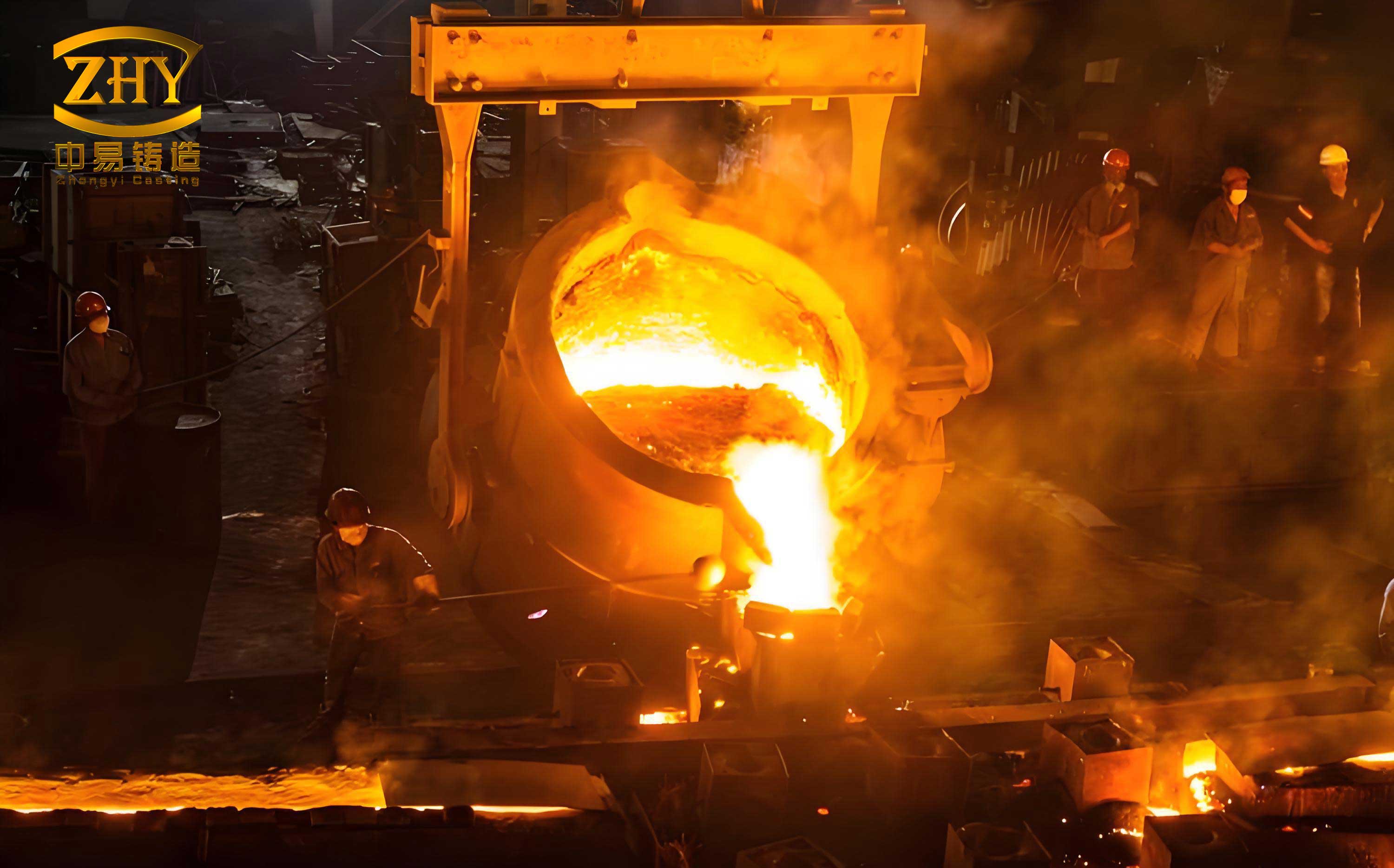
In the context of a modern manganese steel casting foundry, the repair of defects in high manganese steel castings represents a significant technical challenge. These castings, characterized by their high carbon and manganese content, exhibit excellent toughness and wear resistance after proper heat treatment, particularly water quenching to achieve an austenitic structure. However, their very composition makes them prone to cracking during casting or subsequent processing, and welding these defects is notoriously difficult. Historically, a substantial portion of castings—sometimes over a certain percentage—were scrapped due to minor defects that could not be reliably repaired through welding. This article details our first-person experiences and methodological evolution in developing a successful welding technique for high manganese steel castings within our manganese steel casting foundry.
The core issue lies in the metallurgy of high manganese steel. Its standard composition typically includes carbon content around 1.0-1.4% and manganese content between 11-14%. After solution heat treatment at approximately 1050-1100°C followed by rapid water quenching, it retains a single-phase austenitic structure, granting it its legendary impact toughness and work-hardening capability. The chemical composition can be summarized as follows:
| Element | Percentage (%) | Role |
|---|---|---|
| Carbon (C) | 1.0 – 1.4 | Strengthener, promotes austenite stability |
| Manganese (Mn) | 11.0 – 14.0 | Austenite former, enhances toughness |
| Silicon (Si) | 0.3 – 0.8 | Deoxidizer |
| Phosphorus (P) | ≤ 0.05 | Impurity, reduces toughness |
| Sulfur (S) | ≤ 0.05 | Impurity |
The fundamental welding difficulty arises because the heat-affected zone (HAZ) and the weld metal itself experience a thermal cycle that can precipitate carbides (like (Fe,Mn)3C) along grain boundaries, leading to embrittlement and crack initiation. The high thermal expansion coefficient and low thermal conductivity further exacerbate stress buildup. Our initial approach, based on external technical advice, was to use a stainless steel welding rod classified as Cr-Ni type. However, procurement of such specific electrodes was problematic domestically at the time, prompting our in-house development efforts within the manganese steel casting foundry.
Our first experimental trial involved a rather rudimentary method. We took scrap pieces of high manganese steel castings, shaped them into small chunks, and placed them over the defect area. Using a small graphite electrode to generate an electric arc, we attempted to fuse these chunks to the base metal. The result was immediate and severe cracking in the weld zone. This failure underscored the incompatibility of uncontrolled, high-localized heat input with the sensitive microstructure of high manganese steel. The absence of any shielding gas or flux led to excessive oxidation and contamination.
The second iteration involved modifying the filler material. We added approximately 3% nickel to the high manganese steel chunks before welding. Nickel is known to stabilize austenite and improve toughness. The outcome was somewhat improved, with a reduction in gross cracking, but the weld deposit was still plagued by numerous gas pores and fine micro-cracks. We hypothesized that the primary causes were the lack of proper flux shielding, excessively high arc temperature, and excessive current density. The relationship between heat input (Q) and cracking tendency can be conceptually modeled. For arc welding, the heat input per unit length is given by:
$$ Q = \frac{\eta \cdot V \cdot I}{v} $$
Where \( \eta \) is the arc efficiency (approximately 0.8 for manual arc welding), \( V \) is voltage (volts), \( I \) is current (amperes), and \( v \) is travel speed (mm/s). An excessively high \( Q \) leads to a larger HAZ and greater time in critical temperature ranges for carbide precipitation, increasing brittleness.
Subsequently, we attempted to manufacture a proper welding rod. We used thin sections of high manganese steel plate, cut into strips about 10 mm wide, then forged or ground into round rods approximately 4 mm in diameter. These homemade electrodes were coated with a basic flux. During welding, we also added flux powder directly into the arc zone. The resulting weld bead showed a Brinell hardness around 380 HB, which was promising. However, chemical analysis revealed a devastating loss of manganese—over 50% was oxidized and burned away during the welding process. The effective manganese content in the weld metal could be estimated by a simplified burn-off equation:
$$ [Mn]_{weld} = [Mn]_{initial} \cdot (1 – \alpha \cdot t \cdot \frac{P_{O_2}}{T}) $$
Where \( [Mn]_{initial} \) is the initial Mn content in the filler, \( \alpha \) is a rate constant, \( t \) is arc time, \( P_{O_2} \) is partial pressure of oxygen, and \( T \) is temperature. This significant loss of the key austenite former rendered the weld metal properties poor, lacking the necessary toughness.
This series of failures led to a pivotal realization: to preserve the critical alloying elements like carbon and manganese, the filler material must be produced via casting under controlled conditions, rather than fabricated from wrought material subject to intense oxidation. Around the same time, we discovered that the cores used in manufacturing hollow drill steel, which had a composition of carbon above 0.7% and manganese above 1.5%, could serve as a potential substitute filler wire for high manganese steel welding. A comparison of filler material options is presented below:
| Stage | Filler Material | Key Modification | Major Issues | Hardness (HB) |
|---|---|---|---|---|
| 1 | Cast scrap chunks | None | Severe cracking, no shielding | N/A (Failed) |
| 2 | Cast scrap + ~3% Ni | Nickel addition | Gas pores, micro-cracks | ~300-350 |
| 3 | Wrought strip electrode + flux | Flux coating | >50% Mn loss, poor toughness | ~380 |
| 4 (Successful) | Cast rod or hollow steel core | Add ~2% Mo, controlled process | Minimized oxidation, good properties | ~190-210 |
The successful method involved using either a specially cast welding rod or the aforementioned hollow drill steel core as the filler wire. Crucially, we added about 2% molybdenum (Mo) to the filler metal composition. Molybdenum serves multiple purposes: it enhances hardenability, strengthens ferrite, and improves high-temperature strength. More importantly for our application, as we will elaborate, it modifies the weld metal’s response to heat treatment. The welding parameters were meticulously controlled: we used a voltage of 30 volts and a current of 150-180 amperes for manual arc welding. This balance provided sufficient heat to achieve fusion while minimizing excessive thermal input. The resulting weld metal exhibited a Brinell hardness of approximately 190-210 HB, which aligns closely with the specification for quenched high manganese steel (typically 180-220 HB). This marked our first substantial success in the manganese steel casting foundry’s repair operations.
To verify the practical service performance, we conducted a field test on a high manganese steel liner used in a quartz sand crushing machine. We intentionally created and then repaired a defect about 50 x 100 mm on the working surface using our developed technique. After prolonged operation, the welded area showed no excessive wear and remained flush with the original surface, demonstrating adequate work-hardening capability and wear resistance. This practical validation was critical for gaining confidence in the repair process for critical components produced in a manganese steel casting foundry.
A profound technical hurdle emerged concerning post-weld heat treatment. Standard high manganese steel castings require water quenching from around 1050°C to dissolve grain boundary carbides and achieve a homogeneous austenitic structure. However, the welding thermal cycle inevitably destroys this optimized structure in the HAZ and weld metal. Therefore, a post-weld local re-quenching seems necessary. This presents two major difficulties: firstly, it is extremely challenging to locally control the temperature of the weld zone precisely to the required 1050°C without affecting the surrounding base metal or causing distortion; secondly, quenching a welded assembly, especially locally, carries a high risk of inducing quenching cracks due to thermal stresses.
Our innovative solution bypassed the need for post-weld water quenching by modifying the weld metal’s inherent properties. By incorporating molybdenum into the filler metal, we aimed to impart characteristics of a medium manganese steel or a molybdenum-alloyed steel. Such steels do not require rapid water quenching to achieve good toughness; air cooling after welding often suffices to produce a favorable microstructure. The molybdenum addition helps in forming fine carbides and stabilizing a microstructure that offers a good combination of strength and toughness without the severe quench. The transformation behavior can be considered in terms of continuous cooling transformation (CCT) diagrams. For a Mo-containing weld metal, the time-temperature-transformation curve is shifted to the right, allowing martensite or bainite formation to be avoided at slower cooling rates (like air cooling). The hardness after air cooling can be approximated by empirical formulas relating composition to hardenability, such as the ideal critical diameter \( D_I \):
$$ D_I = 0.54 \cdot [\%C] \cdot (1 + 0.64[\%Si]) \cdot (1 + 4.1[\%Mn]) \cdot (1 + 2.83[\%P]) \cdot (1 – 0.62[\%S]) \cdot (1 + 0.27[\%Ni]) \cdot (1 + 0.52[\%Cr]) \cdot (1 + 3.14[\%Mo]) $$
This indicates molybdenum’s potent effect on increasing hardenability, allowing adequate properties with slower cooling. Therefore, by melting a portion of molybdenum into the weld pool, we essentially created a local composite zone with properties approaching those of the quenched base metal, eliminating the need for a risky post-weld quench. Ideally, a filler metal containing around 2-3% molybdenum specifically designed for manganese steel would be optimal. However, even with our manually adjusted process, skilled operators could control the molybdenum addition and its distribution reasonably well. Based on the achieved hardness and the actual service performance of the crusher liner, the repair generally meets the requirements for high manganese steel castings in a foundry environment.
The development process highlighted several key metallurgical principles. The oxidation loss of manganese is a dominant factor in weld metal quality. The activity of manganese in liquid steel is high, and its affinity for oxygen leads to rapid loss in an unprotected arc. The equilibrium constant for the reaction [Mn] + [O] = (MnO) is given by:
$$ \log K_{Mn} = \frac{6770}{T} – 3.09 $$
At arc temperatures exceeding 2000°C, the equilibrium strongly favors MnO formation, explaining the severe burn-off. Using a cast rod with a protective flux coating and reducing arc violence are essential to suppress this. Furthermore, the role of molybdenum in suppressing the formation of brittle phases is crucial. Molybdenum carbides are more stable and disperse finely, preventing the continuous grain boundary carbide networks typical of untreated high manganese steel HAZ. We can model the driving force for carbide precipitation using solubility products. For (Fe,Mn)3C precipitation, the solubility product is a function of temperature and composition. Molybdenum additions increase the activation energy for diffusion of carbon, slowing down carbide growth kinetics.
To provide a comprehensive view, let’s detail the final recommended welding procedure for a manganese steel casting foundry:
| Parameter | Specification | Notes |
|---|---|---|
| Base Metal | ASTM A128 Gr B-4, or similar (11-14% Mn, 1.0-1.4% C) | Must be in fully quenched (austenitic) condition before repair |
| Filler Metal | Cast rod or core wire with ~1% C, ~12% Mn, ~2% Mo. Coated with basic flux. | Alternatively, use suitable commercial high-Mn Mo-bearing electrode if available. |
| Preheat | Not strictly required, but advisable to keep interpass temp below 150°C | Prevents excessive heat buildup. |
| Welding Current | DC, Electrode Positive (DCEP). Current: 150-180 A for 4mm rod. | Adjust based on rod diameter and position. |
| Voltage | 28-32 V | Maintain short arc length. |
| Travel Speed | Moderate, ensuring good fusion without excessive heat input. | Heat input should be controlled within 1.5-2.5 kJ/mm. |
| Post-Weld Cooling | Allow to air cool naturally. Do NOT quench with water. | The Mo addition ensures adequate properties after air cooling. |
| Post-Weld Heat Treatment | Generally not required. Stress relief at low temperature (250-300°C) optional for complex shapes. | Avoid temperatures between 450-850°C to prevent embrittlement. |
The economic impact of mastering this technique for a manganese steel casting foundry is substantial. It dramatically reduces the scrappage rate of expensive castings due to minor defects, improving overall yield and profitability. Furthermore, it extends the service life of worn components through rebuild welding, adding significant value. The knowledge also empowers the foundry to offer repair services as a secondary business stream.
Looking forward, there are several avenues for improving and standardizing the process. The development of a dedicated, flux-coated electrode with optimized composition (C, Mn, Mo, perhaps small Ni or Cr additions) for high manganese steel repair is the logical next step. Research into automated welding processes like submerged arc welding (SAW) or gas metal arc welding (GMAW) with appropriate filler wires and shielding gases could improve consistency and productivity in a high-volume manganese steel casting foundry. The control of dilution between the filler and base metal is critical; too much dilution can lower the effective alloy content in the weld. The dilution ratio \( D \) can be expressed as:
$$ D = \frac{A_{bm}}{A_{bm} + A_{fm}} $$
where \( A_{bm} \) is the cross-sectional area of melted base metal and \( A_{fm} \) is the cross-sectional area of added filler metal. Optimizing welding parameters to control \( D \) ensures the weld metal composition stays within the desired range.
Another area for deeper study is the precise quantification of the toughness of the weld metal and HAZ. Charpy V-notch impact tests at various temperatures would provide definitive data on the repair’s integrity under dynamic loading, which is common for manganese steel components like crusher jaws and railroad crossings. Microstructural analysis using scanning electron microscopy (SEM) to examine carbide morphology and distribution would offer insights for further refinement.
In conclusion, through iterative experimentation and close collaboration between welders and metallurgists in our manganese steel casting foundry, we developed a practical and effective method for repairing defects in high manganese steel castings. The key innovations include the use of a cast or core-wire filler material enriched with molybdenum, careful control of welding parameters to minimize alloy burn-off, and leveraging molybdenum’s metallurgical effects to eliminate the need for hazardous post-weld water quenching. While the current method satisfactorily meets most operational demands, continuous research is warranted to further enhance the performance and reliability of welded repairs, ensuring that manganese steel casting foundries can maximize the utility and lifespan of their critical products. The journey from high scrappage rates to successful in-situ repair underscores the importance of adaptive, hands-on problem-solving in specialized manufacturing environments like a manganese steel casting foundry.