
In my extensive field experience maintaining and repairing agricultural machinery, the failure of cast iron components represents one of the most frequent and critical challenges. These cast iron parts, such as engine blocks, cylinder heads, transmission housings, and differential cases, form the structural backbone of tractors, harvesters, and other heavy equipment. Their failure, often in the form of cracks or breaks due to thermal stress, impact, fatigue, or lack of maintenance, can bring vital machinery to a complete halt. The economic imperative to repair rather than replace these expensive components is strong, making welding the primary recourse. However, the successful repair of a cast iron part is not a simple task; it demands a deep understanding of the material’s inherent properties and the careful application of specialized welding procedures tailored to the constraints of a farm workshop.
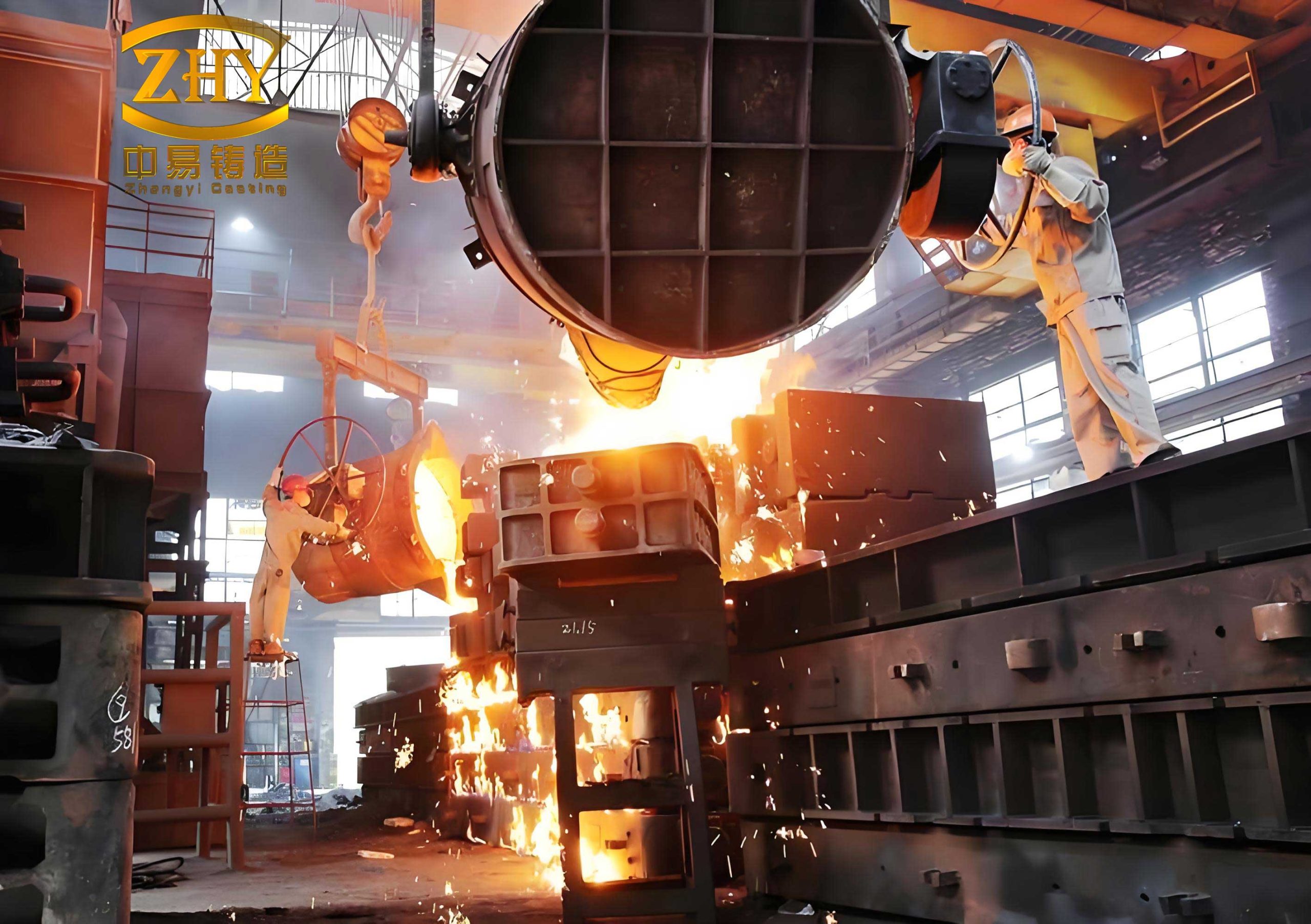
The fundamental challenge lies in the very nature of cast iron. Unlike steel, a typical cast iron part has a high carbon content, usually between 2.5% and 4.0%, and a significant amount of silicon. This composition gives cast iron its excellent castability, damping capacity, and wear resistance, but also makes it brittle and prone to forming hard, unmachinable phases during welding. The primary defects we fight against are:
- White Iron (Chill) Formation: Rapid cooling of the weld zone can cause carbon to remain in solution with iron, forming iron carbide (cementite, Fe3C). This phase is extremely hard and brittle, rendering the area unmachinable and a potential site for crack initiation.
- Heat-Affected Zone (HAZ) Cracking: The steep temperature gradients created during welding induce severe thermal stresses. Combined with the low ductility of cast iron, these stresses often exceed the material’s strength, leading to cracks in the zone surrounding the weld.
- Weld Metal Cracking: The high carbon and silicon content can lead to the formation of low-melting-point eutectics along grain boundaries, causing hot cracking as the weld metal solidifies and contracts.
The welding process must be carefully orchestrated to manage the heat input and cooling rate, symbolized by the fundamental heat flow equation:
$$ q = \eta \cdot V \cdot I $$
where \( q \) is the net heat input (J/mm), \( \eta \) is the arc efficiency, \( V \) is voltage (V), and \( I \) is current (A). For a cast iron part, we aim to minimize \( q \) or control its application to avoid the critical cooling rate that leads to white iron formation. The cooling rate \( (\dot{T}) \) can be approximated for thin sections by:
$$ \dot{T} \propto \frac{q}{d^2} $$
where \( d \) is the material thickness. This shows why preheating—effectively increasing the initial temperature and reducing the gradient—is so vital for thicker sections.
Fundamental Welding Procedures for Cast Iron Repair
Based on the level of control over the thermal cycle, we primarily employ three welding procedures for repairing a damaged cast iron part. The choice depends on the part’s size, complexity, required post-weld properties, and available workshop facilities.
1. The Hot Welding (Fusion Welding) Procedure
This is the most rigorous method, involving heating the entire cast iron part or a large section containing the repair area to a temperature between 600°C and 700°C (1112°F – 1292°F). The part is then welded while maintaining an interpass temperature above 400°C (752°F), followed by a very slow, controlled cooling, often buried in insulating material or furnace-cooled. This procedure virtually eliminates thermal shock.
Operational Mechanics: The high preheat temperature drastically reduces the cooling rate \( \dot{T} \), allowing carbon to precipitate as graphite rather than forming iron carbide. It also lowers the yield strength of the material, allowing thermal stresses to be relieved through plastic deformation rather than cracking. The basic thermal stress \( (\sigma_{th}) \) during cooling can be conceptualized as:
$$ \sigma_{th} = E \cdot \alpha \cdot \Delta T $$
where \( E \) is Young’s modulus, \( \alpha \) is the coefficient of thermal expansion, and \( \Delta T \) is the temperature difference. Preheating minimizes \( \Delta T \) between the weld and the cold base metal.
Application & Tips:
- Method: Typically performed using oxy-acetylene welding (with a cast iron filler rod like RCI-A and a suitable flux) or shielded metal arc welding (SMAW) with a cast iron core electrode (e.g., ENi-CI).
- Best For: Critical, complex-shaped cast iron parts that require full machinability and optimal mechanical properties, such as engine blocks with extensive cracking.
- Workshop Note: Requires a reliable heating furnace or a well-constructed charcoal/coal forge. Temperature control is crucial; overheating above 750°C can cause grain growth and weakening.
- Key Step: After welding, immediately cover the part with a thermal blanket or bury it in dry sand/vermiculite to slow the cool-down to room temperature over 24-48 hours.
2. The Cold Welding (Non-Fusion Welding) Procedure
As the name implies, this method involves welding the cast iron part with little or no preheat (typically <150°C or 300°F). It relies on specific filler metals that yield a soft, ductile weld deposit capable of absorbing stresses without transferring them to the brittle base metal. This is the most common method in field repairs due to its convenience.
Operational Mechanics: The strategy here is isolation rather than assimilation. We use nickel-based (e.g., ENiFe-CI, ENi-CI) or specialty electrodes that deposit a weld metal with high ductility and a low yield strength. The weld metal deforms plastically to accommodate the shrinkage strain, preventing crack propagation into the base metal. The stress concentration factor \( K_t \) at the weld toe must be managed:
$$ K_t = 1 + 2\sqrt{\frac{a}{\rho}} $$
where \( a \) is the crack or defect depth and \( \rho \) is the root radius. A smooth, concave weld profile (large \( \rho \)) minimizes \( K_t \).
Application & Tips:
- Method: Primarily SMAW. The choice of electrode is paramount (see Table 1).
- Best For: Non-critical repairs, thin sections, or situations where disassembly for preheating is impractical. Ideal for repairing mounting lugs, non-pressurized covers, or cracks on machinery in situ.
- Workshop Technique – “Pin & Stitch”: For heavy sections or long cracks, drill and tap holes along the crack face, screw in mild steel studs, and then weld over them. This provides mechanical reinforcement. The stud area fraction should not exceed 25-30% of the crack face area.
- Key Step – Peening: Immediately after depositing each small, short bead (25-50mm), while the metal is still above 500°C, peen it thoroughly with a round-nose hammer. This work-hardens the surface and introduces compressive stresses, counteracting tensile shrinkage stresses.
3. The Heating Stress-Relief (Thermal Stress Reduction) Welding Procedure
This is an intelligent compromise between the hot and cold methods. Instead of heating the entire cast iron part, we selectively heat specific areas called “stress-relief zones” or “heated compensation zones.” These are points on the casting that, when heated, allow the repair area to expand and contract more freely.
Operational Mechanics: The principle is to reduce the constraint \( (C) \) on the weld zone. By heating a strategic area, we locally expand the metal, effectively “pulling” the crack open slightly before welding. As welding proceeds and the entire assembly cools, the stress-relief zone contracts, helping to balance the shrinkage stresses from the weld. The goal is to minimize the residual stress \( \sigma_{res} \):
$$ \sigma_{res} \approx \sigma_{th} \cdot (1 – C) $$
where a lower constraint factor \( C \) leads to lower residual stress.
Application & Tips:
- Method: Often performed with oxy-acetylene torches for both heating and welding. A cast iron filler rod is used.
- Identifying the Zone: The correct zone is one that is structurally robust and directly impedes the free contraction of the weld area. For a crack in a box-shaped structure, the corner opposite the crack is often a candidate. Experience is key.
- Best For: Medium-sized, rigid cast iron parts like gearbox housings or compressor bodies where full preheat is difficult but cold welding is too risky.
- Workshop Sequence: 1) Heat the identified stress-relief zone to 600-700°C. 2) Begin welding the crack. The crack may widen slightly. 3) Maintain heat on the stress-relief zone during welding. 4) Allow both the weld and the heated zone to cool slowly together.
| Electrode Type (AWS Designation) | Common Brand Names | Weld Metal Composition | Best For This Cast Iron Part Type | Key Characteristics & Workshop Advice |
|---|---|---|---|---|
| Pure Nickel (ENi-CI) | Z308, Ni 99 | >90% Ni | Gray Iron (machinable finish critical) | Best machinability. Use smallest diameter possible (2.5mm). Low penetration. Keep arc short. |
| Nickel-Iron (ENiFe-CI) | Z408, NiFe 55 | ~55% Ni, ~45% Fe | Gray Iron, Ductile (Nodular) Iron, Malleable Iron | Excellent strength & ductility balance. Good crack resistance. Most versatile for general repair. |
| Nickel-Iron-Copper (ENiFeCu-CI) | Z408A | Ni-Fe base with Cu addition | Ductile Iron, Mixed/alloyed Irons | Improved fluidity and wetting. Good for dirty or contaminated cast iron parts. |
| High-Nickel (ENi-CI) with Graphite | Z218 | Ni with C additives | Heavy-section Gray Iron | Weld metal matches base metal color and expansion. Requires preheat (200-300°C). |
| Mild Steel (E7018) with Special Technique | Generic 7018 | Low-C Steel | Non-critical, non-machined gray iron parts (last resort) | Will produce hard, unmachinable zone. Must use very short, peened stitches. High risk of cracking. |
Comprehensive Process Execution: From Preparation to Finishing
Regardless of the chosen procedure, a systematic approach is non-negotiable for successfully restoring a cast iron part.
Step 1: Meticulous Defect Preparation
This is arguably the most important step physically performed in the shop. For a crack:
- Locate Ends: Use a dye penetrant or magnifying glass. Drill a 3-5mm diameter “stop hole” at each end of the crack to prevent it from propagating during welding.
- Groove the Crack: Using a rotary grinder with a carbide burr, open the crack into a wide-angled groove (70°-120°). Depth should be at least 2/3 of the section thickness. The groove root must be rounded (U-shaped) to avoid sharp notches that act as stress concentrators. The volume of the groove \( V_{groove} \) must be calculated to estimate filler metal needed:
$$ V_{groove} \approx \frac{1}{2} \cdot L \cdot w \cdot d $$
where \( L \) is length, \( w \) is average width, and \( d \) is depth. - Clean: Remove all traces of oil, grease, paint, and rust by grinding or using a solvent and torch burn-off. Any contamination will cause porosity and poor fusion.
Step 2: Strategic Welding Execution
The welding sequence must manage heat buildup. The fundamental rule is: Deposit minimum metal per pass with maximum cooling time between passes.
- Sequence for Large Areas: For a wide cavity, use a “block” sequence. Divide the area into segments. Weld the central segment first, then move to opposing sides to distribute shrinkage forces symmetrically.
- Travel Speed & Bead Length: Use a slow, steady travel speed (10-15 cm/min) to ensure good fusion but avoid excessive heat input. Weld in short beads of 20-40mm. Allow the bead to cool until you can comfortably touch it (~60°C) before welding the next adjacent bead.
- Welding Parameters: Follow a guideline like Table 2, but always err on the side of lower amperage. A lower current \( I \) directly reduces heat input \( q \).
| Base Metal Thickness (mm) | Electrode Diameter (mm) | Current Range (A) DCEN* | Approximate Bead Length (mm) | Interpass Temperature Max |
|---|---|---|---|---|
| 3 – 6 | 2.5 | 70 – 90 | 15 – 25 | 60°C |
| 6 – 12 | 3.2 | 90 – 120 | 20 – 35 | 80°C |
| >12 | 4.0 | 130 – 160 | 30 – 50 | 100°C |
*DCEN (Direct Current Electrode Negative) puts less heat into the cast iron part than DCEP.
Step 3: Post-Weld Treatment and Inspection
Never consider the job done when the arc stops. For a cast iron part, post-weld actions are critical for long-term service.
- Peening (Reiterated): Performed after each bead. Use a lightweight (approx. 500g) ball-peen hammer and strike with moderate force to densify the metal without causing deformation.
- Stress-Relief Annealing (if possible): For critical repairs, a post-weld heat treatment at 550-600°C for one hour per inch of thickness, followed by furnace cooling, will greatly improve durability and machinability.
- Final Inspection: After complete cooling, inspect visually and with dye penetrant. Gently tap the repair area with a hammer; a clear ringing sound indicates good fusion, while a dull thud may suggest lack of fusion or hidden cracks.
Conclusion: A Philosophy of Repair
Repairing a cast iron part in agricultural machinery is as much an art as it is a science. It requires diagnostic skill to choose the right procedure, manual dexterity to execute it, and patience to follow the necessary thermal controls. The core philosophy is always to minimize and manage stress. Whether through the uniform heat of hot welding, the strategic yielding of cold welding with specialized electrodes, or the clever constraint reduction of heating stress-relief welding, the goal is to reunite the fractured metal without introducing new, more dangerous weaknesses. By understanding the material’s behavior expressed through these principles and formulas, and by rigorously applying the step-by-step techniques outlined, even a complex repair on a critical cast iron part can be conducted successfully in a well-equipped farm workshop, restoring valuable equipment to productive service.