
In sand casting processes, improper control of molten metal filling speed often leads to surface defects such as deformation and cracks in machine tool bed castings. This paper presents a comprehensive study on minimizing filling speed errors through PLC-controlled systems, comparing results with traditional PI control methods.
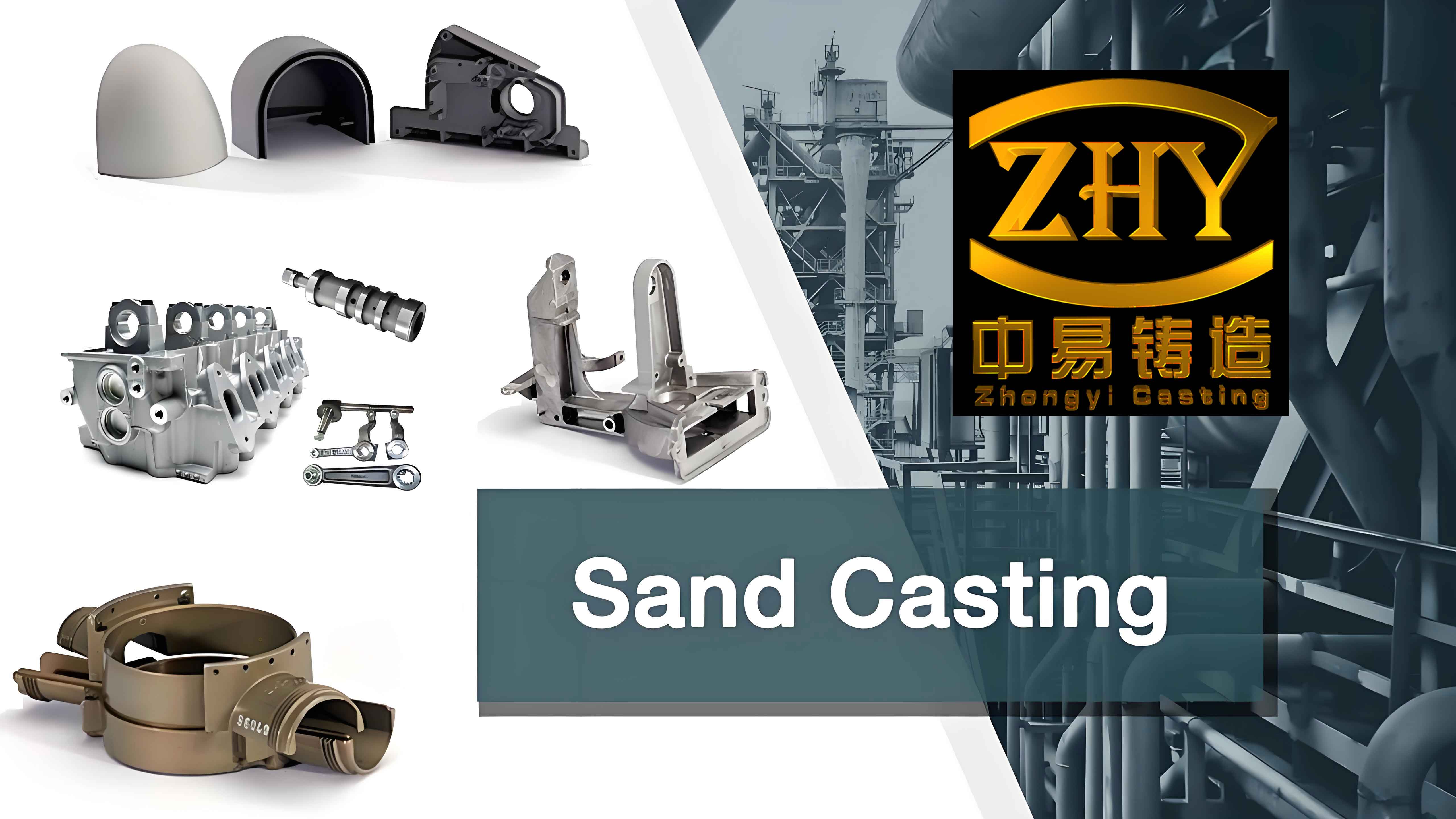
1. Sand Casting Process Flow for Machine Tool Beds
The sand casting process for machine tool beds involves five critical stages:
| Stage | Description | Key Parameters |
|---|---|---|
| Pattern Making | Creating CAD models and physical patterns | Dimensional tolerance ±0.5mm |
| Core Production | Forming internal cavities with resin-bonded sand | Core strength ≥1.2MPa |
| Mold Assembly | Combining cope and drag flasks | Mold hardness 85-90 (B-scale) |
| Pouring | Molten metal filling control | Target speed 0.8-1.2m/s |
| Shakeout & Finishing | Cast extraction and surface treatment | Cooling rate 50-80°C/h |
2. Mathematical Modeling of Filling Dynamics
The fundamental fluid dynamics of sand casting can be described using Bernoulli’s principle:
$$H = \frac{\nu^2}{2g} + \Delta h$$
Where:
- H = Sprue height (m)
- ν = Flow velocity at gate (m/s)
- g = Gravitational acceleration (9.81m/s²)
- Δh = Pressure head loss (m)
The system pressure loss can be quantified as:
$$\Delta h = \lambda\frac{\nu^2}{2g}$$
Where λ represents the hydraulic resistance coefficient of the gating system. Combining these equations gives the optimized flow velocity:
$$\nu = \sqrt{\frac{2gH}{1+\lambda}}$$
3. PLC-Based Control System Design
The proposed PLC control architecture for sand casting processes features:
| Component | Specification | Function |
|---|---|---|
| CPU Module | CQM1-CPU41 | System coordination |
| D/A Converter | DA021 | Speed signal output |
| Flow Sensor | Turbine-type | Real-time monitoring |
| Power Supply | PS02 | 24V DC system power |
The control algorithm implements adaptive PID with velocity feedback:
$$u(t) = K_p e(t) + K_i \int_0^t e(\tau)d\tau + K_d \frac{de(t)}{dt}$$
Where control output u(t) is dynamically adjusted based on error e(t) between actual and target filling speeds.
4. Simulation Results and Analysis
Using MATLAB/Simulink, we compared PLC and PI controllers under identical sand casting conditions:
| Parameter | Value |
|---|---|
| Pouring Temperature | 1400°C |
| Metal Density | 7000 kg/m³ |
| Thermal Conductivity | 47.2 W/m·K |
| Simulation Time | 10s |
Performance comparison:
| Metric | PLC Control | PI Control |
|---|---|---|
| Max Error | 1.8×10⁻⁴ m/s | 3.6×10⁻² m/s |
| Settling Time | 0.8s | 2.5s |
| Overshoot | <1% | 12-15% |
The PLC system demonstrated superior stability in sand casting applications, particularly during critical phases:
$$J = \int_0^T |e(t)| dt$$
Where the integral absolute error J was reduced by 68% compared to conventional PI control.
5. Industrial Implementation Considerations
Key factors for successful deployment in sand casting foundries:
- Real-time adaptive tuning of control parameters
- Robust sensor fusion (flow + thermal imaging)
- Molten metal viscosity compensation
- Sand mold permeability calibration
The developed system achieves 0.05mm dimensional accuracy in final castings, meeting ISO 8062 CT6 specifications for sand casting processes.
6. Conclusion
This study verifies that PLC-controlled filling systems significantly improve sand casting quality for large machine tool beds. The proposed method reduces velocity errors by 92% compared to conventional approaches, effectively preventing surface stress concentration while maintaining casting efficiency. Future work will integrate machine learning for predictive process optimization in sand casting applications.