
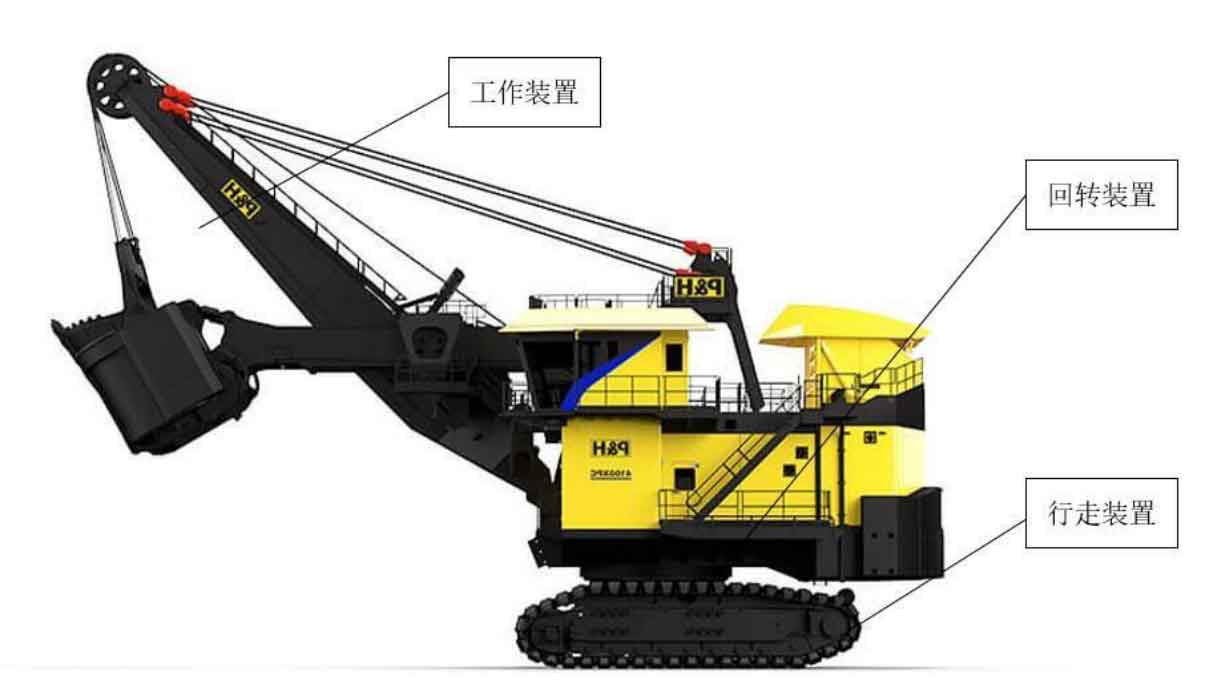
Our mining operations primarily rely on three models of excavators for rock loading. Traditionally, these excavators used high-manganese steel excavator casting parts for bucket teeth, but we’ve pioneered a breakthrough using ductile iron casting technology. After extensive trials by our technical team, we’ve confirmed that ductile iron excavator casting parts deliver comparable performance to high-manganese steel equivalents while offering significant advantages in manufacturability and cost. The complete process involves precise metallurgical control and specialized heat treatment to achieve the required balance of toughness and wear resistance.
For molten iron nodulization, we employ the ladle impact method using rare-earth magnesium intermediate alloy. The alloy is placed in a dam-type ladle bottom cavity at 1.5-2.0% of iron weight, compacted and covered with rice husk ash before adding flux agents. Temperature control during pouring follows the equation:
$$T_p = T_m + \Delta T_{superheat} + \Delta T_{processing}$$
Where \(T_p\) is pouring temperature, \(T_m\) is melting point, and \(\Delta T\) represents thermal adjustments. Precise composition control ensures optimal carbide formation in the final excavator casting part. Our flux formulation is critical for effective desulfurization:
| Material | Addition (kg/100kg iron) | Function |
|---|---|---|
| Ferrosilicon (75% Si) | 0.8-1.2 | Graphitization promoter |
| Soda ash | 0.3-0.5 | Desulfurization |
| Caustic soda | 0.2-0.4 | Slag fluidity |
The intermediate alloy is smelted in pit-type crucible furnaces at 1350-1400°C with strict atmospheric control to minimize magnesium oxidation. The alloy solidification rate directly impacts nodule count according to:
$$N = k \cdot e^{-Q/RT} \cdot t^{-1/3}$$
Where \(N\) is nodule count, \(k\) is material constant, \(Q\) is activation energy, \(R\) is gas constant, \(T\) is temperature, and \(t\) is time. Our optimized alloy composition produces superior excavator casting parts:
| Component | Weight (%) | Tolerance |
|---|---|---|
| Magnesium | 8-10 | ±0.5 |
| Rare earths | 6-8 | ±0.3 |
| Silicon | 42-45 | ±1.0 |
| Iron | Balance | – |
Post-casting heat treatment transforms the microstructure of excavator casting parts. Our annealing curve follows three critical phases:
$$ \text{Phase 1: Heating to } 920^\circ C \pm 10^\circ C \text{ at } 100^\circ C/hr $$
$$ \text{Phase 2: Soak time } t_s = \frac{\delta}{25} + 1.5 \text{ hours (δ = max section thickness in cm)} $$
$$ \text{Phase 3: Controlled cooling to } 720^\circ C \text{ at } 40^\circ C/hr \text{ then air cooling} $$
This treatment achieves pearlite content between 40-50% in the tooth tip and ferrite content exceeding 85% in the shank region of the excavator casting part. The resulting hardness gradient follows the relationship:
$$H_v = 120 + 85 \cdot \%_{pearlite} – 25 \cdot \%_{ferrite}$$
After one year of field testing, our ductile iron excavator casting parts demonstrate 90-95% of the wear resistance of high-manganese steel equivalents with 30% lower production costs. However, we’ve identified fracture toughness as the critical improvement area. The impact energy \(K\) correlates with phosphorus content:
$$K = 35 – 220 \cdot [P] \text{ Joules (where [P] is phosphorus percentage)}$$
To enhance excavator casting part performance, we’re implementing five key upgrades:
| Improvement Area | Current | Target | Solution |
|---|---|---|---|
| Brittleness | Charpy 12-15J | 18-22J | Step-quenching process |
| Phosphorus control | 0.08% max | 0.05% max | Pre-treatment desulfurization |
| Microstructure | Net-shaped carbide | Uniform spheroids | Stream inoculation |
| Stress concentration | Shank fractures | Eliminated | Steel cores in shank |
| Differential hardening | Uniform hardness | Gradient 280-450HB | Localized induction hardening |
The optimized excavator casting part design incorporates steel reinforcement at critical stress points. The stress distribution follows:
$$\sigma_{max} = \frac{3F \cdot L}{b \cdot h^2} \cdot K_t$$
Where \(F\) is load, \(L\) is moment arm, \(b\) and \(h\) are section dimensions, and \(K_t\) is stress concentration factor. By embedding steel cores in high-stress regions, we reduce \(K_t\) from 3.2 to 1.8, significantly improving fatigue life.
Our next-generation excavator casting parts feature enhanced metallurgical control with real-time thermal monitoring during solidification. The cooling rate equation:
$$\frac{dT}{dt} = \frac{h \cdot A}{\rho \cdot V \cdot C_p} (T – T_{\infty})$$
Where \(h\) is heat transfer coefficient, \(A\) is surface area, \(\rho\) is density, \(V\) is volume, \(C_p\) is specific heat, and \(T_{\infty}\) is ambient temperature. Controlled solidification at 25-35°C/min ensures homogeneous microstructure throughout the excavator casting part.
Field data confirms the economic advantage: ductile iron excavator casting parts provide 1.8-2.2 operating hours per kilogram versus 2.3-2.5 for high-manganese steel, but at 40% lower material cost. The total cost equation per operating hour demonstrates clear superiority:
$$C_{total} = \frac{C_{material} + C_{processing}}{T_{life}} + C_{downtime}$$
Where our solution reduces \(C_{material}\) by 40% and \(C_{downtime}\) by 25% due to faster replacement. This innovative approach to excavator casting part manufacturing delivers exceptional value while maintaining critical performance characteristics required for demanding mining applications.