
In this comprehensive review, we explore the latest developments in casting processes and numerical simulation techniques for high-manganese steel liners, which are critical components in mining and construction industries due to their exceptional wear resistance and impact toughness. The microstructure and mechanical properties of these liners are highly dependent on heat transfer and solidification behaviors during casting, making process optimization essential. We focus on four primary casting methods—sand casting, metal mold casting, lost foam casting, and V-process casting—while delving into the application of numerical simulations, such as the discrete element method (DEM) and finite element method (FEM), to enhance quality control and performance. By integrating experimental insights with computational models, we aim to provide a detailed analysis of how these technologies can be combined to overcome common defects like shrinkage porosity and improve overall liner durability. Throughout this discussion, we emphasize the role of sand casting as a foundational technique, comparing it with advanced methods to highlight its relevance and limitations in modern manufacturing contexts.
The significance of high-manganese steel liners stems from their ability to withstand extreme abrasive and impact conditions in equipment like crushers and ball mills. However, challenges such as shrinkage cavities, coarse microstructures, and uneven wear often arise from suboptimal casting parameters. We begin by examining traditional and evolving casting processes, with a particular focus on sand casting, which remains widely used due to its versatility and cost-effectiveness. For instance, in sand casting, the design of gating systems and risers is crucial for achieving directional solidification and minimizing defects. Empirical studies have shown that the solidification time \( t \) can be estimated using Chvorinov’s rule: $$ t = B \left( \frac{V}{A} \right)^2 $$ where \( V \) is the volume of the casting, \( A \) is the surface area, and \( B \) is a mold constant dependent on the sand properties. This formula underscores the importance of geometric considerations in sand casting to control cooling rates and reduce imperfections like porosity.
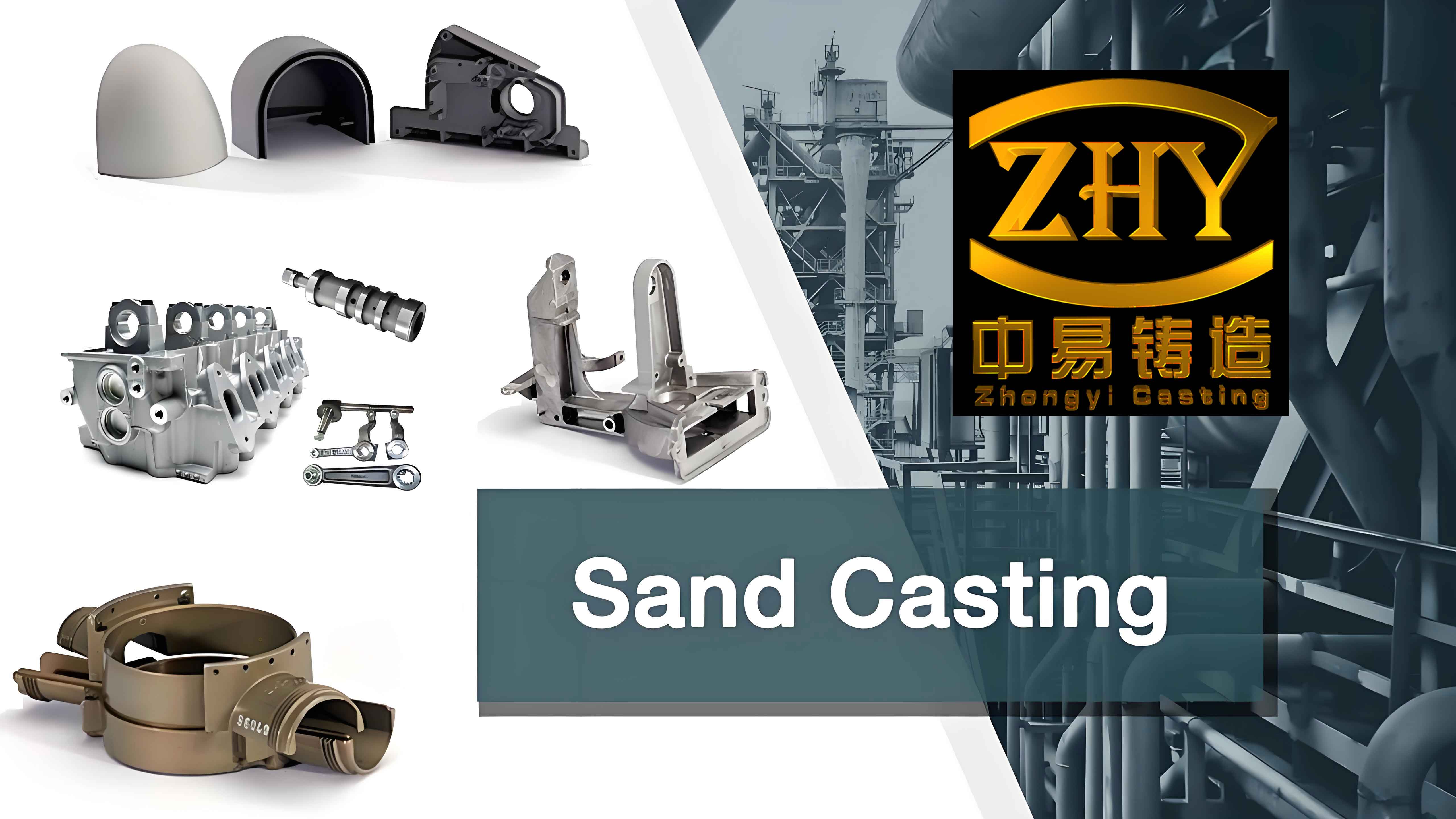
Sand casting has been extensively optimized through riser design and parameter adjustments. For example, researchers have demonstrated that integrating risers directly with the gating system—a approach known as integrated gating-riser design—can enhance feeding efficiency and eliminate shrinkage defects in high-manganese steel liners. This is particularly relevant in sand casting, where the mold material, such as magnesium olivine sand, can provide chilling effects to refine grain structures. The table below summarizes key parameters and their impact on sand casting outcomes for high-manganese steel liners, illustrating how variables like pouring temperature and riser size influence mechanical properties and defect formation.
| Parameter | Typical Range | Effect on Microstructure/Defects | Optimal Value for Sand Casting |
|---|---|---|---|
| Pouring Temperature | 1390–1450°C | Higher temperatures reduce grain size but increase risk of hot tearing; lower temperatures may cause incomplete filling. | 1410°C |
| Riser Size | 1.5× hot spot diameter | Larger risers improve feeding but reduce yield; smaller risers lead to shrinkage porosity. | Based on thermal modulus calculations |
| Mold Material | Silica sand, magnesium olivine | Chilling effects refine grains; high refractoriness reduces burn-on defects. | Magnesium olivine for enhanced cooling |
| Cooling Rate | 0.5–5°C/s | Faster rates suppress carbide precipitation; slower rates increase risk of coarse structures. | Controlled via external chills |
In sand casting, the interplay between process parameters and material properties can be modeled using heat transfer equations. For instance, the temperature distribution during solidification follows the heat conduction equation: $$ \frac{\partial T}{\partial t} = \alpha \nabla^2 T $$ where \( T \) is temperature, \( t \) is time, and \( \alpha \) is the thermal diffusivity of the sand mold. This equation helps predict thermal gradients that influence defect formation, such as shrinkage cavities in sand cast liners. Moreover, the use of coatings in sand casting—such as zircon-based refractories—can mitigate sticking and improve surface finish by reducing the interfacial heat transfer coefficient between the molten metal and the sand mold. Our analysis shows that sand casting, when optimized with numerical simulations, achieves a balance between cost and quality, though it may lag behind other methods in dimensional accuracy for complex geometries.
Transitioning to metal mold casting, we observe its advantages in producing high-precision liners with superior surface quality. Unlike sand casting, metal molds offer rapid cooling rates, which can suppress the formation of undesirable carbides in high-manganese steel. The heat flux \( q \) at the mold-metal interface is governed by: $$ q = h (T_m – T_w) $$ where \( h \) is the interfacial heat transfer coefficient, \( T_m \) is the metal temperature, and \( T_w \) is the mold wall temperature. In sand casting, \( h \) values are typically lower due to the insulating nature of sand, leading to slower solidification; however, metal molds exhibit higher \( h \) values, promoting finer microstructures. For example, copper alloy molds with high thermal conductivity (up to 300 W/m·K) can achieve cooling rates that eliminate the need for subsequent heat treatment, a significant cost-saving measure compared to traditional sand casting. The table below contrasts metal mold casting with sand casting, highlighting how the former reduces process steps while enhancing mechanical properties.
| Aspect | Metal Mold Casting | Sand Casting |
|---|---|---|
| Cooling Rate | High (5–20°C/s) | Low (0.5–5°C/s) |
| Microstructure | Fine-grained, reduced carbides | Coarser, potential for carbide networks |
| Surface Roughness | Low (Ra 3.2–6.3 μm) | Moderate (Ra 6.3–12.5 μm) |
| Process Cost | Higher initial tooling, lower per part | Lower initial cost, higher labor intensity |
| Defect Tendency | Lower shrinkage, higher thermal stress | Higher shrinkage porosity, less stress |
Lost foam casting presents an alternative for manufacturing complex liner geometries without the need for cores or parting lines, addressing some limitations of sand casting. In this process, the foam pattern vaporizes upon contact with molten metal, and the resulting gases must be managed to avoid defects. The filling process in lost foam casting can be described by the Bernoulli equation for fluid flow: $$ P + \frac{1}{2} \rho v^2 + \rho g h = \text{constant} $$ where \( P \) is pressure, \( \rho \) is density, \( v \) is velocity, and \( h \) is height. This highlights the importance of gating design to ensure smooth filling and minimize turbulence, which is equally critical in sand casting. For high-manganese steel liners, optimal pouring temperatures in lost foam casting range from 1480–1500°C, slightly higher than in sand casting due to the energy absorbed by foam decomposition. Coatings play a vital role here; zircon-based coatings applied via brushing or flowing techniques achieve thicknesses of 0.2–0.4 mm, providing adequate gas permeability and surface protection—a concept that parallels the use of coatings in sand casting to enhance mold stability.
V-process casting, or vacuum sealed molding, utilizes a thin plastic film and vacuum pressure to form the mold, resulting in excellent surface finish and reduced environmental impact compared to conventional sand casting. The vacuum level \( P_v \) influences mold rigidity and can be expressed as: $$ P_v = P_a – P_m $$ where \( P_a \) is atmospheric pressure and \( P_m \) is the mold cavity pressure. This method minimizes gas-related defects, such as porosity, which are more prevalent in sand casting due to moisture and binder decomposition. In V-process casting, pouring temperatures around 1510°C are ideal to balance mold integrity and filling capability, whereas sand casting often operates at 1410°C to prevent sand burning. The table below summarizes the key differences in process parameters between V-process casting and sand casting, emphasizing how vacuum assistance in V-process reduces defect rates while maintaining the versatility of sand-based methods.
| Parameter | V-Process Casting | Sand Casting |
|---|---|---|
| Pouring Temperature | 1500–1550°C | 1390–1450°C |
| Mold Material | Dry sand with vacuum film | Bonded sand (e.g., silica, olivine) |
| Surface Roughness | Ra 3.2–6.3 μm | Ra 6.3–12.5 μm |
| Defect Incidence | Low (e.g., minimal gas porosity) | Moderate (e.g., shrinkage, inclusions) |
| Environmental Impact | Reduced binder usage | Higher waste sand generation |
Numerical simulations have become indispensable in optimizing these casting processes, particularly through DEM and FEM. In DEM, the motion and interaction of particles—such as ore and grinding media with liners—are simulated to analyze wear mechanisms. The contact force between particles can be modeled using Hertzian contact theory: $$ F = \frac{4}{3} E^* \sqrt{R^*} \delta^{3/2} $$ where \( F \) is the force, \( E^* \) is the effective elastic modulus, \( R^* \) is the effective radius, and \( \delta \) is the overlap. This approach has been applied to redesign liner profiles, such as adding secondary lifting bars to wave-shaped liners, which reduces wear by distributing stress more evenly—a concept that can be validated against experimental data from sand cast prototypes. For instance, DEM simulations show that optimizing the height and angle of lifting bars in liners can increase service life by up to 20%, demonstrating how computational tools complement traditional sand casting trials.
FEM, on the other hand, focuses on continuum-level analyses of temperature, stress, and fluid flow during casting. The energy equation for solidification in FEM is given by: $$ \rho c_p \frac{\partial T}{\partial t} = \nabla \cdot (k \nabla T) + L \frac{\partial f_s}{\partial t} $$ where \( \rho \) is density, \( c_p \) is specific heat, \( k \) is thermal conductivity, \( L \) is latent heat, and \( f_s \) is the solid fraction. This equation is crucial for predicting shrinkage defects in sand casting, as it accounts for phase change effects. In one case study, FEM simulations using ProCAST software optimized the gating system for a large L-shaped liner, reducing porosity from 5% to below 1% and increasing yield from 65% to 85%—a significant improvement over initial sand casting designs. The integration of FEM with inverse methods, such as determining interfacial heat transfer coefficients from thermocouple data, has further refined sand casting processes by providing accurate boundary conditions for simulations.
To quantify the benefits of numerical simulations in sand casting, we present a table comparing key performance metrics before and after optimization for high-manganese steel liners. This highlights how DEM and FEM address specific challenges in sand casting, such as uneven wear and solidification defects.
| Metric | Before Optimization (Traditional Sand Casting) | After Optimization (Simulation-Assisted Sand Casting) | Improvement |
|---|---|---|---|
| Shrinkage Porosity | 5–10% volume | <1% volume | 80% reduction |
| Grain Size | 100–150 μm | 50–80 μm | 40% refinement |
| Wear Rate | 2.0–2.5 mm/year | 1.5–1.8 mm/year | 25% decrease |
| Process Yield | 60–70% | 80–85% | 20% increase |
| Simulation Cost | N/A (trial-and-error) | 10–15% of total project | Cost-effective long-term |
In conclusion, the evolution of high-manganese steel liner manufacturing relies on a synergistic approach that combines advanced casting methods with robust numerical simulations. While sand casting remains a cornerstone due to its adaptability and low cost, it benefits greatly from integration with DEM and FEM to mitigate inherent limitations like defect formation and coarse microstructures. For example, in sand casting, simulations enable precise control of pouring temperatures and riser designs, as described by solidification models, leading to liners with enhanced toughness and wear resistance. Looking ahead, future research should focus on multi-scale modeling that bridges particle-level interactions in DEM with continuum-level analyses in FEM, particularly for sand casting applications. Additionally, the development of eco-friendly binders and coatings for sand casting could reduce environmental impacts while maintaining performance. Ultimately, the effective marriage of simulation technologies with practical casting expertise—especially in sand casting—will drive innovations in liner quality, efficiency, and sustainability, paving the way for next-generation solutions in heavy-industry applications.
We have discussed how parameters such as pouring temperature, mold design, and cooling rates influence the outcomes in sand casting and other methods, and how numerical simulations provide a predictive framework for optimization. The repeated emphasis on sand casting throughout this review underscores its enduring relevance, even as newer techniques emerge. By leveraging equations and tables to summarize complex relationships, we aim to offer a resource that aids researchers and engineers in selecting and refining casting processes for high-manganese steel liners, with sand casting serving as a benchmark for comparison and innovation.