
The relentless pursuit of higher efficiency and performance in aerospace propulsion systems necessitates engine components capable of withstanding increasingly severe thermal and mechanical loads. Hot-section components, such as turbine blades and structural frames, are particularly demanding. While alloys like K4169 have served reliably at temperatures around 650°C, the next generation of engines requires materials that can perform at approximately 800°C. K439B nickel-based superalloy, developed to meet this challenge, exhibits excellent high-temperature strength, oxidation resistance, and creep properties. The manufacturing of complex, thin-walled components from such advanced alloys predominantly relies on precision investment casting. This process allows for the creation of net-shape parts with intricate geometries, but the final microstructure—and consequently the mechanical properties—is highly sensitive to the thermal conditions during solidification. Predicting and controlling this microstructure is therefore critical. This work integrates numerical simulation, specifically a Finite Element (FE) and Cellular Automaton (CA) coupled model (CAFE), with experimental precision investment casting to investigate and validate the microstructure evolution of K439B alloy in a representative frame-shaped casting.
1. Introduction to Precision Investment Casting and Numerical Modeling
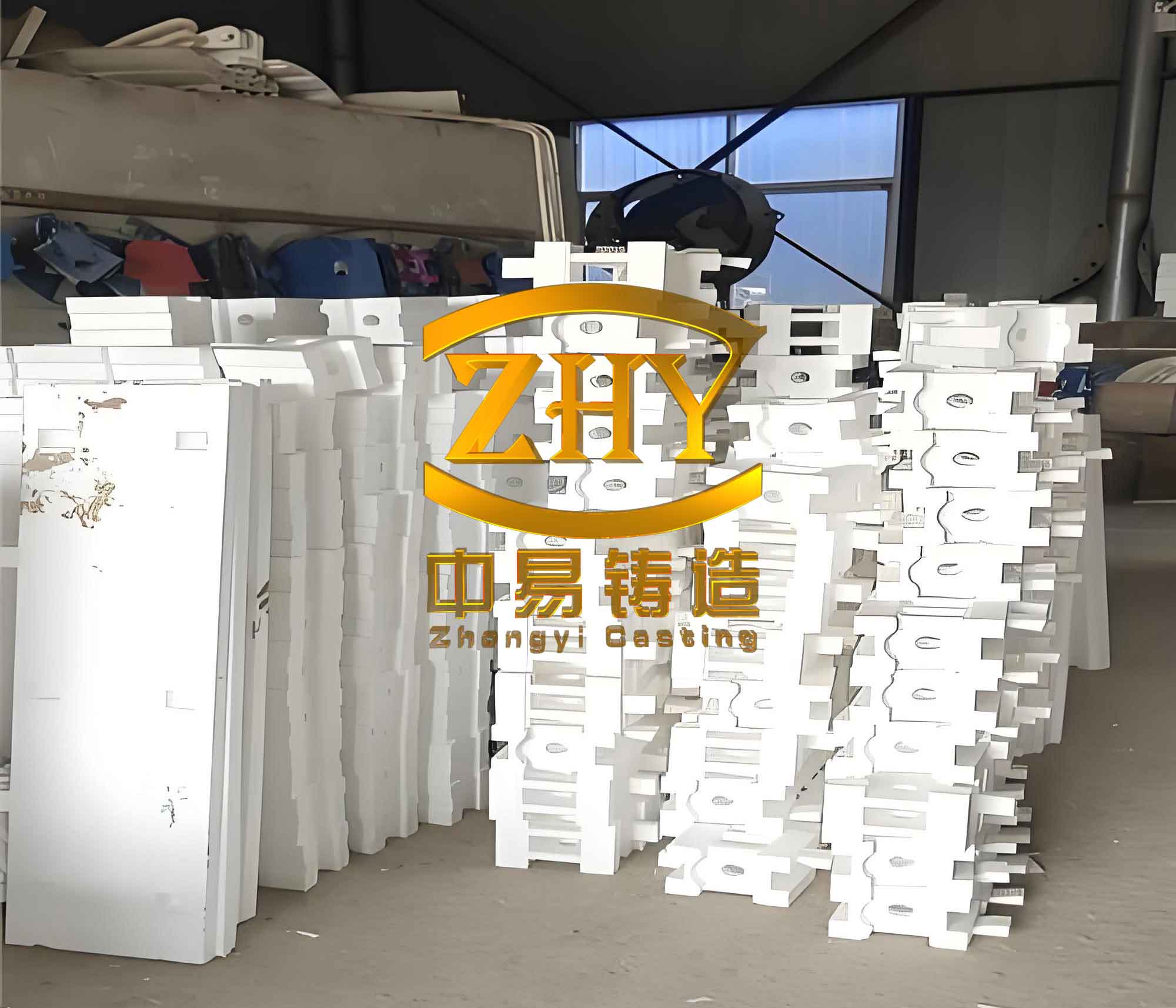
Precision investment casting, also known as the lost-wax process, is a cornerstone manufacturing technique for producing high-integrity superalloy components. The process begins with the fabrication of a wax pattern, which is assembled into a cluster, repeatedly dipped in ceramic slurry, and stuccoed with refractory materials to build a robust shell. The wax is then melted out, and the ceramic mold is fired at high temperature to achieve the necessary strength and stability. The superalloy is melted, often under vacuum, and poured into the preheated mold. Upon solidification and cooling, the ceramic shell is removed to reveal the final metal component.
The solidification microstructure, characterized by features like grain size, morphology (columnar vs. equiaxed), and secondary dendrite arm spacing (SDAS), dictates the component’s performance. Numerical simulation has become an indispensable tool for optimizing the precision investment casting process. Macroscopic simulations solve heat transfer equations to predict temperature fields, cooling rates, and solidification sequences. However, to predict microstructure, these macroscopic fields must be coupled with mesoscopic models of grain nucleation and growth. The CAFE method is particularly effective for this purpose. It uses the finite element method for macroscopic heat flow and the cellular automaton technique to simulate stochastic nucleation and deterministic dendritic growth at the scale of individual grains, providing a bridge between process parameters and final microstructure.
2. Methodology: Integrated Numerical and Experimental Approach
2.1 Geometric Model and Macroscopic FE Simulation
The study focuses on a frame-shaped casting, featuring sections with varying wall thicknesses. Two specific regions of interest (R1 and R2) were selected for detailed microstructural analysis. R1 is located near a thin-section transition (3 mm diameter), while R2 is situated near a thicker section. A 3D FE model of the casting, ceramic shell, and investment flask was created. The mesh was refined in critical areas, resulting in a model with approximately 280,000 volume elements.
The governing equation for macroscopic heat transfer, incorporating the release of latent heat (\(L\)) during solidification, is based on the Fourier equation and is often handled using the enthalpy method:
$$
\rho \frac{\partial H}{\partial t} = \lambda \left( \frac{\partial^2 T}{\partial x^2} + \frac{\partial^2 T}{\partial y^2} + \frac{\partial^2 T}{\partial z^2} \right)
$$
where \(H\) is the enthalpy, \(\rho\) is density, \(\lambda\) is thermal conductivity, and \(T\) is temperature. The enthalpy accounts for both sensible heat and latent heat:
$$
H = \int_{0}^{T} C_p \, dT + (1 – f_s)L
$$
where \(C_p\) is specific heat and \(f_s\) is the solid fraction.
Key process parameters for the precision investment casting simulation are summarized in Table 1.
| Parameter | Value / Specification |
|---|---|
| Alloy | K439B Nickel-based Superalloy |
| Pouring Temperature | 1560 °C |
| Mold Material | Mullite-Fused Silica Composite |
| Mold Preheating Temperature | 850 °C |
| Interface Heat Transfer (Casting-Mold) | Temperature-dependent curve |
| Mold-Flask HTC | 100 W·m⁻²·K⁻¹ |
| Flask-Environment HTC | 10 W·m⁻²·K⁻¹ |
2.2 CAFE Microstructure Model Parameters
The accuracy of the CAFE model hinges on precise material-specific parameters. These were determined through a combination of experimental measurement, thermodynamic calculation, and literature review, tailored for the precision investment casting conditions of K439B.
Thermodynamic Properties: Differential Scanning Calorimetry (DSC) at 20°C/min provided baseline solidus and liquidus temperatures. For the actual cooling rates (50-100°C/min) relevant to precision investment casting, the CALPHAD (CALculation of PHAse Diagrams) method was used with a back-diffusion solidification model. Key results are shown in Table 2.
| Parameter | Value | Notes |
|---|---|---|
| Liquidus Temperature (TL) | ~1347 °C | From DSC |
| Solidus Temperature (TS) | ~1272 °C | From DSC |
| Effective TL (for simulation) | 1323 °C | CALPHAD at high cooling rate |
| Effective TS (for simulation) | 1123 °C | CALPHAD at high cooling rate |
| Gibbs-Thomson Coefficient (Γ) | 2.0 × 10⁻⁷ m·K | From MD simulation data for Ni-based systems |
Growth Kinetics: The Kurz-Giovanola-Trivedi (KGT) model, extended for multicomponent alloys using the equivalent binary alloy approach, describes dendrite tip growth velocity (\(v\)) as a function of constitutional undercooling (\(\Delta T\)):
$$
v = a_2 \Delta T^2 + a_3 \Delta T^3
$$
The coefficients \(a_2\) and \(a_3\) were calculated from the CALPHAD-derived liquidus slope (\(m_i\)), partition coefficient (\(k_i\)), and diffusion coefficient (\(D_{l,i}\)) for each element \(i\). The equivalent parameters were computed as:
$$
m = \frac{\sum (m_i c_i)}{c_0}, \quad k = \frac{\sum (m_i c_i k_i)}{m c_0}, \quad c_0 = \sum c_i
$$
where \(c_i\) is the composition of element \(i\). This yielded \(a_2 = 1.420912 \times 10^{-7} \, \text{m·s}^{-1}\text{·K}^{-3}\) and \(a_3 = 9.528034 \times 10^{-7} \, \text{m·s}^{-1}\text{·K}^{-3}\).
Nucleation Parameters: Nucleation is treated using a continuous Gaussian distribution model. The density of nuclei, \(n\), activated at a given undercooling, \(\Delta T\), is:
$$
\frac{dn}{d(\Delta T)} = \frac{n_{max}}{\sqrt{2\pi}\Delta T_{\sigma}} \exp\left(-\frac{(\Delta T – \Delta T_{max})^2}{2\Delta T_{\sigma}^2}\right)
$$
$$
n(\Delta T) = \int_{0}^{\Delta T} \frac{dn}{d(\Delta T’)} d(\Delta T’)
$$
Parameters for bulk (\(n_v\)) and surface (\(n_s\)) nucleation were initially estimated from literature for nickel-based superalloys and subsequently calibrated against preliminary experimental grain size data. The final parameters used for the two regions are listed in Table 3. The parameters differ between R1 and R2, reflecting their distinct thermal histories, which is a crucial aspect of modeling precision investment casting where conditions vary spatially.
| Parameter | Region R1 | Region R2 |
|---|---|---|
| Max. Volumetric Nuclei Density, \(n_{v,max}\) (m⁻³) | 1 × 10⁹ | 5 × 10⁹ |
| Mean Volumetric Undercooling, \(\Delta T_{v,max}\) (K) | 10 | 15 |
| Std. Dev. of Vol. Undercooling, \(\Delta T_{v,\sigma}\) (K) | 5 | 10 |
| Max. Surface Nuclei Density, \(n_{s,max}\) (m⁻²) | 1.16 × 10⁶ | 3.4 × 10⁶ |
2.3 Experimental Precision Investment Casting and Characterization
To validate the simulation, an actual precision investment casting experiment was conducted. A wax pattern of the frame was produced and assembled with a gating system. A ceramic shell was built using a silica sol binder with successive layers of mullite and alumina stucco. After dewaxing and high-temperature firing, the mold was preheated to 850°C. K439B alloy was melted in a vacuum induction furnace and poured at 1560°C. After solidification and cooling, the shell was removed.
Samples were sectioned from the R1 and R2 regions of the casting. They were prepared metallographically and etched to reveal dendrite morphology for SEM analysis. Electron Backscatter Diffraction (EBSD) was performed to obtain grain orientation maps and quantify grain size. The experimental SDAS was measured directly from SEM micrographs, and the grain size was statistically analyzed from EBSD data.
3. Results and Discussion
3.1 Macroscopic Simulation Results: Thermal Field Analysis
The FE simulation provided detailed insights into the thermal history during precision investment casting. A critical output is the spatial distribution of the average cooling rate, \(\langle L \rangle\), through the solidification interval:
$$
\langle L \rangle = \left| \frac{T_L – T_S}{t_{L} – t_{S}} \right|
$$
where \(t_L\) and \(t_S\) are the times when a location reaches the liquidus and solidus temperatures, respectively.
The simulation revealed a significant difference in thermal conditions between R1 and R2. Region R1, adjacent to the thinner section, exhibited a much higher average cooling rate of 11-13 °C/s. In contrast, Region R2, near the thicker section, cooled at a slower rate of 4-6 °C/s. This twofold difference is a direct consequence of the geometry-driven heat extraction in precision investment casting.
Furthermore, the temperature gradient (\(G\)) along the axial direction of the sections was analyzed. Region R2 was characterized by a steeper axial temperature gradient of approximately 14 °C/mm, promoting directional heat flow. Region R1 showed a milder axial gradient of about 5 °C/mm. This combination of a high cooling rate and a relatively low temperature gradient in R1 creates conditions theoretically favorable for increased nucleation and the development of equiaxed grains.
3.2 Microstructure Simulation and Experimental Validation
The CAFE model successfully simulated the as-cast microstructure evolution for the K439B precision investment casting.
Secondary Dendrite Arm Spacing (SDAS): SDAS is a key microstructural feature that influences mechanical properties and is strongly correlated with local cooling rate. The simulation predicted smaller SDAS values in the faster-cooling R1 region compared to R2. The quantitative comparison between simulated and experimentally measured SDAS is presented in Table 4. The agreement is excellent, with errors typically below 15%, validating the model’s ability to capture local solidification kinetics.
| Region & Section | Simulated SDAS (µm) | Experimental SDAS (µm) | Error |
|---|---|---|---|
| R1 – Cross Section | 21 | 18 | ~16.7% |
| R1 – Longitudinal Section | 22 | 22 | ~0% |
| R2 – Cross Section | 28 | 25 | ~12.0% |
| R2 – Longitudinal Section | 29 | 30 | ~-3.3% |
Grain Structure: The simulated grain structures for both regions are shown in figures depicting different solidification times. The morphology displays the classic outer columnar zone and inner equiaxed zone. A clear difference is observed: R1 exhibits a larger fraction of equiaxed grains and an overall finer grain structure, while R2 shows more extensive columnar growth and larger grains. This is a direct result of the thermal conditions: the higher cooling rate in R1 promotes a greater density of nuclei (as reflected in the higher \(n_{v,max}\) used in its model parameters), while the lower temperature gradient is less conducive to the sustained directional growth of columnar grains, favoring the Columnar-to-Equiaxed Transition (CET).
In areas of wall-thickness transition, the simulated columnar grains grow not only perpendicular to the wall but also show a tendency to align with the local thermal gradient, which can run parallel to the wall surface inward. This complex growth pattern is accurately captured by the CAFE model, demonstrating its utility for predicting microstructure in intricate precision investment casting geometries.
Grain Size Validation: The final validation step involved comparing the simulated average grain size with measurements from EBSD maps. Table 5 summarizes this comparison. The simulated grain sizes are in very close agreement with the experimental data, with errors consistently below 3%. This high level of accuracy confirms that the calibrated CAFE model, with its carefully determined nucleation and growth parameters, can reliably predict the grain structure outcomes of the K439B precision investment casting process.
| Region & Section | Simulated Grain Size (µm) | Experimental Grain Size (µm) | Error |
|---|---|---|---|
| R1 – Cross Section | 508 | 495 | 2.6% |
| R1 – Longitudinal Section | 422 | 414 | 1.9% |
| R2 – Cross Section | 600 | 590 | 1.7% |
| R2 – Longitudinal Section | 817 | 841 | 2.9% |
4. Implications for Precision Investment Casting Process Design
The successful integration of numerical simulation and experimental validation presented here provides a powerful framework for advancing precision investment casting of advanced superalloys like K439B. The key implications are:
1. Predictive Process Optimization: The validated CAFE model can now be used as a virtual testbed. Engineers can simulate the impact of various precision investment casting parameters—such as pouring temperature, mold preheat temperature, and mold material properties—on the final microstructure of a component without costly and time-consuming physical trials. The goal is to achieve a target microstructure (e.g., fine equiaxed grains for improved fatigue life or controlled columnar grains for creep resistance) by tailoring the thermal conditions.
2. Understanding Geometry-Induced Defects: The study clearly shows how geometric features (wall thickness transitions) create localized variations in cooling rate and temperature gradient. These variations are the root cause of heterogeneous microstructures, which can lead to inconsistent mechanical properties and potential failure origins. The model helps identify these critical zones early in the design phase.
3. Parameter Determination Methodology: The systematic approach to determining model parameters—combining DSC, CALPHAD, literature data, and iterative calibration with initial experimental results—establishes a robust methodology. This is particularly valuable for new alloys like K439B, where extensive material databases for simulation may not yet exist. This methodology ensures that simulations for precision investment casting are grounded in material-specific physics.
5. Conclusion
This work demonstrates a comprehensive and validated approach to modeling the microstructure evolution of K439B nickel-based superalloy during precision investment casting. By coupling macroscopic finite element analysis with a mesoscopic cellular automaton model (CAFE), and critically determining model parameters through experimental thermal analysis and thermodynamic calculations, the solidification process of a complex frame casting was accurately simulated.
The primary findings are:
1. The thermal conditions within a precision investment casting vary significantly with geometry. Region R1 (near a thin section) experienced a cooling rate approximately double that of Region R2 (near a thick section), while its axial temperature gradient was only about one-third as large.
2. These differences directly govern microstructure. R1 developed a finer secondary dendrite arm spacing, a smaller average grain size, and a larger fraction of equiaxed grains compared to R2.
3. The simulated microstructural features—including SDAS, grain morphology, and grain size—show excellent agreement with experimental measurements from an actual casting. This validates the accuracy of the numerical model and the parameter determination strategy.
This integrated simulation-experiment framework provides a powerful tool for predicting and controlling the microstructure in precision investment casting. It enables the virtual optimization of process parameters to achieve desired mechanical properties, reduces development time and cost, and enhances the reliability of high-performance components manufactured via precision investment casting for demanding aerospace applications.