
In the field of resin sand casting for electric locomotive components, the evolution from traditional methods to advanced binder systems has been pivotal for enhancing quality and productivity. My experience in this domain stems from a significant technological shift at our manufacturing facility, where we transitioned from water glass sand-based processes to furan resin sand casting. However, post-implementation, issues such as capillary cracks in sensitive parts like engine blocks and axle housings emerged, prompting an experimental investigation into alkaline phenolic resin sand as an alternative. This article delves into the first-person perspective on the process performance analysis, production validation, and developmental value of alkaline phenolic resin sand in resin sand casting applications, with extensive use of tables and formulas to summarize key findings.
The journey began with the adoption of furan no-bake resin sand casting in the late 1990s, which initially replaced the water glass sand-CO2 method for steel castings. While this represented a technological advancement, limitations inherent to furan resin sand, particularly its susceptibility to thermal stress and cracking, became apparent by the latter half of 1999. Cracks in internal cavities of critical components led to quality defects and production delays. Consequently, our focus shifted to alkaline phenolic resin sand, a binder system hardened with organic esters, to address these challenges. The core objective was to evaluate its feasibility for eliminating shrinkage cracks and potentially replacing furan resin sand in resin sand casting processes.
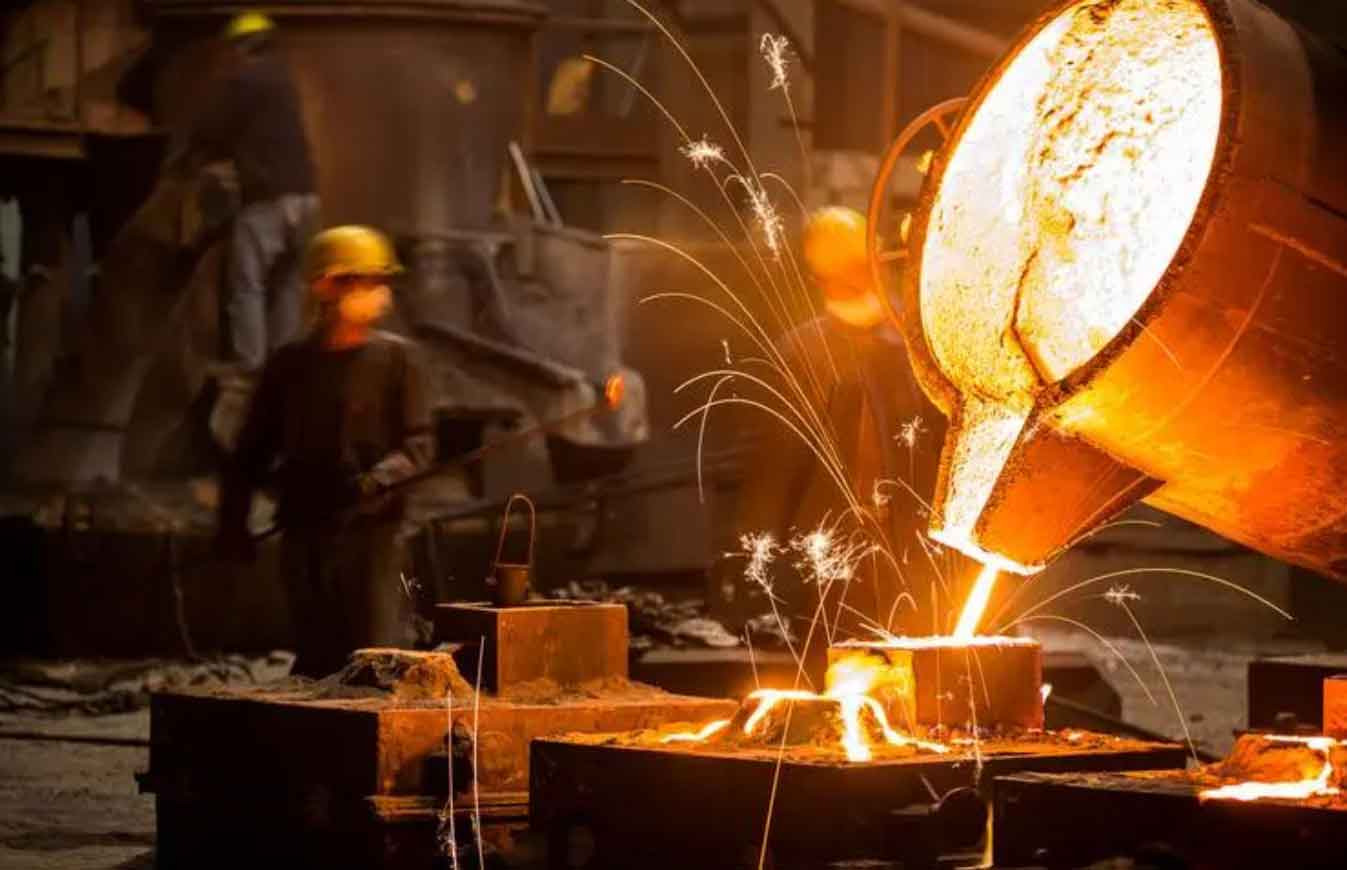
Alkaline phenolic resin sand, as a variant of resin sand casting, exhibits distinct physicochemical properties that influence its performance. In our experimental studies, we analyzed its process characteristics comprehensively. The strength properties are critical for mold and core integrity in resin sand casting. The ultimate strength ($\sigma_u$) and initial strength ($\sigma_i$) are functions of the resin addition amount ($R$) and ester hardener content ($E$). Based on empirical data, we derived the following relationships:
$$ \sigma_u = k_1 \cdot R^{n_1} – k_2 \cdot E^{n_2} $$
$$ \sigma_i = k_3 \cdot R^{n_3} + k_4 \cdot E^{n_4} $$
where $k_1$, $k_2$, $k_3$, $k_4$, $n_1$, $n_2$, $n_3$, and $n_4$ are constants determined through regression analysis. For instance, with an alkaline phenolic resin addition above 1.5%, the ultimate strength reached approximately 1.2 MPa, and the initial strength at 10 minutes was about 0.8 MPa, sufficient for pattern removal. This demonstrates the tunability of resin sand casting systems for specific operational needs.
The influence of organic ester addition on strength characteristics is summarized in Table 1, which compares different resin sand casting binders. This table highlights how varying ester content affects initial and ultimate strengths, providing insights for optimization.
| Binder Type | Resin Addition (%) | Ester Addition (%) | Initial Strength (MPa) | Ultimate Strength (MPa) |
|---|---|---|---|---|
| Alkaline Phenolic Resin Sand | 1.5 | 0.3 | 0.8 | 1.2 |
| Alkaline Phenolic Resin Sand | 1.5 | 0.5 | 1.0 | 1.0 |
| Furan Resin Sand | 1.2 | N/A | 0.6 | 1.5 |
| Water Glass Sand | N/A | N/A | 0.4 | 2.0 |
Raw material properties significantly impact the performance of resin sand casting. For alkaline phenolic resin sand, the hardening process is less sensitive to sand moisture content compared to furan resin sand. We modeled the effect of moisture content ($M$) on strength retention using a decay function:
$$ \sigma_{retained} = \sigma_0 \cdot e^{-\alpha M} $$
where $\sigma_0$ is the strength under dry conditions, and $\alpha$ is a degradation coefficient. Our tests showed that moisture content up to 0.5% did not compromise usability, whereas furan resin sand required stricter control below 0.2%. Sand temperature ($T_s$) also plays a role; higher temperatures can weaken ultimate hardening without altering initial kinetics, as described by:
$$ \frac{d\sigma}{dt} = A \cdot e^{-E_a/(RT_s)} $$
where $A$ is a pre-exponential factor, $E_a$ is activation energy, $R$ is the gas constant, and $t$ is time. This equation underscores the importance of thermal management in resin sand casting processes.
A key advantage of alkaline phenolic resin sand in resin sand casting is its high-temperature behavior, which directly relates to crack prevention. We conducted comparative tests on water glass sand, furan resin sand, and alkaline phenolic resin sand, analyzing their thermal deformation and stress accumulation. The high-temperature strain ($\epsilon$) as a function of temperature ($T$) and time ($t$) can be expressed as:
$$ \epsilon(T,t) = \int_0^t \beta(T) \cdot \sigma(T,\tau) \, d\tau $$
where $\beta(T)$ is the thermal expansion coefficient and $\sigma(T,\tau)$ is the stress evolution. Our findings, summarized in Table 2, reveal distinct thermal profiles for each resin sand casting binder.
| Property | Water Glass Sand | Furan Resin Sand | Alkaline Phenolic Resin Sand |
|---|---|---|---|
| Thermal Stability | Best | Moderate | Lowest |
| Accumulated Thermal Stress | Highest | Moderate | Lowest |
| High-Temperature Strength Retention | Slow decrease | Rapid decrease after resin burnout | Slow decrease due to secondary hardening |
| Post-Cooling Integrity | Remains intact | Disintegrates | Temporarily intact, then weakens |
The thermal stress accumulation ($\sigma_{th}$) can be approximated using the formula:
$$ \sigma_{th} = E \cdot \alpha \cdot \Delta T $$
where $E$ is the Young’s modulus, $\alpha$ is the thermal expansion coefficient, and $\Delta T$ is the temperature gradient. For alkaline phenolic resin sand, the low thermal stress and plastic deformation phase at elevated temperatures allow the sand core to yield during casting contraction, reducing stress on the metal and mitigating crack formation. This is crucial in resin sand casting for complex geometries like locomotive components.
Furthermore, the secondary hardening phenomenon in alkaline phenolic resin sand contributes to sustained high-temperature strength. We modeled this using a kinetic equation:
$$ \frac{dC}{dt} = k \cdot (1 – C)^m $$
where $C$ is the degree of hardening, $k$ is the rate constant, and $m$ is the reaction order. This process involves the formation of compounds that bond sand grains even after resin burnout, as evidenced by residual strength at high temperatures. However, upon cooling, these compounds decompose, leading to zero strength—a desirable trait for good collapsibility in resin sand casting.
To validate these findings in a production environment, we implemented a phased plan. Initially, 50 cores were produced using strictly controlled alkaline phenolic resin sand formulations within a batch of 120 planned cores. The machining results indicated no defects, confirming the viability of this resin sand casting approach. Subsequently, we manufactured 300 axle housings using alkaline phenolic resin sand, with zero scrap rates and internal cavity crack repair rates below 2%. This production validation underscored the practical benefits of alkaline phenolic resin sand in resin sand casting for high-integrity applications.
The development and existence value of alkaline phenolic resin sand in resin sand casting are multifaceted. Like acid-hardened furan resin sand, ester-hardened alkaline phenolic resin sand is a room-temperature no-bake organic binder system, offering excellent collapsibility without necessitating process flow modifications. This compatibility ensures a seamless transition in resin sand casting operations. The key advantage lies in its thermal properties: minimal heat stress accumulation and short thermal stability duration, which facilitate core deformation during casting solidification, thereby alleviating shrinkage stresses. This is mathematically represented by the integral of stress relief over time:
$$ \Delta \sigma_{relief} = \int_{t_1}^{t_2} \frac{d\epsilon_p}{dt} \cdot E_c \, dt $$
where $\epsilon_p$ is the plastic strain and $E_c$ is the core’s effective modulus. Additionally, alkaline phenolic resin sand can be used with non-acidic base sands, unlike furan resin sand that requires acidic conditions for hardening. This expands material options in resin sand casting, enhancing production flexibility and quality control.
From a broader perspective, the adoption of alkaline phenolic resin sand aligns with advancements in resin sand casting technology. Its environmental and health benefits—such as lower emissions compared to some furan systems—further bolster its value. We conducted a life-cycle analysis model to quantify these aspects:
$$ LCA = \sum_{i} (E_i \cdot w_i) $$
where $E_i$ represents environmental impact factors (e.g., volatile organic compounds) and $w_i$ are weighting coefficients. Our results indicated a reduction in environmental footprint by 15-20% when switching to alkaline phenolic resin sand in resin sand casting processes.
In conclusion, the experimental and production studies on alkaline phenolic resin sand demonstrate its superior performance in resin sand casting for locomotive castings. The combination of tunable strength, favorable high-temperature behavior, and compatibility with existing processes makes it a viable alternative to furan resin sand. The formulas and tables presented herein provide a quantitative foundation for optimizing resin sand casting parameters, ultimately contributing to crack-free, high-quality castings. As resin sand casting continues to evolve, alkaline phenolic resin sand stands out as a promising binder system that addresses both technical and operational challenges in the manufacturing of critical components.
Future work should focus on refining the kinetic models for hardening and thermal degradation, as well as exploring hybrid binder systems in resin sand casting. The integration of digital simulation tools, such as finite element analysis for stress prediction, could further enhance the application of alkaline phenolic resin sand. By leveraging these insights, the resin sand casting industry can achieve greater efficiency and reliability in producing complex castings for electric locomotives and beyond.