
In my extensive experience within the foundry industry, addressing defects such as porosity in casting and core shift remains a paramount challenge, especially for critical components like torque tube arms used in level measurement instruments. These defects not only compromise the structural integrity and pressure-bearing capacity of castings but also lead to significant economic losses due to scrap and rework. This article delves into a comprehensive case study where I, leveraging advanced simulation tools, investigated the root causes of gas porosity and core floating in a thick-walled ductile iron casting. Through a first-person narrative, I will detail the journey from problem identification to solution validation, emphasizing the role of numerical simulation in modern foundry practices. The focus will be on elucidating the mechanisms behind porosity in casting and presenting data-driven strategies for its prevention.
The component under investigation is a torque tube arm for a float-type level transmitter. Its design features a complex internal channel with varying diameters, critical for precise magnetic coupling. The casting material is ASTM A126 Class B gray iron, with a nominal composition as summarized in Table 1. The key challenge lies in achieving a consistent minimum wall thickness of 11.2 mm throughout the elongated section while ensuring sound internal quality free from defects, particularly porosity in casting.
| Element | C | Si | Mn | P | S |
|---|---|---|---|---|---|
| Content | 3.2-3.5 | 1.6-2.0 | 0.7-0.9 | ≤0.15 | ≤0.12 |
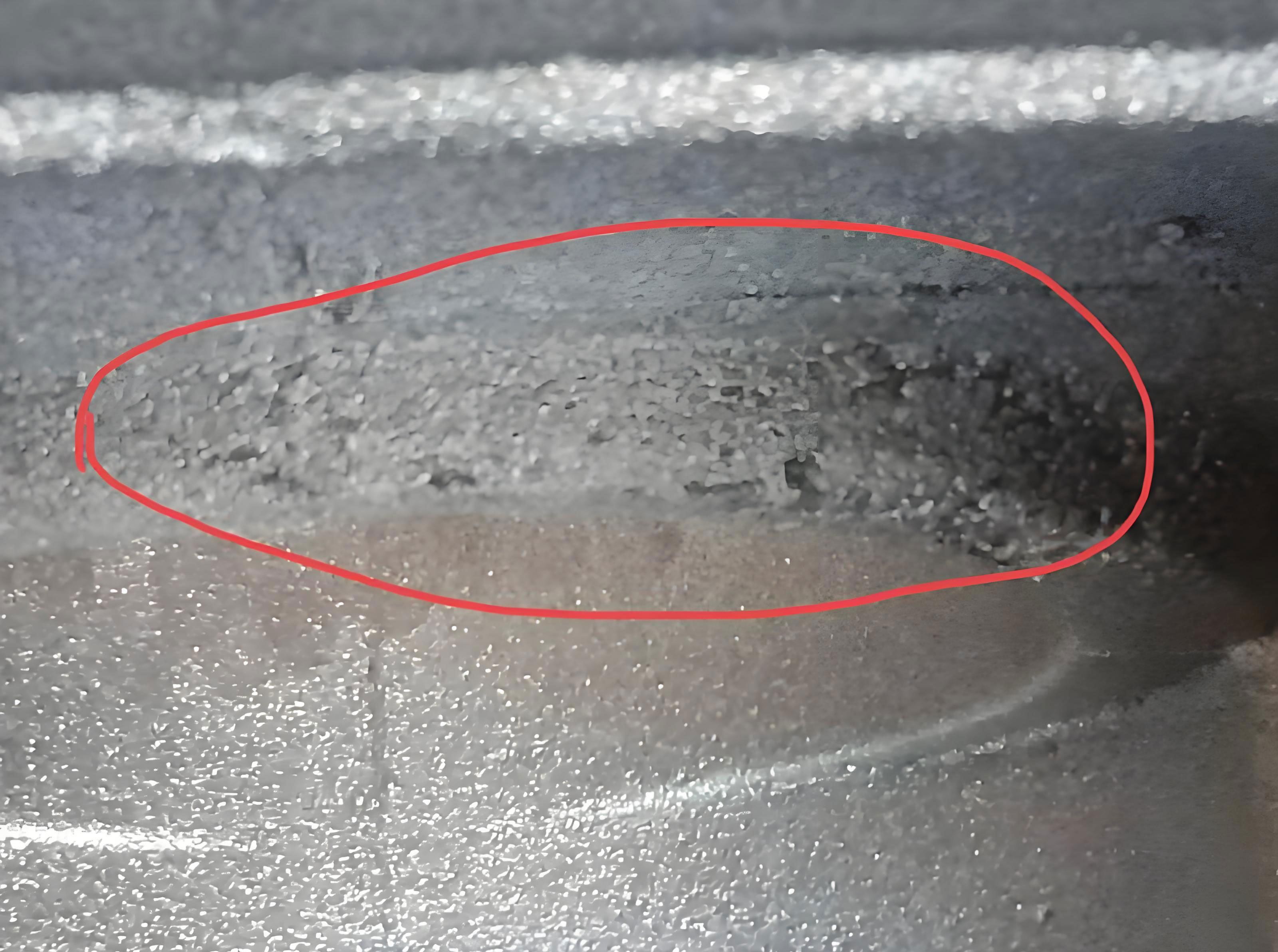
The initial casting process utilized 3D-printed furan resin sand molds and cores. The gating system was a semi-choked design with a ratio of sprue:runner:ingate cross-sectional areas of 1:0.5:0.7. A 20 PPI foam ceramic filter was placed at the sprue base. To simplify assembly, the core was printed integrally with the drag half of the mold. Riser necks were placed near the flanges, and a chilling plate was used. Despite these measures, the initial production batches revealed two critical defects: severe core shift leading to wall thickness violation and subsurface gas porosity defects, primarily identified via radiographic testing as elongated, dark shadows indicative of porosity in casting.
The core shift, or “core floating,” resulted in the upward displacement of the sand core during metal filling and solidification. This was attributed to the reduction in core strength at elevated temperatures, failing to counteract the metallostatic pressure and buoyancy forces. The wall thickness in the upper section was significantly reduced below the specification. Concurrently, radiographic inspection revealed clusters of gas pores, rated as severity level A3, located predominantly in the upper section of the tube wall near the ingate areas. These defects were classic examples of entrapped air porosity in casting, likely exacerbated by turbulent metal flow.
To diagnose these issues, I employed MAGMASOFT® simulation software, a powerful tool for visualizing filling, solidification, and stress phenomena. The first step was to analyze the filling pattern. The simulation of the original gating system revealed a critical flaw. The metal velocity at the ingates exceeded 1.3 m/s, creating severe turbulence as the metal entered the cavity. This high velocity directly impinged on the core and promoted air entrainment. The risk of porosity in casting due to entrapped air was quantified using the “Max Air Pressure” criterion. The simulation showed localized air pressure exceeding 1200 mbar in the upper tube regions near the ingates, precisely where the radiographic defects were found. This correlation confirmed that the ingate design was a primary driver for this type of porosity in casting.
The relationship between filling velocity and air entrapment can be conceptually described by Bernoulli’s principle and the dynamics of a free surface flow. The pressure drop associated with high-velocity streams can draw air into the liquid. A simplified model for the critical velocity for air entrainment can be related to the surface tension and density of the molten metal. While the full Navier-Stokes equations govern the flow, a key indicator is the Reynolds number, $$Re = \frac{\rho v D}{\mu}$$, where $\rho$ is density, $v$ is velocity, $D$ is hydraulic diameter, and $\mu$ is dynamic viscosity. A high Re indicates turbulent flow, which promotes air entrainment and subsequent porosity in casting.
The second phase of simulation involved core stress analysis, a relatively advanced module that models the mechanical behavior of the sand core under thermal and mechanical loads. I defined two observation points: Point 1 near the ingate and Point 2 at the thinnest section of the core. The simulation output, visualized through displacement contours, clearly showed that the maximum core deformation occurred not during filling but during the early stages of solidification. As the metal surrounding the core began to solidify, its temperature approached the solidus point, while the core temperature soared to over 700°C. At this peak temperature, the furan resin binder thermally degrades, leading to a severe loss of strength. The coupled thermal-stress analysis provided the deformation versus temperature history, as summarized in Table 2.
| Observation Point | Max Core Temp. during Solidification (°C) | Final Core Displacement in Z-direction (mm) | Time of Max Displacement (s after start of pour) |
|---|---|---|---|
| Point 1 (Near Ingate) | ~710 | 11.27 | ~180 |
| Point 2 (Thin Section) | ~650 | ~2.0 | ~190 |
The data unequivocally showed that core displacement was thermally activated, coinciding with the period of lowest sand core strength. The buoyancy force ($F_b$) acting on the core can be expressed as $$F_b = \rho_{metal} \cdot g \cdot V_{displaced} – \rho_{core} \cdot g \cdot V_{core}$$, where $g$ is gravity, and $V$ is volume. During solidification, the core’s effective mechanical strength $S_{core}(T)$ becomes a function of temperature, dropping significantly. Core shift occurs when $F_b > S_{core}(T) \cdot A_{bearing}$, where $A_{bearing}$ is the bearing area of the core prints. The simulation visualized this failure mechanism.
Based on these insights, I implemented a multi-faceted corrective action plan. The primary goal was to eliminate the sources of porosity in casting and stabilize the core.
1. Gating System Redesign: To mitigate turbulence and air entrainment, I redesigned the ingates. The new design featured a larger total ingate cross-sectional area to reduce pouring velocity. The ingate orientation was changed from a direct impingement on the core to a tangential direction along the flange, promoting a smoother, swirling fill. The new area ratio was adjusted to ∑S_sprue : ∑S_runner : ∑S_ingate = 1 : 0.8 : 1.2. Simulation of the new design confirmed the metal velocity at the cavity entry was below 0.5 m/s, and the “Max Air Pressure” criterion showed values within the safe range (<1150 mbar), significantly reducing the risk for this type of porosity in casting.
2. Core Reinforcement and Venting: To address core shift, I introduced a steel core bar (chaplet) into the central cavity of the core. This bar acts as a structural reinforcement, maintaining alignment even when the sand binder weakens. Furthermore, the space around the bar provided an essential venting path for gases generated from the decomposing binder, addressing another potential source of gas porosity in casting—namely, invasive gas from the core. I evaluated two bar diameters (6 mm and 8 mm) via simulation. The core stress analysis for the optimized design with an 8 mm bar showed a dramatic reduction in displacement, as compared in Table 3.
| Process Scheme | Core Reinforcement | Simulated Displacement at Point 1 (mm) | Simulated Displacement at Point 2 (mm) | Risk of Porosity in Casting from Core Gases |
|---|---|---|---|---|
| Original | None | 11.27 | ~2.0 | High |
| Improved Scheme 1 | 6 mm Steel Bar | 0.76 | <0.1 | Medium |
| Improved Scheme 2 (Selected) | 8 mm Steel Bar | 0.47 | <0.1 | Low |
The core bar’s stiffness directly influences its effectiveness. The bending resistance can be approximated by the second moment of area, $$I = \frac{\pi d^4}{64}$$ for a solid cylindrical bar, where $d$ is the diameter. The larger 8 mm bar, with an $I$ value approximately $(8/6)^4 = 3.16$ times greater than the 6 mm bar, provided substantially more resistance to deformation under the buoyancy load, effectively anchoring the core.
3. Dimensional Compensation for 3D Printing: Accounting for the layer-by-layer adhesion in 3D printing, which can cause slight oversizing, I added a negative compensation of 2 mm to the mold cavity dimensions to ensure the final casting met the wall thickness specification.
The optimized process, incorporating the 8 mm core bar and redesigned gating, was put into production. The results were thoroughly validated. Radiographic inspection of the resulting castings showed no indications of gas pores; the previously observed porosity in casting was completely eliminated. Dimensional checks at eight critical locations, as mapped in a subsequent layout, confirmed all wall thickness measurements were above the 11.2 mm minimum, with data ranging from 11.43 mm to 12.70 mm. The process was thus proven capable of consistently producing sound castings.
This case study underscores the complexity of defect formation in castings, where multiple factors like turbulent flow, core gas generation, and thermal stress interact. The successful resolution hinged on a systematic approach: using simulation to deconstruct the physics of filling and solidification, isolating the contributions to porosity in casting and core displacement. The MAGMASOFT® software proved invaluable, not only in predicting the risk of air entrainment porosity in casting but also in quantifying the temporal and spatial evolution of core stress—a factor often overlooked in traditional foundry analysis. The visualization of core displacement coupled with temperature history provided an intuitive understanding that guided the effective solution of adding a core bar.
In conclusion, the prevention of porosity in casting and related defects like core shift requires a holistic view of the process. Key takeaways include: the critical need to control ingate velocity to prevent turbulent air entrainment; the importance of modeling core strength degradation at high temperatures to predict and prevent shift; and the effectiveness of combining simulation with practical solutions like core reinforcement. This methodology, centered on understanding and mitigating the root causes of porosity in casting, is universally applicable to enhancing quality and yield in sand casting production of complex, high-integrity components.
The journey from defect analysis to process optimization highlighted several broader principles in foundry engineering. For instance, the generation of gas from binders is a perpetual concern. The rate of gas evolution $G(t,T)$ from a furan resin sand core is a function of time and temperature, often following an Arrhenius-type relationship: $$G(t,T) = A \cdot e^{-E_a/(R T)} \cdot f(t)$$, where $A$ is a pre-exponential factor, $E_a$ is the activation energy, $R$ is the gas constant, and $T$ is the absolute temperature. If this gas cannot escape rapidly through permeable sand or dedicated vents, the pressure buildup $P_{gas}$ may exceed the metallostatic pressure $P_{metal} = \rho g h$ at the solidification front, leading to gas invasion and another form of porosity in casting. The venting provided by the core bar channel directly alleviated this pressure.
Furthermore, the thermal interaction between the casting and the core is governed by heat transfer equations. The temperature field in the core can be modeled using the heat conduction equation: $$\rho_c C_{p,c} \frac{\partial T}{\partial t} = \nabla \cdot (k_c \nabla T) + Q$$, where $\rho_c$, $C_{p,c}$, and $k_c$ are the density, specific heat, and thermal conductivity of the sand core, respectively, and $Q$ represents any internal heat source (like exothermic reactions). Solving this coupled with the casting’s solidification simulation reveals the precise thermal history that dictates core strength loss. This detailed understanding is crucial for predicting the window of vulnerability for core shift.
To generalize the findings, I have compiled a summary of defect mechanisms and corresponding mitigation strategies related to porosity in casting in Table 4. This table can serve as a quick reference for foundry engineers facing similar challenges.
| Defect Type | Primary Mechanism | Key Contributing Factors | Simulation Criteria for Diagnosis | Preventive Measures |
|---|---|---|---|---|
| Entrapped Air Porosity | Turbulent metal flow entraining air bubbles | High ingate velocity, improper gating geometry, lack of filters | High velocity (>0.5 m/s at ingate), Max Air Pressure >1150 mbar | Increase ingate area, use tapered sprue, employ filters, orient ingates tangentially |
| Invasive Gas Porosity | Gas from mold/core decomposition invading solidifying metal | High binder content, low sand permeability, inadequate venting, high pouring temperature | High gas pressure in sand domain, correlation of pore location with core/mold interfaces | Reduce binder content, add vents/chills, use low-gas binders, ensure proper core baking |
| Shrinkage Porosity (often confused with gas) | Inadequate feeding during solidification | Poor riser design, lack of directional solidification, high alloy shrinkage | Niyama criterion (G/√Ṫ) below critical value, isolated liquid pockets at end of solidification | Optimize riser size/placement, use chills, modify alloy composition |
| Core Shift / Floating | Buoyancy force exceeding core strength at temperature | High metallostatic head, slender core design, low hot strength of core sand | Core displacement vector plots, stress vs. temperature history at core prints | Use core reinforcement (bars/chaplets), increase core print area, use high-temperature strength binders |
The economic impact of porosity in casting cannot be overstated. Scrap costs, rework, and delayed deliveries collectively erode profitability. Implementing a simulation-driven design process, as demonstrated, represents a proactive investment. The cost of a simulation project is often a fraction of the cost of a single trial production run involving tooling modifications. By virtually testing multiple gating and core reinforcement scenarios, the optimal solution is identified before any metal is poured, thereby eliminating iterations and reducing the incidence of porosity in casting.
Looking forward, the integration of artificial intelligence with simulation software promises even greater advances. Machine learning algorithms could analyze historical data from thousands of simulations and actual castings to predict the probability of porosity in casting for new designs, suggesting optimal process parameters automatically. However, the fundamental physics—the equations of fluid flow, heat transfer, and stress—will remain the bedrock of understanding. As foundry engineers, our task is to master these principles and leverage ever-improving tools to produce flawless castings, free from the perennial challenge of porosity in casting.