
The gearbox housing is a critical mechanical component whose manufacturing process directly determines the performance, reliability, and longevity of the entire transmission system. Continuous optimization of its production is therefore paramount. Among advanced casting techniques, the Vacuum-Assisted Lost Foam Casting process has emerged as a highly promising method. This process effectively minimizes common casting defects such as gas pores and inclusions while significantly enhancing the dimensional accuracy and surface finish of castings. Applying this advanced process to gearbox housing production holds the potential to substantially elevate product quality and performance. This article provides a detailed exploration of the principles of the Vacuum-Assisted Lost Foam Casting process, its specific application in gearbox housing manufacturing, a comprehensive analysis of its impacts, and a discussion on future trends.
Principles and Characteristics of the Vacuum-Assisted Lost Foam Casting Process
Fundamental Principles
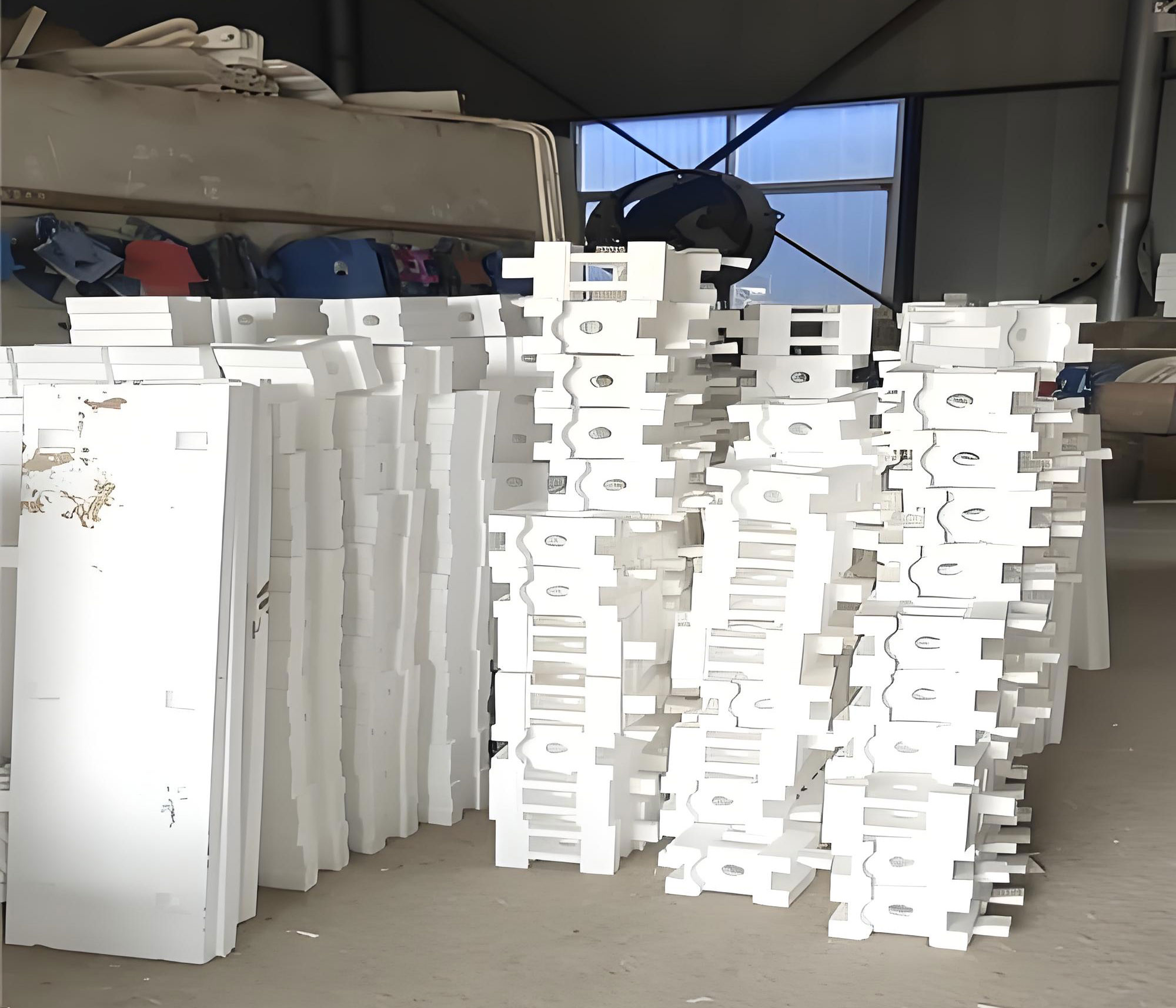
The Vacuum-Assisted Lost Foam Casting (VLFC) process is an evolution of the conventional lost foam casting process. Its core principle involves creating a negative pressure (vacuum) within the mold flask containing the unbonded sand and the expendable foam pattern. The process sequence is as follows: A precision-machined foam pattern, typically made of expandable polystyrene (EPS) or similar polymer, is assembled and coated with a refractory ceramic slurry. This coated cluster is then placed in a flask and surrounded by loose, unbonded sand, which is compacted via vibration. Before and during molten metal pouring, a vacuum pump is activated, drawing air through the permeable sand and creating a sub-atmospheric pressure inside the flask.
The applied vacuum serves multiple critical functions simultaneously, governed by fundamental physical laws. The pressure difference across the foam pattern wall accelerates its thermal degradation and removal upon contact with the molten metal. The removal of gases from the mold cavity minimizes the chance of gas entrapment. Furthermore, the vacuum consolidates the unbonded sand, imparting immediate high strength and rigidity to the mold, which is essential for maintaining dimensional accuracy. The pressure differential also acts as an additional driving force for mold filling, improving the replication of intricate details. This can be conceptually described by modifying Bernoulli’s principle to account for the applied vacuum pressure \(P_{vac}\):
$$P_{metal} + \frac{1}{2}\rho v^2 + \rho g h + P_{vac} = constant$$
where \(P_{metal}\) is the metallostatic pressure, \(\rho\) is the metal density, \(v\) is the flow velocity, \(g\) is gravity, and \(h\) is the height of the metal column. The added \(P_{vac}\) term significantly enhances the effective filling pressure.
Key Characteristics and Advantages
The Vacuum-Assisted Lost Foam Casting process exhibits several distinct characteristics that offer substantial advantages over traditional casting methods:
| Characteristic | Description and Advantage |
|---|---|
| Defect Reduction | Vacuum evacuation of pattern decomposition gases drastically reduces gas porosity and slag inclusions. The dry, unbonded sand eliminates moisture-related defects like blowholes. |
| Superior Surface Finish & Accuracy | Excellent replication of the smooth foam pattern surface and minimal mold wall movement under vacuum yield castings with very good surface finish (often Ra 12.5-25 μm) and tight dimensional tolerances (typically CT6-CT8 per ISO). |
| Near-Net-Shape Capability | The process allows for the integration of complex internal passages and external features into the foam pattern, enabling casting without cores and significantly reducing machining allowances. This leads to high material yield, often exceeding 85%. |
| Process Simplification | Eliminates the need for core making, core setting, and bonded sand systems. It also enables riser-less casting for many geometries due to the controlled cooling and feeding under vacuum. |
| Production Efficiency | Simplified molding, lack of core processes, and reduced cleaning/fettling time lead to shorter cycle times and higher productivity suitable for medium to high-volume production. |
Comparative Analysis with Other Casting Processes
To appreciate the position of the Vacuum-Assisted Lost Foam Casting process, a comparison with mainstream casting methods is essential.
| Process | Key Advantages | Key Limitations | Relative Cost for Gearbox Housings |
|---|---|---|---|
| Green Sand Casting | Very low pattern cost, high production rate for simple shapes. | Poor surface finish, lower dimensional accuracy, requires cores, higher machining allowance. | Low (for simple shapes) |
| Resin Sand Casting | Good dimensional accuracy, suitable for medium complexity. | Requires core making and assembly, binder cost, sand reclamation issues, moderate finish. | Medium |
| Die Casting (Aluminum) | Excellent surface finish, high production rate, good accuracy. | Very high tooling cost, limited to non-ferrous metals, porosity concerns for pressure-tightness. | High (for high volume) |
| Vacuum-Assisted Lost Foam Casting | Excellent complexity, good finish/accuracy, no cores, low cleaning cost. | High pattern cost, pattern storage issues, process parameter sensitivity. | Medium to High (justified by complexity & reduced machining) |
The vacuum-assisted lost foam casting process is particularly competitive for complex, medium-to-high volume iron and aluminum castings like gearbox housings, where its near-net-shape capability offsets the initial pattern cost.
Application in Gearbox Housing Production
Gearbox Housing Requirements and Challenges
Gearbox housings present a significant manufacturing challenge. Their structure is typically a complex, thin-walled, three-dimensional enclosure with numerous bosses, ribs, mounting flanges, and critical internal bearing seats. Key production requirements include:
- Dimensional Accuracy and Stability: Precise bore diameters, center distances, and flange flatness are crucial for proper gear and bearing alignment.
- Pressure Tightness: Housings for lubricated gearboxes must be free from micro-leakage paths.
- Mechanical Properties: Adequate strength, stiffness, and fatigue resistance to withstand operational loads and vibrations.
- Surface Quality: Good internal surface finish to minimize friction and facilitate oil flow.
- Economic Production: A cost-effective method that minimizes expensive machining operations on hard-to-cut areas like internal passages.
The vacuum-assisted lost foam casting process is uniquely suited to address these challenges simultaneously.
Detailed Manufacturing Process Flow
The application of the vacuum-assisted lost foam casting process for gearbox housings follows a meticulous sequence:
- Foam Pattern Design & Manufacturing: A 3D CAD model of the final part is used to design the pattern, incorporating necessary shrinkage allowances (typically 1.8-2.2% for gray iron). The pattern is then molded in multiple sections from expandable polystyrene (EPS) beads using precision aluminum tooling and steam, before being assembled into a complete cluster using specialized adhesives.
- Pattern Coating: The assembled cluster is dipped or sprayed with a water-based refractory ceramic coating. This coating is critical: it provides a barrier between the sand and the metal, improves surface finish, allows controlled gas permeability for pattern decomposition products, and strengthens the fragile foam pattern. Coating thickness (\(t_c\)) is a key parameter, typically ranging from 0.2 to 0.8 mm, and is controlled by the coating slurry’s viscosity \(\eta\) and dipping speed \(v_d\).
- Molding: The coated cluster is placed on a bottom board in a perforated flask. Loose, dry silica sand (or other unbonded sand) is filled around it while the flask is vibrated to achieve high and uniform compaction density. The sand’s compactability affects mold strength.
- Vacuum Application & Pouring: A plastic sheet covers the flask top, and a vacuum pump is activated, drawing the sheet tight and creating a uniform negative pressure inside the sand mold (typically 0.04 – 0.06 MPa gauge pressure). Molten metal is then poured into the sprue cup. The foam pattern vaporizes and is replaced by metal. The vacuum is maintained throughout pouring and initial solidification.
- Cooling, Shakeout, and Cleaning: After sufficient cooling, the vacuum is released. The sand is simply dumped out, and the casting cluster is separated from the sprue/runner system. Due to the absence of sand binders, cleaning is remarkably easy, often involving only light shot blasting.
Control of Critical Process Parameters
The quality outcome of the vacuum-assisted lost foam casting process is highly sensitive to several interdependent parameters. Optimal control is achieved through a systems approach, often summarized by a conceptual process capability index \(C_{pk}^{VLFC}\):
$$C_{pk}^{VLFC} = f(P_{vac}, T_{pour}, v_{pour}, \rho_{sand}, t_c, t_{vac})$$
Where:
- \(P_{vac}\): Vacuum level. Higher vacuum improves mold rigidity and gas removal but can cause excessive metal penetration into the coating.
- \(T_{pour}\): Pouring temperature. Must be high enough to ensure complete pattern degradation and fluidity but not so high as to cause erosion or excessive shrinkage. For gray iron gearbox housings, it is typically 1380-1450°C.
- \(v_{pour}\): Pouring speed. Must match the pattern decomposition rate. Too slow leads to fold defects; too fast causes turbulent filling. A critical velocity \(v_c\) exists to ensure progressive filling.
- \(\rho_{sand}\): Sand compaction density, achieved through vibration parameters (amplitude, frequency, time). Higher density improves dimensional stability.
- \(t_c\): Coating thickness, controlling gas permeability and metal interface.
- \(t_{vac}\): Vacuum duration, maintained through solidification to prevent mold collapse.
An example of a parameter interaction matrix is shown below:
| Parameter | Effect if Too High | Effect if Too Low | Optimal Range (Gray Iron Housing) |
|---|---|---|---|
| Vacuum Level (\(P_{vac}\)) | Metal penetration, wrinkled surface | Mold collapse, poor filling, porosity | 0.04 – 0.05 MPa (gauge) |
| Pouring Temp (\(T_{pour}\)) | Shrinkage porosity, erosion | Cold shuts, misruns, pattern residue | 1400 – 1420°C |
| Coating Permeability | Poor surface finish | Gas defects, shiny carbon | Controlled via \(t_c\) & slurry formula |
Impact Analysis on Gearbox Housing Production
Impact on Product Quality
The Vacuum-Assisted Lost Foam Casting process fundamentally enhances gearbox housing quality. The dominant mechanism is the drastic reduction of gas-related defects. The vacuum actively extracts pyrolytic gases (\(C_nH_m, H_2\)) from the decomposition zone ahead of the metal front, preventing their entrapment. The integrity of the mold under vacuum minimizes sand-related defects. Dimensional accuracy is improved because the unbonded sand mold is rigidified instantaneously by the vacuum pressure, resisting the metallostatic pressure and thermal expansion forces that typically cause mold wall movement in green sand casting. The linear dimensional variation \(\Delta L\) can be modeled as:
$$\Delta L_{VLFC} = L_0 \cdot \alpha_{metal} \cdot \Delta T + \delta_{shrinkage} + \epsilon_{mold}$$
where \(\epsilon_{mold}\), the mold wall movement, is significantly smaller compared to bonded sand molds. The near-net-shape capability reduces machining stock, which in turn minimizes the risk of exposing subsurface defects during machining and preserves the beneficial as-cast surface layer.
Impact on Production Efficiency and Cost
The impacts on efficiency and cost are interlinked and generally positive, though with a different cost structure.
Efficiency Gains: The elimination of core-making, core-setting, and sand mixing operations streamlines the production line. The simplified shakeout and drastically reduced cleaning/fettling time (often a 50-70% reduction compared to sand casting) significantly shorten the overall cycle time (\(CT\)). This can be expressed as:
$$CT_{VLFC} = t_{pattern} + t_{coat} + t_{mold} + t_{pour} + t_{cool} + t_{clean}$$
where \(t_{clean}\) is markedly lower. The process is highly amenable to automation in pattern assembly, coating, and molding, further boosting productivity for stable, high-volume runs.
Cost Structure Analysis: The total unit cost \(C_{unit}\) for a lost foam casting process gearbox housing is given by:
$$C_{unit} = C_{pattern\_amortized} + C_{metal} + C_{labor} + C_{energy} + C_{tooling\_maintenance}$$
The significant cost driver is the foam pattern, especially for low volumes. However, this is counterbalanced by substantial savings:
- Material Cost Savings: Reduced machining allowance increases yield, lowering effective metal cost per part. Weight savings can also be achieved through design optimization enabled by the process.
- Machining Cost Reduction: This is the most significant saving. Complex internal features are cast to near-final dimensions, eliminating costly milling, drilling, and boring operations. The cost benefit \(\Delta C_{machining}\) is often the key economic justification.
- Lower Labor & Energy Costs: Simplified processes and automation reduce direct labor. The absence of sand binder curing ovens reduces energy consumption.
Thus, while the piece cost for low volumes may be high, for medium-to-high volume production of complex parts like gearbox housings, the total cost of ownership (including machining) is frequently lower.
Impact on Production Environment
The Vacuum-Assisted Lost Foam Casting process offers notable environmental advantages, aligning with green manufacturing principles. The use of dry, unbonded sand eliminates the need for chemical binders (phenolic resins, etc.) and associated fumes (e.g., formaldehyde, phenol) during pouring. This dramatically improves indoor air quality for workers. The sand is 100% reusable without the need for complex thermal or mechanical reclamation; it is merely cooled and screened before reuse. This results in near-zero solid waste generation from sand disposal. The process also has lower energy intensity due to the elimination of core ovens and sand mixing equipment. Furthermore, the improved metal yield reduces the overall energy footprint associated with melting metal that would otherwise become machining swarf.
Challenges, Solutions, and Future Trends
Prevalent Challenges and Technical Solutions
Despite its advantages, the Vacuum-Assisted Lost Foam Casting process faces specific challenges in gearbox housing production.
| Challenge | Root Cause | |
|---|---|---|
| Shiny Carbon (Carbonaceous Residue) | Incomplete pyrolysis of the foam pattern, depositing lustrous carbon films on the casting surface, impairing machinability and surface quality. | Optimize coating permeability to control gas outflow. Use low-carbon or carbon-free foam patterns (e.g., Polymethylmethacrylate – PMMA). Precisely control pouring temperature and vacuum level. |
| Pattern-Induced Defects (Folds, Misruns) | Mismatch between metal advance velocity (\(v_m\)) and pattern degradation rate. If \(v_m\) is too high relative to gas removal, folds occur. | Implement computerized gating and venting design to ensure progressive, bottom-up filling. Use advanced simulation software to model coupled filling, pyrolysis, and heat transfer. Optimize sprue/runner geometry to control \(v_m\). |
| Dimensional Variation on Complex Features | Non-uniform cooling and sand compaction around intricate pattern sections. | Integrate cooling channels (chills) into the sand mold design. Use engineered sands (e.g., zircon, chromite) in critical areas to improve heat dissipation. Optimize vibration compaction strategy. |
| High Initial Pattern Cost | Precision machining of aluminum tooling for foam molding. | Utilize additive manufacturing (3D printing) to produce low-volume prototype or short-run patterns directly from CAD data, bypassing expensive tooling. For high volume, the tooling cost is amortized effectively. |
Future Development Trends
The future of the Vacuum-Assisted Lost Foam Casting process is directed by technological innovation, market demands, and environmental sustainability.
Technological Trends:
- Digitalization and Simulation: Advanced finite element method (FEM) and computational fluid dynamics (CFD) simulations integrating pyrolysis kinetics, gas flow, and solidification will become standard for first-time-right process design, reducing development time and scrap rate. The governing equations for coupled simulation are complex, involving energy conservation: $$\rho C_p \frac{\partial T}{\partial t} = \nabla \cdot (k \nabla T) + \dot{Q}_{pyrolysis}$$ and species transport for decomposition gases.
- Advanced Pattern Materials: Development of new copolymer foams (e.g., EPS-PMMA blends) that decompose more cleanly and predictably. Research into bio-based and biodegradable foams is also ongoing.
- Process Automation & IoT: Full automation of pattern handling, coating, and molding stations. Integration of Industrial Internet of Things (IIoT) sensors for real-time monitoring of vacuum level, pouring temperature, and sand compaction, enabling adaptive process control and predictive maintenance.
Market & Environmental Trends:
The drive for lightweighting in automotive and aerospace sectors will increase demand for complex, thin-walled aluminum and magnesium castings, a strength of the lost foam casting process. The global push for sustainable manufacturing will further favor this process due to its low waste generation and energy efficiency. The development of closed-loop sand cooling and handling systems will minimize external environmental impact. Regulations on volatile organic compound (VOC) emissions will continue to make binder-less processes like vacuum-assisted lost foam casting more attractive compared to traditional bonded sand methods.
Conclusion
The Vacuum-Assisted Lost Foam Casting process represents a significant technological advancement for the production of complex, high-quality components like gearbox housings. By integrating a vacuum system into the lost foam casting process, it overcomes key limitations related to mold strength and gas evacuation, yielding castings with superior dimensional accuracy, excellent surface finish, and minimal internal defects. Its near-net-shape capability delivers substantial economic benefits through material savings and drastic reductions in machining costs, often justifying the initial investment in pattern tooling for suitable production volumes. Furthermore, its environmentally friendly characteristics, stemming from the use of reusable unbonded sand and the absence of harmful binders, align with modern sustainable manufacturing goals. While challenges such as process parameter sensitivity and pattern cost persist, ongoing advancements in simulation, materials science, and automation are steadily addressing these issues. The future of the Vacuum-Assisted Lost Foam Casting process is bright, poised for expanded adoption as industries continue to seek efficient, precise, and green manufacturing solutions for complex cast components.