
In my experience with the lost foam casting process, I have encountered numerous challenges that can compromise the quality of cast iron components. The lost foam casting process is renowned for its precision and environmental benefits, as it eliminates the need for molds, parting lines, and cores, thereby reducing waste and improving dimensional accuracy. However, this technique is often described as “deceptively simple,” with defects such as collapse, sand adhesion, nodules, and bulges (or blister-like protrusions) frequently arising if not meticulously controlled. Among these, bulge defects on the surface of castings have been a persistent issue in several production facilities I’ve collaborated with. This article delves into the root causes of these bulge defects and presents a solution through the application of a specialized coating, TXSG-870, which has proven effective in enhancing surface quality in the lost foam casting process.
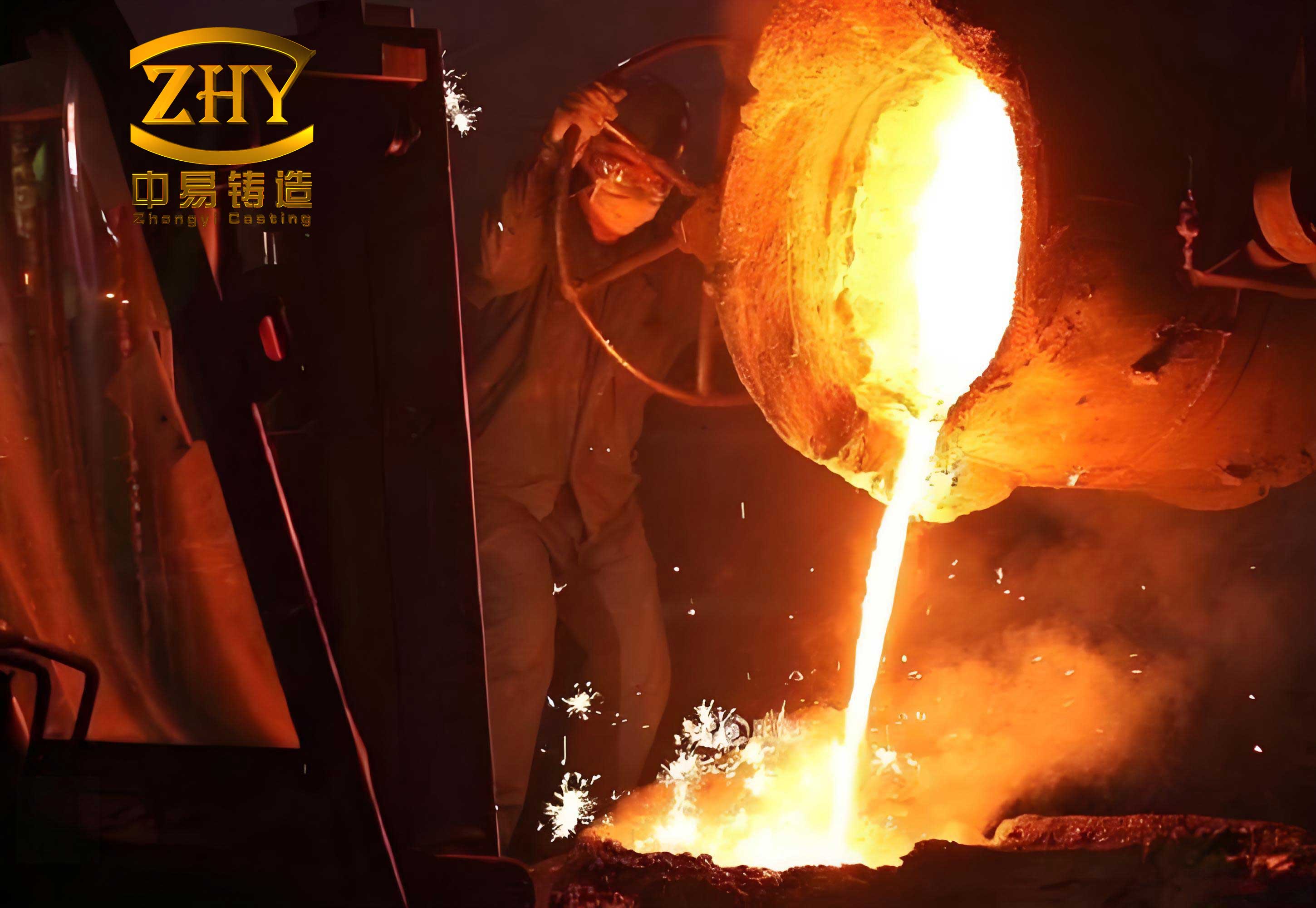
The lost foam casting process involves coating expandable polystyrene (EPS) patterns with a refractory coating, drying them, assembling them in a flask, and compacting dry sand around them. Under vacuum negative pressure, molten metal is poured, causing the pattern to vaporize and be replaced by the metal. The coating plays a critical role in this process: it must provide a barrier between the metal and the sand, facilitate gas evacuation, and maintain integrity during pouring. Without a high-quality coating, defects like sand penetration, bulges, and inclusions are common. In my investigations, I found that bulge defects often originate from coating blistering during the drying stages, which later manifests as protrusions on the cast surface. This insight led to a focused study on coating properties and their impact on the lost foam casting process.
Understanding Bulge Defects: Mechanisms and Causes
Bulge defects in the lost foam casting process are characterized by localized convex formations on the casting surface, resembling blisters. Through observations in production settings, I identified that these defects correlate directly with bubbles that form in the coating layers during drying. When the coating blisters, it creates voids beneath the surface; during pouring, molten metal fills these voids, resulting in bulges. The primary factors contributing to coating blistering include:
- Inadequate Coating Adhesion and Wet Strength: If the coating does not bond firmly to the EPS pattern, or if its wet strength is low, internal gas pressure from vaporizing moisture or pattern decomposition can lift the coating, forming bubbles.
- Poor Permeability at Room Temperature: Coatings with low permeability trap gases and moisture, preventing their escape during drying. This is exacerbated in thicker layers, where the outer surface dries quickly, forming a skin that traps volatiles underneath.
- Operational Variables: Issues such as residual release agents on patterns, improper dipping techniques, and suboptimal drying conditions can weaken coating integrity. For instance, prolonged immersion in coating slurry can over-saturate lower layers, reducing adhesion.
To quantify these effects, consider the gas pressure buildup beneath the coating. The pressure \( P \) required to form a blister can be approximated by Laplace’s law for a thin spherical cap:
$$ P = \frac{2 \gamma}{r} $$
where \( \gamma \) is the surface tension of the coating and \( r \) is the radius of the blister. However, in practice, the coating’s mechanical resistance must be overcome. The critical pressure \( P_c \) for blistering depends on the coating’s adhesive strength \( \sigma_a \) and thickness \( t \):
$$ P_c = k \cdot \frac{\sigma_a}{t} $$
where \( k \) is a proportionality constant related to coating elasticity. If internal gas pressure exceeds \( P_c \), blistering occurs. In the lost foam casting process, this pressure arises from water vapor and decomposition gases during drying and pouring.
The Role of Coatings in the Lost Foam Casting Process
Coatings are indispensable in the lost foam casting process, serving multiple functions: providing refractoriness, ensuring gas permeability, and maintaining dimensional stability. A deficient coating can lead to direct metal-sand contact, causing defects. My analysis of conventional coatings revealed limitations in adhesion and resistance to water infiltration, which predispose them to blistering. For example, many commercial coatings exhibit low wet strength, meaning they become pliable when rewetted by subsequent layers, allowing gas entrapment. This is particularly problematic in multi-layer applications, where the first layer must act as a stable foundation. I hypothesized that enhancing the first layer’s properties—specifically, its adhesion, dry strength, and hydrophobicity—could mitigate bulge defects. This led to the development of TXSG-870 coating, formulated to address these shortcomings in the lost foam casting process.
TXSG-870 Coating: Formulation and Properties
TXSG-870 is a paste-like coating with a light blue appearance, designed specifically for the lost foam casting process. Its formulation incorporates high-purity aluminosilicate refractories for elevated sintering and peel-off characteristics, along with specialized binders and fibers to boost adhesion and strength. Key properties include:
- High Adhesion and Wet Strength: The binder system ensures strong bonding to EPS patterns, reducing the risk of detachment during drying.
- Controlled Permeability: A tailored particle size distribution balances gas evacuation without compromising barrier integrity.
- Hydrophobic Behavior: After drying, the coating resists water penetration, preventing re-wetting and gas entrapment in multi-layer applications.
The performance metrics of TXSG-870 are summarized in Table 1, compared to a typical commercial coating (referred to as Coating A).
| Property | TXSG-870 Coating | Coating A | Test Method |
|---|---|---|---|
| Baumé Degree | 65–75 | 60–70 | Hydrometer |
| Density (g/cm³) | 1.65–1.75 | 1.60–1.70 | Weight/Volume |
| Suspension Stability (24 h) | ≥99% | ≥95% | Settling Test |
| Adhesion Strength (MPa) | 0.15–0.20 | 0.08–0.12 | Peel Test |
| Wet Strength Index | High (No slumping) | Moderate (Some sagging) | Visual Inspection |
| Permeability at Room Temperature (cm²/s) | 2.5 × 10⁻⁸ | 1.2 × 10⁻⁸ | Gas Flow Meter |
| Hydrophobicity (Contact Angle, °) | >90 | <60 | Goniometer |
These properties directly influence the lost foam casting process. For instance, the higher adhesion strength \( \sigma_a \) of TXSG-870 increases the critical pressure \( P_c \), making it more resistant to blistering. The permeability \( \kappa \) can be modeled using the Kozeny-Carman equation:
$$ \kappa = \frac{\phi^3}{K (1 – \phi)^2 S^2} $$
where \( \phi \) is porosity, \( S \) is specific surface area, and \( K \) is a constant. TXSG-870’s optimized particle packing yields a \( \phi \) around 0.35, balancing strength and gas escape.
Experimental Validation and Production Results
To validate the efficacy of TXSG-870 in the lost foam casting process, I conducted trials at a production facility manufacturing iron castings such as oil pans and flywheel housings. Three coating schemes were tested:
- Scheme 1: All three layers applied with TXSG-870.
- Scheme 2: First layer with TXSG-870, subsequent layers with Coating A.
- Scheme 3: All layers with Coating A (control).
Each scheme involved coating EPS patterns with a slurry at 70 Bé, drying at 30–40°C with controlled humidity, and then proceeding to pouring under standard lost foam casting process conditions. The outcomes were assessed based on coating integrity during drying and final casting quality. Key observations include:
- Coating Blistering: In Scheme 3, blisters appeared after the second or third layer, matching prior defect patterns. Schemes 1 and 2 showed minimal blistering, with Scheme 1 being flawless.
- Casting Surface Quality: After shot blasting, castings from Scheme 1 had smooth surfaces with no bulges or sand adhesion. Scheme 2 showed minor improvements over Scheme 3, but some bulges persisted where Coating A was used in upper layers.
The reduction in bulge defects can be quantified using a defect density metric \( D \), defined as the number of bulges per unit area (e.g., per m²). For Scheme 1, \( D \approx 0 \); for Scheme 3, \( D \approx 10–15 \). The improvement ratio \( R \) is:
$$ R = \frac{D_{\text{control}} – D_{\text{TXSG-870}}}{D_{\text{control}}} \times 100\% $$
which approaches 100% for Scheme 1. Additionally, the coating’s thermal stability during the lost foam casting process was evaluated. Upon metal pouring, the coating must withstand thermal shock without cracking. The thermal stress \( \sigma_t \) can be expressed as:
$$ \sigma_t = E \cdot \alpha \cdot \Delta T $$
where \( E \) is Young’s modulus, \( \alpha \) is the coefficient of thermal expansion, and \( \Delta T \) is the temperature gradient. TXSG-870’s low \( \alpha \) (approx. 5 × 10⁻⁶ K⁻¹) minimizes \( \sigma_t \), preventing cracks that could lead to metal penetration.
Mechanistic Insights: Why TXSG-870 Works
The success of TXSG-870 in the lost foam casting process stems from its multifunctional design. First, its high adhesion ensures that the coating remains anchored to the EPS pattern during drying, resisting lift-off from gas pressure. This is due to polymeric binders that form covalent bonds with the polystyrene surface. Second, the controlled permeability allows moisture and gases to escape uniformly. The permeability \( \kappa \) is tuned via fiber additives that create micro-channels, described by the equation:
$$ \kappa_{\text{eff}} = \kappa_0 + \beta V_f $$
where \( \kappa_0 \) is the base permeability, \( \beta \) is a constant, and \( V_f \) is the fiber volume fraction. Third, the hydrophobic nature prevents water from secondary layers from infiltrating the first layer, maintaining its dry state and strength. The contact angle \( \theta \) relates to surface energy \( \gamma_{sv} \) and liquid-vapor energy \( \gamma_{lv} \) via Young’s equation:
$$ \cos \theta = \frac{\gamma_{sv} – \gamma_{sl}}{\gamma_{lv}} $$
TXSG-870’s formulation lowers \( \gamma_{sv} \), yielding \( \theta > 90^\circ \), indicating hydrophobicity. This combination of properties disrupts the blister formation cycle inherent in the lost foam casting process.
Broader Implications for the Lost Foam Casting Process
Implementing TXSG-870 coating has broader benefits for the lost foam casting process. Beyond eliminating bulge defects, it enhances overall process reliability. For instance, the coating’s good sintering behavior promotes easy peel-off after casting, reducing cleaning efforts. Moreover, its high strength minimizes mold erosion during pouring, which is crucial for maintaining dimensional accuracy in complex geometries. In the lost foam casting process, dimensional control is paramount; any coating failure can lead to deviations. The coating’s performance can be optimized further by adjusting parameters like layer thickness and drying time. A model for drying time \( t_d \) as a function of coating thickness \( L \) and diffusivity \( D_m \) is:
$$ t_d = \frac{L^2}{2 D_m} $$
For TXSG-870, \( D_m \) is higher due to its permeability, shortening \( t_d \) and improving productivity. These advantages underscore the importance of tailored coatings in advancing the lost foam casting process.
Conclusion
In summary, bulge defects in the lost foam casting process for iron castings are primarily caused by coating blistering, which results from inadequate adhesion, low wet strength, and poor permeability. Through the development and application of TXSG-870 coating, these issues have been effectively mitigated. This coating offers superior adhesion, high dry strength, and hydrophobic characteristics, ensuring a stable barrier during pattern decomposition and metal pouring. Production trials confirm that TXSG-870 eliminates surface bulges, yielding castings with excellent surface finish. The insights gained highlight the critical role of coating technology in optimizing the lost foam casting process, and I recommend its adoption for similar applications to enhance quality and efficiency. Future work could explore adaptations for non-ferrous alloys or larger-scale implementations, further solidifying its value in modern foundry practices.