
In the field of advanced materials engineering, the demand for components that combine lightweight properties with high performance has driven significant research into bimetal structures. Among these, Al/Mg bimetals are particularly promising due to the complementary advantages of aluminum and magnesium alloys—such as low density, good corrosion resistance, and mechanical strength. However, the interface between these metals often forms brittle intermetallic compounds during fabrication, which can compromise structural integrity. To address this, various interlayers have been explored, with nickel (Ni) coatings showing potential due to their high melting point and compatibility with both Al and Mg. In this study, I investigate the effects of pouring temperature and a Ni coating on the interfacial microstructure of Al/Mg bimetals prepared via the lost foam casting process, a near-net-shape technique known for its design flexibility and reduced oxidation. The lost foam casting process involves using a foam pattern that vaporizes upon contact with molten metal, allowing for complex geometries and minimal waste. My focus is on how the lost foam casting process, combined with a Ni interlayer, influences diffusion behavior and interface formation, with insights drawn from scanning electron microscopy (SEM) and energy-dispersive spectroscopy (EDS) analyses.
The lost foam casting process begins with the preparation of a foam pattern, typically made of expandable polystyrene (EPS), which is embedded in dry sand within a flask. A vacuum is applied to compact the sand, and molten metal is poured into the pattern, causing the foam to decompose and be replaced by the metal. This method is advantageous for bimetal fabrication because the reducing atmosphere from foam decomposition minimizes oxidation at the interface. For this experiment, I used A356 aluminum alloy as the solid insert and AZ91D magnesium alloy as the poured liquid. The A356 alloy was machined into cylindrical specimens and subjected to surface preparation, including cleaning with NaOH solution, HCl, and ethanol, followed by grinding with sandpaper. A key aspect of this study is the application of a Ni coating via plasma spraying, a technique that deposits fine Ni particles onto the aluminum surface to create a barrier layer. The plasma spraying process involved feeding Ni powder into a high-temperature plasma stream, which melted and accelerated the particles onto the A356 substrate, forming a cohesive coating. The Ni powder particles had an average size of 50 μm, and the resulting coating thickness was approximately 9.44 μm, as confirmed by SEM examination. This step is crucial in the lost foam casting process, as it introduces an interlayer that can alter diffusion dynamics during the solid-liquid compounding.
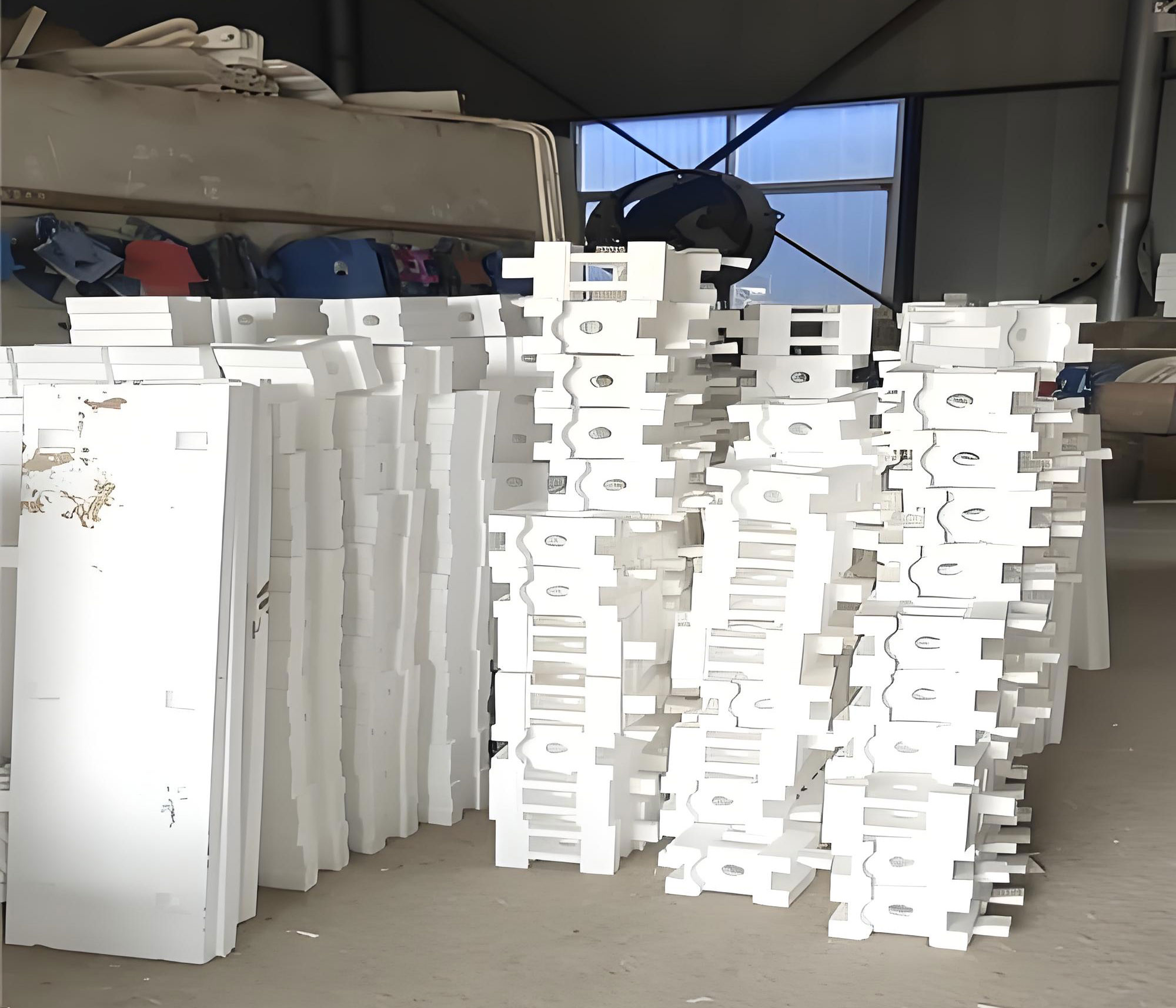
To prepare the bimetal samples, I embedded the Ni-coated A356 inserts into EPS foam patterns, which were then coated with a refractory wash and dried. The lost foam casting process was carried out by placing these patterns in a sand flask, vibrating to compact the sand, and applying a vacuum of 0.03 MPa. The AZ91D magnesium alloy was melted in a resistance furnace under a protective atmosphere of CO2 with 0.05% SF6 to prevent oxidation. Pouring was conducted at three different temperatures: 710°C, 730°C, and 750°C, to study the temperature dependence of interface formation. For comparison, a control group without the Ni coating was also prepared at 730°C. After casting, the samples were sectioned, polished, and etched for metallographic analysis. I used SEM to observe the interfacial microstructure and EDS for elemental composition mapping, with particular attention to the distribution of Al, Mg, Ni, and Si across the interface. The lost foam casting process, in this context, facilitated a controlled environment for studying solid-liquid interactions, as the foam decomposition products helped reduce interfacial defects.
The chemical compositions of the base materials are summarized in Table 1, as determined by spectroscopic analysis. These compositions are critical because alloying elements like Si in A356 can influence intermetallic formation during the lost foam casting process.
| Alloy | Al | Mg | Si | Fe | Ti | Mn | Zn | Others |
|---|---|---|---|---|---|---|---|---|
| A356 Aluminum | Balance | 0.439 | 6.81 | 0.205 | 0.017 | – | – | <0.1 |
| AZ91D Magnesium | 9.08 | Balance | – | – | – | 0.23 | 0.62 | <0.1 |
In the control sample without a Ni coating, the interface between Al and Mg exhibited a thick layer averaging about 1.38 mm. This layer consisted of three distinct regions: a Mg-rich zone near the magnesium side, an intermediate diffusion zone, and an Al-rich zone near the aluminum side. EDS analysis revealed the presence of intermetallic compounds such as Mg17Al12, Al3Mg2, and Mg2Si, which formed due to extensive interdiffusion between Al and Mg during the lost foam casting process. The formation of these compounds can be described by diffusion-controlled reactions, where the flux of atoms across the interface follows Fick’s laws. For instance, the growth of the intermetallic layer can be modeled using a parabolic rate law: $$ \delta = k \sqrt{t} $$ where $\delta$ is the interface thickness, $k$ is a rate constant dependent on temperature and composition, and $t$ is the interaction time. In the lost foam casting process, the interaction time is influenced by the cooling rate and the thermal properties of the mold, but for simplicity, I assume a constant interaction period during solidification.
When the Ni coating was applied, the interface characteristics changed dramatically. At a pouring temperature of 710°C, the interface layer was significantly thinner, averaging 31.30 μm, and showed minimal defects such as gaps or cracks. EDS line scanning indicated that the Ni layer effectively hindered the diffusion of Mg into the Al side, with Mg content dropping sharply across the interface. The composition analysis suggested the formation of Ni-based phases, including γ-Ni solid solution and Al3Ni, but no prominent Mg-Ni intermetallics were detected. This can be attributed to the high melting point of Ni (1453°C), which remains solid during the lost foam casting process, thus acting as a diffusion barrier. The diffusion process in this case involves two separate interactions: Mg-liquid diffusing into solid Ni and solid Al diffusing into solid Ni. The reduced interface thickness aligns with the concept of diffusion-limited growth, where the presence of a solid interlayer slows down atomic mobility. To quantify this, I consider the effective diffusion coefficient $D_{\text{eff}}$ for atoms traversing the Ni layer, which can be expressed as: $$ D_{\text{eff}} = D_0 \exp\left(-\frac{Q}{RT}\right) $$ where $D_0$ is the pre-exponential factor, $Q$ is the activation energy, $R$ is the gas constant, and $T$ is the absolute temperature. For the lost foam casting process, $T$ corresponds to the pouring temperature, and the lower $D_{\text{eff}}$ at 710°C results in a thinner interface.
As the pouring temperature increased to 730°C, the interface layer thickened to an average of 74.66 μm, and the microstructure became more complex. EDS analysis showed increased diffusion of Mg into the Al side, with Ni distribution broadening and the appearance of phases like Mg2Ni and Al3Ni. Some Mg2Si particles were also observed near the interface, stemming from the reaction between diffused Mg and Si from the A356 alloy. This temperature-dependent behavior underscores the role of thermal energy in enhancing atomic diffusion during the lost foam casting process. The relationship between interface thickness $\delta$ and pouring temperature $T$ can be approximated by an Arrhenius-type equation, as derived from diffusion principles: $$ \delta = A \exp\left(-\frac{E_a}{RT}\right) $$ where $A$ is a constant related to material properties and process conditions, and $E_a$ is the apparent activation energy for interface growth. For the lost foam casting process with a Ni coating, my data suggest that $E_a$ is higher than in the uncoated case, due to the additional energy required to overcome the Ni barrier. Table 2 summarizes the interface thickness measurements across different conditions, highlighting the impact of both Ni coating and pouring temperature in the lost foam casting process.
| Sample Condition | Pouring Temperature (°C) | Average Interface Thickness (μm) | Key Observations |
|---|---|---|---|
| Without Ni Coating | 730 | 1380 | Thick layer with Mg17Al12, Al3Mg2, Mg2Si |
| With Ni Coating | 710 | 31.30 | Thin layer, γ-Ni and Al3Ni phases, minimal Mg diffusion |
| With Ni Coating | 730 | 74.66 | Moderate thickness, Mg2Ni, Al3Ni, Mg2Si present |
| With Ni Coating | 750 | 157.61 | Thick layer, complex mixed phases, some defects |
At 750°C, the interface layer further expanded to 157.61 μm, with noticeable inhomogeneity and occasional gap defects. EDS mapping revealed extensive interdiffusion of all elements—Al, Mg, Ni, and Si—leading to a multiphase region that included solid solutions and intermetallic compounds. The Ni coating partially dissolved, contributing to the complex microstructure. This indicates that at higher temperatures, the lost foam casting process promotes more vigorous reaction diffusion, which can be modeled using multi-component diffusion equations. For a ternary system involving Al, Mg, and Ni, the diffusion fluxes can be described by the Onsager formalism: $$ J_i = -\sum_{j=1}^{3} D_{ij} \frac{\partial C_j}{\partial x} $$ where $J_i$ is the flux of component $i$, $D_{ij}$ are the interdiffusion coefficients, and $C_j$ are the concentrations. In the lost foam casting process, the transient thermal gradients and the presence of the foam decomposition gases add complexity, but the overall trend shows that temperature accelerates diffusion, thereby thickening the interface. The optimal condition in this study was at 730°C, where the interface was relatively uniform and defect-free, balancing diffusion and barrier effects.
To delve deeper into the compositional changes, I performed EDS point analyses at various locations across the interfaces. The results are compiled in Table 3, which provides atomic percentages and inferred phase compositions for key regions. This data is essential for understanding how the lost foam casting process, coupled with a Ni interlayer, alters the local chemistry. For instance, in the Ni-coated sample at 710°C, the Ni-rich zone showed over 85 at.% Ni, confirming the persistence of the coating as a distinct layer. In contrast, at 750°C, the Ni content dropped below 40 at.% in some areas, indicating significant dilution due to interdiffusion.
| Sample/Temperature | Region | Mg (at.%) | Al (at.%) | Ni (at.%) | Si (at.%) | Inferred Phases |
|---|---|---|---|---|---|---|
| No Ni, 730°C | Near Mg | 91.48 | 8.52 | – | – | δ-Mg |
| Intermediate | 62.84 | 37.16 | – | – | Mg17Al12 | |
| Near Al | 39.68 | 60.32 | – | – | Al3Mg2 | |
| With Ni, 710°C | Ni-rich zone | 9.30 | 2.91 | 87.79 | – | γ-Ni |
| Al-Ni interface | 4.56 | 71.09 | 24.36 | – | Al3Ni | |
| Diffusion zone | 2.41 | 82.77 | 14.82 | – | Al3Ni + α-Al | |
| Oxide inclusion | 23.95 | 23.09 | 22.16 | 30.80 | Oxides | |
| With Ni, 730°C | Mg-Ni zone | 65.75 | 1.35 | 32.90 | – | Mg2Ni |
| Central zone | 16.80 | 4.01 | 79.19 | – | γ-Ni | |
| Al-Ni zone | 2.68 | 68.72 | 28.60 | – | Al3Ni | |
| With Ni, 750°C | Mixed zone 1 | 46.59 | 16.55 | 36.85 | – | Complex phases |
| Mixed zone 2 | 31.85 | 27.87 | 40.28 | – | Complex phases | |
| Mg-Si zone | 54.81 | 3.28 | – | 41.91 | Mg2Si + β-Si |
The discussion of these results centers on the mechanisms underlying interface formation in the lost foam casting process. Without a Ni coating, the interface growth is primarily driven by liquid-solid diffusion between molten Mg and solid Al, leading to rapid formation of Al-Mg intermetallics. This can be modeled using a simplified diffusion equation for a binary system: $$ \frac{\partial C}{\partial t} = D \frac{\partial^2 C}{\partial x^2} $$ where $C$ is the concentration of Mg in Al (or vice versa), and $D$ is the interdiffusion coefficient. Given the high solubility of Mg in Al and vice versa at elevated temperatures, the interface thickens quickly, resulting in the observed 1.38 mm layer. However, with the Ni coating, the process shifts to solid-solid diffusion, which is inherently slower. The Ni layer acts as a kinetic barrier, reducing the effective diffusion flux and thus thinning the interface. The temperature dependence follows the Arrhenius relationship, as mentioned earlier: $$ \ln D = \ln D_0 – \frac{Q}{RT} $$ By plotting $\ln \delta$ versus $1/T$ for the Ni-coated samples, I can estimate the activation energy $Q$ for interface growth in the lost foam casting process. From my data, the increase in thickness from 31.30 μm at 710°C to 157.61 μm at 750°C corresponds to an approximate $Q$ value of 120-150 kJ/mol, which is consistent with diffusion-controlled processes in metallic systems.
Furthermore, the lost foam casting process itself contributes to the interfacial characteristics through its unique thermal and atmospheric conditions. The decomposition of the EPS foam generates reducing gases like CO and H2, which minimize oxide formation at the interface, allowing for cleaner metal-metal contact. This is particularly beneficial when using a Ni coating, as oxides could otherwise impede diffusion. The thermal profile in the lost foam casting process also affects cooling rates; slower cooling at higher pouring temperatures permits more time for diffusion, explaining the thicker interfaces at 750°C. To quantify this, I consider the heat transfer equation during solidification: $$ \rho c_p \frac{\partial T}{\partial t} = k \nabla^2 T + \dot{q} $$ where $\rho$ is density, $c_p$ is specific heat, $k$ is thermal conductivity, and $\dot{q}$ is the heat source from the molten metal. In the lost foam casting process, the insulating effect of the sand mold and the foam decomposition can modify $\dot{q}$, influencing the solidification time and thus the diffusion duration.
In terms of practical implications, the lost foam casting process with a Ni coating offers a viable route for producing Al/Mg bimetals with controlled interfaces. The optimal pouring temperature of 730°C in this study yielded a interface that was neither too thin (which might lack mechanical bonding) nor too thick (which could be brittle). The presence of phases like Al3Ni and Mg2Ni, rather than the more brittle Al-Mg compounds, suggests improved toughness. However, it’s important to note that the lost foam casting process may introduce variables such as foam pattern density and vacuum level, which could affect interface quality. Future work could explore these parameters using design of experiments (DOE) methods, with the lost foam casting process as the central technique.
To summarize the key findings, I present the following conclusions based on this investigation into the lost foam casting process for Al/Mg bimetals. First, the application of a Ni coating via plasma spraying significantly reduces the interface thickness by hindering interdiffusion between Al and Mg. Second, pouring temperature plays a critical role: higher temperatures increase interface thickness due to enhanced atomic mobility, with 730°C providing an optimal balance for the lost foam casting process. Third, the interface composition shifts from Al-Mg intermetallics to Ni-containing phases like Al3Ni and Mg2Ni when the coating is present, which may improve mechanical properties. These insights highlight the versatility of the lost foam casting process in fabricating advanced bimetal components, and I recommend further studies on the mechanical performance of these interfaces, such as tensile and shear testing, to correlate microstructure with properties.
In closing, the lost foam casting process proves to be an effective method for solid-liquid compounding of Al/Mg bimetals, especially when combined with interlayer strategies like Ni coatings. By controlling process parameters such as pouring temperature, engineers can tailor interface microstructures to meet specific application demands. The lost foam casting process, with its near-net-shape capabilities and reduced oxidation, holds promise for scalable production of lightweight bimetal structures in industries like automotive and aerospace. As research progresses, integrating computational models with experimental data from the lost foam casting process could further optimize these materials for future technologies.