
In our production facility, the established method for manufacturing φ40 mm low-chromium grinding balls employed metal mold casting, specifically a “one mold, eight balls” configuration supplemented with quartz sand risers. While this technique served its purpose, the landscape of foundry technology has evolved significantly. The emergence of the lost foam casting process presented a compelling alternative, offering superior dimensional accuracy, enhanced product quality, a simplified and more stable operational workflow, and a marked reduction in scrap rates. For us to remain competitive, adopting this advanced lost foam casting technology to replace the incumbent method became not just an option, but an imperative.
Fundamental Research on Lost Foam Casting Technology
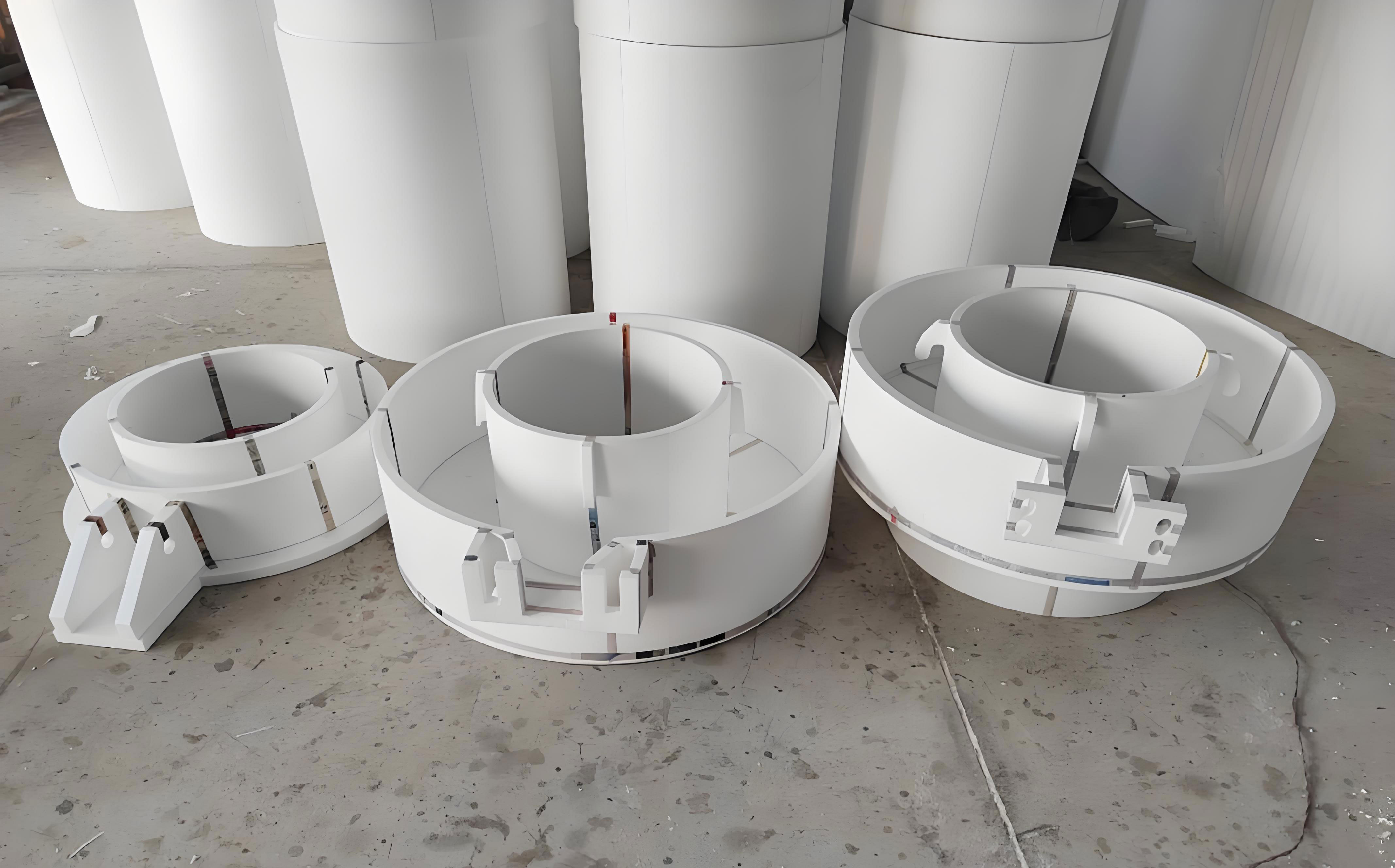
The core principle of lost foam casting involves creating a precise foam pattern of the desired part, coating it with a refractory slurry, embedding it in unbonded sand within a flask, and then pouring molten metal. The metal vaporizes the foam pattern, occupying its exact cavity to form the casting. The success of this lost foam casting process hinges on meticulous control over several interconnected parameters.
1. Alloy Chemical Composition Design
The grinding balls are destined for operation in a φ2.3 m × 3.5 m wet-type ball mill. Balancing requirements for hardness, toughness, and wear resistance, we optimized the chemical composition specifically for production via the lost foam casting route. The target composition is detailed in Table 1.
| Element | Target Range (ω%) |
|---|---|
| Carbon (C) | 3.0 – 3.8 |
| Silicon (Si) | 1.4 – 2.6 |
| Manganese (Mn) | 0.4 – 0.8 |
| Chromium (Cr) | 1.5 – 2.7 |
| Molybdenum (Mo) | 0.2 – 0.3 |
| Rare Earth (RE resid.) | < 0.02 |
| Sulfur (S) | < 0.06 |
| Phosphorus (P) | < 0.06 |
The carbon equivalent (CE) is a critical parameter influencing castability and final microstructure. For our iron-based alloy, it can be approximated using a modified formula accounting for the alloying elements present:
$$ CE = C + \frac{Si + Mn}{6} + \frac{Cr + Mo}{5} $$
Where C, Si, etc., represent the weight percentages. A target CE range between 4.0 and 4.5 was aimed for to ensure good fluidity for the lost foam casting process while achieving the desired as-cast structure.
2. Pattern and Gating System Design for Lost Foam Casting
The design of the expendable pattern and its gating system is paramount in lost foam casting, as it directly defines the final casting geometry and the dynamics of mold filling.
2.1 Foam Pattern Production
A dedicated aluminum alloy pattern mold was designed and manufactured to produce a cluster of six grinding ball patterns in a single shot. This cluster pattern was then supplied to a specialized foam manufacturer for mass production using expandable polystyrene (EPS) beads. The density of the foam pattern is crucial; a typical target range is 20-25 kg/m³ to minimize gaseous decomposition products during pouring.
2.2 Gating and Feeding System Design
Individual six-ball cluster patterns were assembled into larger arrays to maximize yield per casting cycle. These arrays were connected using 40 mm × 40 mm cross-section EPS foam runners (sprue and gates) into a cohesive three-dimensional structure, designed to be stacked in three layers within the flask. A top-pouring gating system was adopted for this lost foam casting application. The main goals were to ensure rapid and complete mold filling while facilitating the escape of foam pyrolysis products.
The total cross-sectional area of the ingates ($A_{gate}$) must be sufficient to allow the required flow rate. It can be related to the pouring time ($t$), the effective metallostatic head ($H$), and an empirical friction factor ($\mu$) derived from the system’s geometry:
$$ t = \frac{V_{metal}}{A_{gate} \cdot \mu \cdot \sqrt{2gH}} $$
where $V_{metal}$ is the total volume of metal poured, and $g$ is gravitational acceleration. For our design, a pouring time of approximately 140 seconds was targeted.
3. Coating Application and Drying Process
The refractory coating applied to the foam pattern serves multiple vital functions in lost foam casting: it provides a smooth casting surface, enhances structural strength during handling and sand filling, and allows gases from the decomposing foam to permeate through it into the surrounding sand.
3.1 Coating Formulation and Preparation
A water-based zirconia-rich coating was formulated. The mixing procedure was strictly controlled:
- CMC (Carboxymethyl Cellulose) binder was pre-dissolved in warm water at a ratio of 1:40 and left to hydrate for a minimum of 4 hours.
- The CMC solution was added to the mixer and stirred for 1-2 hours.
- White latex (PVA) was added as a secondary binder and mixed for 0.5-1 hour.
- Additives like high-quality bentonite, sodium carbonate, and dextrin were incorporated and mixed for ~1 hour.
- The primary refractory flour (zircon sand, 200-300 mesh) was finally added and mixed intensively for 2-3 hours to achieve a homogeneous slurry with a specific gravity typically between 1.7 and 1.8 g/cm³.
The coating was always stirred for 10-15 minutes immediately before use to maintain suspension.
3.2 Application and Drying
The foam pattern assemblies were first dipped into the coating slurry to achieve a uniform base layer. Areas with insufficient coverage were touched up by brushing. Drying was conducted in a controlled oven at 30-40°C with adequate airflow to prevent pattern distortion. This cycle of dipping and drying was repeated 3-4 times to build up a final coating thickness of 1.0 to 1.5 mm, which is critical for the integrity of the lost foam casting process.
4. Molding, Pouring, and Process Control in Lost Foam Casting
A specially designed bottom-vacuum flask with dimensions of φ2720 mm × 1500 mm was utilized. Dry, unbonded silica sand with a grain size of 20-40 mesh was used as the molding medium. The coated pattern assembly was carefully positioned in the flask, and sand was filled while simultaneously applying vibration to ensure uniform and dense packing around the complex geometry.
Applying a vacuum to the flask is a key feature of the lost foam casting process. A vacuum level of 0.05 MPa (approximately 380 mmHg) was maintained. This serves two primary purposes: it strengthens the unbonded sand mold, preventing wall movement, and, more importantly, it establishes a pressure gradient that actively extracts the gaseous and liquid decomposition products of the vaporizing foam through the coating and into the sand bed, thereby reducing the likelihood of casting defects.
The molten metal was prepared in a medium-frequency induction furnace (details in next section) and poured at a carefully controlled temperature. For this low-chromium alloy in the lost foam casting process, the optimal pouring temperature ($T_{pour}$) was found to be in the range:
$$ 1480^\circ C \leq T_{pour} \leq 1500^\circ C $$
Pouring was completed within the designed 140-second window, successfully replicating the intricate pattern cluster into solid metal castings.
5. Melting Technology for Lost Foam Casting
A medium-frequency coreless induction furnace was employed for melting. This technology is particularly advantageous for lost foam casting production due to its intense electromagnetic stirring action. The stirring promotes significant temperature, concentration, and compositional fluctuations within the melt, leading to a highly homogeneous and clean liquid alloy with minimal inclusions—a prerequisite for high-quality castings, especially when the mold filling process involves the decomposition of a foam pattern.
The power input and melting cycle can be modeled to estimate the energy required to superheat the charge to the target pouring temperature:
$$ Q = m \left[ C_s (T_m – T_0) + L_f + C_l (T_{pour} – T_m) \right] $$
where $Q$ is the total energy (J), $m$ is the mass of the charge (kg), $C_s$ and $C_l$ are the specific heats of solid and liquid metal (J/kg·K), $T_0$, $T_m$, $T_{pour}$ are the initial, melting, and pouring temperatures (K), and $L_f$ is the latent heat of fusion (J/kg).
6. Heat Treatment Process Development
Heat treatment is essential to transform the as-cast microstructure into one that provides optimal hardness and wear resistance. Two quenching media were investigated following the lost foam casting process: water and air.
6.1 Water Quenching Process
After pouring and a controlled cooling period within the sand mold, the castings were shaken out while still at a “dull red” heat, corresponding to a temperature range of 600–700°C. They were then immediately quenched in a agitated water bath maintained at 20–40°C. The intense cooling rate of water quenching promotes the formation of martensite and other hard phases.
6.2 Air Quenching Process
As an alternative, a shake-out at the same temperature range (600–700°C) was followed by allowing the grinding balls to cool freely in still air. This provides a much slower cooling rate, resulting in a different, typically less hard, microstructure like bainite or fine pearlite.
The cooling rate ($\dot{T}$) is the decisive factor. It can be described by Newton’s law of cooling during the initial stage:
$$ \dot{T} = -\frac{h A}{m C} (T – T_{medium}) $$
where $h$ is the heat transfer coefficient (W/m²·K), $A$ is the surface area, $m$ is mass, $C$ is specific heat, and $T_{medium}$ is the quenchant temperature. The heat transfer coefficient $h$ differs drastically: $h_{water} \gg h_{air}$.
The size of the quenching tank is critical for process stability. A rule of thumb for water quenching in lost foam casting production is that the mass of the quenchant should be at least 10 times the mass of the hot castings being quenched to prevent excessive temperature rise.
$$ M_{water} \geq 10 \cdot M_{castings} $$
Experimental Results, Analysis, and Industrial Trial
By strictly controlling the aforementioned lost foam casting process parameters, a batch of φ40 mm low-chromium alloy grinding balls was successfully produced. The cast balls exhibited excellent surface finish, were round and free of flashes, fins, or other surface defects.
1. Chemical Composition Comparison
Table 2 shows the achieved chemical compositions from different production methods. All values are within the specified target ranges. A slight increase in carbon content was observed in the lost foam casting samples, a phenomenon often attributed to carbon pickup from the decomposition of the EPS foam pattern. This can be compensated for during the charge calculation stage of the lost foam casting process.
| Production Method | C | Si | Mn | Cr | Mo | P | S | RE (resid.) |
|---|---|---|---|---|---|---|---|---|
| Metal Mold Casting | 3.50 | 1.63 | 0.57 | 2.1 | 0.015 | 0.037 | 0.003 | 0.0153 |
| Lost Foam (Air Quench) | 3.51 | 1.63 | 0.57 | 2.1 | 0.015 | 0.037 | 0.003 | 0.0153 |
| Lost Foam (Water Quench) | 3.51 | 1.65 | 0.57 | 2.1 | 0.015 | 0.037 | 0.003 | 0.0153 |
2. Hardness and Density Performance
The mechanical properties, as shown in Tables 3 and 4, demonstrate clear advantages for the lost foam casting process, particularly when combined with water quenching.
| Production Method | Average Hardness (HRC) | Notes |
|---|---|---|
| Metal Mold Casting | 54.8 | Baseline |
| Lost Foam Casting (Air Quench) | 53.6 | Slightly lower due to less severe quench |
| Lost Foam Casting (Water Quench) | 65.9 | ~20% increase over baseline |
| Production Method | Average Density (kg/dm³) | Improvement |
|---|---|---|
| Metal Mold Casting | 6.85 | Baseline |
| Lost Foam Casting (Water Quench) | 7.22 | ~5.4% increase |
The significant improvement in hardness for the water-quenched lost foam cast balls is a direct result of the high cooling rate enabling a hardened microstructure. The superior density indicates a reduction in microporosity, which is attributed to the favorable solidification dynamics and the constant pressure from the vacuum applied during the lost foam casting process, promoting better metal feeding.
3. Metallographic Analysis
Metallographic examination revealed the microstructural superiority of balls produced by the lost foam casting and water quenching route.
- Lost Foam (Air Quench): The microstructure consisted primarily of a matrix of fine pearlite with some bainitic regions, along with moderately refined eutectic carbides. The hardness was adequate but not maximized.
- Lost Foam (Water Quench): This sample exhibited a vastly superior microstructure. The matrix was predominantly martensite with retained austenite, providing the high hardness. More importantly, the eutectic carbides (of the type M7C3 and M3C) were significantly finer and more uniformly distributed throughout the matrix compared to other methods. This refined and homogeneous carbide distribution is a key factor for enhanced wear resistance and is a direct benefit of the controlled solidification inherent in the lost foam casting process combined with severe quenching.
- Metal Mold Casting: The microstructure showed coarse pearlite and larger, less uniformly distributed carbides. The cooling rate from the metal mold, while faster than sand casting, was insufficient to generate martensite and resulted in a coarser overall structure.
The refinement of the secondary dendrite arm spacing (SDAS, $\lambda_2$) can be empirically related to the local solidification time ($t_f$), which is influenced by the cooling conditions of the lost foam casting process:
$$ \lambda_2 = k \cdot (t_f)^n $$
where $k$ and $n$ are material constants. A shorter $t_f$, promoted by the unbonded sand and vacuum in lost foam casting, leads to a finer $\lambda_2$ and, consequently, finer micro-constituents.
4. Industrial Field Trial and Benefit Analysis
A batch of 1,000 kg of φ40 mm grinding balls produced via the lost foam casting and water quenching process was installed in a φ2.1 m × 3.0 m industrial wet grinding mill for a direct comparison against standard metal-mold cast balls over a three-month period. The results confirmed the laboratory findings:
- Surface Quality: The balls had a smooth, clean surface free from sand inclusions, gas holes, or shrinkage cavities.
- Performance: They demonstrated excellent performance with no spalling or fracturing, maintained their spherical shape (non-deforming), and showed a measurably lower wear rate.
- Projected Life: Based on the wear trend, the service life is projected to be substantially longer than that of metal-mold-cast balls.
Economic and Operational Benefits: The transition to lost foam casting delivers multifaceted advantages. The process streamlines production, reduces labor intensity, and improves the working environment. From a direct cost perspective, assuming an annual consumption of 700 tonnes of φ40 mm balls, the increased wear resistance translates to an estimated annual requirement of only 628 tonnes of lost foam cast balls. This represents a direct saving of 72 tonnes of material, equating to significant cost reduction in grinding media expenditure (on the order of hundreds of thousands of monetary units annually). Furthermore, the superior sphericity and surface finish of the lost foam cast balls contribute to improved grinding efficiency and mill throughput, offering additional indirect benefits.
In conclusion, the systematic research and implementation of the lost foam casting process for producing low-chromium alloy grinding balls have proven highly successful. The process demonstrates clear technical superiority in terms of achieved microstructure, hardness, density, and casting integrity over the traditional metal mold method. When integrated with an appropriate heat treatment like water quenching, the lost foam casting technology enables the production of grinding media with exceptional wear-resistant properties, leading to tangible economic gains and operational advantages in mineral processing applications.