
As a leading manufacturer of hydraulic supports for coal mining in China, our company produces a substantial volume of cast components annually, ranging from 3,500 to 4,000 tons. These parts, including socket bases, connecting heads, guide rails, and racks, are critical for the assembly and function of the supports. Traditionally, these castings have been manufactured using conventional green sand molding processes. While functional, sand casting often results in parts with relatively rough surface finishes, limited dimensional accuracy, and consequently, requires significant machining allowances to meet final specifications. In response to escalating industry demands for superior surface quality and tighter dimensional tolerances, we embarked on an investigative project to explore and validate the application of lost foam casting for these specific components. This document details our first-person perspective on the exploratory process, experimental methodology, results, and the insights gained.
Lost foam casting, also known as evaporative pattern casting, represents a significant paradigm shift in foundry technology. The process involves creating a precise replica of the desired final part from expandable polystyrene (EPS) foam or similar copolymers. This foam pattern is then coated with a refractory ceramic slurry, dried, and placed in a flask. Loose, unbonded sand is vibrated around the assembly to fill all cavities. Molten metal is poured directly into the foam-filled mold. Upon contact, the foam pattern vaporizes and is replaced by the metal, precisely replicating the pattern’s geometry. Patented in the late 1950s, lost foam casting has matured into a robust technology, seeing widespread adoption and growing production share globally due to its inherent advantages.
The benefits of lost foam casting over traditional sand casting are multifaceted and compelling:
- Design Freedom & Precision: The process eliminates parting lines and core assemblies, allowing for the production of highly complex geometries with internal cavities that would be difficult or impossible with conventional methods. Dimensional accuracy can achieve CT5 to CT7 grades, with surface roughness (Ra) ranging from 6.3 to 12.5 µm.
- Reduced Machining & Cleanup: The absence of draft angles and flash significantly reduces machining allowance, which can be limited to 1.5–2 mm. Gating systems are easier to remove, drastically decreasing cleaning labor.
- Process Simplification & Environmental Friendliness: The use of dry, unbonded sand eliminates moisture-related defects (like blowholes) and the need for sand binders. Sand recovery and reuse rates exceed 95%. The process generates less dust, noise, and gaseous emissions (like CO), aligning with green manufacturing principles. It is often hailed as the “21st-century casting technology.”
| Aspect | Lost Foam Casting | Conventional Green Sand Casting |
|---|---|---|
| Pattern/Mold | One-piece foam pattern; no cores or parting lines. | Multi-part wooden/metal pattern; requires cores and parting lines. |
| Surface Finish (Ra) | 6.3 – 12.5 µm | Rougher, typically > 25 µm |
| Dimensional Accuracy | High (CT5-CT7) | Lower |
| Machining Allowance | 1.5 – 2 mm | Larger, often > 3-5 mm |
| Process Complexity | Simplified, dry sand, no binders | Complex, requires sand mixing with binders and moisture control |
| Environmental Impact | Lower waste, high sand reclamation, less dust/smoke | Higher waste, lower reclamation, more emissions |
For our initial trial, we selected a “socket base” (柱窝), a primary load-bearing component of the hydraulic support. The material specification was ZG27SiMn cast steel, requiring subsequent heat treatment (quenching and tempering) and machining. The part has complex curvatures, particularly in its spherical socket, which are desirable to cast to near-net shape to minimize machining. The dimensional and surface quality requirements made it an ideal candidate for testing the capabilities of lost foam casting.
Technical and Process Preparation
Successful implementation of lost foam casting hinges on meticulous preparation across several domains: equipment, materials, and process design.
2.1 Equipment Setup
We assembled a dedicated pilot line for this experiment, which included:
– A vacuum system (Model 2BE-303) with a large stabilizing tank to ensure consistent negative pressure during pouring.
– A frequency-controlled, airbag-suspended vibration table (Model TQSW) for compacting the dry sand.
– Four vacuum flasks constructed from 6mm steel plate with internal plenum chambers and 200-mesh stainless steel screens.
– A rotary coating mill, foam cutting tables, and a controlled-temperature drying room.
2.2 Raw Material Selection
Key materials were sourced:
– Pattern Material: Expandable Polystyrene (EPS) boards.
– Molding Aggregate: Ceramic-coated “Zhu” sand (宝珠砂), 20-40 mesh, chosen for its excellent flowability, high refractoriness, and permeability.
– Coating: A water-based refractory coating was prepared in-house using a provided formula, containing quartz flour, organic binders (BY binder, white latex), sodium carboxymethyl cellulose (CMC), and bentonite.
2.3 Process Design & Requirements
A detailed process plan was drafted, analyzing the part geometry to determine:
– Optimal gating and risering system design.
– Pattern assembly strategy.
– Coating application and drying parameters.
– Sand filling and vibration sequence.
– Pouring temperature and vacuum parameters.
The primary goal was to produce a casting that met all drawing dimensions with a superior surface finish.
The Experimental Process
3.1 Foam Pattern Fabrication
Given the low initial batch size, we opted for manual pattern fabrication instead of mold-foaming. The pattern’s quality is paramount; lower-density foam with high molecular weight minimizes liquid residue and gas generation during metal pour. A shrinkage allowance of 2.5% was applied. The complex shape necessitated a multi-block construction approach.
Using cardboard templates, EPS blocks were cut to approximate shapes on hot-wire cutting tables. Critical spherical surfaces were formed using a dedicated rotating fixture with a centrally positioned hot wire. All segments were meticulously sanded and assembled using a minimal amount of specialized cold-set adhesive to limit gas evolution. Key dimensions, like machined faces, were given a 1-2 mm positive allowance.
3.2 Coating Preparation, Application, and Drying
The coating serves as a barrier between the sand and the metal, providing surface finish, preventing erosion, and allowing gases from the decomposing foam to escape. Our coating was mixed in a rotary mill for 8-10 hours to achieve a homogeneous suspension with the required properties: good viscosity, thixotropy, permeability, and adhesion.
The coating was applied via a combination of dipping and brushing to ensure uniform coverage, especially in recessed areas. An average coating thickness of 1.5–2.5 mm was targeted. To prevent pattern distortion under the wet coating’s weight, patterns were inverted after the second coat. Drying was conducted in a controlled environment at 45°C for a total of 28 hours to ensure complete moisture removal without pattern warping.
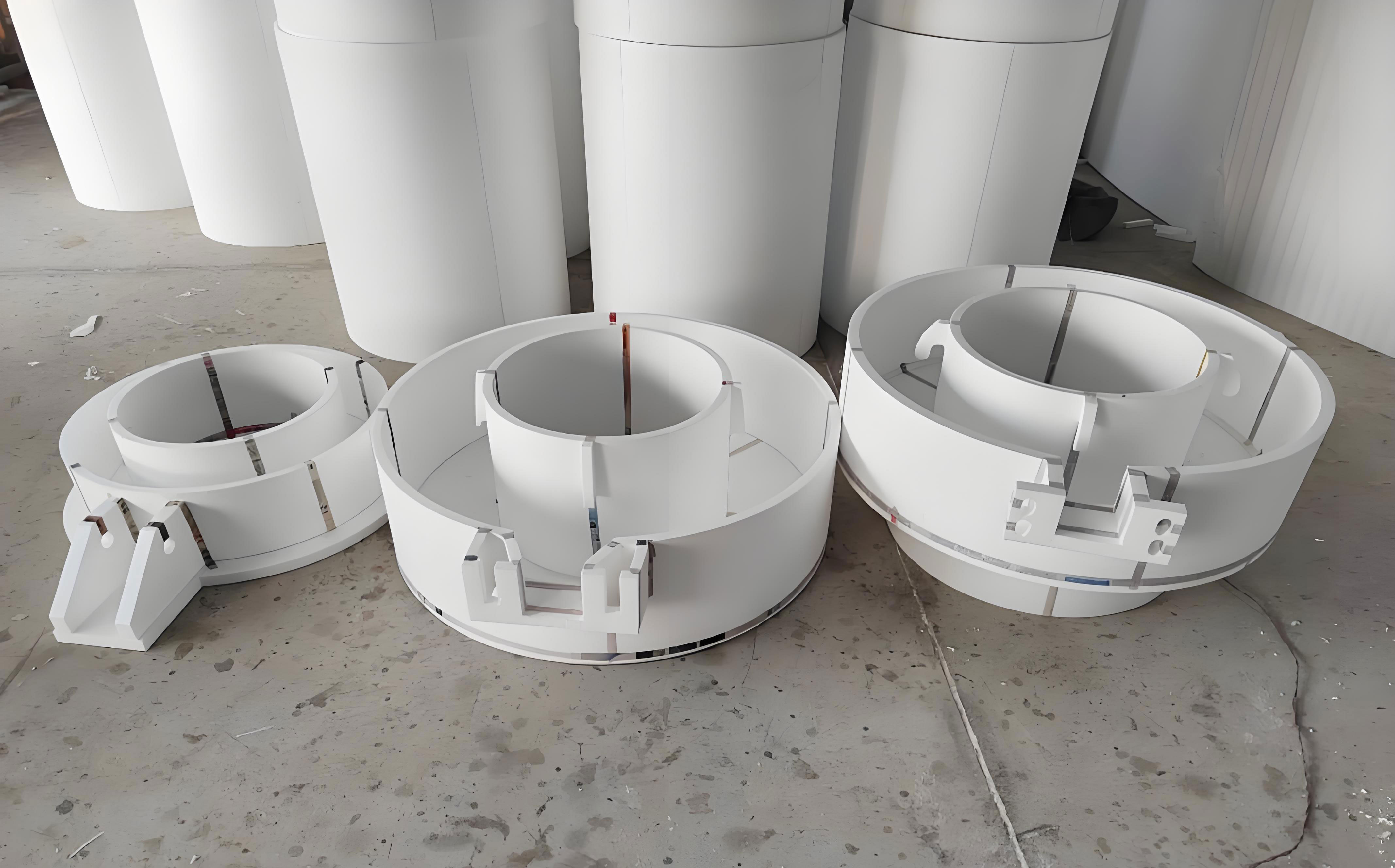
3.3 Molding (Flask Assembly and Sand Compaction)
The coated pattern assembly was placed in the vacuum flask. The pouring position was carefully chosen to avoid large horizontal surfaces, tilting the main plane by approximately 15° from vertical to facilitate sand filling. The gating system (a combined pouring cup/riser) was attached.
The dry “Zhu” sand was then introduced in stages around the pattern. The vibration table was used iteratively following a “frequent, short bursts” principle to achieve uniform and adequate compaction without pattern distortion. Each vibration cycle lasted about 60 seconds. The process can be conceptually summarized by the need to achieve a critical sand density $\\rho_{sand}^{*}$ around the pattern to resist metallostatic pressure during pouring:
$$ \\rho_{sand} \\geq \\rho_{sand}^{*} = f(P_{metal}, \\phi_{sand}, A_{pattern}) $$
where $P_{metal}$ is the metal pressure, $\\phi_{sand}$ is the sand grain packing factor, and $A_{pattern}$ is the pattern’s effective area. After filling, the flask top was sealed with a plastic film to maintain vacuum.
3.4 Vacuum Application and Pouring
Maintaining a stable vacuum is crucial to stabilize the mold cavity as the foam vaporizes and to draw decomposition products through the coating and sand. Our system maintained a vacuum between -0.065 MPa and -0.075 MPa during pouring. The metal (ZG27SiMn) was melted in an electric arc furnace. Pouring temperature was tightly controlled between 1590°C and 1610°C. A specially designed dual-chamber pouring cup was used to dampen the stream from the lip-pour ladle, reducing sand disturbance and air entrainment. The relationship between pouring time $t_p$, vacuum pressure $\\Delta P$, and foam decomposition rate is key to avoiding mold collapse or incomplete filling.
Experimental Results and Analysis
4.1 Casting Surface Quality and Appearance
The resulting castings demonstrated a markedly superior surface finish compared to traditional sand castings. The coating shell peeled off in large sections post-shakeout, requiring minimal manual cleaning. After shot blasting, the surface was smooth and clean, free from gross defects like mold shifts or severe veining. A minor issue of localized sand adhesion was observed in a narrow recess between two lugs.
4.2 Dimensional Accuracy and Weight Comparison
A quantitative assessment confirmed the precision of the lost foam casting process. Key dimensions were measured and compared against both the engineering drawing and a typical sand-cast counterpart.
| Drawing Dimension & Tolerance | Lost Foam Casting | Sand Casting |
|---|---|---|
| 490 -2 (Riser Face) | 492 | 501 |
| 420 | 419 | 430 |
| 160 ±2 | 161 | 161 |
| 54 | 54 | 57 |
| 110 (Riser Face) | 110 | 115 |
| 246 (Machined Face) | 247 | 251 |
The data clearly shows that the lost foam casting consistently met nominal dimensions with minimal deviation, whereas the sand casting exhibited greater variability and oversizing, necessitating more machining.
| Process | Casting Weight (kg) | Total Poured Weight (kg) | Yield |
|---|---|---|---|
| Lost Foam Casting | 224 | 305 | 73.4% |
| Sand Casting | 238 | 330 | 72.1% |
The lost foam casting was approximately 6% lighter for the same functional part, directly due to reduced machining stock and more efficient gating. The casting yield was slightly improved.
4.3 Defect Analysis and Mitigation Strategies
The experiment was not without imperfections, providing valuable learning points:
– Minor Shrinkage Porosity: A small concentrated shrinkage cavity (5-10 mm deep) was found at the root of one riser. The riser on the opposite side, which also served as the main pouring gate, showed no shrinkage due to thermal feeding from the continuous metal stream.
– Root Cause & Solution: The riser volume was marginally undersized for the solidification characteristics of this geometry in lost foam casting. The solution is to increase riser size, potentially using insulating sleeves or exothermic pads to improve feeding efficiency, encapsulated by the formula for riser design $V_{riser} \\geq \\frac{V_{casting} \\cdot \\beta}{\\eta}$ where $\\beta$ is the solidification shrinkage and $\\eta$ is the riser efficiency.
– Localized Sand Adhesion and Slag Inclusions: Sand sticking in the lug recess and minor slag in the spherical socket were observed.
– Root Cause & Solution: This was attributed to two factors: 1) Potential local coating weakness or detachment during sand compaction, and 2) Turbulence from the lip-pour ladle. Mitigation involves optimizing coating strength/permeability and transitioning to a bottom-pour teapot ladle for a quieter metal stream. The permeability $K$ of the coating-sand system must be sufficient to handle the gas flux $\\dot{G}$ from the decomposing foam: $K \\propto \\frac{\\dot{G} \\cdot \\mu}{\\Delta P / L}$, where $\\mu$ is gas viscosity and $L$ is the escape path length.
Conclusion and Future Outlook
Our exploratory venture into applying lost foam casting for hydraulic support components, specifically the socket base, has yielded highly promising results. The technology successfully produced castings with excellent surface finish, high dimensional accuracy, and near-net shape geometry, validating its potential for this application. The direct comparison with sand castings underscores the advantages in reduced machining, cleaner production, and improved precision.
The manual pattern-making method, while effective for prototyping, is a bottleneck for productivity and consistency. For industrial-scale adoption, investment in pattern tooling for molded foam patterns or CNC machining of foam blocks is essential to fully leverage the automation potential and repeatability of the lost foam casting process.
In conclusion, lost foam casting presents a compelling and technologically advanced alternative for manufacturing high-quality, complex cast steel components for heavy machinery like hydraulic supports. It aligns with the dual objectives of enhancing product quality and advancing towards more sustainable, environmentally conscious manufacturing practices. The knowledge gained from this experiment forms a solid foundation for further process optimization and broader implementation within our production framework.