
In my extensive experience within the foundry industry, the evolution of lost foam casting has been remarkable. This process, distinguished by its use of expendable foam patterns, has gained widespread adoption due to its significant advantages over traditional sand casting methods. The benefits are clear: reduced environmental footprint, exceptional design flexibility, lower labor intensity, and superior dimensional repeatability. These attributes make lost foam casting particularly advantageous for producing complex, thin-walled components like engine blocks, gearbox housings, and, as I will focus on here, flywheel housings and structural brackets. However, the very mechanism that enables its flexibility—the vaporization of the foam pattern upon contact with molten metal—also introduces a unique set of challenges. Defects such as burning-on (veining/gas cutting), porosity, and sand wash are not merely inconveniences; they are direct reflections of imbalances in the process parameters and design philosophy. This article synthesizes my practical insights into the root causes of these prevalent defects and outlines a systematic, first-principles approach to process optimization aimed at achieving near-zero defect production.
The Core Mechanism and Inherent Challenges
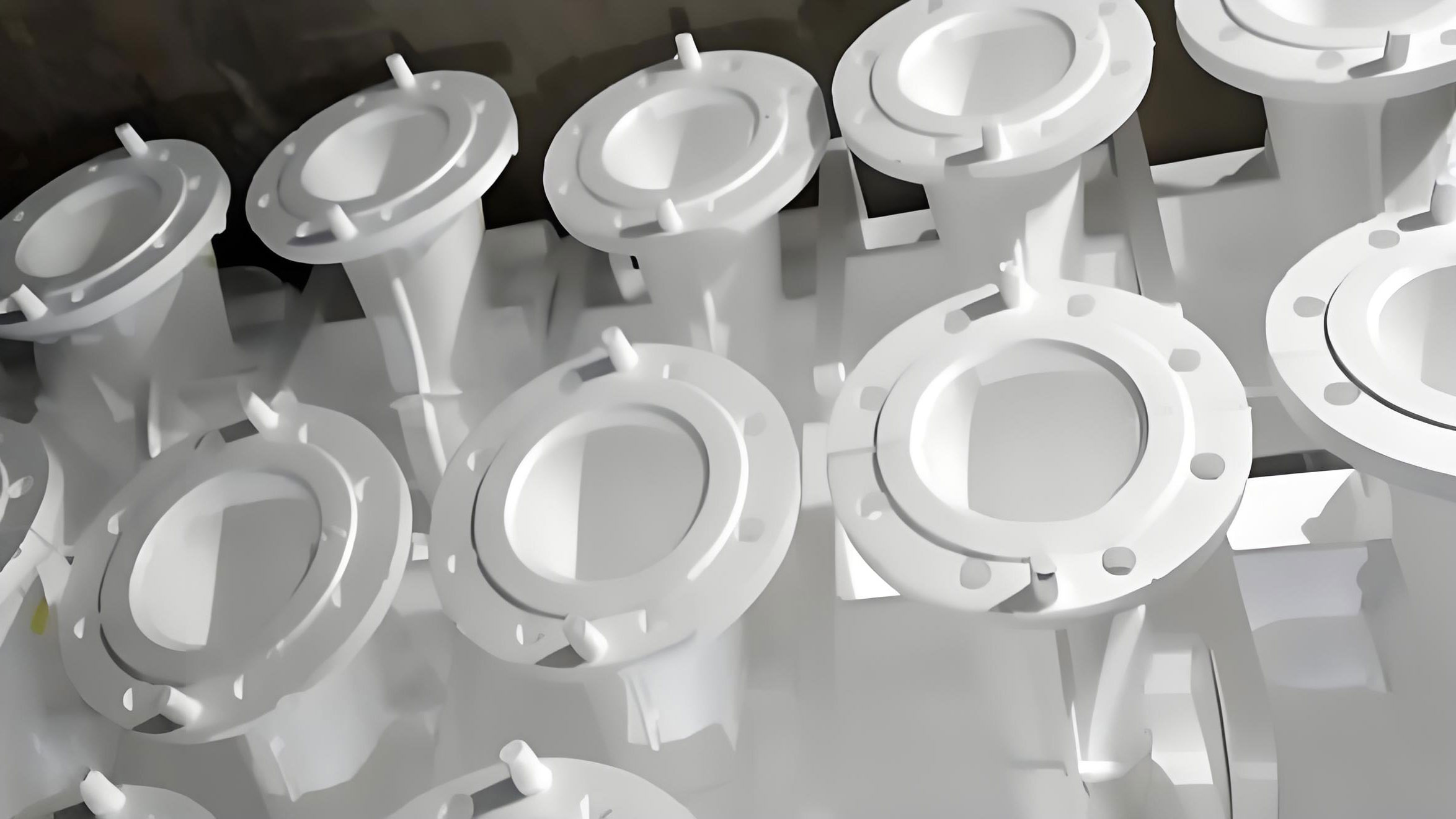
At its heart, lost foam casting is a process of substitution and controlled degradation. A precision-machined foam pattern, coated with a refractory layer, is embedded in unbonded sand. When molten metal is poured, it replaces the foam, which thermally decomposes. The success of the cast component hinges on the precise synchronization of several events: the rate of metal advance, the kinetics of foam degradation, the venting of resulting gases and liquids through the coating, and the stability of the sand mold. A disruption in this sequence manifests as a casting defect. The primary variables governing this interplay can be summarized by the following relationship, central to lost foam casting stability:
$$ Q_{metal} = k \cdot \frac{(T_{pour} – T_{decomp}) \cdot A_{gate}}{V_{gas} \cdot \rho_{coating} \cdot P_{vacuum}} $$
Where:
$Q_{metal}$ is the effective metal flow rate filling the pattern,
$k$ is a process-specific constant,
$T_{pour}$ is the pouring temperature,
$T_{decomp}$ is the foam decomposition temperature,
$A_{gate}$ is the total cross-sectional area of the gates,
$V_{gas}$ is the volumetric rate of gas generation,
$\rho_{coating}$ is the effective permeability/density of the coating, and
$P_{vacuum}$ is the applied vacuum pressure.
Optimizing lost foam casting involves manipulating these variables to maintain $Q_{metal}$ within a stable window that prevents defect formation.
Systematic Analysis of Critical Defects
Through years of troubleshooting, I have categorized the most debilitating defects in lost foam casting into a few key types, each with a distinct fingerprint and causal pathway.
1. Burning-On (Veining/Gas Cutting) and Mechanical Penetration
This defect appears as a rough, metallic-skinned surface where sand grains are fused to the casting. In lost foam casting, it often stems from two mechanisms: mechanical penetration due to inadequate sand compaction, and gas/thermal cutting where high-pressure pyrolysis gases erode the coating. A classic case involved a thin-walled (5mm) HT250 flywheel housing. The initial process yielded a 20% scrap rate due to severe burning-on in the upper internal cavity.
Root Cause Analysis: The pattern was oriented with a large, open face downward. During sand filling and vibration, the upward-facing internal cavity, featuring an obtuse angle greater than 90°, created a “shadow” zone. Sand could not effectively compact in this region, resulting in low localized mold strength ($\sigma_{sand}$). The relationship between vibration parameters and achieved density is critical:
$$ \rho_{sand} = f(A_v, f_v, t_v, \theta) $$
where $A_v$ is vibration amplitude, $f_v$ is frequency, $t_v$ is time, and $\theta$ is the geometry-dependent fill angle. For the problematic cavity, $\theta$ was unfavorable, leading to $\rho_{sand}$ below the critical threshold required to resist metal static pressure $P_{metal} = \rho_{metal} \cdot g \cdot h$.
Corrective Actions & Results:
- Pattern Re-orientation: The cluster was redesigned to position the open cavity face upward. This allowed gravity-assisted sand filling, transforming $\theta$ to a favorable acute angle, ensuring direct compaction.
- Cluster Spacing Optimization: The center-to-center distance between patterns in the cluster was increased from 80mm to 120mm. This provided sufficient space for sand flow and proper compaction around each pattern, increasing overall mold rigidity.
After implementation, the defect was completely eliminated (0% scrap), validating that the issue was purely one of mold fill and compaction dynamics in lost foam casting.
2. Subsurface and Shallow Porosity
Porosity, appearing as smooth-walled holes just beneath the machined surface, is predominantly a failure of gas evacuation. The pyrolysis of polystyrene follows a general reaction: $$ C_nH_{2n} + (3n/2)O_2 \rightarrow nCO_2 + nH_2O + \text{hydrocarbons} + \text{carbon residue} $$. These products must be transported through the coating and sand before the metal front solidifies. In one production run for a ductile iron flywheel housing, 30% of parts showed porosity at the highest boss feature after machining.
Root Cause Analysis: A structured DOE (Design of Experiments) was employed to isolate variables:
- Pouring Temperature ($T_{pour}$): Increased from 1430-1440°C to 1450-1460°C. Result: Defect rate improved to 20%. Higher temperature accelerates foam degradation but also increases gas generation rate ($V_{gas}$).
- Coating Thickness ($\rho_{coating}$): The boss area was intentionally coated thinner (~0.5mm vs. standard 2.0mm). Result: Defect rate 25%. Thinner coating improves permeability but risks erosion.
- Vacuum Pressure ($P_{vacuum}$): Increased from -0.025 MPa to -0.045 MPa. Result: Defect rate 15%. Stronger vacuum enhances gas extraction.
- Passive Venting: A simple foam “exhaust fin” (50x30x5 mm) was attached from the boss to the cluster’s external sand interface. Result: Defect rate 0%.
Corrective Actions & Results: The exhaust fin proved most effective. It provided a dedicated, low-resistance path for gases to escape from the isolated high-point directly into the sand bulk, bypassing the need to travel through long, tortuous coating paths. This is a prime example of designing for degassing in lost foam casting. The final process incorporated this fin while maintaining other optimized parameters (higher $T_{pour}$ and $P_{vacuum}$), achieving sustained defect-free production.
3. Sand Wash and Erosion Inclusions
This defect manifests as compacted sand lumps or veins within the casting, usually near gates or abrupt changes in flow direction. It is caused by the mechanical failure of the refractory coating, allowing unbonded sand to infiltrate the metal stream. A connecting rod bracket (HT200, ~50kg) exhibited a 20% scrap rate from sand wash at the base of the vertical gating points.
Root Cause Analysis: The initial gating used three side gates. Computational fluid dynamics (CFD) analogies and post-mortem analysis indicated:
- High Local Velocity/Pressure: The metal entry was concentrated, leading to high dynamic pressure on a small coating area. The pressure ($P_{dyn}$) can be approximated from Bernoulli: $$ P_{dyn} = \frac{1}{2} \rho v^2 $$ where $v$ is the gate velocity.
- Inadequate Coating Strength: While increasing coating thickness from 1.5mm to 2.2mm at the gates reduced the defect rate to 12%, it was not a complete solution, as it also marginally reduces permeability.
Corrective Actions & Results: The fundamental solution was to redesign the gating system to reduce $v$ and distribute $P_{dyn}$. A fourth gate was added, transforming the system to a balanced four-point side entry. This increased the total gating area ($A_{gate}$), thereby reducing the metal velocity $v$ for a given pouring rate. The gate velocity reduction is inversely proportional: $$ v_{new} = v_{old} \cdot \frac{A_{gate_{old}}}{A_{gate_{new}}} $$. The more balanced fill also prevented localized overheating of the coating. This modification alone reduced the sand wash defect rate to 0%, proving that hydraulic design is paramount in lost foam casting gating.
| Defect Type | Primary Manifestation | Root Causes | Key Process Variables | Effective Corrective Measures |
|---|---|---|---|---|
| Burning-On / Penetration | Rough surface, sand fused to metal | Low sand compaction density, high local metal pressure | Pattern orientation ($\theta$), vibration parameters ($A_v, f_v, t_v$), cluster spacing | Reorient pattern for optimal fill; Increase cluster spacing; Optimize vibration cycle |
| Porosity (Subsurface) | Smooth holes below machined surface | Entrapped pyrolysis gases | Pouring temperature ($T_{pour}$), coating permeability/thickness, vacuum ($P_{vacuum}$), venting design | Add strategic exhaust fins/risers; Optimize $T_{pour}$ & $P_{vacuum}$; Ensure coating application uniformity |
| Sand Wash / Erosion | Sand inclusions near gates or impingement zones | Coating failure due to high-velocity metal flow | Gate velocity ($v$), gating geometry, coating mechanical strength | Increase number of gates to reduce $v$; Use larger, flatter gates; Ensure robust coating in high-flow areas |
| Carbon Defects (Kish, Lustrous Carbon) | Slag-like films or wrinkled surfaces | Incomplete evacuation of pyrolysis carbon residues | Pouring rate, coating permeability, alloy chemistry (oxidizing potential) | Increase pouring temperature and rate moderately; Use coatings with oxidizing agents; Ensure strong, consistent vacuum |
| Pattern-Related Distortion | Dimensional inaccuracy, warping | Foam stress relaxation, handling damage, improper cluster assembly | Foam density, storage conditions, adhesive application and curing | Use stable, aged foam; Design rigid clustering systems; Automate/standardize gluing processes |
Integrated Process Optimization Framework
Solving individual defects is reactive. A proactive approach in lost foam casting requires an integrated optimization framework focused on four pillars: Gating and Feeding, Venting, Cluster Design, and Parameter Control.
Pillar 1: Gating System Optimization
The gating system must fulfill a contradictory mandate: fill the mold quickly enough to avoid premature freezing, but gently enough to avoid erosion. For lost foam casting, I advocate for the “pressurized yet distributed” system. The traditional sprue-runner-gate ratio (e.g., 1:1:1) is a good starting point, but the geometry is more critical. Bottom gating is often preferred for stability, but top or side gating can be used with proper control. The key is to minimize direct impingement on flat coating surfaces. Using several smaller gates is almost always superior to one large gate. The total filling time ($t_{fill}$) should be synchronized with the foam degradation front, a relationship that can be modeled as: $$ t_{fill} \approx \frac{V_{casting}}{A_{gate} \cdot v_{crit}} $$ where $v_{crit}$ is an empirically determined maximum velocity to avoid erosion, typically between 0.5 and 1.5 m/s for ferrous lost foam casting.
Pillar 2: Strategic Venting and Slag Displacement
Venting is not an afterthought; it is a core design element. Every isolated high point in the pattern is a potential gas trap. The solution is integrated exhaust risers or “fin” vents. These are not feeding risers but dedicated gas conduits. Their cross-sectional area can be small, as they only transport gas and liquid residue, not feed liquid metal. A useful heuristic is to allocate 10-20% of the total gating area to dedicated venting pathways. Furthermore, the gating system itself should be designed to promote the forward movement of pyrolysis residues ahead of the metal front and into strategically placed “slag traps”—blind ends or enlarged sections of runners where these low-density materials can collect without being entrained.
Pillar 3: Rational Cluster Design and Inlet Layout
The pattern assembly, or cluster, dictates mold filling dynamics and productivity. The layout must ensure:
- Uniform Sand Compaction: Patterns must be spaced to allow sand flow on all sides. A minimum gap of 1.5-2 times the local pattern thickness is a good rule.
- Balanced Filling: Patterns should be arranged symmetrically around the sprue, and gate lengths to each pattern should be as equal as possible to ensure simultaneous filling.
- Optimal Orientation: Large, flat surfaces should be oriented vertically to aid compaction and reduce the projected area against metal static pressure. Critical functional surfaces should be placed downward or vertically to minimize the risk of defects.
Pillar 4: Parameter Synchronization and Control
The variables in the master equation must be balanced. This requires strict process discipline and often involves creating a “process window” diagram for each alloy and casting family. The interdependence can be expressed conceptually:
| Parameter | Primary Effect | If Too Low | If Too High | Optimal Correlation |
|---|---|---|---|---|
| Pouring Temperature ($T_{pour}$) | Controls foam degradation rate, fluidity | Cold shuts, misruns, porosity | Penetration, excessive gas generation, metal shrinkage | Must increase with section thickness and coating density |
| Pouring Rate / Time ($t_{fill}$) | Controls metal front velocity and heat input | Unstable degradation, fold defects | Erosion, sand wash, turbulence | Inversely related to gating area ($A_{gate}$); must be fast enough to maintain thermal gradient |
| Vacuum Level ($P_{vacuum}$) | Drives gas evacuation, mold strength | Porosity, mold collapse | Increased penetration, excessive liquid styrene draw | Must be balanced with coating permeability; higher for denser coatings or complex shapes |
| Coating Permeability ($\rho_{coating}$) | Governs gas transmission and surface finish | Porosity, blowholes | Penetration, poor finish | Higher permeability allows lower $T_{pour}$ and $P_{vacuum}$; must be matched to alloy type |
Conclusion: A Philosophy of Prevention
The journey to mastering lost foam casting is one of moving from defect correction to defect prevention. Each defect is a message—a clear signal of a specific imbalance in the complex physics of the process. By adopting a structured, analytical approach that views the pattern, cluster, gating, venting, and process parameters as an integrated system, these defects can be systematically designed out. The use of first-principle models, even simplified ones, combined with rigorous empirical testing (moving cautiously from small batches to full production) provides a powerful methodology. The ultimate goal in lost foam casting is not just to produce a shape, but to reliably produce sound, high-integrity castings by harmonizing the replacement of foam with metal in a stable, controlled environment. This requires constant vigilance, a deep understanding of cause and effect, and a commitment to optimizing every link in the chain, from foam bead to finished casting.