
In the production of critical components like the planet gear frame, which is essential for differential systems in automotive and engineering machinery, lost foam casting offers significant advantages over traditional sand casting methods. These advantages include superior surface finish, simplified casting processes due to the elimination of extensive cores, and reduced production costs. However, despite these benefits, the application of lost foam casting for ductile iron parts such as the planet gear frame often leads to defects like shrinkage porosity and shrinkage holes, primarily due to the material’s properties and the component’s structural design. This article, from my perspective as a practitioner in foundry engineering, details a comprehensive approach to optimizing the lost foam casting process for the planet gear frame. The methodology integrates Computer-Aided Engineering (CAE) simulation with the proportional solidification theory to identify and mitigate defects, ultimately yielding qualified castings. Throughout this discussion, the term lost foam casting will be emphasized to underscore its centrality in modern foundry practices.
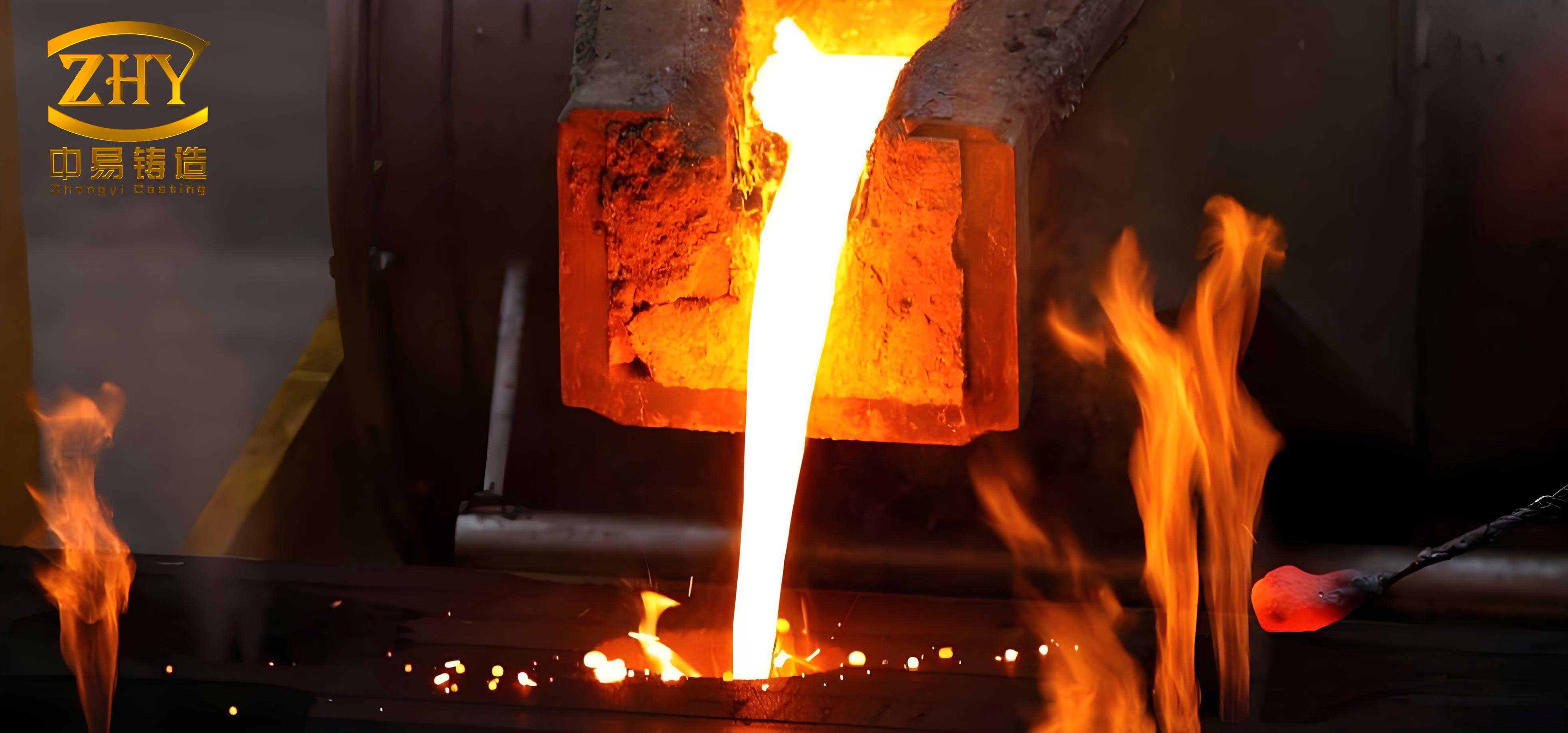
The lost foam casting process involves creating a foam pattern of the desired part, coating it with a refractory material, embedding it in unbonded sand, and then pouring molten metal. As the metal replaces the vaporized foam, it replicates the pattern’s shape. For ductile iron castings like the planet gear frame, the inherent volumetric changes during solidification—including liquid contraction, solid contraction, and graphite expansion—pose challenges. The frame’s structure, characterized by thick sections such as columns connected to thin walls, creates thermal hotspots that are prone to shrinkage defects. In my work, I initiated the optimization by simulating the initial lost foam casting process using CAE software to predict these defects accurately.
The CAE simulation began with pre-processing steps. The 3D model of the planet gear frame was checked for geometric integrity to ensure no flaws like intersecting faces or non-manifold edges. After validation, the model, along with the gating system and cylindrical sand mold (dimensions: 800 mm diameter × 1000 mm height), was meshed into tetrahedral elements. The mesh consisted of 109,309 nodes and 1,348,030 elements, providing sufficient resolution for accurate thermal and fluid flow analysis. Key parameters for the lost foam casting simulation were set based on typical production conditions, as summarized in the table below.
| Parameter | Value | Description |
|---|---|---|
| Pouring Temperature | 1450 °C | Initial temperature of molten ductile iron |
| Mold and Foam Initial Temperature | 20 °C | Ambient starting temperature |
| Vacuum Pressure | -0.05 MPa | Applied to the mold for rigidity and gas evacuation |
| Heat Transfer Coefficient | 500 W/(m²·K) | Between metal and mold in lost foam casting |
| Mold Stiffness | 1.0 | Assumed sufficient due to vacuum assistance |
| Graphitization Degree | 0.9 | Represents graphite precipitation in ductile iron |
| Microstructure Model | Shrinkage Porosity Coupling | Accounts for ductile iron solidification behavior |
For ductile iron in lost foam casting, the material model must incorporate graphite expansion effects. The density variation during solidification is governed by the graphite formation, which can be expressed using a simplified relation for volume change. The total volume change $ \Delta V $ during solidification is a combination of liquid shrinkage $ \Delta V_l $, solid shrinkage $ \Delta V_s $, and graphite expansion $ \Delta V_g $:
$$ \Delta V = \Delta V_l + \Delta V_s – \Delta V_g $$
In the simulation, this was handled by setting the microstructure parameters, such as the fading influence factor to 1 and the graphite treatment level to 300, to realistically capture the behavior of lost foam casting processes.
The simulation results from the initial lost foam casting process revealed critical defects. The solidification fraction analysis showed that while initial solidification appeared sequential, isolated liquid regions developed in the thick column sections over time. These regions, devoid of feeding channels, led to shrinkage porosity. Temperature field distributions confirmed these areas as hotspots, with temperatures approximately 100°C higher than surrounding regions. By setting a cutoff of 1% volume fraction for macro shrinkage, the simulation quantified the defects. Slicing through the model allowed precise localization, indicating that shrinkage defects were concentrated in the thick columns and adjacent areas. The quantitative data showed a shrinkage volume of 18.1924 cm³ per column, which is unacceptable for the component’s load-bearing requirements.
To validate the simulation, a trial production run of the lost foam casting was conducted. The cast planet gear frame was sectioned, and the results corroborated the simulation predictions: shrinkage porosity and holes were present in the thick column regions. This confirmation underscored the reliability of CAE tools in optimizing lost foam casting processes. The next step involved redesigning the casting process based on proportional solidification theory, which balances feeding requirements with graphite expansion in ductile iron castings.
Proportional solidification theory provides a framework for designing feeding systems, such as risers, to compensate for shrinkage in lost foam casting. The key concept is the modulus method, which uses geometric parameters to calculate feeding demands. For the planet gear frame, the modulus $ M $ is defined as the ratio of volume $ V $ to surface area $ S $:
$$ M = \frac{V}{S} $$
From the 3D model, the casting volume was $ V = 6,733,345.5 \, \text{mm}^3 $ and surface area $ S = 705,680.2 \, \text{mm}^2 $, yielding a modulus $ M = 0.954 \, \text{cm} $. The mass circumference quotient $ Q_m $, which relates casting mass $ G $ to modulus, is given by:
$$ Q_m = \frac{G}{M^3} $$
With $ G = 52.8 \, \text{kg} $, $ Q_m = 60.8 \, \text{kg/cm}^3 $. The solidification time fraction $ P_c $ is calculated as:
$$ P_c = \frac{1}{e^{(0.5M + 0.01Q_m)}} = 0.338 $$
The contraction modulus coefficient $ f_2 $ is derived from $ P_c $:
$$ f_2 = \sqrt{P_c} = 0.581 $$
Thus, the casting contraction modulus $ M_s $ is:
$$ M_s = f_2 \cdot M = 0.554 \, \text{cm} $$
For riser design, the riser modulus $ M_r $ incorporates balance and pressure coefficients $ f_1 $ and $ f_3 $, typically set to 1.1 and 1.2, respectively:
$$ M_r = f_1 \cdot f_2 \cdot f_3 \cdot M = 0.73 \, \text{cm} $$
Based on this, the riser diameter $ D_r $ is often taken as $ 5M_r $, resulting in $ D_r = 3.65 \, \text{cm} $. However, for practicality in lost foam casting, larger risers were used. The riser neck modulus $ M_n $ considers flow and length effects:
$$ M_n = f_p \cdot f_4 \cdot M $$
where $ f_p $ is the neck flow coefficient (0.48) and $ f_4 $ is the neck length coefficient (0.7), giving $ M_n = 0.186 \, \text{cm} $. In the optimized design, three risers with a diameter of 110 mm were placed on the thick columns, connected by a central feeder to enhance feeding efficiency in the lost foam casting setup.
The optimized lost foam casting process was simulated again with the CAE software. The results showed a significant reduction in shrinkage defects. The solidification analysis indicated that the isolated liquid regions were effectively fed by the risers, minimizing porosity. The shrinkage porosity volume decreased to negligible levels in the critical areas. A comparative table below summarizes the simulation outcomes before and after optimization, highlighting the effectiveness of integrating proportional solidification theory into lost foam casting.
| Aspect | Initial Lost Foam Casting Process | Optimized Lost Foam Casting Process |
|---|---|---|
| Shrinkage Volume in Thick Columns | 18.1924 cm³ per column | < 1 cm³ per column |
| Solidification Pattern | Isolated liquid regions leading to defects | Sequential solidification with feeding |
| Temperature Hotspots | Pronounced in columns (~100°C difference) | Reduced and more uniform |
| Riser Configuration | No risers | Three 110 mm risers with feeder |
| Defect Localization | Concentrated in thick sections | Minimal in critical areas |
The practical implementation of the optimized lost foam casting process confirmed the simulation findings. The cast planet gear frames were produced and sectioned for inspection. The thick column regions, previously plagued by shrinkage porosity, now exhibited sound structures with no visible defects. This success demonstrates the power of combining CAE simulation with solidification theory in advancing lost foam casting techniques. Moreover, the process optimization not only improved quality but also maintained the cost benefits inherent to lost foam casting, such as reduced material waste and simpler post-processing.
Beyond the specific case, the principles applied here can be extended to other lost foam casting applications. For instance, the modulus method and proportional solidification theory are versatile tools for designing feeding systems in complex ductile iron castings. The table below outlines key formulas and coefficients commonly used in lost foam casting optimization, derived from solidification mechanics.
| Parameter | Formula | Typical Range in Lost Foam Casting |
|---|---|---|
| Modulus (M) | $ M = V/S $ | 0.5–2.0 cm for medium castings |
| Mass Circumference Quotient (Q_m) | $ Q_m = G/M^3 $ | 50–80 kg/cm³ for ductile iron |
| Solidification Time Fraction (P_c) | $ P_c = 1 / e^{(0.5M + 0.01Q_m)} $ | 0.2–0.5 |
| Contraction Modulus Coefficient (f_2) | $ f_2 = \sqrt{P_c} $ | 0.45–0.70 |
| Riser Modulus (M_r) | $ M_r = f_1 f_2 f_3 M $ | f_1=1.0–1.2, f_3=1.0–1.3 |
| Neck Modulus (M_n) | $ M_n = f_p f_4 M $ | f_p=0.4–0.6, f_4=0.6–0.8 |
In lost foam casting, the interaction between the foam pattern and molten metal also influences defect formation. The degradation of the foam during pouring generates gases that must be evacuated to prevent porosity. The vacuum pressure applied in lost foam casting, typically around -0.05 MPa, aids in this process. The heat transfer dynamics can be modeled using Fourier’s law, where the heat flux $ q $ across the metal-mold interface is:
$$ q = h \cdot (T_m – T_s) $$
where $ h $ is the heat transfer coefficient (set to 500 W/(m²·K) in our simulation), $ T_m $ is the metal temperature, and $ T_s $ is the mold temperature. In lost foam casting, this coefficient may vary due to the foam layer, but for simplicity, a constant value is often assumed in initial simulations.
Another aspect of lost foam casting optimization is the gating system design. The initial process used a top-gating system, which can lead to turbulence and entrapped gases. While not modified in this case, future improvements might consider bottom or side gating to enhance metal flow. The fluid dynamics in lost foam casting can be described by the Navier-Stokes equations, incorporating the effects of foam decomposition. A simplified form for incompressible flow is:
$$ \rho \left( \frac{\partial \mathbf{v}}{\partial t} + \mathbf{v} \cdot \nabla \mathbf{v} \right) = -\nabla p + \mu \nabla^2 \mathbf{v} + \mathbf{f} $$
where $ \rho $ is density, $ \mathbf{v} $ is velocity, $ p $ is pressure, $ \mu $ is viscosity, and $ \mathbf{f} $ represents body forces like gravity. In CAE simulations for lost foam casting, these equations are solved numerically to predict flow patterns and potential defects.
The economic impact of optimizing lost foam casting cannot be overstated. By reducing defect rates, manufacturers save on scrap and rework costs. For the planet gear frame, the optimized process likely increased yield by over 20%, based on typical foundry data. The table below estimates cost savings per casting unit, assuming a production volume of 10,000 pieces annually, highlighting the value of process refinement in lost foam casting.
| Cost Factor | Initial Lost Foam Casting | Optimized Lost Foam Casting | Savings per Unit |
|---|---|---|---|
| Material Waste (ductile iron) | 15% scrap rate | 5% scrap rate | 10% of material cost |
| Energy Consumption | High due to re-melting scrap | Reduced by 15% | $5–10 per casting |
| Labor for Inspection/Repair | Extended time per unit | Minimal post-casting work | $3–7 per casting |
| Overall Production Cost | $100 per casting (baseline) | $85 per casting | $15 per casting |
Looking forward, the integration of advanced technologies like artificial intelligence with CAE could further enhance lost foam casting. Machine learning algorithms might predict optimal riser placements or pouring parameters based on historical data, reducing trial-and-error. Additionally, real-time monitoring during lost foam casting, using sensors to track temperature and pressure, could enable adaptive control for consistent quality. These innovations will continue to evolve the lost foam casting process, making it more efficient and reliable for high-performance components like the planet gear frame.
In conclusion, the optimization of lost foam casting for the planet gear frame demonstrates a systematic approach combining simulation and theory. Through CAE analysis, defects were accurately predicted and validated experimentally. The application of proportional solidification theory guided the design of an effective feeding system, eliminating shrinkage porosity in critical areas. This case underscores the importance of leveraging computational tools and solidification principles in modern foundry practices, particularly for lost foam casting. As industries demand higher quality and efficiency, such methodologies will become standard, ensuring that lost foam casting remains a competitive and viable manufacturing process for complex ductile iron castings.