
In our foundry operations, we historically relied on manual molding techniques for producing various castings, with an annual output exceeding 800 tons. Most products were characterized by single-piece or small-batch production. This traditional approach was plagued by outdated processes and equipment, high labor intensity, poor working conditions, low production efficiency, and difficulties in controlling casting quality, leading to high scrap rates that significantly impacted overall mechanical plant productivity. To fundamentally address these challenges, we decided to implement the lost foam casting method, tailored to our specific circumstances.
The adoption of lost foam casting has been a transformative step. We have successfully applied this technique to over a dozen products made from materials such as high-manganese steel, carbon steel, and gray iron. This article details our experience, using the production of PCK crusher hammers as a case study, to elaborate on the process configuration, workflow design, and resulting benefits of lost foam casting.
The core advantage of lost foam casting lies in its simplicity and precision. By using expendable foam patterns that vaporize upon metal pour, we eliminate the need for conventional molds and cores. This fundamental shift underpins the improvements in quality, efficiency, and working environment we have achieved.
Process Equipment Configuration
Guided by the principle of adapting to small-batch production and maximizing the use of existing, often idle, equipment to minimize investment, we configured a dedicated lost foam casting line. The setup emphasizes functionality and cost-effectiveness, with several key pieces of equipment being modified or fabricated in-house.
| Equipment Item | Specification / Description | Primary Function in Lost Foam Casting |
|---|---|---|
| Three-dimensional Vibration Table | 1.2m × 1.2m platform | To uniformly compact dry sand around the foam cluster, ensuring mold integrity. |
| Special Vacuum Flask | 1m × 0.8m × 0.6m dimensions | Holds the sand and foam pattern assembly; designed for effective vacuum application. |
| Coating Mixer | 0.5 m³ capacity | Ensures homogeneous preparation of the refractory coating applied to foam patterns. |
| Vacuum Pump System | 12 m³/min flow rate, with modified oil-water separator, pressure stabilizer, and wet dust collector | Creates and maintains the necessary negative pressure within the sand flask to remove pyrolysis gases and stabilize the mold during pour and solidification. |
| Vacuum Distribution Unit | Custom-built | Manages vacuum supply to multiple flasks if needed. |
| Multi-function Cutting Machine | Custom-built | Used for precisely cutting and shaping foam boards into patterns. |
This configuration, centered around the vacuum system and vibration table, forms the backbone of our lost foam casting operation. The self-modified components highlight the adaptability of the lost foam casting process to various shop-floor constraints.
Production Process Flow Design and Implementation
The entire lost foam casting process is a carefully sequenced chain of operations. Each step is critical to ensuring the final quality of the cast hammer. The workflow can be summarized by a core formula representing the sequence of state changes: $$ \text{Foam Pattern} \xrightarrow[\text{Coating}]{\text{Assembly}} \text{Coated Cluster} \xrightarrow[\text{Sand}]{\text{Embedding}} \text{Mold} \xrightarrow[\text{Vacuum}]{\text{Pouring}} \text{Casting}. $$
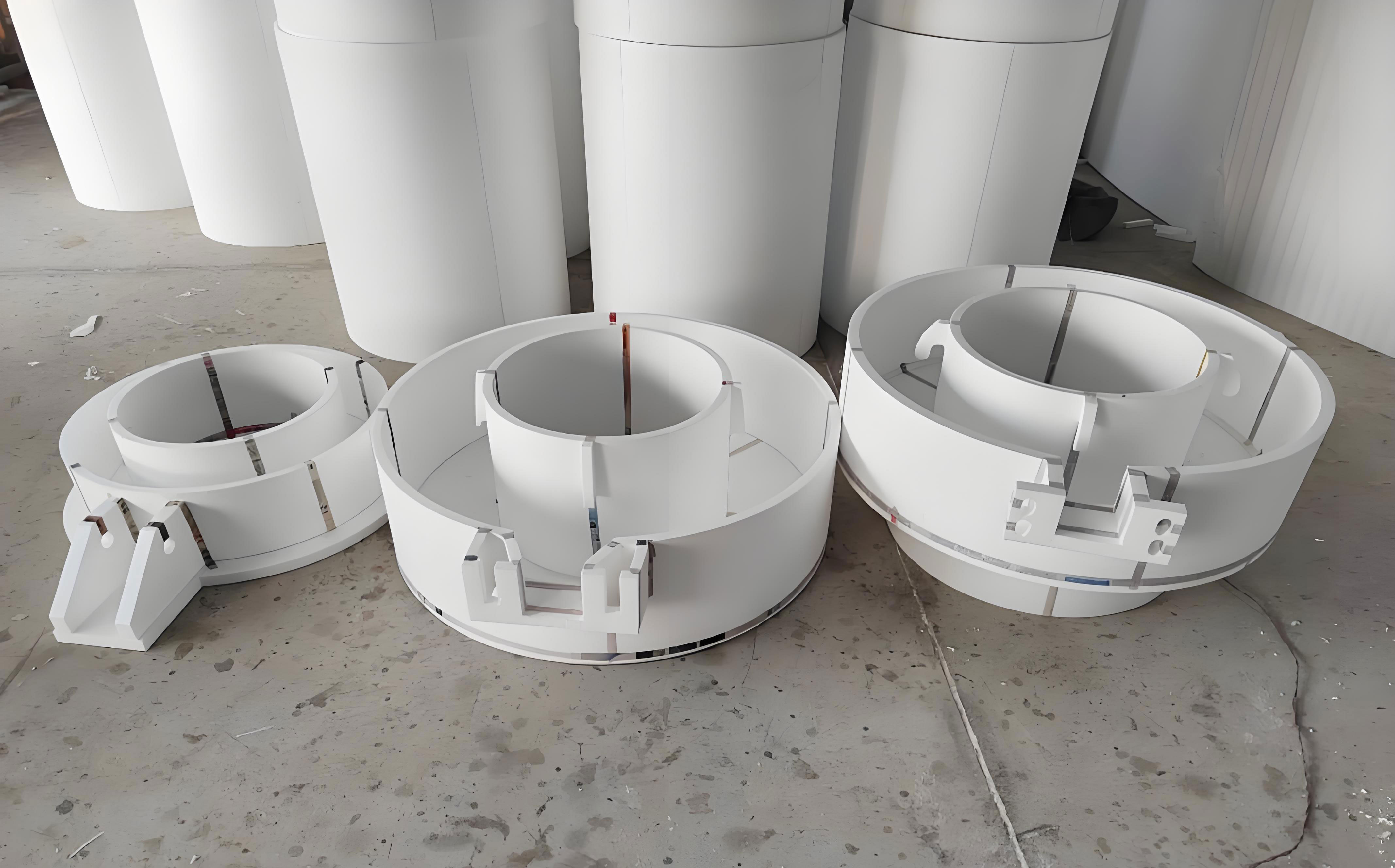
1. Pattern Manufacturing and Gating System Design
For the PCK crusher hammer, the material is Mn13 high-manganese steel with a solidification shrinkage factor of 2.3%. This shrinkage must be accurately compensated for in the pattern dimensions. If the nominal part dimension is $L_0$, the pattern dimension $L_p$ is calculated as: $$ L_p = L_0 \times (1 + f_s) $$ where $f_s$ is the shrinkage allowance (0.023 for Mn13). Initially, we employed a pattern-making technique involving the cutting and bonding of foam boards. The hammer shape is relatively simple, facilitating this method.
The gating and venting system is paramount in lost foam casting. We adhere to strict principles to ensure clean filling and minimal defects:
- Use of a pressurized gating system to promote turbulent-free filling.
- Cross-sectional area ratios for the sprue ($\sum F_s$), runner ($\sum F_r$), and ingate ($\sum F_i$) follow: $$ \sum F_s : \sum F_r : \sum F_i = 1 : 1.1 : 1.3. $$ This ratio helps control metal velocity and pressure.
- Minimum sand thickness (shakeout allowance) requirements: bottom (60-90 mm), sides (≥60 mm), between patterns (45-55 mm).
- Vent tabs are attached to the highest points of the pattern to facilitate gas escape from the foam degradation.
The patterns, gating, and vents are assembled into a cluster using hot-melt adhesive. A cluster is designed to maximize yield per flask. The layout must balance metal feed and sand compaction.
2. Coating Preparation and Application
The refractory coating is the barrier between the molten metal and the sand; its properties are vital. A good coating for lost foam casting must exhibit excellent gas permeability, adhesion, suspension stability, and dry strength. We formulate our coating meticulously. Its performance can be modeled by considering key parameters: permeability ($k$), thickness ($\delta$), and viscosity ($\eta$). The coating’s role in gas diffusion can be approximated by Darcy’s law for flow through a porous medium, though adapted for gas transport during foam decomposition. The critical dry coating thickness $\delta_c$ for our hammer castings is set between 0.8 and 1.2 mm.
| Process Stage | Coating Thickness, $\delta$ (mm) | Natural Drying Time (hours) | Drying Parameters |
|---|---|---|---|
| Application & Drying | 0.8 – 1.2 | >12 | Temperature < 50°C for 6 hours |
The coated cluster is dried thoroughly to remove moisture and develop strength. Inadequate drying can lead to mold collapse or gas-related defects, underscoring the precision required in lost foam casting.
3. Mold Assembly and Compaction
The dried cluster is placed in the vacuum flask. A base layer of dry silica sand (approx. 80 mm thick) is laid first. The cluster is positioned respecting the shakeout allowances. The flask is then filled with more dry sand while being subjected to vibration on the 3D table. Compaction time ($t_v$) is crucial; for our setup, $t_v \approx 75$ seconds. The vibration ensures uniform sand density ($\rho_s$) around the complex pattern geometry, providing mold support. The sand density can be related to vibration parameters (frequency $f$, amplitude $A$) and time: $$ \rho_s(t) \propto \int_0^{t_v} A(t) f(t) \, dt. $$ After compaction, the flask top is sealed with a plastic film, and the pouring cup is placed.
4. Vacuum Application and Pouring
The vacuum system is engaged to stabilize the mold. We maintain a constant vacuum pressure ($P_v$) of -0.06 MPa (gauge) within the flask before and during pouring. This negative pressure consolidates the sand mold and extracts the gaseous products from the decomposing foam. The pouring temperature ($T_p$) for Mn13 steel in lost foam casting is slightly higher than in conventional sand casting to compensate for the energy absorbed by foam degradation: $$ T_{p,\text{LFC}} = T_{p,\text{conventional}} + \Delta T $$ where $\Delta T$ is typically 20-40°C. For our hammers, $T_p$ is maintained at 1390-1420°C. Pouring must be continuous and swift to prevent premature cooling or mold instability, a key discipline in lost foam casting.
5. Solidification and Shakeout
After pouring, the vacuum is maintained for about 10 minutes to ensure complete metal solidification under stable mold conditions. The vacuum is then released. The entire flask is left for approximately 30 minutes before shakeout. A significant benefit of lost foam casting is that the coating often peels off naturally upon cooling (after about 12 hours), drastically reducing cleaning labor. The casting yield ($Y$) for lost foam casting is notably high and can be expressed as: $$ Y = \frac{\text{Weight of Finished Casting}}{\text{Weight of Metal Poured}} \times 100\%. $$ In our process, this yield reaches 75-90%.
Comprehensive Effect and Analysis
The implementation of lost foam casting has yielded quantifiable improvements in both product quality and operational economics.
Quality Analysis
The surface finish and dimensional accuracy of hammers produced via lost foam casting are superior. The process replicates the foam pattern’s surface exactly. Key quality metrics are compared below:
| Method | Surface Roughness, $R_a$ (μm) | Dimensional Accuracy Grade (CT) |
|---|---|---|
| Lost Foam Casting | 6.3 | 7-8 |
| Traditional Sand Casting | 100 | 13 |
The mechanical properties of the lost foam cast hammers are equivalent to those from conventional methods, proving that the process does not compromise material integrity. This is critical for wear parts like crusher hammers.
| Method | Tensile Strength, $\sigma_b$ (N/mm²) | Elongation, $\delta_5$ (%) | Impact Absorption, $A_k$ (J) | Hardness (HB) |
|---|---|---|---|---|
| Lost Foam Casting | 708 | 19.2 | 94 | 219 |
| Traditional Sand Casting | 715 | 21 | 98 | 224 |
The minor variations are within normal material property scatter bands, confirming the suitability of lost foam casting for high-performance applications.
Economic and Operational Analysis
The economic advantages of lost foam casting are profound, stemming from reduced steps, material reuse, and lower defect rates. A direct comparison highlights the efficiency gains.
| Parameter | Lost Foam Casting | Traditional Sand Casting |
|---|---|---|
| Pattern/Tooling Cost per batch (Relative Units) | 49 | 310 |
| Sand Reclamation Rate (%) | ~95 | ~30 |
| Process Yield (Metal Utilization %) | 89 | 75 |
| Scrap Rate (%) | 0.6 | 5 |
| Production Cycle Time (days) | 5 | 18 |
The near-total reusability of dry sand in lost foam casting ($\eta_{\text{sand-reclaim}} \approx 95\%$) is a major cost and environmental benefit, described by: $$ \text{Sand Cost per Cycle} \propto \frac{1}{\eta_{\text{sand-reclaim}}}. $$ The drastic reduction in production lead time is due to the elimination of steps like core making, mold assembly, and extensive cleaning. The low scrap rate directly improves overall equipment effectiveness (OEE).
Conclusions and Further Implications
The successful application of lost foam casting for crusher hammers has led us to several definitive conclusions about this advanced foundry technique:
1. The lost foam casting process is inherently compact in equipment layout, relatively simple in its operational sequence, and easy for skilled workers to master. It significantly boosts production efficiency and shortens lead times while reducing per-unit costs, making it ideal for small-batch production scenarios.
2. A fundamental benefit of lost foam casting is the dramatic improvement in the working environment. It eliminates the silica dust associated with green sand handling and the physical strain of manual molding and core setting, modernizing the foundry workspace.
3. Process simplification is a hallmark of lost foam casting. It obviates the need for sand mixing (with binders), core making and placement, mold drafting, and mold closing. This not only reduces labor but also enables efficient multi-cavity mold layouts in a single flask, enhancing productivity.
4. The dimensional fidelity and surface quality achieved through lost foam casting are exceptional. Castings exhibit high precision (CT7-8), excellent surface finish ($R_a$ 6.3 μm), and perfect replication of pattern details. They are free from flash, sand inclusion defects, and burn-on, minimizing post-casting finishing work. The inherent feeding characteristics of the process promote sound solidification, reducing shrinkage defects.
5. From a resource perspective, lost foam casting is highly efficient. The drastic reduction in cleaning labor (over 50% in many cases), coupled with high metal yield (75-90%) and near-total sand reclamation, delivers substantial and sustainable economic advantages. The process stability inherent in a well-controlled lost foam casting system results in consistently low scrap rates.
In summary, the transition to lost foam casting has proven to be a comprehensive solution for upgrading our casting capability. The synergy of quality enhancement, cost reduction, and environmental improvement solidifies lost foam casting as a cornerstone technology for modern, competitive foundry operations, particularly for complex, high-value components like crusher hammers. The principles and results detailed here are broadly applicable, encouraging wider adoption of the lost foam casting methodology across the metal casting industry.