
As a researcher deeply involved in metallurgical engineering, I have long been fascinated by the potential of advanced casting techniques to enhance material performance. Among these, lost foam casting stands out for its ability to produce complex near-net-shape components with excellent dimensional accuracy and surface finish. This study focuses on the application of lost foam casting to fabricate 45 medium-carbon steel, a workhorse alloy widely used in machinery, shipbuilding, and construction due to its good combination of strength, toughness, and machinability. However, the inherent thermal gradients and solidification characteristics of the lost foam casting process often lead to microstructural inhomogeneity, such as coarse and uneven grain structures, which can result in scatter in mechanical properties and limit the alloy’s use in critical load-bearing applications.
To address this challenge, microalloying with grain refiners presents a technologically and economically viable solution. Rare earth (RE) elements, particularly in the form of rare earth silicoferrite (RE-Si-Fe) alloys, have shown remarkable efficacy in modifying solidification structures, purifying melts, and enhancing mechanical properties in various ferrous alloys. Their high chemical activity allows them to interact with impurities and influence nucleation and growth kinetics. Despite promising indications, a quantitative understanding of how specific addition levels of RE-Si-Fe, particularly in the context of the lost foam casting process, affect the through-thickness microstructure and property uniformity of 45 steel castings is still lacking. This knowledge gap hinders the optimized industrial application of RE microalloying in foundry practice.
Therefore, the primary objective of this investigation was to systematically evaluate the influence of different RE-Si-Fe addition amounts on the microstructural evolution and resultant mechanical properties of 45 steel produced via the lost foam casting technique. By employing a combination of metallographic characterization, mechanical testing, and fracture analysis, this work aims to elucidate the underlying mechanisms—such as grain refinement, purification, and second-phase modification—through which RE elements exert their effects. The findings are expected to provide a solid theoretical foundation for employing RE microalloying to produce high-quality, low-alloy steel castings with more consistent and superior performance via the lost foam casting route.
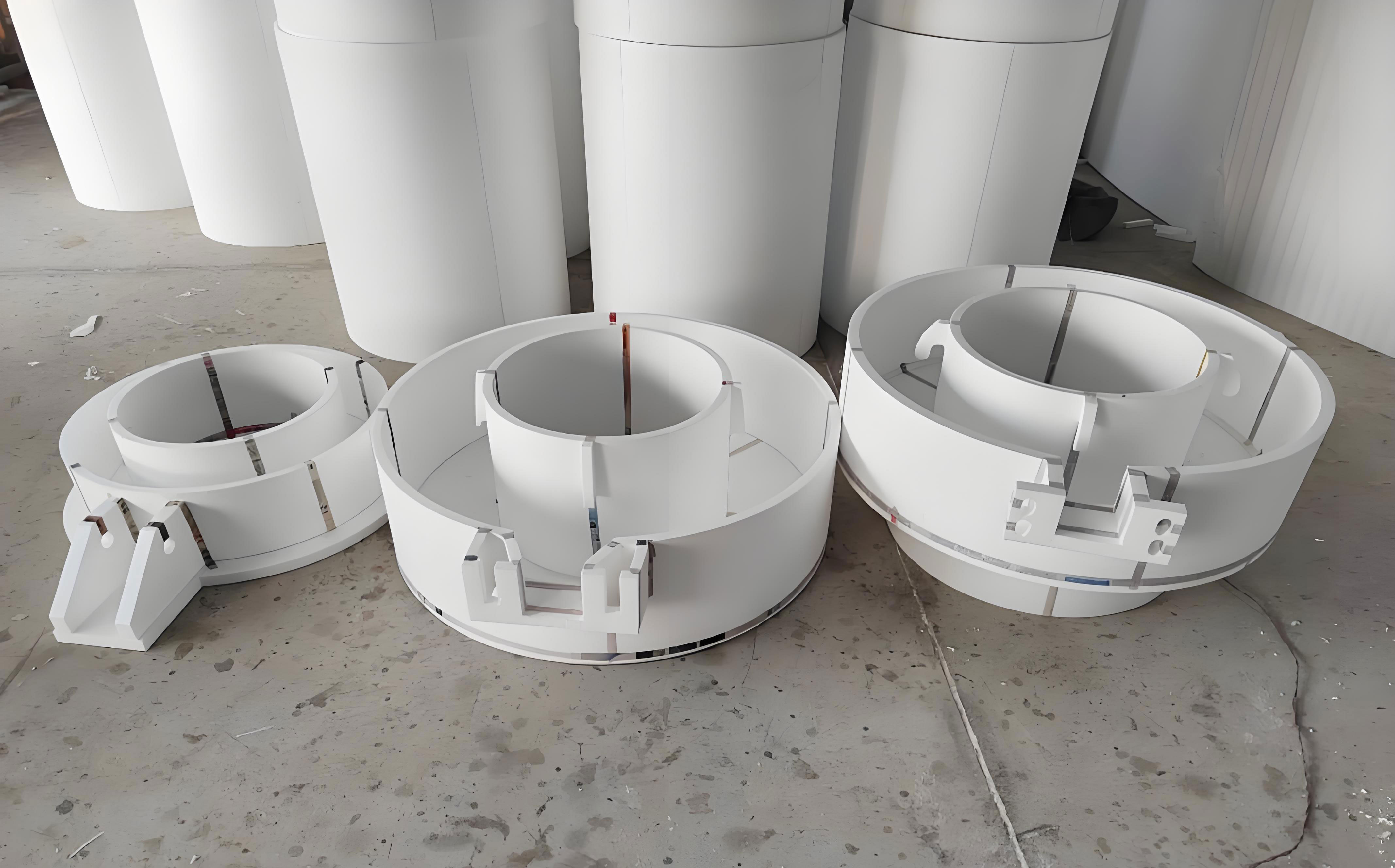
The experimental matrix was designed around three primary compositions: a base 45 steel without RE addition, and two variants with nominal RE-Si-Fe alloy additions of 0.15 wt.% and 0.35 wt.%, respectively. The chemical compositions of the base 45 steel and the RE-Si-Fe alloy used are detailed in Tables 1 and 2. All castings were produced using a standard lost foam casting procedure. Expandable polystyrene (EPS) foam patterns with a density of 25 kg/m³ were fabricated to the desired shape. These patterns were then coated with a refractory wash based on bauxite to a thickness of approximately 1.0–1.2 mm and subsequently dried. The coated patterns were placed in a flask, surrounded by unbonded quartz sand, and compacted using vibration. A bottom-gating system design was employed for the mold assembly. The molten metal was prepared in a medium-frequency induction furnace, and the RE-Si-Fe alloy was added to the ladle during tapping for the designated batches. The pouring temperature was rigorously controlled at 1600 °C. After pouring, the decomposition of the EPS pattern and filling of the cavity were followed by natural cooling to room temperature before shakeout and retrieval of the castings.
| C | Si | Mn | Mo | Al | Cr | Ni | Cu | Fe |
|---|---|---|---|---|---|---|---|---|
| 0.46 | 0.199 | 0.606 | 0.001 | 0.0001 | 0.065 | 0.033 | 0.012 | Bal. |
| Si | RE (La, Ce, Pr, etc.) | Ca | Fe |
|---|---|---|---|
| 50.35 | 30.2 | 2.5 | 16.95 |
To assess the through-thickness variations, specimens for microstructural and mechanical analysis were extracted from three distinct locations within the castings: the core (slowest cooling), the mid-radius region (intermediate cooling), and the near-surface region (fastest cooling). These sampling positions are crucial for evaluating the uniformity imparted by the lost foam casting process and the RE modification. Metallographic samples were prepared via standard grinding, polishing, and etching with aqua regia (3:1 HCl:HNO₃ by volume). Microstructural observation was conducted using optical microscopy (OM) and scanning electron microscopy (SEM). The average grain size (for ferrite) and pearlite interlamellar spacing were quantitatively measured using image analysis software (ImageJ) based on the linear intercept method and direct measurement, respectively. Energy dispersive spectroscopy (EDS) was employed for elemental mapping, particularly to trace the distribution of RE elements like Ce.
Mechanical property evaluation included Rockwell hardness (HRA scale) tests and uniaxial tensile tests. Hardness was measured with a 60 kgf load and a 12-second dwell time; twelve indents were taken per sample location and averaged. Tensile tests were performed on standard round specimens at a constant strain rate of 0.001 s⁻¹. The fracture surfaces of the broken tensile specimens were examined using SEM to identify the fracture mode and micromechanisms.
The microstructural analysis revealed a profound and consistent grain-refining effect due to the addition of RE-Si-Fe alloy across all sampling locations in the lost foam casting. The optical micrographs from the core, mid-radius, and near-surface regions for the three alloy conditions clearly demonstrated this trend. The base 45 steel (0% RE) exhibited relatively coarse and non-uniform ferrite grains, with the largest size observed in the slowly cooled core region. With the addition of 0.15 wt.% RE-Si-Fe, a noticeable reduction in grain size was apparent. This refinement became even more pronounced in the 0.35 wt.% RE-Si-Fe condition, where a relatively fine and uniform grain structure was achieved throughout the casting cross-section. Quantitative grain size data is summarized in Table 3.
| RE-Si-Fe Content | Core Region | Mid-radius Region | Near-surface Region |
|---|---|---|---|
| 0% | 232.62 | 228.17 | 191.05 |
| 0.15% | 195.74 | 190.18 | 173.07 |
| 0.35% | 153.97 | 147.65 | 130.12 |
The grain refinement mechanism in the lost foam casting process can be attributed to several synergistic effects of RE elements. Thermodynamically, RE additions are known to alter the Fe-C phase diagram, depressing the liquidus temperature and expanding the solid-liquid two-phase region. This increases the constitutional undercooling and the driving force for nucleation. Kinetically, RE elements possess a potent ability to act as heterogeneous nucleation sites. They react with existing inclusions in the steel melt (e.g., oxides, sulfides) to form complex, high-melting-point compounds like (RE,M)C or (RE,M)N (where M can be Mn, Ti, etc.). These compounds serve as effective substrates for the nucleation of δ-ferrite or austenite grains, dramatically increasing the nucleation rate (I). According to classical nucleation theory:
$$ I = I_0 \exp\left(-\frac{\Delta G^*}{kT}\right) $$
where $\Delta G^*$ is the critical nucleation energy barrier, $k$ is Boltzmann’s constant, and $T$ is temperature. The formation of potent RE-containing nucleants significantly reduces $\Delta G^*$, thereby exponentially increasing $I$. Furthermore, RE elements, being surface-active, tend to segregate at the advancing solid-liquid interface during growth. This segregation lowers the interfacial energy and creates a solute drag effect, which hinders grain boundary migration and suppresses grain coarsening in the later stages of solidification, a phenomenon particularly beneficial in the variable cooling environment of lost foam casting.
SEM examination at higher magnification provided further insight into the microstructural changes, particularly within the pearlitic colonies. The average interlamellar spacing of pearlite decreased progressively with increasing RE-Si-Fe content. For the core samples, the spacing reduced from approximately 0.96 μm in the base alloy to 0.68 μm with 0.15% addition, and further down to 0.24 μm with 0.35% addition. This refinement of the pearlite microstructure is a direct consequence of the enhanced nucleation of pearlite colonies due to prior austenite grain refinement and possibly a slight depression of the austenite-to-pearlite transformation temperature by RE in solid solution, increasing the undercooling for the eutectoid reaction. EDS elemental mapping confirmed the presence and distribution of RE elements like Ce. The signal intensity for Ce was markedly higher in the 0.35% RE sample compared to the 0.15% sample, indicating a higher local concentration and confirming increased RE solubility in the matrix with higher addition levels.
The modification of the microstructure directly translated into significant enhancements in mechanical properties. The Rockwell hardness (HRA) measured across the three locations showed a clear positive correlation with RE-Si-Fe content, as compiled in Table 4. The most substantial improvement was observed in the core region, where hardness increased from 47.82 HRA for the base alloy to 49.6 HRA for the 0.15% RE alloy, and finally to 53.43 HRA for the 0.35% RE alloy. This represents an improvement of about 13% for the highest addition level. Similar trends were observed at the mid-radius and near-surface locations, though the absolute values were higher near the surface due to faster cooling. The hardness enhancement is a composite result of multiple strengthening mechanisms activated by RE addition: grain refinement (Hall-Petch strengthening), pearlite refinement (interlamellar spacing strengthening), solid solution strengthening from RE and Si atoms, and dispersion strengthening from fine RE-containing inclusions.
| RE-Si-Fe Content | Core Region | Mid-radius Region | Near-surface Region |
|---|---|---|---|
| 0% | 47.82 | 50.11 | 52.75 |
| 0.15% | 49.60 | 52.34 | 54.89 |
| 0.35% | 53.43 | 55.67 | 57.92 |
The tensile properties, summarized in Table 5, followed a similar improving trend. The stress-strain curves for all conditions exhibited typical elastic-plastic behavior with a yield plateau. Both yield strength (YS) and ultimate tensile strength (UTS) increased with RE-Si-Fe content at all sampling locations. The most significant gains were again noted in the core and mid-radius regions. For instance, the UTS at the mid-radius increased from 395 MPa for the base alloy to 434 MPa for the 0.15% RE alloy, and reached 493 MPa for the 0.35% RE alloy. The elongation also showed a complex behavior: it initially increased with the 0.15% addition compared to the base alloy, likely due to significant grain refinement and inclusion spheroidization improving ductility, but then decreased slightly with the 0.35% addition, possibly due to the increased strength and the presence of a higher density of fine, hard second-phase particles.
| RE-Si-Fe Content & Location | Ultimate Tensile Strength (MPa) | Yield Strength (MPa) | Elongation (%) |
|---|---|---|---|
| 0% – Core | 373 | 342 | 8.5 |
| 0% – Mid-radius | 395 | 388 | 6.0 |
| 0% – Near-surface | 380 | 376 | 7.0 |
| 0.15% – Core | 380 | 367 | 15.17 |
| 0.15% – Mid-radius | 434 | 410 | 19.83 |
| 0.15% – Near-surface | 424 | 372 | 10.83 |
| 0.35% – Core | 410 | 377 | 10.0 |
| 0.35% – Mid-radius | 493 | 412 | 13.5 |
| 0.35% – Near-surface | 424 | 391 | 9.5 |
The strengthening contributions can be quantitatively deconvoluted using established models. The Hall-Petch relationship accounts for grain refinement strengthening:
$$ \Delta \sigma_{y(HP)} = k_y d^{-1/2} $$
where $k_y$ is the strengthening coefficient (~0.5 MPa·m$^{1/2}$ for ferrite) and $d$ is the grain diameter. For the core region, moving from 0.15% to 0.35% RE, the grain size reduction from 195.74 µm to 153.97 µm contributes an incremental strength increase, $\Delta \sigma_{y(HP)}$, of approximately 25.2 MPa. The refinement of pearlite interlamellar spacing ($\lambda$) contributes through a relationship often modeled as:
$$ \Delta \sigma_p \propto \lambda^{-1} $$
Using appropriate constants, the reduction in $\lambda$ from 0.68 µm to 0.24 µm contributes an additional ~4.1 MPa. Solid solution strengthening from RE (Ce) and Si atoms can be estimated using the Fleischer model for misfit strain:
$$ \Delta \sigma_{ss} = M \alpha G b (c_{Si} \epsilon_{Si}^{3/2} + c_{Ce} \epsilon_{Ce}^{3/2}) $$
where $M$ is the Taylor factor (~3.06), $\alpha$ is a constant (~0.2), $G$ is the shear modulus (~80 GPa), $b$ is the Burgers vector (~0.248 nm), $c_i$ are solute concentrations, and $\epsilon_i$ are the misfit parameters. This calculation yields a contribution $\Delta \sigma_{ss}$ of about 18.4 MPa for the increase from 0.15% to 0.35% RE. Summing these contributions to the base strength of the 0.15% alloy provides a predicted strength close to the experimentally measured value for the 0.35% alloy core sample, validating the multi-mechanism strengthening model. An important ancillary benefit of RE addition in the lost foam casting process is melt purification. RE elements have a high affinity for oxygen and sulfur, forming stable compounds:
$$ 2[RE] + 3[O] \rightarrow (RE)_2O_3(s) $$
$$ [RE] + [S] \rightarrow (RE)S(s) $$
These high-melting-point compounds can float out as slag or remain as finely dispersed, globular inclusions. This purification action reduces the content of harmful elements like O and S, which are known to embrittle grain boundaries. Moreover, the RE treatment effectively modifies the morphology of residual inclusions, such as transforming elongated MnS stringers into more harmless, isolated globules. This modification dramatically reduces the stress concentration factor ($K_t$) associated with inclusions. For an elongated inclusion with aspect ratio $a/b$, $K_t \approx 1 + 2(a/b)$. Spheroidization ($a/b \rightarrow 1$) minimizes $K_t$, thereby improving both strength and ductility by reducing sites for void initiation.
Fractographic analysis of the tensile specimens provided insights into the failure mechanisms. The macroscopic appearance of the fracture surfaces indicated a mixed ductile-brittle mode. SEM observations at higher magnification revealed features characteristic of both mechanisms. For both the 0.15% and 0.35% RE alloys, the presence of dimples—equiaxed and elongated—confirmed the occurrence of microvoid coalescence, a hallmark of ductile fracture. These dimples were often associated with fine particles (likely RE-containing inclusions or carbides), which acted as void nucleation sites. However, interspersed among the dimples were regions exhibiting cleavage facets, river patterns, and secondary cracks, indicative of localized brittle fracture. The 0.15% RE alloy generally showed a larger area fraction of dimples compared to the 0.35% RE alloy, correlating well with its higher measured elongation. This mixed-mode fracture behavior underscores the complex interplay between increased strength (promoting cleavage) and improved microstructure (promoting ductile tearing) induced by RE modification in the lost foam casting process.
In conclusion, this comprehensive investigation demonstrates that the addition of rare earth silicoferrite alloy is a highly effective strategy for significantly improving the microstructure and mechanical properties of 45 steel castings produced by the lost foam casting technique. The key findings are as follows: First, RE-Si-Fe addition acts as a powerful grain refiner throughout the casting cross-section, reducing the average ferrite grain size by up to ~35% at the 0.35 wt.% addition level compared to the base alloy. This refinement is attributed to enhanced heterogeneous nucleation and growth restriction during solidification in the lost foam casting mold. Second, the RE addition refines the pearlitic microstructure, decreasing the interlamellar spacing. Third, it enhances hardness and tensile strength uniformly across the casting, primarily through Hall-Petch strengthening, pearlite refinement, and solid solution strengthening. The improvement in ultimate tensile strength reached up to 25% in the mid-radius region with 0.35% RE addition. Fourth, RE elements purify the melt and spheroidize harmful inclusions, which contributes to property enhancement and influences the fracture mode. Finally, the fracture behavior evolves to a mixed ductile-brittle mode, with the balance shifting based on the RE content and the resultant microstructure.
This study quantitatively establishes the benefits of specific RE-Si-Fe addition levels (0.15% and 0.35%) in the context of lost foam casting. The results provide valuable guidelines for foundry engineers seeking to exploit RE microalloying to produce 45 steel and similar medium-carbon steel castings with more homogeneous and superior mechanical performance using the versatile and efficient lost foam casting process. Future work could focus on optimizing the RE addition for specific section thicknesses or exploring the interaction of RE with other microalloying elements like V or Nb in the lost foam casting of steels.