
As a process engineer specializing in advanced casting methods, I have been deeply involved in the development and application of the lost foam casting (LFC) process for producing high-integrity components. While lost foam casting has found widespread use domestically for wear-resistant parts, heat-resistant castings, pipe fittings, valve bodies, and general engineering machinery components, its application for core engine components like cylinder blocks, especially dry-type ones, has been limited. To expand the technological frontier of lost foam casting, our team has dedicated significant effort to conquering the challenges of producing engine cylinder blocks. This journey has yielded substantial and rewarding results, marking a significant breakthrough for the process.
Traditionally, cylinder blocks in domestic production are predominantly manufactured using machine-molded green sand processes. The adoption of lost foam casting for cylinder blocks is rare. The few attempts have largely focused on wet-type liners. The dry-type cylinder block presents a far greater challenge due to its intricate internal cavity structure. The most formidable obstacle is the minimal clearance between cylinder bores, which can be as narrow as 3 mm. This imposes extremely苛刻 demands on coating application, sand filling, and compaction. However, the potential rewards justify the effort. The lost foam casting process is capable of yielding castings with superior dimensional accuracy, tight weight tolerances, and excellent surface finish. The process streamlines production by eliminating core making, core setting, and the complex sand preparation associated with traditional methods. The freedom from conventional molding constraints liberates designers to optimize component geometry purely based on functional performance requirements, significantly shortening new product development cycles and allowing for flexible production scheduling. The assembly of the pattern from multiple foam segments minimizes the dimensional deviations and wall thickness variations commonly caused by core shift or misalignment in conventional sand casting. Nonetheless, the formation mechanism in lost foam casting is considerably more complex than in sand casting. This complexity is directly linked to the success rate, quality level, and intrinsic properties of the final casting. Defects such as mold collapse, misruns, carbon pickup, lustrous carbon films, and porosity are intimately related to the physics of the formation process.
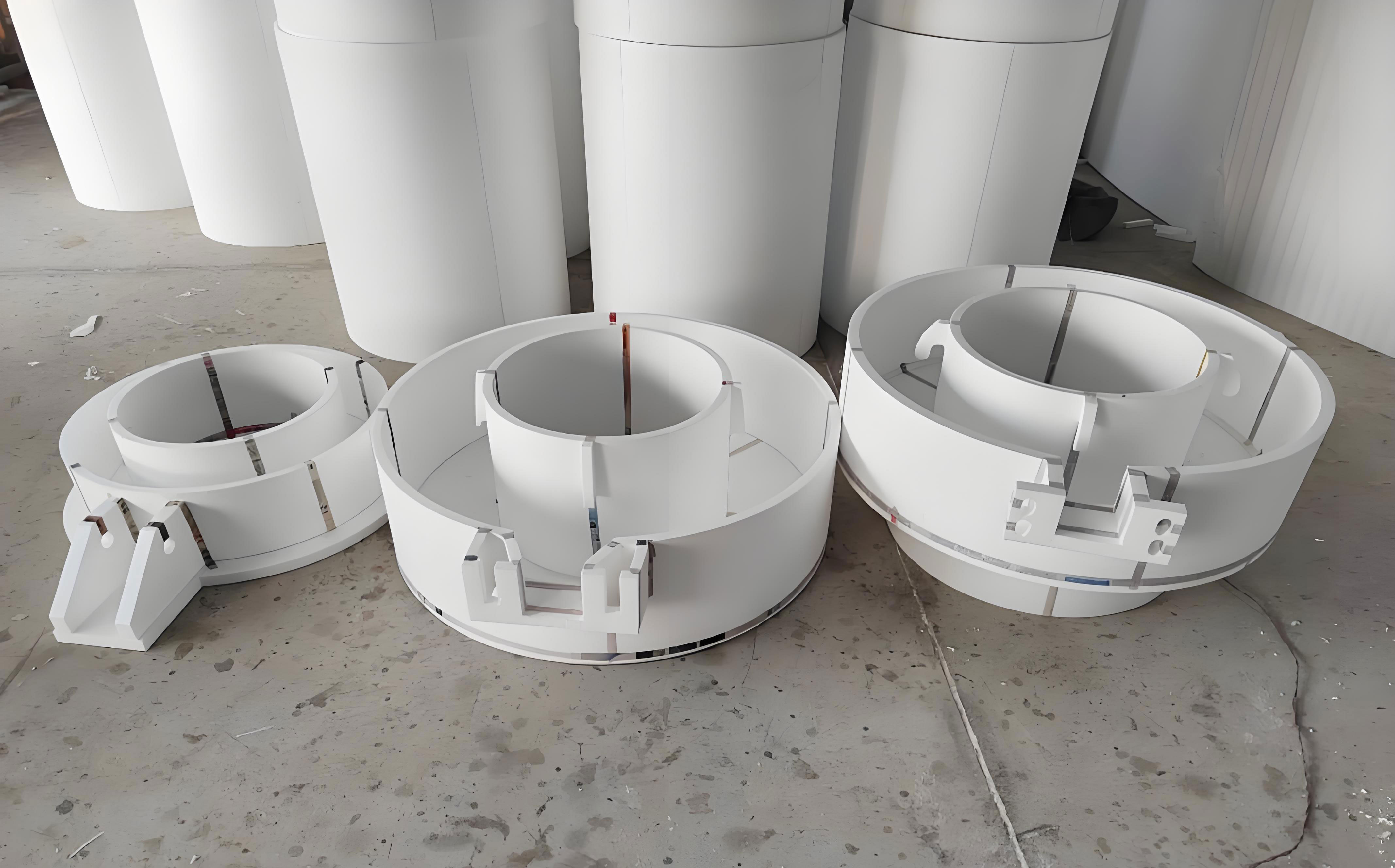
The subject of our development is a high-strength, thin-walled, dry-type cylinder block cast in HT250 gray iron. Its stringent requirements for mechanical properties, pressure tightness, dimensional precision, and microstructure make it an ideal benchmark for advancing lost foam casting technology. The casting’s overall envelope dimensions are 450 mm × 250 mm × 350 mm, featuring the critically narrow 3 mm inter-bore walls.
Comprehensive Process Design and Engineering for Lost Foam Casting
The successful production of such a complex component via lost foam casting hinges on a meticulously designed and controlled process chain. Every step, from raw material selection to shakeout, must be optimized.
1. Equipment and Raw Material Foundation
A robust infrastructure is essential. Our setup includes a batch-type pre-expander, a dedicated EPS foam molding machine, a 3-dimensional vibration table, a 1.5-ton medium-frequency induction furnace, and a double-hook shot blasting machine. For the pattern material, we selected Expandable Polystyrene (EPS) beads. Controlling the final expanded bead density is paramount, as it directly affects the amount of gaseous and liquid decomposition products during metal pouring. We rigorously maintain a target density range of 18 g/L to 23 g/L. The relationship between bead pre-expansion, steam pressure/time, and final density can be modeled. The expansion ratio $$ R = \frac{\rho_{polymer}}{\rho_{foam}} $$ where $\rho_{polymer}$ is the density of the raw polystyrene (typically ~1050 g/L) and $\rho_{foam}$ is the target expanded foam density. Process parameters must be tuned to achieve the desired $R$ value corresponding to 18-23 g/L.
| Parameter | Target Range/Value | Influence on Process |
|---|---|---|
| Raw Bead Size | Specified for wall thickness | Affects surface finish and foam integrity. |
| Pre-Expansion Density | 18 – 23 g/L | Lower density improves burnout but increases gas volume, risking defects. |
| Steam Pressure & Time | Optimized for tooling | Controls bead fusion and detail replication. |
| Aging Time & Temperature | 8-24 hrs at 20-25°C | Stabilizes bead pressure, prevents shrinkage. |
2. Pattern Design, Assembly, and Coating
The heart of lost foam casting is the expendable pattern. For the complex geometry of the dry-type cylinder block, a multi-piece pattern assembly strategy is mandatory. The parting lines must be strategically placed to facilitate molding, ensure detail reproduction, and minimize gluing seams in critical areas. The main partition typically separates the block’s lower crankcase section from the upper cylinder bank and head deck section. Further subdivisions are made for complex water jackets and oil galleries.
Pattern assembly integrity is critical. We employ a hybrid adhesive strategy: fast-setting cyanoacrylate (“cold glue”) for precise alignment and tacking, supplemented by thermo-plastic hot-melt adhesive beads for major seam bonding and gap filling. The adhesive must have sufficient green strength to withstand handling and coating, yet decompose cleanly without excessive residue.
The coating is the critical interface between the decomposing foam and the advancing metal. For this application, a high-performance, refractory, water-based lost foam coating is essential. Its properties must be meticulously adjusted:
- Rheology: Thixotropic behavior for excellent dip-coating performance, ensuring uniform coverage in deep recesses and the 3mm gaps without running or sagging.
- Permeability: High gas permeability to allow the rapid egress of foam decomposition products away from the metal front, preventing gas entrapment or pressure buildup that can cause turbulence or mold collapse.
- Strength: Sufficient dry strength to resist erosion from sand during filling and compaction, and from the liquid metal.
Coating thickness is controlled between 1.5 mm and 2.0 mm per layer, often requiring multiple dips. Drying is a careful balance: too rapid can cause cracking, too slow hampers productivity. We use controlled convection ovens at 40-50°C with adequate air circulation to ensure complete drying without pattern distortion.
| Coating Property | Target/Measurement | Function |
|---|---|---|
| Density (Baumé) | 1.65 – 1.75 Bé | Controls slurry pickup and thickness. |
| Viscosity (Ford Cup #4) | Adjustable for dipping | Ensures coverage and drain-off. |
| Permeability Number | High (>15) | Facilitates gas evacuation. |
| Dry Film Thickness | 1.5 – 2.0 mm | Barrier against sand burn-in and metal penetration. |
| Drying Cycle | 8-12 hrs @ 45-55°C | Complete moisture removal. |
3. Gating System Design and Fluid Dynamics
The gating system in lost foam casting serves not only to deliver metal but also to manage the flow of foam decomposition products. For the thin-walled cylinder block, a carefully balanced pressurized system is designed to promote smooth, progressive filling from the bottom-up (to minimize turbulence) while maintaining a sufficient metallostatic head. We utilize a system with a sprue, runner, and multiple ingates. The cross-sectional area ratio is critical for controlling velocity and pressure: we employ the ratio Sprue : Runner : Total Ingate Area = 1.4 : 1.2 : 1.0.
This design helps maintain a positive pressure gradient, reducing air aspiration. The velocity of metal at the ingate, $v_{ingate}$, can be approximated using Bernoulli’s principle, considering the head height $h$ and a loss factor $C_d$ for the foam-filled cavity:
$$ v_{ingate} \approx C_d \sqrt{2gh} $$
where $g$ is acceleration due to gravity. A lower $v_{ingate}$ is desired to reduce turbulence. The fill time $t_f$ is governed by the volumetric flow rate $Q = A_{ingate} \cdot v_{ingate}$ and the casting volume $V$: $$ t_f \approx \frac{V}{Q} $$. This fill time must be shorter than the foam degradation time to prevent collapse but not so short as to cause violent gas generation.
| Element | Design Principle | Function |
|---|---|---|
| Sprue | Tapered, largest area (1.4x base) | Minimizes aspiration, creates head pressure. |
| Runner | Full, along bottom of mold (1.2x base) | Distributes metal evenly to multiple ingates. |
| Ingates | Multiple, thin and wide (Base area = 1.0) | Controls metal entry, promotes directional solidification towards feeders. |
| Feeder (Riser) | Placed on heavy sections (head deck) | Compensates for solidification shrinkage. |
4. Sand Filling, Compaction, and Pouring Parameters
Dry, unbonded silica sand (AFS 40/70) is used as the molding medium. The compaction process is vital, especially for replicating the 3mm gaps. We employ a “rainfall” sand filling technique combined with multi-stage vibration on a 3D table. Sand is poured evenly over the pattern to minimize impact and distortion. Vibration parameters—frequency, amplitude, and duration—are optimized to achieve high, uniform compaction without causing pattern deformation or coating damage. The goal is to achieve a bulk density $\rho_{sand, compacted}$ that ensures mold rigidity. The vibration transfers kinetic energy to the sand particles, reducing inter-particle friction and allowing them to flow into all cavities. The final step is placing a sintered refractory pouring cup on top of the sprue.
Pouring is the culmination of the lost foam casting process. Three parameters are paramount:
- Pouring Temperature ($T_p$): High enough to provide sufficient superheat to degrade the foam and keep the metal fluid, but not so high as to increase gas solubility and reaction rates. We target 1420°C – 1500°C for HT250 iron.
- Mold Vacuum ($P_v$): Applied through the sand via a porous plate at the bottom of the flask. Vacuum (typically 0.04 – 0.06 MPa) serves multiple purposes: it strengthens the unbonded sand mold, helps extract foam decomposition gases through the coating, and can influence fill profile.
- Pouring Rate: Must be steady and matched to the gating design to maintain a consistent metal front.
The thermal decomposition of EPS is an endothermic process. The energy required to pyrolyze the foam and heat the products comes from the liquid metal, causing a local temperature drop at the interface. The rate of degradation $k$ follows an Arrhenius-type relationship:
$$ k = A \exp\left(-\frac{E_a}{RT_{interface}}\right) $$
where $E_a$ is the activation energy, $R$ is the gas constant, and $T_{interface}$ is the temperature at the metal-foam interface, which is lower than $T_p$.
| Parameter | Target Range | Rationale and Effect |
|---|---|---|
| Pouring Temperature | 1420°C – 1500°C | Balances fluidity, foam degradation, and defect formation (carbon, porosity). |
| Mold Vacuum | 0.04 – 0.06 MPa | Enhances mold strength, evacuates pyrolysis gases, improves feeding. |
| Vacuum Hold Time | 3-5 min after pour | Maintains mold integrity until solidification skin forms. |
| Pouring Speed | Constant, ~1.5-2.0 kg/s | Ensures smooth, controlled fill to minimize turbulence. |
Defect Analysis and Mitigation in Lost Foam Casting of Cylinder Blocks
The production trial phase revealed several characteristic lost foam casting defects, each requiring targeted solutions:
1. Carbon Defects (Pickup & Lustrous Carbon): This manifested as hardened spots or glossy carbon films on the casting surface, particularly in thick sections or stagnant flow areas. It results from incomplete pyrolysis of the EPS, where aromatic hydrocarbons crack and deposit solid carbon. Mitigation: We increased the pouring temperature towards the upper end of the range (1480-1500°C) to provide more energy for complete dissociation of the foam into gaseous products ($C_nH_m \rightarrow nC + m/2 H_2$, followed by $C + O_2 \rightarrow CO_2$ if oxygen is available). Concurrently, we ensured adequate pattern aging to reduce residual pentane gas, which can contribute to carbon formation. The vacuum also helps by removing hydrocarbons quickly.
2. Burn-in/Buckle Penetration (Veining): Metal penetration into the sand, especially in the 3mm gaps, creating a “fused sand” defect that is extremely difficult to remove. This occurs when the coating fails or the sand is insufficiently compacted, allowing liquid metal to infiltrate sand interstices. Mitigation: This was our most significant challenge. Beyond optimizing coating thickness and permeability, and maximizing vibration compaction, we introduced a hybrid solution. For the most restrictive gaps, we designed and placed thin, shell resin sand cores. These rigid cores guarantee dimensional accuracy and prevent sand movement, effectively replacing the function of the compacted sand in those ultra-thin areas. This innovative step was crucial for the success of the lost foam casting process for this component.
3. Porosity (Gas & Shrinkage): Internal voids can arise from entrapped foam decomposition gases or solidification shrinkage. Mitigation: A combination of high coating permeability, adequate mold vacuum, proper gating for directional solidification, and the use of feeders (risers) on heavy sections addressed this. The vacuum is particularly effective in pulling gases out through the coating before they can be entrapped by the advancing metal.
4. Pattern-Related Distortion: Improper assembly or weak glue joints can lead to misalignment or floating of pattern sections during sand filling. Mitigation: Rigorous quality control on pattern assembly, using the hybrid gluing strategy, and gentle yet effective sand filling techniques were implemented.
| Defect Type | Root Cause | Corrective Action |
|---|---|---|
| Carbon Pickup / Films | Incomplete foam pyrolysis; low metal temperature; high foam density. | Increase pouring temperature; ensure full pattern aging; optimize foam density (lower end). |
| Burn-in / Metal Penetration | Coating failure/breakdown; low sand compaction; local hot spots. | Optimize coating recipe and application; enhance vibration compaction; use shell cores in critical gaps. |
| Gas Porosity | Entrapment of foam pyrolysis gases; inadequate venting. | Increase coating and sand permeability; apply and optimize mold vacuum; ensure proper pouring rate. |
| Misruns / Cold Shuts | Low metal fluidity; excessive heat loss to foam; slow pouring. | Increase pouring temperature; redesign gating for faster fill; pre-heat mold flask. |
Results and Validation of the Lost Foam Casting Process
Through the systematic application of the designed lost foam casting process and the targeted defect mitigation strategies, we successfully produced dry-type cylinder block castings. The components underwent rigorous inspection and validation:
- Dimensional Accuracy: Critical dimensions, including bore spacing and the 3mm wall thickness, were held within drawing tolerances, proving the stability of the pattern assembly and sand molding process.
- Surface Quality: The as-cast surface finish was significantly superior to typical sand castings, reducing the required machining allowance.
- Mechanical Properties: Tensile bars machined from the castings consistently met the HT250 specification (Tensile Strength ≥ 250 MPa). The microstructure showed a uniform Type A graphite distribution in a pearlitic matrix, free from massive carbides or excessive undercooled graphite.
- Pressure Tightness: Critical sections like the water jacket and oil galleries passed prescribed leak tests, confirming the absence of interconnected shrinkage or gas porosity.
- Machining and Assembly: The castings were successfully machined by the customer and assembled into functional engines, meeting all performance and durability requirements of the OEM.
The success is a direct result of treating lost foam casting as an integrated system where pattern quality, coating performance, sand dynamics, gating physics, and thermal parameters are all interlinked and must be optimized in concert. The introduction of shell cores for extreme geometry was a pragmatic and effective innovation that bridged a fundamental limitation of dry sand flow.
Conclusion and Future Perspective
The production of a complex, thin-walled, dry-type engine cylinder block via the lost foam casting process represents a major technological advancement. This project demonstrates that with scientific process design, precise control, and innovative problem-solving—such as the strategic use of hybrid cores—lost foam casting is fully capable of meeting the stringent demands of high-integrity automotive components previously dominated by conventional high-pressure molding lines.
The breakthrough validates lost foam casting as a competitive and versatile process for high-value, complex castings. It offers distinct advantages in design flexibility, tooling cost for low-to-medium volumes, and superior surface finish. The knowledge gained—particularly in managing extreme thin sections and controlling carbon defects—enriches the technical foundation for expanding the application of lost foam casting into other demanding sectors. Future work will focus on further refining the thermal balance models to predict interface temperatures more accurately, developing even more permeable and robust coatings, and exploring the use of alternative pattern materials like PMMA (Polymethyl methacrylate) for reduced carbon defect potential in ferrous castings. The journey of advancing lost foam casting technology continues, with this successful cylinder block project serving as a significant milestone.