
The evolution of lost foam casting represents a continuous quest for higher quality, greater reliability, and expanded applicability. A significant leap forward in this field is the development of a hybrid process that combines the pattern flexibility of lost foam casting with the cleanliness and control of investment shell casting, all while leveraging the established benefits of vacuum-assisted pouring. This article details this advanced methodology, which we term the Lost Foam Shell Mold with Negative Pressure Pouring process, from first principles to practical application.
Traditional lost foam casting involves embedding a foam pattern in unbonded sand and pouring molten metal directly onto it, causing the foam to pyrolyze. While offering exceptional geometric freedom, this direct pyrolysis can lead to carbon-related defects, gas porosity from pattern decomposition products, and potential hydrogen pick-up from moisture in the coating. The process described herein strategically eliminates these fundamental issues by removing the foam pattern entirely before metal introduction through a controlled thermal cycle, resulting in a pristine, fired ceramic shell ready for casting.
1. Process Philosophy and Core Advantages
The core innovation lies in decoupling the pattern removal stage from the metal casting event. The process retains the initial stages of conventional lost foam casting—using an expandable polystyrene (EPS) foam pattern and applying a refractory coating—but then diverts into a dedicated thermal cleaning and sintering step. This fundamental shift offers profound advantages:
- Elimination of Carbon Defects: Complete removal of the foam pattern prior to pouring eradicates the primary source of carbon pickup and associated lustrous carbon defects in ferrous castings.
- Elimination of Pattern-Gas Defects: By avoiding in-situ gasification, the process prevents the entrapment of pyrolysis gases within the metal, significantly reducing gas porosity.
- Elimination of Coating-Gas Defects: The high-temperature sintering phase drives off all volatiles and chemically bound water from the coating, preventing gas generation from the mold wall during pouring.
- Enhanced Metallurgical Purity: The metal solidifies in a clean, inert cavity, leading to superior mechanical properties and material consistency, crucial for high-integrity components.
- Precision Casting Capability: The resulting fired shell provides dimensional stability and surface finish comparable to investment casting, but is capable of being scaled to much larger and more complex part geometries.
- Environmental & Operational Benefits: Liquefying and collecting the foam in a controlled kiln environment is more manageable than dealing with its uncontrolled combustion and fume generation during pouring.
2. Detailed Process Breakdown
2.1 Principle and Rationale
The process transforms a coated foam pattern into a hollow, robust ceramic shell. The sequence is: Pattern Creation -> Coating Application -> Thermal Dewaxing & Sintering -> Shell Molding & Vacuum Pouring. This hybrid approach can be visualized as bridging the gap between several conventional methods.
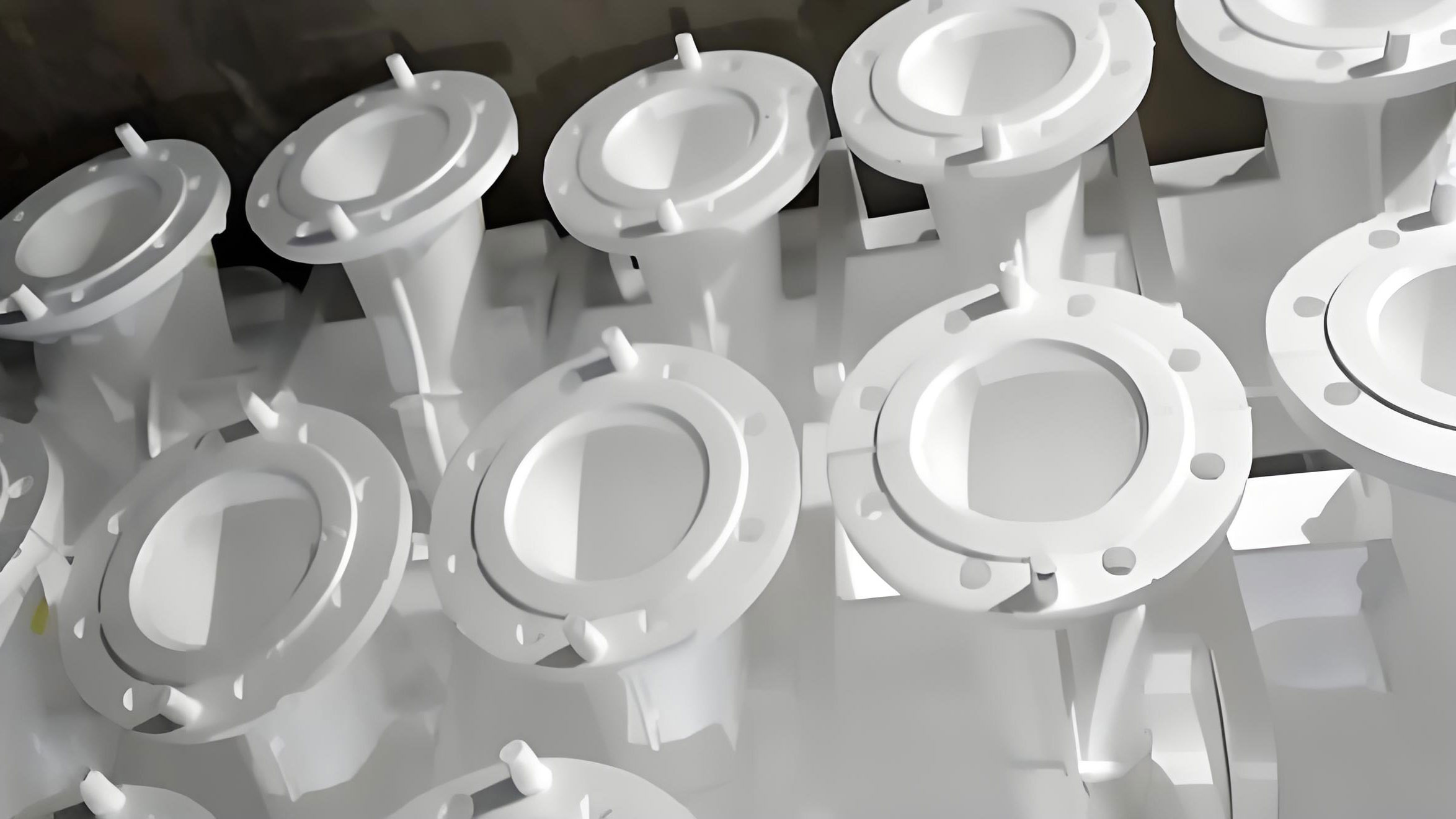
The governing principle for foam removal is based on its thermal degradation. EPS transitions through distinct phases: glass transition (~75-100°C), softening and expansion, followed by liquefaction and eventual depolymerization/vaporization at higher temperatures. The process exploits the liquefaction phase to drain the majority of the pattern material out of the shell as a viscous liquid, which can be collected and managed, before a final high-temperature stage clears any residue and sinters the ceramic.
2.2 Pattern Production and Gating System Design
The foundation is a high-quality EPS pattern. For critical castings, using a higher foam density (e.g., 26-30 g/L) is recommended to yield a smoother pattern surface, which directly translates to a better casting finish. The gating and risering system is optimally designed as part of the original foam assembly, either glued on or, for production runs, molded integrally to eliminate seams and ensure perfect alignment.
Key pattern preparation steps include meticulous finishing to remove parting lines and fused bead imperfections, often using specialty patching compounds. The integrity of the foam pattern assembly is paramount, as it must withstand coating application and handling prior to firing. The design of the gating must also facilitate the later drainage of liquefied foam; this often means orienting the pattern cluster with major cavities or downsprue openings facing downward in the kiln.
2.3 Coating Application and Build-up Strategy
The coating system is arguably the most critical consumable in this lost foam casting variant. It serves a dual purpose: forming the future mold wall and providing green strength to the fragile foam assembly. A two-layer or multi-layer approach is standard:
| Coating Layer | Primary Function | Typical Thickness | Material Characteristics |
|---|---|---|---|
| Face Coat (Primary) | Forms the interface with molten metal. Provides surface finish and chemical inertness. | 2.0 – 3.0 mm | Fine, high-purity refractories (e.g., zircon, fused silica, high-alumina). Precise rheology for detail replication. |
| Back-up Coat (Secondary) | Provides structural strength and insulation. Controls shell permeability. | Variable, as needed | Coarser, more economical refractories (e.g., mullite, fireclay). Higher binder content for strength. |
A significant departure from traditional lost foam coating practice is the drying protocol. Instead of requiring each layer to be completely dry before applying the next, this process allows for application at a “leather-hard” or partially dry state. This reduces process time considerably. Reinforcement of critical areas, such as gate-to-casting junctions, is achieved using refractory fabric impregnated with the coating slurry, ensuring these high-stress points remain intact even when the underlying hot-melt adhesive fails during heating.
The final dry coating thickness $\(t_c\)$ is a function of casting size, metal type (ferrous/non-ferrous), and required shell strength. An empirical relationship can be used for initial estimation:
$$ t_c = k \cdot \sqrt[3]{V_c} $$
where $\(V_c\)$ is the volume of the casting and $\(k\)$ is an empirical coefficient ranging from 0.5 for non-ferrous to 1.2 for large steel castings.
2.4 Thermal Processing: Dewaxing and Sintering
This is the pivotal step that defines the process. It is conducted in a programmable kiln or oven and consists of two distinct thermal regimes.
Stage 1: Low-Temperature Dewaxing & Liquefaction. The coated cluster is loaded into the kiln, strategically oriented with drainage paths pointing downward. The temperature is ramped slowly (typically 30-50°C/hour) through the range of 100-350°C. In this phase, the EPS foam melts, collapses, and drains from the shell as a liquid polymer. This material can be collected on trays for disposal or reclamation, dramatically reducing fume generation compared to burning. Precise control of the ramp rate is essential to prevent steam pressure buildup from any residual coating moisture, which could crack the shell. The success of this stage hinges on providing adequate, unobstructed drainage channels from all sections of the pattern.
Stage 2: High-Temperature Sintering & Residual Removal. After the bulk liquid has drained, the temperature is increased further to a sintering range, typically between 850°C and 1100°C depending on the coating material. This stage serves to:
- Burn off any residual carbonaceous foam residue trapped within the coating matrix.
- Drive off all remaining chemically bound water from the binder system.
- Sinter the refractory particles together, transforming the “green” coating into a strong, monolithic ceramic shell with good permeability.
After a sufficient hold time at peak temperature to ensure complete through-thickness sintering, the shells are cooled. Controlled cooling is necessary to prevent thermal shock. The resulting shell is hollow, clean, and possesses high hot strength.
| Process Stage | Temperature Range | Primary Physical/Chemical Events | Key Control Parameters |
|---|---|---|---|
| Drying & Preheat | Ambient to 150°C | Removal of free water from coating. Initial softening of EPS. | Ramp rate, air circulation. |
| Liquefaction & Drainage | 150°C – 400°C | EPS melts, viscosity drops, liquid drains by gravity. Binder pyrolysis begins. | Peak temperature hold time, drainage orientation. |
| Sintering & Firing | 850°C – 1100°C+ | Combustion of residual organics. Removal of crystalline water. Refractory particle bonding (sintering). | Peak temperature, hold time, atmosphere. |
| Controlled Cooling | Peak to ~500°C | Solid-state phase changes in ceramic. Stress relief. | Cooling rate in critical temperature ranges. |
2.5 Shell Molding and Vacuum Setup
The fired shell, while strong, is still brittle and requires external support during handling and pouring. This is achieved by placing it in a standard foundry flask and surrounding it with dry, unbonded sand—identical to conventional lost foam casting practice.
- Shell Preparation: Prior to molding, the shell’s pouring cups and any auxiliary drainage holes are sealed using high-temperature tape or plastic film to prevent sand ingress.
- Flask Loading: A base layer of sand is placed in the flask and leveled. The shell(s) are then positioned. Multiple shells can be arranged in a single flask for productivity. The top of the pouring cup should extend above the final sand level.
- Sand Filling & Compaction: Dry silica sand is poured around and over the shell. Vibration is applied to achieve high and uniform packing density, ensuring full support against metallostatic pressure.
- Vacuum Seal: The compacted sand bed is covered with a plastic film (typically 0.1-0.15 mm polyethylene). The film’s edges are sealed against the flask walls, and the vacuum system is connected. A protective layer of loose sand is often spread over the film to shield it from radiant heat and accidental sparks during pouring.
The role of vacuum is crucial. It rigidizes the loose sand, preventing any wall movement. More importantly, it draws molten metal rapidly and completely into the thin sections of the intricate shell cavity. It also helps extract any minimal gases that may evolve. The required negative pressure $\(P_v\)$ can be related to the metal head pressure and shell permeability:
$$ P_v \geq \frac{\rho_m g h}{A \mu} \cdot \frac{L}{K} $$
Where $\(\rho_m\)$ is metal density, $\(g\)$ is gravity, $\(h\)$ is effective metal head height, $\(A\)$ is cross-sectional area of gates, $\(\mu\)$ is metal dynamic viscosity, $\(L\)$ is mold filling length, and $\(K\)$ is shell permeability. In practice, for steel castings, a vacuum of 0.02 to 0.04 MPa (200 to 400 mbar) is typically sufficient and must be maintained throughout the pour and initial solidification.
2.6 Pouring Protocol and Solidification
Pouring into a pre-fired shell demands attention to metal quality and temperature.
- Metal Preparation: The metal must be properly melted, alloyed, and cleaned of slag. For high-integrity castings, ladle preheating to 700-800°C is essential to prevent skulling and temperature loss.
- Pouring Temperature: The optimal pouring temperature $\(T_{pour}\)$ must balance fluidity and minimization of shrinkage. It is often higher than for sand casting due to the chilling effect of the ceramic shell and the absence of an endothermic foam decomposition reaction:
$$ T_{pour} = T_{liquidus} + \Delta T_{superheat} $$
where $\(\Delta T_{superheat}\)$ is typically 50-100°C greater than for equivalent sand castings to ensure complete filling of thin sections. - Pouring Operation: The pour must be quick and continuous to establish a smooth, turbulent-free fill. The vacuum system maintains the preset pressure. The gating system, now a hollow channel in the ceramic, is designed to establish favorable temperature gradients toward the risers, which must be adequately sized to feed the shrinkage.
2.7 Knock-out, Cleaning, and Finishing
After sufficient cooling time, the vacuum is released. The sand is simply dumped out, and the castings, with the fragile spent shell still adhering, are removed. A key advantage of this lost foam casting variant is that the thermal shock of pouring and cooling often causes the ceramic shell to craze and partially self-detach. For ferrous castings, the shell can frequently be removed by light mechanical vibration or water blasting, eliminating the need for aggressive shot blasting that can work-harden surfaces or damage thin features. The resulting casting exhibits excellent surface finish, precise dimensions, and requires minimal finishing before machining or dispatch.
3. Comparative Analysis with Other Casting Processes
The Lost Foam Shell Mold process occupies a unique position, combining benefits from several established methods while mitigating their disadvantages.
| Process | Key Advantages of Lost Foam Shell Mold | Key Limitations Overcome |
|---|---|---|
| Conventional Lost Foam Casting | Eliminates carbon/gas defects. Enables high-integrity ferrous/alloy casting. Better surface finish. | Inherent defects from foam pyrolysis. Limited to lower-melting-point alloys for critical work. |
| Investment Casting | Much lower pattern cost (EPS vs. wax). Faster shell build (no slurry dipping/drying cycles). Scalable to very large parts. | High cost of wax and multi-layer ceramic shell process. Size limitations of wax tooling. |
| Resin Sand Molding | No core assembly or parting lines. Superior dimensional accuracy on complex parts. No core gas issues. | Requires core boxes and core assembly. Limited geometric complexity. De-coring of internal passages needed. |
| V-Process (Vacuum Molding) | Better sand fill around complex details (no ramming). No binder-related fumes. Cleaner sand reclamation. | Requires a rigid pattern plate. Limited draft angles. Pattern costs for complex parts. |
The economic break-even for this advanced lost foam casting process is often found in medium-to-high complexity castings where superior metallurgical quality, excellent surface finish, and reduced machining allowance justify the additional steps of shell firing.
4. Applications and Future Prospects
This process is particularly well-suited for demanding applications where material properties and defect-free status are non-negotiable. Prime candidates include:
- High-Integrity Steel Castings: Components for lifting, mining, power generation, and defense where fatigue life and toughness are critical.
- Complex, Thin-Wall Geometries: Parts with intricate internal passages, undercuts, and varying sections that are challenging or impossible to core with traditional methods.
- Corrosion & Heat-Resistant Alloys: Stainless steels, duplex steels, and high-nickel alloys where gas defects and surface contamination must be minimized.
- Rapid Prototyping & Low-Volume Production: The ease of producing complex foam patterns via CNC machining or 3D printing, combined with this high-quality molding process, is ideal for prototypes and short runs.
The future development of this lost foam casting branch will likely focus on:
- Advanced Coating Materials: Development of environmentally friendly, low-firing-temperature coatings with engineered permeability and collapsibility.
- Process Automation: Integrating robotic coating application, automated kiln loading/unloading, and flask handling to improve consistency and reduce costs.
- Alternative Pattern Materials: Exploring foams with lower melting points or more complete vaporization characteristics to optimize the dewaxing cycle.
- Energy Optimization: Recovering heat from the sintering kiln and optimizing thermal cycles for reduced energy consumption.
5. Conclusion
The Lost Foam Shell Mold with Negative Pressure Pouring process represents a sophisticated synthesis of established foundry principles. It successfully addresses the most persistent technical challenges associated with traditional lost foam casting—namely, carbon defects and gas porosity—by the simple yet profound act of removing the pattern before the metal arrives. By doing so through controlled liquefaction and sintering, it also gains the dimensional fidelity and surface quality of precision shell processes while retaining the unparalleled geometric freedom and simplicity of unbonded sand support inherent to lost foam technology.
This hybrid methodology expands the viable application space for lost foam casting into the realm of high-performance, safety-critical, and premium alloy components. It offers foundries a compelling technical pathway to produce castings with exceptional metallurgical integrity and complex geometries that are difficult or uneconomical to manufacture via other routes. As material demands escalate and the pursuit of zero-defect manufacturing intensifies, this advanced iteration of lost foam casting is poised to play an increasingly significant role in the future of metal casting technology.