
In our journey to master the lost foam casting process for ductile iron components, we encountered significant challenges that required deep analysis and systematic improvements. Lost foam casting, a unique and innovative method, presents distinct advantages but also demands precise control over various parameters to ensure high-quality outputs. This article delves into our experiences, focusing on the critical issues of spheroidization recession, surface sand and slag inclusions, and casting deformation. We will explore the underlying causes, detail the工艺措施 we implemented, and summarize the outcomes through extensive production validation. Throughout this discussion, we emphasize the importance of adapting traditional foundry knowledge to the specifics of lost foam casting, a technique that continues to evolve in modern manufacturing.
The lost foam casting process involves creating a foam pattern that vaporizes upon contact with molten metal, leaving behind a precise casting. However, when applied to ductile iron, this method introduces complexities related to metallurgy and process stability. Our facility, equipped with a dedicated lost foam casting line, aimed to produce transmission housings for tractors, with castings weighing up to 100 kg. The initial production phase revealed that without tailored approaches, defects such as spheroidization recession were rampant, affecting nearly 40% of batches. This prompted us to reevaluate every step, from melting and treatment to pouring and cooling, within the context of lost foam casting. By integrating theoretical insights with practical adjustments, we developed a robust methodology that enhances product consistency and yield.
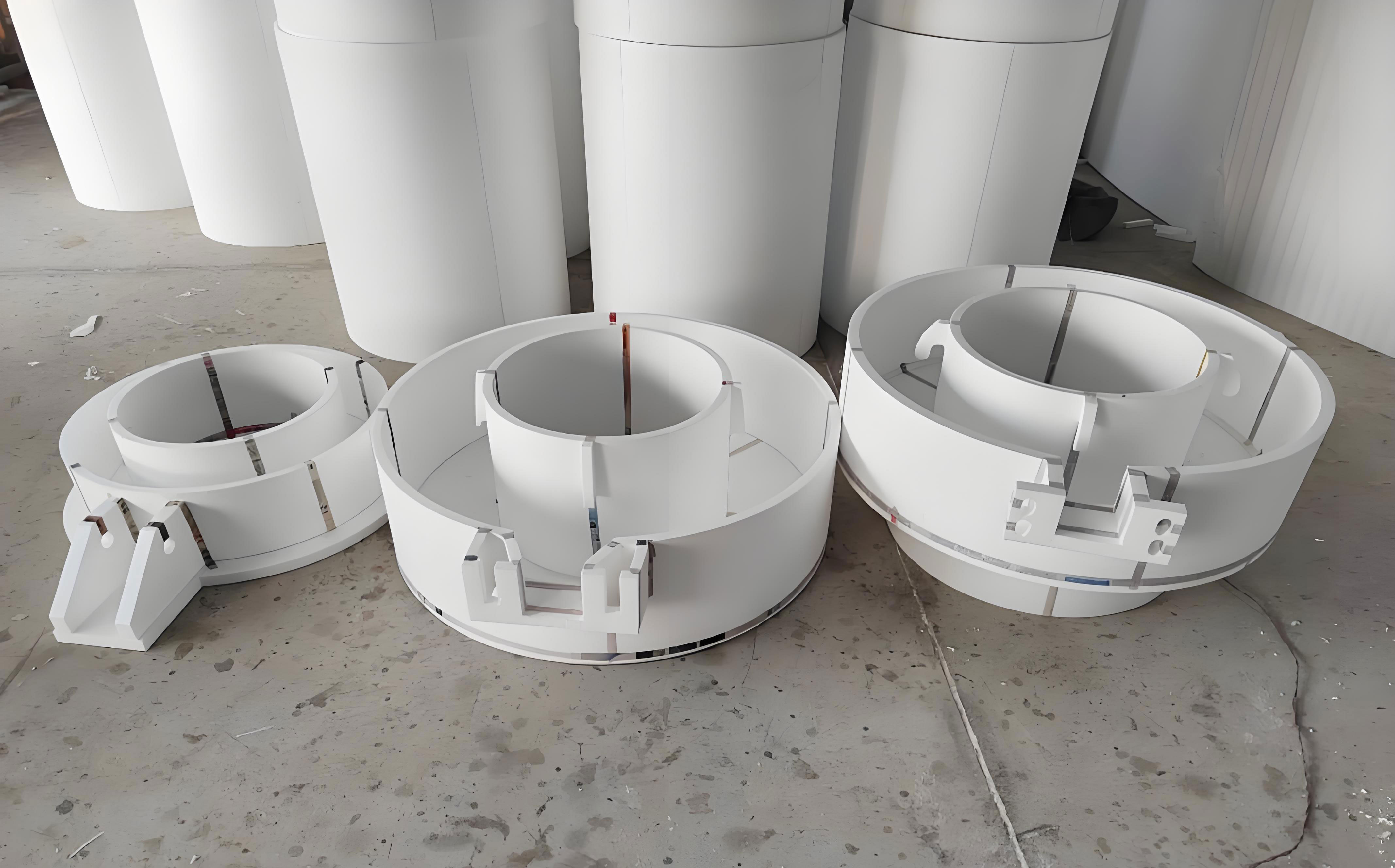
Our lost foam casting line operates under specific conditions that influence the entire process. The key parameters are summarized in the table below, which highlights the design and operational aspects critical for ductile iron production. Understanding these parameters is essential for diagnosing issues and implementing effective solutions in lost foam casting.
| Parameter | Value | Description |
|---|---|---|
| Annual Production Capacity | 15,000 tons | Double-shift system for合格铸件 |
| Sandbox Dimensions | 1200 × 1100 × 1300 mm | Size of the molding containers used in lost foam casting |
| Production Cycle | 15 boxes/hour | Pacing of the lost foam casting line |
| In-box Cooling Time | >150 minutes | Duration for castings to solidify and cool within the sandbox |
| Vacuum Level | -0.04 to -0.06 MPa | Negative pressure applied to stabilize the mold in lost foam casting |
| Melting Equipment | 10-ton medium-frequency induction furnace | Power: 6000 kW, used for melting iron for lost foam casting |
The products we focused on were transmission housings made of QT500-7 ductile iron, with wall thicknesses around 10 mm and masses up to 57 kg. The chemical composition requirements for these castings are stringent, as detailed in another table. In lost foam casting, maintaining these compositions while managing high pouring temperatures is a delicate balance. We observed that deviations often led to defects, underscoring the need for precise control in every phase of lost foam casting.
| Element | Target Range (%) | Role in Ductile Iron for Lost Foam Casting |
|---|---|---|
| C | 3.6–3.9 | Carbon content affects fluidity and graphite formation in lost foam casting. |
| Si | 2.2–2.6 | Silicon influences graphitization and must be controlled in lost foam casting. |
| Mn | 0.4–0.6 | Manganese enhances strength but can promote carbides in lost foam casting. |
| S | ≤0.03 | Sulfur must be minimized to avoid interference with spheroidization in lost foam casting. |
| P | ≤0.07 | Phosphorus reduces ductility and requires tight limits in lost foam casting. |
| Mg | 0.03–0.05 | Magnesium is key for spheroidization but prone to loss in lost foam casting. |
| Re | 0.02–0.04 | Rare earth elements aid nodularization and are critical in lost foam casting. |
One of the primary issues we faced in lost foam casting was spheroidization recession, where the nodular graphite structure deteriorated over time or across castings. This phenomenon is particularly problematic in lost foam casting due to the elevated pouring temperatures required. Typically, lost foam casting demands temperatures 40–50°C higher than sand casting, around 1450–1480°C, to ensure complete pattern vaporization and mold filling. However, the球化处理 process itself reduces temperature by 50–100°C, necessitating an initial iron temperature of 1560–1570°C. At such highs, magnesium—the essential spheroidizing agent—undergoes rapid oxidation and evaporation, leading to recession. We modeled this loss using a kinetic equation: $$ \frac{d[Mg]}{dt} = -k \cdot [Mg] \cdot e^{-E_a/(RT)} $$ where \(k\) is the rate constant, \(E_a\) is the activation energy for magnesium loss, \(R\) is the gas constant, and \(T\) is the temperature in Kelvin. This formula highlights how temperature escalates magnesium depletion in lost foam casting, directly impacting spheroidization stability.
Additionally, time delays between treatment and pouring exacerbated the issue. In lost foam casting, the sequence involves tapping,球化处理, slag removal, transportation, and pouring—each step adding seconds or minutes. If the total time exceeds a critical threshold, the residual magnesium falls below the level needed for effective nodularization. We quantified this by defining a recession index \(RI\): $$ RI = \frac{[Mg]_0 – [Mg]_t}{[Mg]_0} \times 100\% $$ where \([Mg]_0\) is the initial magnesium content after treatment and \([Mg]_t\) is the content at time \(t\). Our data showed that for lost foam casting, maintaining \(RI < 15\%\) required completing all steps within 10 minutes. Any prolongation, common in early trials, led to unacceptable球化级别, often degrading to level 5 or worse. This underscored the need for optimized logistics and专用 equipment in lost foam casting operations.
Surface sand and slag inclusions were another prevalent defect in our lost foam casting production. These manifest as holes or voids on the casting exterior, primarily due to entrapped oxides, slag, or debris from the treatment process. In lost foam casting, the absence of a traditional mold means that impurities have fewer barriers to entry, making effective filtration crucial. The sources include reaction by-products from球化剂 and孕育剂, residual slag removers, and loose material from ladle linings. To address this, we incorporated foam filters into the gating system—a standard practice in lost foam casting but with specific considerations. The filter efficiency \(\eta\) can be expressed as: $$ \eta = 1 – \exp\left(-\frac{\alpha \cdot L}{v}\right) $$ where \(\alpha\) is the filter’s capture coefficient, \(L\) is the thickness, and \(v\) is the flow velocity of molten iron. For lost foam casting, we selected filters with a refractoriness above 1480°C and placed them mid-way in the sprue to buffer impact and enhance slag removal. This adjustment significantly reduced inclusion rates, proving vital for maintaining surface quality in lost foam casting.
Casting deformation posed a third major challenge in lost foam casting, stemming from the low mechanical strength of foam patterns. Unlike rigid molds, foam can distort during handling, coating, or under the heat of pouring, leading to dimensional inaccuracies in the final product. In lost foam casting, deformation risks are amplified by several factors: improper pattern placement during drying, inadequate support during cluster assembly, and insufficient pressure holding after pouring. We analyzed this using a simple beam deflection model for the foam pattern: $$ \delta = \frac{5 \cdot w \cdot L^4}{384 \cdot E \cdot I} $$ where \(\delta\) is the deflection, \(w\) is the distributed load, \(L\) is the span length, \(E\) is the Young’s modulus of the foam, and \(I\) is the moment of inertia. This equation informed our design of工艺拉筋 and supports to increase rigidity. For instance, adding strategic braces and延长保压时间 to at least 10 minutes minimized distortion in lost foam casting, ensuring compliance with the 0.5 mm tolerance limit.
To combat spheroidization recession in lost foam casting, we implemented a multi-faceted approach. First, we switched to specialized球化剂 and孕育剂 formulated for high-temperature applications in lost foam casting. These reagents exhibit enhanced resistance to magnesium fade, as confirmed by trials showing sustained nodularization even at 1580°C. Second, we upgraded to dedicated treatment ladles with a height-to-diameter ratio of 1.8:1, promoting better reaction control and slag separation in lost foam casting. Third, we fine-tuned the球化剂 addition based on real-time sulfur analysis, using the relation: $$ \text{Mg addition (\%)} = 1.5 + 0.2 \cdot ([S] – 0.02) $$ where \([S]\) is the sulfur percentage. This dynamic adjustment, coupled with strict temperature caps (max 1580°C), stabilized magnesium levels. Furthermore, we streamlined operations to cut the tap-to-pour time to under 10 minutes, a critical improvement for lost foam casting efficiency. The table below summarizes these工艺措施 and their impact on spheroidization in lost foam casting.
| Measure | Implementation in Lost Foam Casting | Expected Outcome |
|---|---|---|
| Specialized Reagents | Use of high-temperature球化剂 and孕育剂 | Reduced magnesium loss, improved nodularization stability |
| Ladle Design | Height/diameter = 1.8:1, with完整堤坝 | Enhanced reaction efficiency and slag containment |
| Dynamic Mg Addition | Formula-based on S content (1.5–1.7%) | Optimal spheroidization with minimal waste |
| Temperature Control | Limit tap temperature to ≤1580°C | Mitigated reagent烧损 and thermal衰退 |
| Time Management | Complete process within 10 minutes | Minimized球化衰退 through rapid pouring |
For surface inclusion control in lost foam casting, we emphasized rigorous slag removal and filter integration. Operators were trained to thoroughly skim slag post-treatment and blow loose debris from ladle spouts. However, the cornerstone was the foam filter, selected for its high耐火度 and placement within the gating system. We evaluated filter performance using a cleanliness index \(CI\): $$ CI = \frac{N_{\text{clean}}}{N_{\text{total}}} \times 100\% $$ where \(N_{\text{clean}}\) is the number of castings without inclusions and \(N_{\text{total}}\) is the total produced. After introducing filters, \(CI\) rose from ~70% to over 95% in lost foam casting batches, demonstrating their efficacy. Additionally, we monitored ladle lining integrity to prevent material脱落, further securing metal purity in lost foam casting.
Addressing deformation in lost foam casting involved both procedural and design modifications. We instituted 100% inspection of foam patterns on flat plates using feeler gauges, rejecting any with gaps exceeding 0.3 mm. During coating and molding, careful handling and proper orientation were enforced to avoid stress concentrations. The保压时间 was extended to 10+ minutes, allowing the casting to stabilize under vacuum before release. From a design perspective, we added工艺拉筋 and supports, effectively increasing the pattern’s moment of inertia \(I\) in critical sections. For a typical housing, the added rigidity reduced deflection \(\delta\) by an estimated 50%, based on the beam formula. These steps collectively ensured dimensional accuracy in lost foam casting, meeting the tight公差要求.
The改进效果 of these measures in lost foam casting were substantial. Spheroidization levels consistently achieved grade 3 or better, with a 100% compliance rate in recent batches. Surface inclusion defects dropped dramatically, and casting deformation was controlled within 0.5 mm. Overall, the product yield exceeded 90%, validating the工艺改进 for lost foam casting. However, we recognize that lost foam casting remains a learning-intensive process; challenges like optimizing cluster efficiency and managing black zone浇注 persist. Continuous refinement is essential to harness the full potential of lost foam casting for ductile iron.
In conclusion, our experience with lost foam casting for ductile iron underscores the necessity of adapting冶金原理 and process controls to this unique method. Lost foam casting demands higher temperatures, faster cycles, and meticulous attention to detail compared to conventional sand casting. By addressing spheroidization recession through specialized reagents and time compression, mitigating inclusions via advanced filtration, and controlling deformation with structural reinforcements, we have stabilized production. The key takeaway is that lost foam casting success hinges on an integrated approach—blending theoretical insights with practical adjustments. As we advance, further research into foam properties, metal-flow dynamics, and real-time monitoring will enhance lost foam casting reliability. Ultimately, mastering lost foam casting not only boosts product quality but also drives sustainable growth in foundry operations, making it a vital technique for modern manufacturing challenges.