
In my extensive experience with marine engineering, I have consistently observed that the quality of steel castings used in critical ship components—such as stern tube sleeves and rudder frames—is paramount for vessel integrity and safety. These steel castings are subjected to significant operational stresses, including vibration, wave impact, and frictional forces from rotating shafts. Consequently, any defects like porosity, sand inclusions, cracks, or shrinkage porosity introduced during the casting process can severely compromise mechanical properties, leading to potential failures. To mitigate these risks, I advocate for an integrated non-destructive evaluation (NDE) approach that combines ultrasonic testing (UT) and magnetic particle testing (MT), implemented at strategic stages of manufacturing. This methodology, grounded in standards like ASTM A609, enables early defect detection and cost-effective remediation before high-precision machining, thereby enhancing product reliability and验收通过率. In this article, I will detail the procedural nuances, technical parameters, and rationale behind this组合检测 strategy, emphasizing its application to steel castings throughout the production cycle.
The inherent challenges with steel castings stem from their铸造过程, where defects can manifest internally or near surfaces. Traditional inspection after final machining often reveals defects that are either irreparable or require expensive rework. Therefore, I propose shifting inspection工序前移 to phases where the steel casting retains machining allowances—specifically, after rough machining but before fine finishing. This allows for timely intervention using UT for subsurface flaws and MT for surface and near-surface anomalies. The core principle is to leverage the complementary strengths of UT and MT: UT excels at volumetric defect detection at depths, while MT is sensitive to surface-breaking discontinuities. By applying these methods sequentially, we can comprehensively assess the steel casting’s integrity, ensuring that final products meet stringent maritime standards.
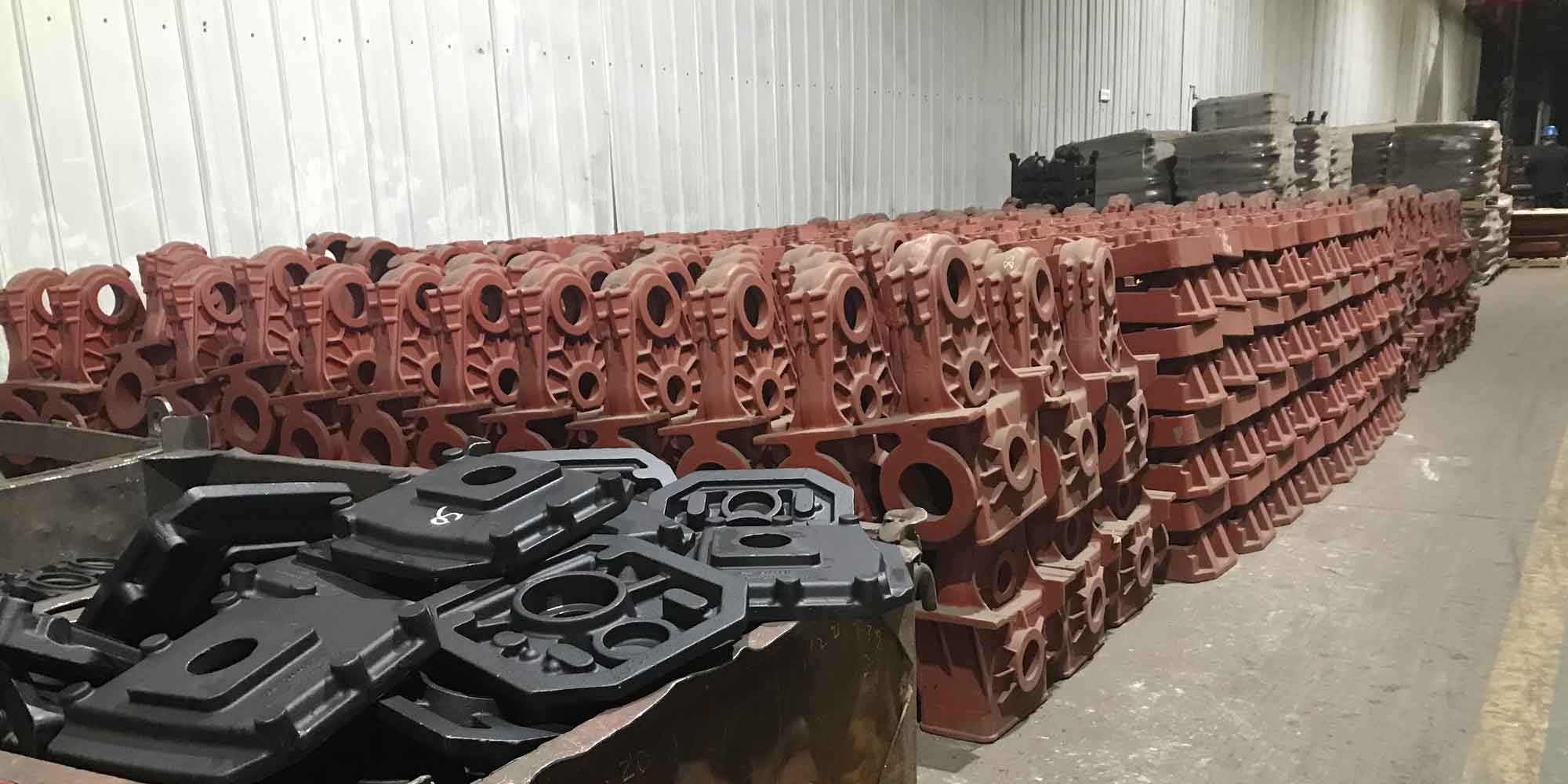
My focus on steel castings begins with ultrasonic testing, which is indispensable for identifying internal flaws that could later emerge on machined surfaces. For marine components like stern tube sleeves, the inner bore surface is particularly critical due to its interaction with shafts. After rough boring, when a 20–30 mm machining allowance remains, I conduct UT to probe for defects within this region. The goal is to locate and quantify flaws such as shrinkage porosity or inclusions that might intersect the final machined surface after precision boring. Based on ASTM A609, I have developed a tailored UT protocol that accounts for the coarse grain structure and inhomogeneities typical of steel castings.
Probe selection is crucial for effective UT. Given the need to inspect at shallow depths (20–35 mm) and minimize near-field effects, I prefer dual-crystal longitudinal wave probes over single-crystal ones. The dual-crystal probe, with a frequency of 4 MHz and a crystal angle of 10°–12°, optimizes sensitivity in the target zone while reducing background noise. The sound pressure field for such a probe can be approximated by the following formula, which highlights the focusing effect:
$$P(x) = P_0 \cdot \frac{\sin\left(\frac{\pi D}{\lambda} \cdot \frac{x}{F}\right)}{\frac{\pi D}{\lambda} \cdot \frac{x}{F}}$$
where \(P(x)\) is the pressure at depth \(x\), \(P_0\) is the initial pressure, \(D\) is the crystal diameter, \(\lambda\) is the wavelength, and \(F\) is the focal length. For steel castings, with an assumed sound velocity \(v \approx 5900 \, \text{m/s}\), the wavelength \(\lambda = v / f\) calculates to about 1.475 mm for 4 MHz, ensuring adequate resolution. Additionally, I employ shear wave angle probes (70°, 2.5 MHz) to detect planar flaws like cracks oriented perpendicular to the inspection surface, complementing the dual-crystal probe’s capabilities.
Sensitivity calibration is performed using reference blocks fabricated from the same steel casting material to ensure accurate defect sizing. The distance-amplitude correction (DAC) curve is established based on flat-bottom holes (e.g., φ2.4 mm) in these blocks. The curve amplitude is highest in the 10–35 mm range, confirming optimal detection sensitivity for defects within the machining allowance. The general formula for echo amplitude \(A\) from a disc-shaped reflector is:
$$A = A_0 \cdot \frac{S_d}{S_p} \cdot e^{-2\alpha x} \cdot \left(\frac{x_0}{x}\right)^2$$
where \(A_0\) is the initial amplitude, \(S_d\) is the defect area, \(S_p\) is the probe area, \(\alpha\) is the attenuation coefficient (higher for coarse-grained steel castings), \(x\) is the depth, and \(x_0\) is the reference distance. For steel castings, I adjust the DAC curve by +6 dB to account for surface curvature and coupling losses, using a mixture of oil and grease as couplant to improve acoustic transmission.
The inspection procedure involves grid scanning over the entire inner bore surface at a speed not exceeding 100 mm/s, with at least 10% probe overlap. Defects are evaluated against the DAC curve: any indication exceeding the curve is assessed for length using the 6 dB drop method, and for area using a 300 mm × 300 mm evaluation frame. The acceptance criteria for steel castings, derived from ASTM A609, are summarized in the table below:
| Quality Grade UT | Maximum Individual Indication Length (mm) | Maximum Individual Indication Area (mm²) | Total Defect Area (mm²) |
|---|---|---|---|
| Acceptable | 30 | 200 | 5000 |
Any defect classified as a crack is rejected outright. This rigorous UT process ensures that internal flaws in steel castings are identified and addressed before they compromise the final machined surface.
Following UT, magnetic particle testing is employed to capture surface and near-surface defects that might escape ultrasonic detection, such as fine cracks or localized porosity. I typically apply MT when the steel casting has a remaining machining allowance of 0.2–0.3 mm after precision boring, allowing for minor repairs without affecting the final finish. The choice of equipment and parameters is tailored to the curved surfaces of components like stern tube sleeves.
For MT, I use portable alternating current (AC) electromagnetic yokes due to their adaptability to curvature and effective surface magnetization. AC is preferred over direct current (DC) for steel castings in this context because of its strong skin effect, which concentrates the magnetic field at the surface, enhancing sensitivity to shallow defects. The magnetic field strength \(H\) near the yoke legs can be estimated as:
$$H = \frac{N I}{L + \pi r}$$
where \(N\) is the number of coil turns, \(I\) is the current, \(L\) is the distance between yoke legs, and \(r\) is the leg radius. For a typical yoke with a lift force ≥4.5 kg, I set the leg spacing \(D\) to 180 mm, which maximizes the effective inspection area per pass. The transverse coverage is approximately \(D/2\), or 90 mm, and scans are performed in two mutually perpendicular directions to ensure complete coverage. The magnetic flux density \(B\) in the steel casting relates to \(H\) via the material’s permeability \(\mu\):
$$B = \mu H$$
where \(\mu\) is higher for ferromagnetic steel castings, facilitating defect indication.
The magnetic suspension is a key factor; I prepare an oil-based suspension using a blend of odorless kerosene and transformer oil to prevent corrosion on the machined surfaces of steel castings. The concentration is maintained as per standards, typically around 1.2–2.4 mL of magnetic powder per 100 mL of carrier fluid, to ensure optimal particle mobility and indication clarity. The suspension viscosity \(\eta\) affects particle settlement, governed by Stokes’ law:
$$v_s = \frac{2 r_p^2 (\rho_p – \rho_f) g}{9 \eta}$$
where \(v_s\) is the settling velocity, \(r_p\) is the particle radius, \(\rho_p\) and \(\rho_f\) are the particle and fluid densities, and \(g\) is gravity. Adjusting the oil ratio controls \(\eta\) to keep particles suspended during inspection.
Defect evaluation involves comparing indications to acceptance levels. Linear defects like cracks are unacceptable, while non-linear indications are tolerated within limits. The criteria for steel castings are tabulated below:
| Quality Grade MT | Non-Linear Defects Max Length (mm) | Non-Linear Defects Max Length (mm) | Max Quantity / Total Area (mm²) | Linear/Lineal Defects Max Length (mm) |
|---|---|---|---|---|
| Acceptable | 2 | 4 | 8 / 70 | 2 |
For linear defects, additional length limits based on material thickness \(t\) apply: e.g., for \(t \leq 16\) mm, maximum length is 4 mm; for \(16 < t \leq 50\) mm, 6 mm; for \(t > 50\) mm, 10 mm. After MT, any unacceptable defects are removed by grinding or welding, and the surface is re-machined to final dimensions, followed by a final MT verification.
To summarize the combined NDE process, I have consolidated the key parameters for both UT and MT in comprehensive tables. These tables encapsulate the technical specifications applied to steel castings during manufacturing:
| Parameter | Specification |
|---|---|
| Component | Stern Tube Sleeve/Rudder Frame (Steel Casting) |
| Material | Carbon-Manganese Steel Casting |
| Surface Condition | Machined (Rough Bored) |
| Inspection Coverage | 100% Inner Bore |
| Timing | After Rough Machining |
| Standard | ASTM A609 |
| Probe Type 1 | Dual-Crystal, 4 MHz, 10°–12° Angle |
| Probe Type 2 | Shear Wave, 2.5 MHz, 70° Angle |
| Reference Block | φ2.4 mm Flat-Bottom Hole (Material-Matched) |
| Couplant | Oil + Grease Mixture |
| Coupling Compensation | +6 dB |
| Scanning | Grid Pattern, ≤100 mm/s |
| Parameter | Specification |
|---|---|
| Component | Stern Tube Sleeve/Rudder Frame (Steel Casting) |
| Material | Carbon-Manganese Steel Casting |
| Surface Condition | Machined (0.2–0.3 mm Allowance) |
| Inspection Coverage | 100% Surface |
| Timing | Pre-Finish and Post-Finish |
| Lighting | ≥1000 lux |
| Standard | ASTM A609 (with Adaptations) |
| Instrument | Portable AC Electromagnetic Yoke (CDX-5 Type) |
| Magnetization | AC, Continuous Method, Lift Force ≥4.5 kg |
| Magnetic Suspension | Oil-Based, Black Particles |
| Reference Shims | A-Type (30/100) |
| Scanning Pattern | Two Perpendicular Directions, Leg Spacing 180 mm |
The integration of UT and MT offers a robust solution for quality assurance in steel castings. From a theoretical perspective, the probability of defect detection \(P_d\) can be modeled as a function of inspection sensitivity and coverage. For combined methods, the overall detection probability for steel castings approximates:
$$P_{\text{total}} = 1 – (1 – P_{\text{UT}})(1 – P_{\text{MT}})$$
where \(P_{\text{UT}}\) and \(P_{\text{MT}}\) are the detection probabilities for UT and MT, respectively. By applying both methods at optimal stages, \(P_{\text{total}}\) approaches unity, significantly reducing the risk of defective steel castings reaching service.
In practice, this approach has proven highly effective. For instance, in producing stern tube sleeves from steel castings, early UT detection of subsurface porosity allows for grinding and welding while sufficient material remains, avoiding costly post-machining repairs. Subsequent MT catches fine cracks induced by machining stresses, ensuring a flawless final surface. The economic impact is substantial: rework costs are minimized, and product acceptance rates improve. Moreover, this methodology aligns with industry trends toward predictive maintenance and quality control in marine steel castings.
In conclusion, the combination of ultrasonic and magnetic particle testing, implemented through a strategic工序前移 protocol, represents a best practice for non-destructive evaluation of marine steel castings. By leveraging tailored probes, sensitivity calibrations, and acceptance criteria—all grounded in standards like ASTM A609—this approach ensures comprehensive defect detection across depths and surfaces. The use of formulas and tables, as illustrated herein, provides a quantitative framework for optimizing inspection parameters. As marine engineering advances, such integrated NDE methodologies will remain crucial for enhancing the reliability and longevity of steel castings in critical ship components. I encourage wider adoption of this practice to foster safer and more efficient maritime operations.