
In modern metallurgical industries, the demand for high-performance and durable casting parts has significantly increased, especially in applications such as zinc electrowinning. Cathode plates used in zinc electrowinning require robust cross beams that serve as both load-bearing and conductive components. Traditional manufacturing methods, such as welding or gravity casting, often lead to defects like poor joint integrity, cold shuts, and insufficient strength, which compromise the quality and safety of these casting parts. To address these issues, we developed a pressure casting process for producing integral cross beams with large length-to-diameter ratios. This article discusses the challenges associated with blowhole defects in such casting parts, analyzes their causes, and presents effective countermeasures based on our experimental work.
The evolution towards automation and larger electrolytic cells in zinc electrowinning has heightened the requirements for cathode plate components. Conventional welded cross beams involve multiple welding steps, leading to high labor intensity, inconsistent quality dependent on operator skill, and potential failures such as false welding or conductive issues. These flaws can result in operational hazards, like falling components during cell handling, or process inefficiencies, such as reduced zinc deposition or re-dissolution. Gravity-cast alternatives, while eliminating some welding defects, often suffer from poor surface finish, cold shuts, and low rigidity. Therefore, our focus shifted to pressure casting as a method to produce integral cross beams—combining the beam, lifting lugs, and conductive heads into a single casting part—to enhance strength, corrosion resistance, and conductivity. However, pressure casting of large length-to-diameter ratio casting parts introduces unique challenges, particularly blowhole defects, which we investigated thoroughly.
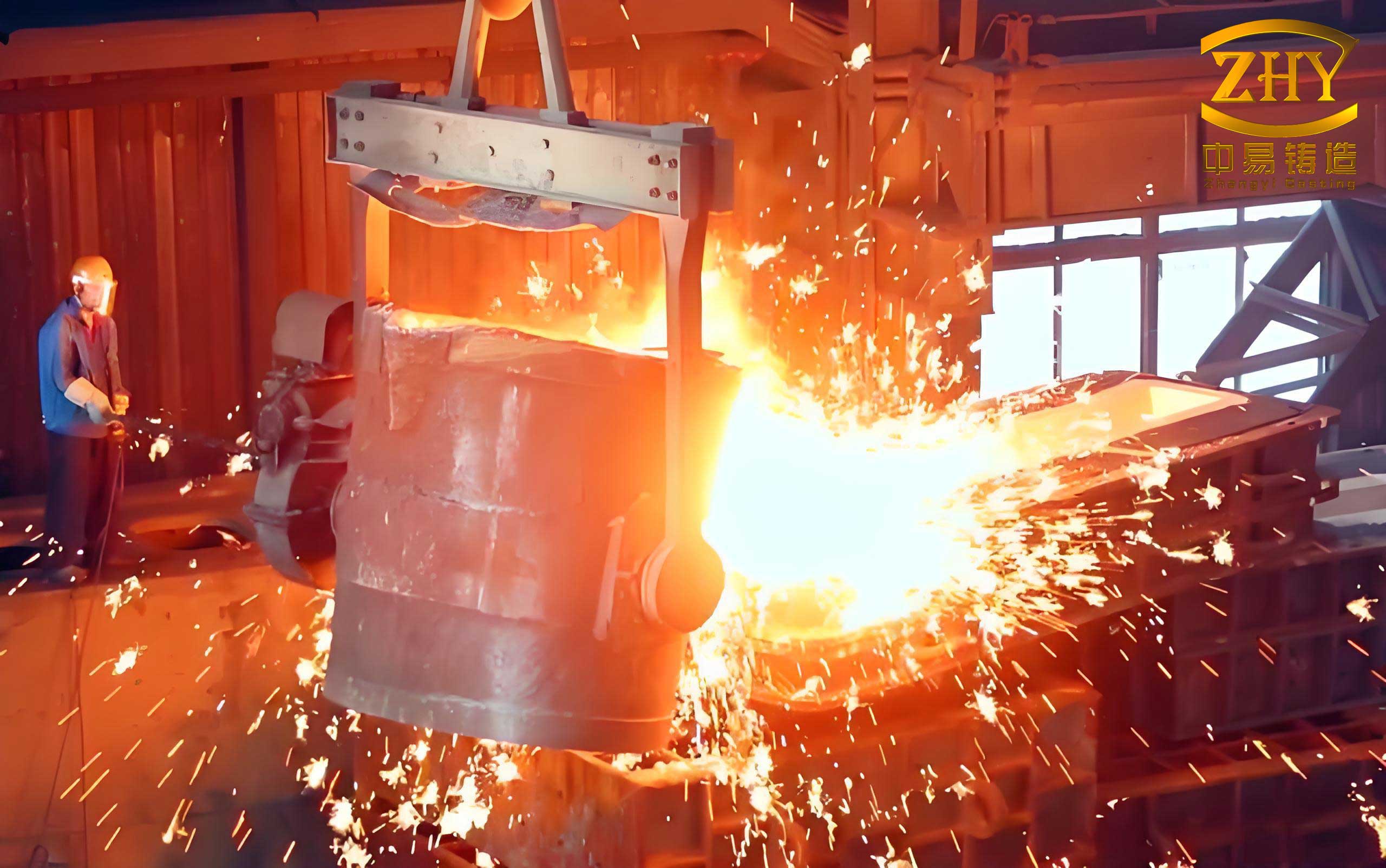
Pressure casting involves injecting molten metal into a mold cavity under high speed and pressure, resulting in rapid solidification. This process is efficient for mass-producing complex casting parts, but it can trap gases within the casting, leading to porosity or blowholes. For large length-to-diameter ratio casting parts, such as cross beams exceeding 90 cm in length, the extended flow paths and intricate geometries exacerbate gas entrapment. Blowholes not only weaken the mechanical properties but also affect electrical conductivity, which is critical for conductive components in electrowinning. Our study aimed to identify the root causes of these defects and implement optimized practices to produce high-quality casting parts. The following sections detail our equipment, process, defect analysis, and solutions, supported by tables and formulas to summarize key findings.
We utilized a 660-ton automatic ladling pressure casting machine for manufacturing the integral cross beams. The machine consists of several subsystems: a clamping unit, injection unit, hydraulic system, electrical controls, and safety features. The clamping unit employs a toggle mechanism to amplify the clamping force, ensuring mold integrity during injection. The injection unit includes a shot cylinder, accumulator for fast injection, booster accumulator, shot sleeve, and plunger. Key parameters of the machine are summarized in Table 1.
| Parameter | Value |
|---|---|
| Plunger Diameter | 80 mm |
| Casting Pressure | 132.8 MPa |
| Projected Area | 600 cm² |
| Maximum Shot Capacity | 70.56 N (weight of aluminum) |
| Injection Speed Range | 2-6 m/s |
| Booster Pressure | Up to 60 MPa |
The mold for the integral cross beam was designed horizontally, with a gate located centrally at the bottom to facilitate symmetrical filling. The casting part features a large length-to-diameter ratio, with dimensions ranging from 90 to 120 cm. To ensure proper gas evacuation, the mold incorporated multiple vents and overflow wells at the ends of flow channels and at junctions where metal flow might stagnate. The mold was preheated to 180°C ± 5°C before each casting cycle to reduce thermal shock and improve metal flow.
Our pressure casting process began with alloy preparation. We used an aluminum alloy composed of Si 0.22%, Fe 0.36%, Mn 0.023%, and the remainder aluminum. The alloy was melted in a furnace, refined with a degassing agent using nitrogen purging at 0.1-0.3 MPa, and held at 730-750°C for 20 minutes to remove dissolved gases. The molten metal was then transferred to a holding furnace maintained at 670-680°C. Prior to casting, the mold was sprayed with a release agent, and copper inserts for conductive heads were positioned and fixed. The injection cycle involved ladling the molten aluminum into the shot sleeve, followed by a two-stage injection: a slow phase to fill the sleeve and a fast phase to fill the mold cavity. Booster pressure was applied at 60 MPa for 10-20 seconds to compensate for solidification shrinkage. After ejection, the casting part was inspected, and the mold was cleaned for the next cycle. Typical process parameters are listed in Table 2.
| Parameter | Value |
|---|---|
| Mold Temperature | 180°C |
| Molten Metal Temperature | 670°C |
| Maximum Booster Pressure | 60 MPa |
| Injection Speed | 4 m/s (optimized) |
| Shot Sleeve Fill Ratio | 60-70% |
| Hold Time | 15 seconds |
During initial trials, we observed significant blowhole defects in the casting parts, particularly in regions with long flow paths or complex geometries. Blowholes are voids or pores formed by trapped gases, which can be macroscopic or microscopic. These defects compromise the integrity of casting parts, reducing mechanical strength and electrical conductivity. We analyzed the sources of these defects, which primarily stem from four factors: inadequate mold venting, volatilization of moisture from release agents, dissolved gases in the molten metal, and gas entrapment during injection. For large length-to-diameter ratio casting parts, the main contributors are mold venting issues, injection-induced turbulence, and inherent gas solubility in aluminum.
To quantify the impact of blowholes, we consider the gas content in pressure-cast aluminum. Typically, the hydrogen content ranges from 15 to 45 mg per 100 g of aluminum. The solubility of hydrogen in aluminum follows Sieverts’ law, expressed as:
$$ C = k \sqrt{P_{H_2}} $$
where \( C \) is the hydrogen concentration, \( k \) is a constant dependent on temperature, and \( P_{H_2} \) is the partial pressure of hydrogen. During solidification, the solubility drops sharply, causing hydrogen to precipitate and form micropores. For large casting parts, the extended solidification time exacerbates this effect. Additionally, gas entrapment during injection can be modeled using fluid dynamics principles. The Reynolds number (\( Re \)) for flow in the mold cavity indicates the transition from laminar to turbulent flow:
$$ Re = \frac{\rho v D}{\mu} $$
where \( \rho \) is the density of molten aluminum, \( v \) is the flow velocity, \( D \) is the hydraulic diameter, and \( \mu \) is the dynamic viscosity. High \( Re \) values lead to turbulence, which entraps air bubbles. We identified that for our casting parts, with \( v \) initially set at 6 m/s, \( Re \) exceeded critical thresholds, promoting gas entrainment.
We conducted a detailed cause analysis, summarized in Table 3. The primary causes were categorized, and their effects on casting parts were evaluated.
| Cause Category | Specific Cause | Effect on Casting Parts |
|---|---|---|
| Mold Design | Insufficient venting paths or small vent holes | Gas trapped in long flow channels, leading to large random pores |
| Molten Metal Quality | High hydrogen content due to inadequate degassing | Microscopic pinholes distributed uniformly, reducing mechanical properties |
| Injection Parameters | High injection speed causing turbulent flow | Air entrapment and formation of irregular voids |
| Process Conditions | Low shot sleeve fill ratio | Increased air volume in sleeve, entrapped during injection |
Based on this analysis, we implemented several countermeasures to mitigate blowhole defects in our casting parts. First, we optimized the mold design using ProCast simulation software to visualize metal flow and gas evacuation. The simulation revealed stagnant zones where gas accumulated; we added vents and overflow wells at these locations. The optimized mold design increased vent area by 30% compared to the initial design, ensuring faster gas escape relative to metal filling speed.
Second, we enhanced molten metal treatment. The degassing process was intensified by using high-purity nitrogen (99.8%) with a rotary impeller degasser. The degassing time was extended to 15 minutes, and the holding time in the furnace was minimized to reduce hydrogen pickup. The hydrogen content was measured using a reduced pressure test, showing a decrease from 0.35 mL/100 g Al to 0.15 mL/100 g Al after optimization.
Third, we adjusted the shot sleeve fill ratio. Initially, the fill ratio was around 50%, which allowed excessive air in the sleeve. We increased it to 60-70% by precisely controlling the ladle amount, reducing the air volume available for entrapment. This change lowered the turbulence during the slow injection phase.
Fourth, we modified injection parameters. The injection speed was reduced from 6 m/s to 4 m/s, and the injection time was extended from 0.10 seconds to 0.15 seconds. This allowed for more laminar flow, minimizing air entrainment. The pressure buildup curve was also adjusted to apply booster pressure earlier in the cycle, compensating for solidification shrinkage without trapping gases. The optimized parameters are compared in Table 4.
| Parameter | Before Optimization | After Optimization |
|---|---|---|
| Injection Speed | 6 m/s | 4 m/s |
| Injection Time | 0.10 s | 0.15 s |
| Shot Sleeve Fill Ratio | 50% | 65% |
| Degassing Hydrogen Content | 0.35 mL/100 g Al | 0.15 mL/100 g Al |
| Vent Area Ratio | Base | +30% |
After implementing these measures, we evaluated the quality of the casting parts through non-destructive and destructive testing. Visual inspection showed a significant reduction in surface blowholes. Cross-sectional analysis of samples taken from critical regions, such as the beam center and lug junctions, revealed minimal porosity. The copper-aluminum interface in the conductive head showed excellent metallurgical bonding, with no gaps or oxides, indicating effective integration during pressure casting.
Mechanical testing was conducted to assess the strength of the casting parts. We performed three-point bending tests on the cross beams, with supports spaced at 1 m intervals. The maximum load before failure was recorded, and the bending strength (\( \sigma_b \)) was calculated using the formula:
$$ \sigma_b = \frac{3FL}{2bd^2} $$
where \( F \) is the applied load, \( L \) is the span length, \( b \) is the width of the beam, and \( d \) is the thickness. For our casting parts, with \( F = 244 \) kg (converted to Newtons: \( 244 \times 9.81 = 2393.64 \) N), \( L = 1 \) m, \( b = 70 \) mm, and \( d = 14 \) mm, the bending strength was:
$$ \sigma_b = \frac{3 \times 2393.64 \times 1}{2 \times 0.07 \times (0.014)^2} = 73.33 \text{ MPa} $$
This value indicates high rigidity, suitable for load-bearing applications. Additionally, we tested the lifting lugs under tensile loads. The open lugs sustained 844 kg, and the closed lugs sustained 1894 kg, well above operational requirements. A summary of mechanical properties is provided in Table 5.
| Property | Value |
|---|---|
| Bending Strength | 73.33 MPa |
| Open Lug Load Capacity | 844 kg |
| Closed Lug Load Capacity | 1894 kg |
| Hardness (Brinell) | 65 HB |
Electrical conductivity is crucial for casting parts used in electrowinning. We measured the electrical resistance of the integral cross beam using a micro-ohmmeter. The theoretical resistance (\( R_{theory} \)) for the aluminum alloy was calculated based on its resistivity (\( \rho = 2.85 \times 10^{-8} \ \Omega \cdot \text{m} \)), length (\( L = 1 \ \text{m} \)), and cross-sectional area (\( S = 0.07 \times 0.014 = 9.8 \times 10^{-4} \ \text{m}^2 \)):
$$ R_{theory} = \rho \frac{L}{S} = 2.85 \times 10^{-8} \times \frac{1}{9.8 \times 10^{-4}} = 29.08 \ \mu\Omega $$
The measured resistance values ranged from 29.21 to 30.29 \( \mu\Omega \), with an average of 29.75 \( \mu\Omega \). The ratio of measured to theoretical resistance is:
$$ \text{Ratio} = \frac{29.75}{29.08} \times 100\% = 102.3\% $$
This close alignment indicates that the casting parts have minimal internal defects affecting conductivity. For comparison, welded cross beams typically show higher resistance due to joint imperfections.
We also monitored the thermal performance of the casting parts during operational trials in a zinc electrowinning plant. Temperature sensors were attached to the conductive heads of 1000 integral cross beams and an equal number of welded beams. Over a four-month period, the temperature distribution was recorded. The pressure-cast beams exhibited lower operating temperatures, with an average of 44.7°C, compared to 47.9°C for welded beams. This 3.2°C reduction signifies better electrical efficiency and less energy loss. The temperature data is summarized in Table 6, showing the percentage of beams in each temperature range.
| Temperature Range (°C) | Pressure-Cast Beams (%) | Welded Beams (%) |
|---|---|---|
| 36-40 | 15% | 10% |
| 41-45 | 50% | 40% |
| 46-50 | 30% | 35% |
| 51-55 | 5% | 10% |
| 56-60 | 0% | 4% |
| 61-65 | 0% | 1% |
The lower temperatures in pressure-cast casting parts correlate with reduced resistance and fewer hotspots, enhancing the overall efficiency of the electrowinning process. Furthermore, no visible deformation, cracking, or acid corrosion was observed in the casting parts during the trial, confirming their durability in harsh environments.
Our study demonstrates that pressure casting is a viable method for producing large length-to-diameter ratio casting parts with superior properties. By addressing blowhole defects through mold optimization, improved degassing, adjusted fill ratios, and controlled injection parameters, we achieved casting parts with high mechanical strength, excellent electrical conductivity, and reliable performance. The integral cross beams produced show a bending strength of 73.33 MPa, lug load capacities exceeding 800 kg, and resistance values within 102% of theoretical limits. These casting parts offer a cost-effective and quality-consistent alternative to traditional welded or gravity-cast components, supporting the advancement of zinc electrowinning technology.
In conclusion, the successful mitigation of blowhole defects in pressure-cast casting parts hinges on a holistic approach that considers mold design, metal quality, and process dynamics. Future work could explore advanced simulation techniques for predicting gas entrapment or alternative alloy compositions to further enhance properties. As industries continue to demand high-performance casting parts, pressure casting with optimized parameters will play a pivotal role in meeting these needs, ensuring safety, efficiency, and longevity in critical applications.