
In the realm of high-speed rail transportation, the demand for precision and reliability in component manufacturing has reached unprecedented levels. As a seasoned engineer specializing in metallurgical processes, I have dedicated years to refining the art and science of steel casting for critical applications. The phrase “zero defects” is not merely a slogan but a fundamental principle that guides every phase of production, especially for key steel castings used in electric multiple unit (EMU) trains. These components, such as couplers, brake discs, mounting seats, and axle boxes, must withstand extreme operational stresses, including thermal shocks, fatigue loads, and mechanical impacts. Therefore, ensuring the highest quality in steel casting is paramount, not only for performance but also for passenger safety. This article delves into the comprehensive strategies I employ to control and enhance the quality of steel castings, focusing on material specifications, surface integrity, and internal soundness. Through a combination of advanced simulation tools, rigorous process controls, and innovative techniques, I aim to elucidate the multifaceted approach required to achieve excellence in steel casting for modern railways.
The foundation of quality in steel casting begins with stringent material technical indicators. Unlike conventional castings, those used in high-speed trains require exceptional properties to endure harsh environments. For instance, brake discs must resist thermal fatigue caused by repetitive braking, necessitating specific compositional and gaseous element controls. In my practice, I adhere to strict limits: oxygen content ≤ 0.010%, hydrogen content ≤ 0.00005%, and nitrogen content ≤ 0.015%. These parameters are critical because excessive gases can lead to porosity and non-metallic inclusions, compromising the steel casting’s integrity. Additionally, mechanical performance targets, such as tensile strength ≥ 1,050 MPa and elongation ≥ 8%, are non-negotiable. To quantify these requirements, I often use formulas to relate composition to properties. For example, the relationship between tensile strength (σ_t) and alloying elements can be expressed as:
$$ \sigma_t = \sigma_0 + k_1 \cdot \%C + k_2 \cdot \%Mn + k_3 \cdot \%Cr + \ldots $$
where σ_0 is the base strength and k_i are coefficients derived from empirical data. Furthermore, non-metallic inclusions are classified per standards like ASTM E45, with restrictions such as Type II and Type inclusions ≤ 1 grade. Controlling these aspects requires meticulous melting and refining practices, which I will discuss later.
Surface quality is another critical dimension in steel casting. The as-cast surface often serves as the final product face, especially in areas where machining is minimal. Any defect, no matter how small, can act as a stress concentrator, initiating cracks under cyclic loading. For axle box castings, which experience continuous alternating stresses, specifications allow only dispersed non-crack defects with diameters ≤ Φ1.5 mm and depths ≤ 2 mm, limited to 3 per 100 cm². This highlights the need for flawless surface finish. In my experience, achieving such quality involves optimizing molding and core-making processes. For instance, I prefer using resin-coated sand for cores to ensure smooth internal surfaces. To illustrate common surface defects and their tolerances, I have compiled the following table based on industry standards for steel casting:
| Defect Type | Maximum Size | Allowed Density | Critical Areas |
|---|---|---|---|
| Non-crack pores | Φ1.5 mm x 2 mm deep | 3 per 100 cm² | Fatigue-prone zones |
| Magnetic indications | Length ≤ 2 mm, total ≤ 4 mm | Grade 1 per GB/T 9444 | Machined surfaces |
| Slag inclusions | Not permitted | Zero tolerance | All surfaces |
Internal quality, assessed through non-destructive testing like radiography or ultrasonics, is equally vital. For steel castings in EMUs, radiographic inspection often reveals shrinkage porosity or gas holes that could undermine structural integrity. Standards such as ASTM E446 define acceptance levels, with critical regions requiring no defects above Class 2 for certain categories. In brake discs, ultrasonic testing mandates that no shrinkage defects exist within 8 mm of the friction surface and no flaws larger than 2 mm equivalent flat-bottomed holes within 12 mm. To meet these demands, I rely heavily on casting simulation software like MAGMA to predict and mitigate internal defects. The solidification process, for example, can be modeled using the Fourier heat conduction equation:
$$ \frac{\partial T}{\partial t} = \alpha \nabla^2 T $$
where T is temperature, t is time, and α is thermal diffusivity. By simulating temperature gradients, I optimize riser placement and cooling rates to ensure directional solidification, minimizing shrinkage in steel casting.
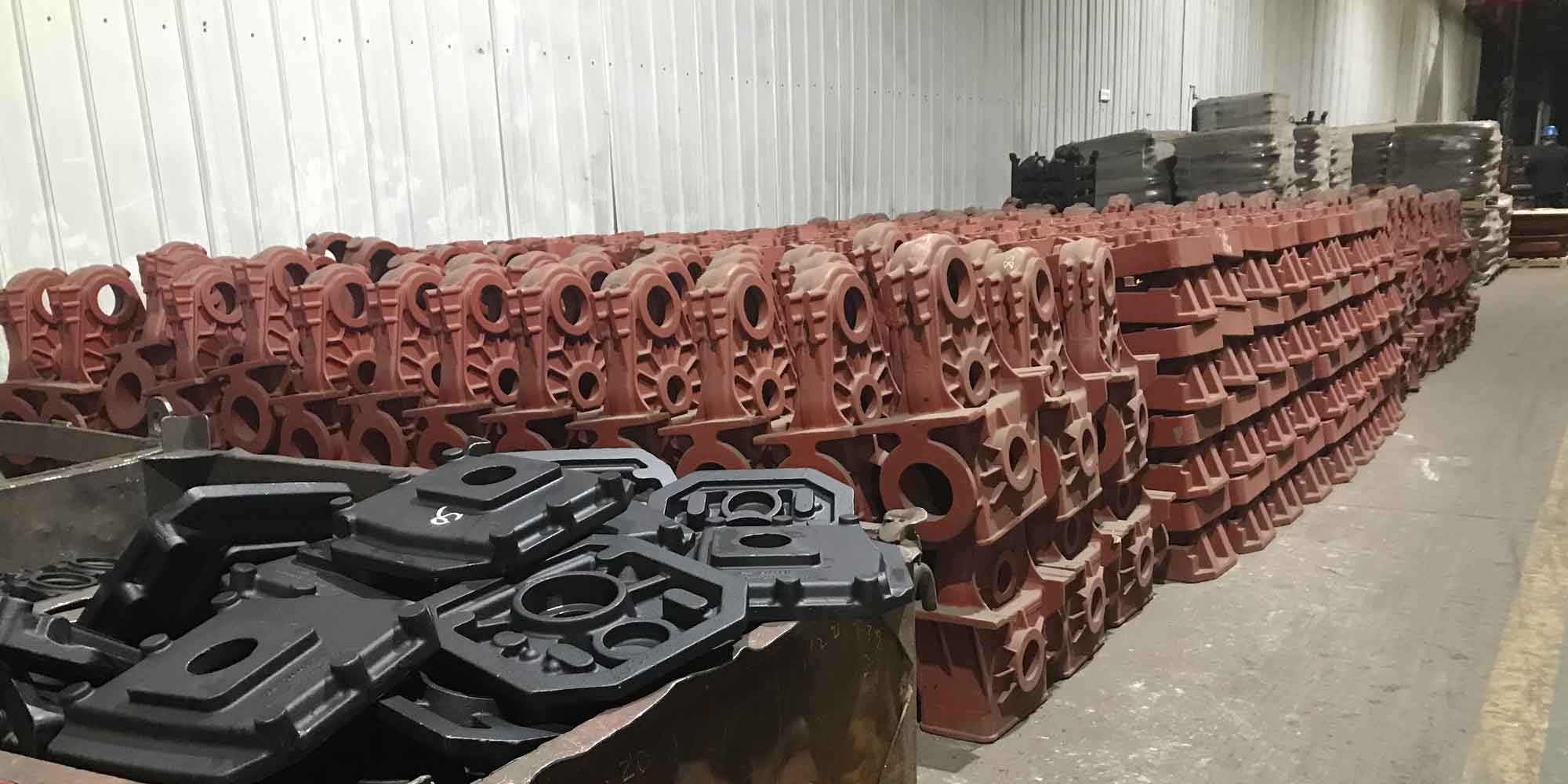
Ensuring quality in steel casting involves a holistic approach, from raw material selection to final inspection. I begin with steel melt quality control, as the liquid metal’s purity sets the stage for everything else. For critical steel castings, I use medium-frequency induction furnaces equipped with bottom-blown argon systems, as shown in the image below. This technology reduces non-metallic inclusions by promoting flotation and agglomeration. Additionally, I implement wire feeding refining to adjust composition and degas the melt. The effectiveness of argon bubbling can be described by the Stokes’ law for bubble rise velocity:
$$ v = \frac{2 (\rho_l – \rho_g) g r^2}{9 \mu} $$
where v is the velocity, ρ_l and ρ_g are liquid and gas densities, g is gravity, r is bubble radius, and μ is viscosity. By controlling bubble size and flow rate, I achieve lower oxygen and hydrogen levels, essential for high-integrity steel casting.
Surface quality control demands attention to both process design and operational discipline. One common issue I encounter is excessive magnetic indications on machined surfaces, often stemming from micro-shrinkage. These defects appear as fine lines under magnetic particle inspection and are prevalent in areas between risers due to localized overheating. Through microstructural analysis, I confirmed that micro-shrinkage results from a wide solidification range in alloyed steel castings. To address this, I enhance temperature gradients by strategically placing chills and optimizing riser spacing. The thermal gradient G can be approximated as:
$$ G = \frac{T_{melt} – T_{mold}}{d} $$
where T_{melt} is the melting temperature, T_{mold} is the mold temperature, and d is the distance. By increasing G, I promote columnar grain growth and reduce micro-porosity. Another surface defect, slag porosity, arises from turbulent flow during pouring. To prevent this, I design gating systems with filters and use refractory sprue tubes to minimize turbulence. The Reynolds number (Re) helps assess flow characteristics:
$$ Re = \frac{\rho v D}{\mu} $$
where ρ is density, v is velocity, D is diameter, and μ is viscosity. Keeping Re below 2,000 ensures laminar flow, reducing slag entrainment in steel casting.
Internal quality control focuses on eliminating shrinkage and gas porosity. For complex steel castings like tight-lock couplers, I use MAGMA software to simulate filling and solidification. The software outputs temperature fields that guide riser and chill design, ensuring adequate feeding. Shrinkage volume V_sh can be estimated using the Chvorinov’s rule for solidification time:
$$ t_s = B \left( \frac{V}{A} \right)^n $$
where t_s is solidification time, V is volume, A is surface area, B and n are constants. By adjusting V/A ratios with risers, I minimize shrinkage cavities. Gas porosity, particularly invasive gas holes, is another challenge. These defects occur when mold or core gases invade the solidifying steel casting. In brake discs, I found gas holes near the outer circumference, sub-surface at 2–10 mm depths. Analysis revealed they were invasive gas pores from resin decomposition in sand cores. To combat this, I optimize core sand formulations to reduce gas generation and improve permeability. The gas pressure P_gas buildup can be modeled as:
$$ P_{gas} = P_0 + \frac{nRT}{V} $$
where P_0 is initial pressure, n is moles of gas, R is the gas constant, T is temperature, and V is volume. By using low-gas resins and venting molds, I keep P_gas below the metal pressure, preventing invasion. Additionally, I employ facing sand with new silica sand for molds, which has lower binder content and higher strength, further reducing gas defects in steel casting.
Process optimization extends beyond traditional methods. I integrate digital tools for real-time monitoring and control. For example, I use spectroscopic analysis to verify melt composition instantly, ensuring consistency in steel casting. Statistical process control (SPC) charts help track key variables like pouring temperature and mold hardness. A typical SPC formula for control limits is:
$$ UCL/LCL = \bar{x} \pm A_2 \bar{R} $$
where UCL and LCL are upper and lower control limits, \bar{x} is the sample mean, \bar{R} is the average range, and A_2 is a constant. This proactive approach detects deviations early, preventing mass defects. Moreover, I advocate for advanced materials, such as exothermic riser sleeves that improve feeding efficiency, and ceramic filters that trap inclusions. The filtration efficiency η can be expressed as:
$$ \eta = 1 – \exp(-k L) $$
where k is a filtration coefficient and L is filter thickness. These innovations significantly enhance the internal soundness of steel casting.
In tackling specific defects, I have developed targeted strategies. For magnetic indication defects, I conduct root cause analyses using design of experiments (DOE). Factors like riser size, chill placement, and pouring temperature are varied, and response surface methodology (RSM) models the outcomes. A quadratic model for defect count Y might be:
$$ Y = \beta_0 + \sum \beta_i x_i + \sum \beta_{ii} x_i^2 + \sum \sum \beta_{ij} x_i x_j $$
where β are coefficients and x_i are factors. This data-driven approach pinpoints optimal parameters. For slag porosity, I emphasize gating design principles, such as using tangential gates to reduce velocity and employing swirl gates for slag separation. The centrifugal force in a swirl gate is given by:
$$ F_c = \frac{m v^2}{r} $$
where m is mass, v is tangential velocity, and r is radius. This force pushes slag to the center, preventing it from entering the steel casting cavity. For invasive gas holes, I perform gas evolution tests on core sands to measure total gas volume and evolution rate. The ideal core sand should have a slow, steady gas release, achievable by adjusting resin type and catalyst. Permeability P is also critical, calculated as:
$$ P = \frac{Q L}{A \Delta p t} $$
where Q is gas flow rate, L is sample length, A is cross-sectional area, Δp is pressure drop, and t is time. High P values ensure easy gas escape, safeguarding the steel casting from porosity.
The role of simulation in steel casting cannot be overstated. I use MAGMA not only for solidification but also for stress analysis to predict hot tearing and distortion. The thermal stress σ_therm during cooling is approximated by:
$$ \sigma_{therm} = E \alpha \Delta T $$
where E is Young’s modulus, α is thermal expansion coefficient, and ΔT is temperature difference. By simulating stress fields, I modify geometry with reinforcing ribs or adjust cooling rates to avoid cracks. For instance, in axle box castings, I identified high-stress zones in rib areas and added fillets to distribute stress. This virtual prototyping saves time and resources while enhancing the reliability of steel casting. Additionally, I employ computational fluid dynamics (CFD) to model mold filling, ensuring smooth metal flow without air entrapment. The Navier-Stokes equations govern this flow:
$$ \rho \left( \frac{\partial \mathbf{v}}{\partial t} + \mathbf{v} \cdot \nabla \mathbf{v} \right) = -\nabla p + \mu \nabla^2 \mathbf{v} + \mathbf{f} $$
where v is velocity vector, p is pressure, and f is body force. Solving these equations helps optimize gating designs for defect-free steel casting.
Quality assurance also hinges on rigorous material management. I specify premium raw materials: low-phosphorus and sulfur scrap steel, high-purity ferroalloys, and refractory linings with low moisture content. For steel castings requiring ultra-low impurities, I use industrial pure iron as a base. Each material batch is tested, and certificates of analysis are maintained. The following table summarizes key material specifications for steel casting in EMU applications:
| Material | Requirement | Test Method | Impact on Steel Casting |
|---|---|---|---|
| Scrap Steel | P ≤ 0.020%, S ≤ 0.015% | Optical Emission Spectroscopy | Reduces hot tearing and segregation |
| Ferroalloys | High purity, low gas content | Chemical Analysis | Ensures precise composition control |
| Molding Sand | AFS fineness 50-70, low clay | Sieve Analysis | Improves surface finish and dimensional accuracy |
| Refractories | Al2O3 ≥ 85%, low thermal shock | X-ray Diffraction | Enhances melt purity and lining life |
Post-casting treatments are equally important. I apply heat treatments like normalizing and tempering to achieve desired microstructures and relieve residual stresses. The tempering parameter P_temp for steel casting can be defined as:
$$ P_{temp} = T (\log t + C) $$
where T is temperature in Kelvin, t is time in hours, and C is a constant. By controlling P_temp, I optimize toughness and strength. Non-destructive testing (NDT) methods, including ultrasonic, radiographic, and magnetic particle inspection, are integral to my quality protocol. For ultrasound, the flaw size detection limit d_min is related to wavelength λ:
$$ d_{min} \approx \frac{\lambda}{2} = \frac{c}{2f} $$
where c is sound speed and f is frequency. Using high-frequency probes, I detect minute defects in steel casting, ensuring compliance with standards.
In my journey, I have learned that continuous improvement is key. I foster a culture of quality where every team member is trained in defect prevention techniques. Regular audits and feedback loops help refine processes. For example, after implementing argon bottom-blowing, the inclusion count in steel casting dropped by 40%, as measured by automated image analysis. I also collaborate with research institutions to explore novel techniques, such as additive manufacturing for sand molds, which offers superior complexity and accuracy. The future of steel casting lies in digital twins—virtual replicas that simulate real-time production—allowing predictive maintenance and adaptive control. This innovation will further elevate the quality of steel casting for high-speed trains.
To summarize, achieving excellence in steel casting for EMUs demands a multifaceted strategy encompassing material science, process engineering, and advanced technology. From melt refinement to final inspection, each step must be meticulously controlled. By leveraging simulation, statistical methods, and innovative materials, I have successfully mitigated defects like micro-shrinkage, slag porosity, and invasive gas holes. The relentless pursuit of “zero defects” is not just a goal but a necessity for safety and performance. As railways evolve, so must our approaches to steel casting, ensuring that every component meets the highest standards of quality and reliability.