
In my extensive experience in the field of metallurgy and steel casting, I have observed the critical role that railway couplers play in ensuring the safety and efficiency of freight transportation. These components, which connect cars and transmit forces, are subjected to complex loading conditions including tension, compression, impact, and bending. Over time, this leads to various failure modes such as cracking, deformation, and wear, particularly in heavy-haul operations like the Datong-Qinhuangdao line in China. The traditional material used for these couplers, ZG25MnCrNiMo-E grade steel casting, has shown limitations under increasing operational demands, necessitating the development of a superior steel casting material.
The failure analysis of cracked couplers revealed that fractures often initiated at stress concentration points, such as the tail pin hole and hook tongue surfaces. These cracks propagated through a combination of brittle and fatigue mechanisms, indicating that the existing steel casting’s mechanical properties were insufficient for modern heavy-haul, high-speed trains. As a researcher involved in this project, I aimed to address these issues by designing a new high-strength, high-toughness steel casting, referred to as “E+ grade steel casting,” which leverages advanced metallurgical techniques to enhance performance.
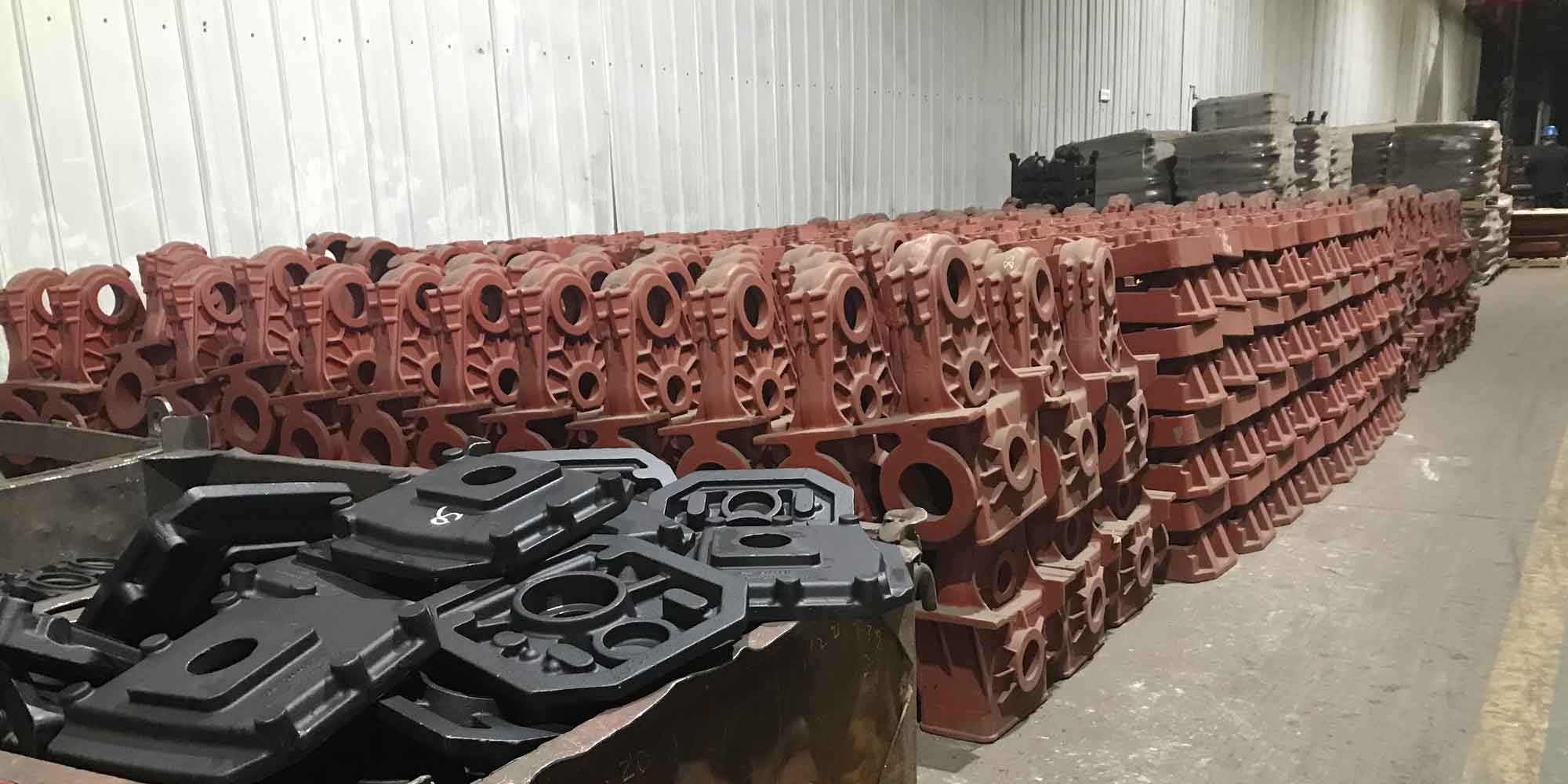
The primary objective was to improve the steel casting’s strength and toughness simultaneously, ensuring reliability and longevity. Specifically, the focus was on enhancing fatigue resistance to prevent catastrophic failures and improving low-temperature impact toughness to mitigate brittle fracture risks. To achieve this, I utilized a dual-process electric arc furnace (EAF) and ladle furnace (LF) refining method to reduce harmful elements like nitrogen, oxygen, sulfur, and phosphorus, resulting in cleaner molten steel. Additionally, rare earth microalloying was employed to modify inclusion morphology and distribution, which is crucial for optimizing the steel casting’s properties.
The technical targets for the new steel casting were set relative to the existing E-grade steel casting. Key performance metrics included tensile strength, yield strength, elongation, reduction of area, impact energy at low temperatures, and hardness. The goal was to achieve a significant increase in strength while maintaining or improving ductility and toughness. For instance, the yield strength was targeted to rise by over 17%, and the impact toughness at -40°C by at least 15%. These improvements are essential for steel casting components that endure harsh environmental conditions.
In designing the chemical composition for the E+ grade steel casting, I optimized the alloy element content based on the original E-grade steel casting. The approach involved increasing the concentrations of nickel, chromium, and manganese to enhance hardenability and strength, while reducing sulfur and phosphorus to improve toughness. The addition of rare earth elements, such as those from the lanthanide series, was critical for purifying the steel casting and refining its microstructure. The rare earth content was controlled to not exceed 0.15% by mass, ensuring effective microalloying without adverse effects.
| Element | Range for E+ Grade | Typical Value from Trials |
|---|---|---|
| C | 0.22 – 0.26 | 0.250 |
| Si | 0.20 – 0.50 | 0.370 |
| Mn | 1.25 – 1.50 | 1.390 |
| S | ≤0.02 | 0.005 |
| P | ≤0.02 | 0.013 |
| Cu | ≤0.30 | 0.084 |
| Ni | 0.45 – 0.65 | 0.550 |
| Cr | 0.45 – 0.65 | 0.550 |
| Mo | 0.20 – 0.30 | 0.260 |
| RE (added) | ≤0.15 | 0.012 |
The production process for this advanced steel casting involved a 20t eccentric bottom tapping EAF coupled with a 25t LF refining furnace. The workflow included charging, melting, oxidation, tapping from EAF, refining in LF, and final casting. During refining, argon stirring was used to homogenize the steel casting and remove inclusions, with slag basicity maintained between 3 and 5 to optimize desulfurization. Rare earth elements were added via an immersion method after final deoxidation, leveraging their ability to form fine, dispersed inclusions that enhance toughness.
Heat treatment of the steel casting was crucial to achieve the desired microstructure and properties. The process involved quenching from 900–920°C followed by tempering at 550–570°C. This quench and temper cycle produced a tempered martensitic structure, which balances strength and toughness in the steel casting. The cooling rates and times were carefully controlled to prevent distortion and residual stresses.
| Process | Charging Temperature (°C) | Holding Temperature (°C) | Heating Time (min) | Holding Time (min) | Cooling Medium |
|---|---|---|---|---|---|
| Quenching | ≤500 | 900–920 | 180–720 | ≥150 | Water |
| Tempering | ≤500 | 550–570 | 210–270 | ≥120 | Air |
The mechanical properties of the developed steel casting were extensively tested. Tensile tests, impact tests at various temperatures, and hardness measurements were conducted to validate the design. The results showed that the E+ grade steel casting met all target specifications, with significant improvements over the conventional E-grade steel casting.
| Property | E+ Grade Steel Casting | E Grade Steel Casting | Improvement |
|---|---|---|---|
| Tensile Strength (MPa) | ≥940 | ≥830 | ~13.2% |
| Yield Strength (MPa) | ≥810 | ≥690 | ~17.4% |
| Elongation (%) | ≥14 | ≥14 | Unchanged |
| Reduction of Area (%) | ≥30 | ≥30 | Unchanged |
| Impact Energy at -40°C (J) | ≥31 | ≥27 | ~14.8% |
| Hardness (HBW) | 262–311 | 241–311 | Increased lower limit |
To further quantify the toughness, I conducted impact tests across a range of temperatures. The steel casting exhibited excellent low-temperature performance, with impact energies remaining high even at -80°C. This is critical for applications in cold climates where steel casting components are prone to brittle fracture. The data can be modeled using an exponential decay function to describe the temperature dependence of impact energy:
$$E(T) = E_0 \cdot e^{-k(T – T_0)}$$
where \(E(T)\) is the impact energy at temperature \(T\), \(E_0\) is the impact energy at a reference temperature \(T_0\), and \(k\) is a material constant specific to the steel casting. For the E+ grade steel casting, \(k\) was lower than for the E-grade, indicating better retention of toughness at low temperatures.
| Test Temperature (°C) | Impact Energy Values (J) | Average (J) |
|---|---|---|
| Room Temperature | 102, 96, 118, 116, 98, 100 | 105 |
| -20 | 106, 102, 86, 104, 94, 88 | 96.7 |
| -40 | 72, 67, 68, 60, 67, 70 | 67.3 |
| -60 | 30, 26, 23, 26, 31, 24 | 26.7 |
| -80 | 22, 16, 28, 20, 17, 16 | 19.8 |
In addition to static mechanical tests, dynamic tear (DT) and nil-ductility transition temperature (NDTT) tests were performed to assess the steel casting’s fracture resistance under high strain rates. The DT energy values were high, and the NDTT was below -56°C, confirming the superior toughness of this steel casting material. These properties are vital for steel casting parts that experience impact loads during service.
The wear resistance of the steel casting was another key focus, as couplers are subject to abrasive conditions. Pin-on-disk tests showed that the E+ grade steel casting had approximately 30% lower wear loss compared to the conventional E-grade steel casting. This improvement can be attributed to the refined microstructure and hard inclusions introduced by rare earth microalloying. The wear volume \(V\) can be estimated using the Archard wear equation:
$$V = K \cdot \frac{F \cdot L}{H}$$
where \(K\) is the wear coefficient, \(F\) is the applied load, \(L\) is the sliding distance, and \(H\) is the hardness of the steel casting. For the E+ grade steel casting, the higher hardness and optimized microstructure result in a lower \(K\) value, enhancing wear resistance.
| Material | Load (N) | Speed (rpm) | Test Duration (s) | Wear Loss (mg) | Average Wear Loss (mg) |
|---|---|---|---|---|---|
| E Grade Steel Casting | 100 | 150 | 140 | 11, 9, 12, 11, 10, 9 | 10.3 |
| E+ Grade Steel Casting | 100 | 150 | 140 | 7, 6, 8, 7, 7, 8 | 7.2 |
Microstructural analysis revealed that the rare earth treatment transformed the inclusion morphology from irregular sulfides to fine, spherical oxy-sulfides and oxides. This modification reduces stress concentrations around inclusions, thereby improving the fatigue life of the steel casting. The grain size was also refined, contributing to the enhanced toughness. The Hall-Petch relationship describes how yield strength \(\sigma_y\) increases with decreasing grain size \(d\):
$$\sigma_y = \sigma_0 + \frac{k_y}{\sqrt{d}}$$
where \(\sigma_0\) is the friction stress and \(k_y\) is a constant. For the E+ grade steel casting, the finer grains due to rare earth addition lead to higher strength without compromising ductility.
The successful development of this high-strength, high-toughness steel casting has significant implications for railway safety and efficiency. By implementing the E+ grade steel casting in Type 16 and Type 17 couplers, we can better meet the demands of heavy-haul, high-speed freight trains. The material’s superior performance stems from a holistic approach that combines clean steelmaking practices, precise alloy design, and advanced microalloying techniques.
In conclusion, the E+ grade steel casting represents a substantial advancement in material technology for railway components. Its optimized chemical composition, coupled with rare earth microalloying, results in exceptional mechanical properties, including high strength, excellent low-temperature toughness, and improved wear resistance. This steel casting material not only addresses the limitations of previous alloys but also sets a new standard for durability and reliability in demanding applications. Future work will focus on scaling up production and exploring further refinements to expand the use of this innovative steel casting in other critical infrastructure areas.