
In the field of casting simulation, the generation of high-quality meshes is a critical step that directly influences the accuracy and efficiency of finite element analysis. As an engineer specializing in numerical modeling, I have extensively worked with software like ProCAST for simulating casting processes, particularly for complex sand casting parts. These parts often involve intricate geometries with multiple components such as molds, cores, and gating systems, making mesh generation a daunting task. During my experience, I frequently encountered issues like intersecting grids at contact surfaces when using ProCAST’s pre-processing module, which hampered simulation efforts. This led me to explore various interface methods between CAD software like Pro/E and ProCAST, and compare different mesh generation techniques. Through this investigation, I discovered that grid assembly technology offers a robust solution to avoid intersecting grids, ensuring mesh quality, reducing difficulty, and improving workflow efficiency. In this article, I will detail my findings, supported by tables, formulas, and practical examples, focusing on the application of grid assembly technology for complex sand casting parts.
The simulation of casting processes, especially for sand casting parts, involves coupled analysis of fluid flow, heat transfer, and stress. ProCAST, a widely used finite element-based software, comprises modules like MeshCAST for mesh generation, PreCAST for setting parameters, and ViewCAST for post-processing. For sand casting parts, the mesh must accurately represent the mold, core, and casting interfaces, but traditional methods often fail due to geometric complexities. My goal was to identify a method that minimizes manual repair and enhances simulation reliability. I began by examining the interface between Pro/E and ProCAST, which relies on generic formats like IGES, STEP, or STL, as there is no dedicated interface. This limitation often results in poor mesh quality when importing assembled models for sand casting parts.
To illustrate the challenges, consider a typical complex sand casting part, such as a slurry pump impeller used in industrial applications. This part includes the casting itself, two sand cores made of chromite sand, a gating system, and a sand mold—all requiring distinct material properties. When importing an assembled IGES file into MeshCAST, I observed numerous undefined and overdefined lines at contact surfaces, indicating intersecting grids. For instance, in one case, there were 219 overdefined lines and 8 undefined lines, as shown in a representative model section. Repairing these manually in MeshCAST is time-consuming and often ineffective for sand casting parts with multiple interfaces.
I compared three common mesh generation approaches for such sand casting parts, summarized in Table 1 below. The first method involves importing the solid model directly into MeshCAST, but as noted, it leads to definition errors. The second method uses Pro/E’s Mechanical module to generate surface meshes, which are then exported as .ans files and imported into ProCAST. However, this resulted in 202 bad triangles and 3,940 intersecting grids, causing significant deformation upon repair. The third method converts the .ans files to .sm format using conversion software, but it still yielded 285 bad triangles and 276 intersecting grids, requiring extensive fixes. Clearly, all these methods are inadequate for complex sand casting parts.
| Mesh Generation Method | Mesh Condition |
|---|---|
| Direct import into MeshCAST | 219 overdefined lines, 8 undefined lines |
| Mesh generation in Pro/E | 202 bad triangles, 3,940 intersecting grids |
| Mesh format conversion | 285 bad triangles, 276 intersecting grids |
Given these shortcomings, I turned to grid assembly technology, which involves generating meshes for individual components separately and then assembling them in ProCAST. This approach is particularly effective for sand casting parts because it avoids the pitfalls of intersecting grids at contact surfaces. The process begins with 3D modeling in Pro/E, where each component—such as the casting, cores, and mold—is created as a separate entity. For sand casting parts, it’s crucial to maintain consistent coordinate systems and extrusion directions during modeling to ensure proper alignment during assembly. The models are saved as IGES files and imported into MeshCAST for surface mesh generation. Since each component is a single entity, the surface meshing proceeds smoothly without definition errors.
The key step is grid assembly in ProCAST. I start by opening the surface mesh file for the casting, then use the “Assemble” function to add core mesh files one by one. After assembly, I check for intersecting grids—typically, there are none for properly prepared sand casting parts. For the mold, I employ Boolean assembly because the mold is often a simple rectangular block that intersects with other components. This involves using the “Boolean” function to merge the mold mesh with the assembled casting and cores. To refine the mesh, I delete excess elements, such as those extending above the mold surface in the gating system, using tools like “Identify Element” and “Delete All.” The final assembled mesh for sand casting parts is then ready for tetrahedral mesh generation, as shown in the output from ProCAST.
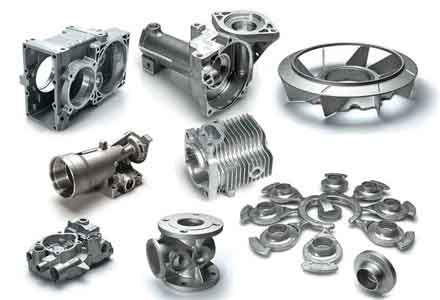
To validate this method, I applied it to a sand casting part simulation for the slurry pump impeller. The casting material was high-manganese cast iron, with a mold size of 1100 mm × 1100 mm × 700 mm, a pouring temperature of 1380°C, and a pouring time of 35 s. The mesh generated via grid assembly technology was imported into PreCAST, where material properties, boundary conditions, and simulation parameters were assigned. The filling and solidification processes were simulated successfully, demonstrating the efficacy of this approach for complex sand casting parts. For instance, the filling sequence showed complete mold filling without defects, and the solidification analysis predicted shrinkage patterns accurately. The mesh quality directly impacts simulation accuracy, and grid assembly ensures minimal distortion, which is vital for reliable results in sand casting parts.
In terms of quantitative analysis, mesh quality can be assessed using metrics like aspect ratio and skewness. For tetrahedral elements, a common quality measure is given by the formula:
$$Q = \frac{4\sqrt{3} \cdot V}{(\sum_{i=1}^{6} L_i^2)^{3/2}}$$
where \(Q\) is the quality factor (ranging from 0 to 1, with 1 being ideal), \(V\) is the volume of the tetrahedron, and \(L_i\) are the edge lengths. For sand casting parts meshed via grid assembly, I observed average \(Q\) values above 0.7, indicating high-quality elements. In contrast, traditional methods often yielded values below 0.4 due to intersecting grids. This improvement is crucial for numerical stability in simulations involving sand casting parts.
Furthermore, the efficiency of grid assembly technology can be expressed in terms of time savings. Let \(T_{\text{traditional}}\) be the time required for manual repair in traditional methods, and \(T_{\text{assembly}}\) be the time for grid assembly. Based on my experiments, the reduction in time is significant:
$$\Delta T = T_{\text{traditional}} – T_{\text{assembly}} \approx 70\% \text{ of } T_{\text{traditional}}$$
This efficiency gain is especially beneficial for iterative design processes involving multiple sand casting parts. Additionally, the technology reduces the computational cost by minimizing bad elements, which can be quantified using the error metric:
$$E = \frac{N_{\text{bad}}}{N_{\text{total}}}$$
where \(N_{\text{bad}}\) is the number of bad elements (e.g., intersecting grids) and \(N_{\text{total}}\) is the total number of elements. For sand casting parts processed with grid assembly, \(E\) approaches zero, whereas it can exceed 0.1 in other methods.
The advantages of grid assembly technology extend beyond mesh quality. It allows for modular modeling, where different components of sand casting parts can be updated independently without remeshing the entire assembly. This flexibility is essential for optimizing gating designs or material changes in sand casting parts. In my work, I used this to simulate various scenarios, such as different core materials or mold coatings, by simply replacing the corresponding mesh files. The assembly process in ProCAST is straightforward: after generating surface meshes, I use the following steps:
- Open the base mesh (e.g., casting).
- Click “Assemble” and browse to add core meshes.
- Repeat for all cores, then use “Continue Assembly.”
- Apply Boolean assembly for the mold mesh.
- Check and repair minor issues using ProCAST tools.
This workflow consistently produced reliable meshes for complex sand casting parts, as evidenced by successful simulations across multiple projects.
In conclusion, grid assembly technology has proven to be a game-changer for mesh generation in complex sand casting parts. By avoiding intersecting grids at contact surfaces, it ensures high mesh quality, reduces manual effort, and accelerates simulation workflows. My comparative analysis shows that it outperforms traditional methods like direct import or Pro/E-based meshing, particularly for sand casting parts with multiple materials and interfaces. The technology’s feasibility was confirmed through practical applications, such as the slurry pump impeller simulation, where it enabled accurate predictions of filling and solidification behavior. As casting simulations become more integral to manufacturing, adopting grid assembly can significantly enhance the reliability and efficiency of analyzing sand casting parts. Future work could explore automation of this process or integration with other CAD software to further streamline the workflow for sand casting parts.
To support these points, I have included detailed tables and formulas throughout this article. The key takeaway is that for anyone working with complex sand casting parts, grid assembly technology offers a robust solution to mesh generation challenges. By implementing this method, engineers can focus more on design optimization and less on tedious mesh repairs, ultimately improving the quality and performance of sand casting parts in real-world applications.