
In the railway freight industry, couplers are critical components that ensure the safe and efficient connection of wagons. These couplers are typically manufactured from E-grade steel casting, a material chosen for its superior strength and durability under heavy loads. The manufacturing process involves a quenching and tempering heat treatment to achieve the desired mechanical properties, such as high tensile strength and toughness. The quenching heating phase is particularly crucial, as it determines the austenitization quality, which directly impacts the final microstructure and performance. Traditionally, the heating duration for quenching has been based on an empirical rule: holding at the austenitizing temperature for 1 hour per 25 mm of maximum section thickness. However, this approach lacks scientific rigor and may lead to excessive energy consumption and reduced production efficiency. In this study, we investigate the optimal quenching heating time for E-grade steel casting couplers through comprehensive laboratory and field experiments, aiming to establish a more efficient and scientifically sound thermal processing protocol.
Steel casting is a versatile manufacturing method that allows for the production of complex geometries with excellent mechanical properties. In railway applications, steel casting components like couplers must withstand cyclic loading and impact forces, necessitating precise control over their metallurgical structure. The E-grade steel casting used here is a low-alloy steel with a composition designed to enhance hardenability and toughness. Its typical chemical composition includes elements like carbon, manganese, chromium, and molybdenum, which contribute to the formation of a fine-grained microstructure after heat treatment. The quenching process involves heating the steel casting to an austenitizing temperature, holding to ensure complete phase transformation, followed by rapid cooling to form martensite. Subsequent tempering relieves internal stresses and improves ductility. The key challenge lies in determining the minimum holding time required for full austenitization without over-aging or grain growth, which can degrade properties.
To address this, our research team designed a two-phase experimental approach. First, laboratory tests were conducted using Keel bars cast from the same heat of E-grade steel casting as the couplers. These bars, with an effective thickness of 32 mm, were subjected to quenching at 900–920°C with varying holding times: 20, 30, 40, and 60 minutes. After water quenching, all samples were tempered at 560–600°C for 60 minutes. The mechanical properties, including yield strength, tensile strength, elongation, reduction of area, and impact energy at 40°C, were measured. Additionally, microstructural analysis was performed to assess the presence of non-metallic inclusions and the grade of tempered sorbite. Second, field trials were carried out in a dedicated continuous suspension-type heat treatment furnace used for industrial production of couplers. The furnace zones were reconfigured to adjust heating and holding periods, with the production cycle time modified from the original 28 minutes to 21 minutes per batch. We monitored the performance of actual couplers and accompanying Keel bars under these optimized conditions, evaluating their properties post-treatment.
The chemical composition of the E-grade steel casting used in our experiments is summarized in Table 1. This composition aligns with standard specifications, ensuring consistency in material behavior during heat treatment. The elements like chromium and molybdenum enhance the hardenability of the steel casting, allowing for deeper penetration of hardness during quenching.
| Element | C | Si | Mn | P | S | Cr | Ni | Mo | Cu | Al |
|---|---|---|---|---|---|---|---|---|---|---|
| Measured Value | 0.26 | 0.33 | 1.34 | 0.007 | 0.009 | 0.53 | 0.44 | 0.22 | 0.14 | 0.033 |
| Standard Range | 0.22–0.28 | 0.20–0.40 | 1.20–1.50 | ≤0.030 | ≤0.030 | 0.40–0.60 | 0.35–0.55 | 0.20–0.30 | ≤0.30 | 0.02–0.06 |
In the laboratory phase, the mechanical properties of the Keel bars after quenching and tempering were evaluated for each holding time. The results, presented in Table 2, demonstrate that all specimens met the standard requirements, regardless of holding duration. This suggests that even shorter times may be sufficient for proper austenitization in this steel casting. Notably, the impact energy values remained above the minimum threshold of 27 J, indicating good toughness. The microstructure, assessed as tempered sorbite grades, showed variations: holding for 20 and 30 minutes resulted in grade 7 tempered sorbite, while 40 and 60 minutes yielded grade 5. Both grades are acceptable per standards, but the finer structure associated with shorter times may offer better fatigue resistance. Non-metallic inclusions were within acceptable limits, primarily Type I and II with fine series ratings of 1.0 to 1.5, as shown in Table 3.
| Holding Time (min) | Yield Strength (MPa) | Tensile Strength (MPa) | Elongation (%) | Reduction of Area (%) | Impact Energy at 40°C (J) |
|---|---|---|---|---|---|
| 20 | 765–766 | 886–894 | 14.5–15.0 | 39–41 | 27–34 |
| 30 | 777–780 | 883–888 | 15.5–16.0 | 39–40 | 28–39 |
| 40 | 763–781 | 867–884 | 16.0 | 39–41 | 31–39 |
| 60 | 758–787 | 867–891 | 16.0 | 42–43 | 32–39 |
| Standard Requirement | ≥690 | ≥830 | ≥14 | ≥30 | ≥27 |
| Holding Time (min) | Inclusion Rating | Microstructure |
|---|---|---|
| 20 | Type I: 1.0, Type II Fine Series: 1.5 | Tempered Sorbite Grade 7 |
| 30 | Type I: 1.0, Type II Fine Series: 1.5 | Tempered Sorbite Grade 7 |
| 40 | Type I: 1.0, Type II Fine Series: 1.5 | Tempered Sorbite Grade 5 |
| 60 | Type I: 1.0, Type II Fine Series: 1.5 | Tempered Sorbite Grade 5 |
To translate these findings to industrial-scale production, we considered the maximum section thickness of the couplers, which is 89 mm. Based on the laboratory data, we calculated the equivalent holding time per 25 mm of thickness. For instance, with a 32 mm Keel bar, a 20-minute hold corresponds to approximately 15.875 minutes per 25 mm. Scaling this to 89 mm gives a holding time of about 55.625 minutes, significantly less than the traditional 1 hour (60 minutes) per 25 mm, which would equate to 213 minutes for the coupler. This calculation can be expressed using a simple formula for holding time estimation:
$$ t_{\text{coupler}} = \left( \frac{t_{\text{lab}}}{d_{\text{lab}}} \right) \times d_{\text{coupler}} $$
where \( t_{\text{coupler}} \) is the required holding time for the coupler, \( t_{\text{lab}} \) is the laboratory holding time, \( d_{\text{lab}} \) is the laboratory specimen thickness (32 mm), and \( d_{\text{coupler}} \) is the coupler thickness (89 mm). For \( t_{\text{lab}} = 20 \) minutes, we get:
$$ t_{\text{coupler}} = \left( \frac{20}{32} \right) \times 89 \approx 55.6 \text{ minutes} $$
Similarly, for other holding times, the calculated values are summarized in Table 4. This highlights that the traditional method overestimates the necessary duration, leading to energy waste in steel casting heat treatment processes.
| Laboratory Holding Time (min) | Holding Time per 25 mm (min) | Calculated Coupler Holding Time (min) |
|---|---|---|
| 20 | 15.875 | 55.625 |
| 30 | 23.438 | 83.438 |
| 40 | 31.250 | 111.250 |
| 60 | 46.875 | 166.875 |
In the field trials, we adjusted the continuous furnace to implement a shorter cycle time. Originally, the furnace operated with a 28-minute cycle, but we modified it to 21 minutes, redistributing the heating and holding zones. The quenching section was set to 2 zones for heating and 3 zones for holding, while the tempering section used 1 zone for heating and 4 zones for holding. The temperatures were controlled at 780–800°C for the first zone, 880°C for the second, and 910°C for the remaining zones in quenching; for tempering, 540°C for the first zone and 580°C for others. This configuration resulted in a total quenching heating time of 145 minutes and tempering time of 193 minutes for each coupler batch. We processed 66 couplers, including standard and test pieces, and evaluated their properties. The mechanical properties of Keel bars placed at different positions in the furnace (front, middle, rear) all met standards, as shown in Table 5. The microstructure and inclusion ratings were also satisfactory, confirming the efficacy of the optimized process for steel casting components.
| Loading Position | Yield Strength (MPa) | Tensile Strength (MPa) | Elongation (%) | Reduction of Area (%) | Impact Energy at 40°C (J) – Average |
|---|---|---|---|---|---|
| Front | 803 | 914 | 15 | 39 | 31 |
| Middle | 820 | 916 | 17 | 39 | 33 |
| Rear | 778 | 900 | 14 | 39 | 31 |
| Standard Requirement | ≥690 | ≥830 | ≥14 | ≥30 | ≥27 |
The microstructures of the coupler knuckles, as observed in the field samples, displayed tempered sorbite grades 7 and 5, with inclusion ratings within limits. This consistency across batches underscores the reliability of the shortened heating time. Moreover, the hardness values measured on the couplers ranged from 260 to 290 HBW, well within the acceptable range for E-grade steel casting applications. The optimization not only maintains quality but also enhances production throughput. By reducing the cycle time from 28 to 21 minutes, we achieve a 25% increase in furnace capacity, leading to significant energy savings and lower operational costs. This is particularly beneficial for large-scale manufacturing of steel casting parts, where heat treatment is a major energy consumer.
From a metallurgical perspective, the austenitization kinetics in steel casting can be described by diffusion-controlled phase transformation models. The time required for complete austenitization depends on factors like initial microstructure, alloy content, and heating rate. For E-grade steel casting, which contains carbide-forming elements, the process may follow an equation derived from Fick’s law:
$$ t = A \cdot \exp\left(\frac{Q}{RT}\right) \cdot d^m $$
where \( t \) is the holding time, \( A \) is a pre-exponential factor, \( Q \) is the activation energy for diffusion, \( R \) is the gas constant, \( T \) is the absolute temperature, \( d \) is the section thickness, and \( m \) is an exponent typically around 2 for thick sections. In our case, with a constant temperature of 910°C (1183 K), we can simplify this to \( t = k \cdot d^m \). Using the laboratory data, we estimate \( k \) and \( m \) to optimize holding times for various steel casting geometries. For instance, with \( d = 32 \) mm and \( t = 20 \) minutes, we can calibrate the model to predict times for other thicknesses. This approach provides a scientific basis for heat treatment schedules, moving beyond empirical rules.
The economic implications of this optimization are substantial. In steel casting foundries, energy costs account for a significant portion of production expenses. By shortening the quenching heating time, we reduce the dwell time in high-temperature furnaces, leading to direct savings in fuel or electricity consumption. Assuming an industrial furnace with a power rating of 500 kW, reducing the heating time by 68 minutes (from 213 to 145 minutes) per batch can save approximately 567 kWh per batch. Over a year of continuous production, this translates to thousands of dollars in energy savings. Additionally, the increased throughput allows for more steel casting components to be processed, enhancing overall plant efficiency. This aligns with sustainable manufacturing goals, as reduced energy use lowers the carbon footprint of steel casting operations.
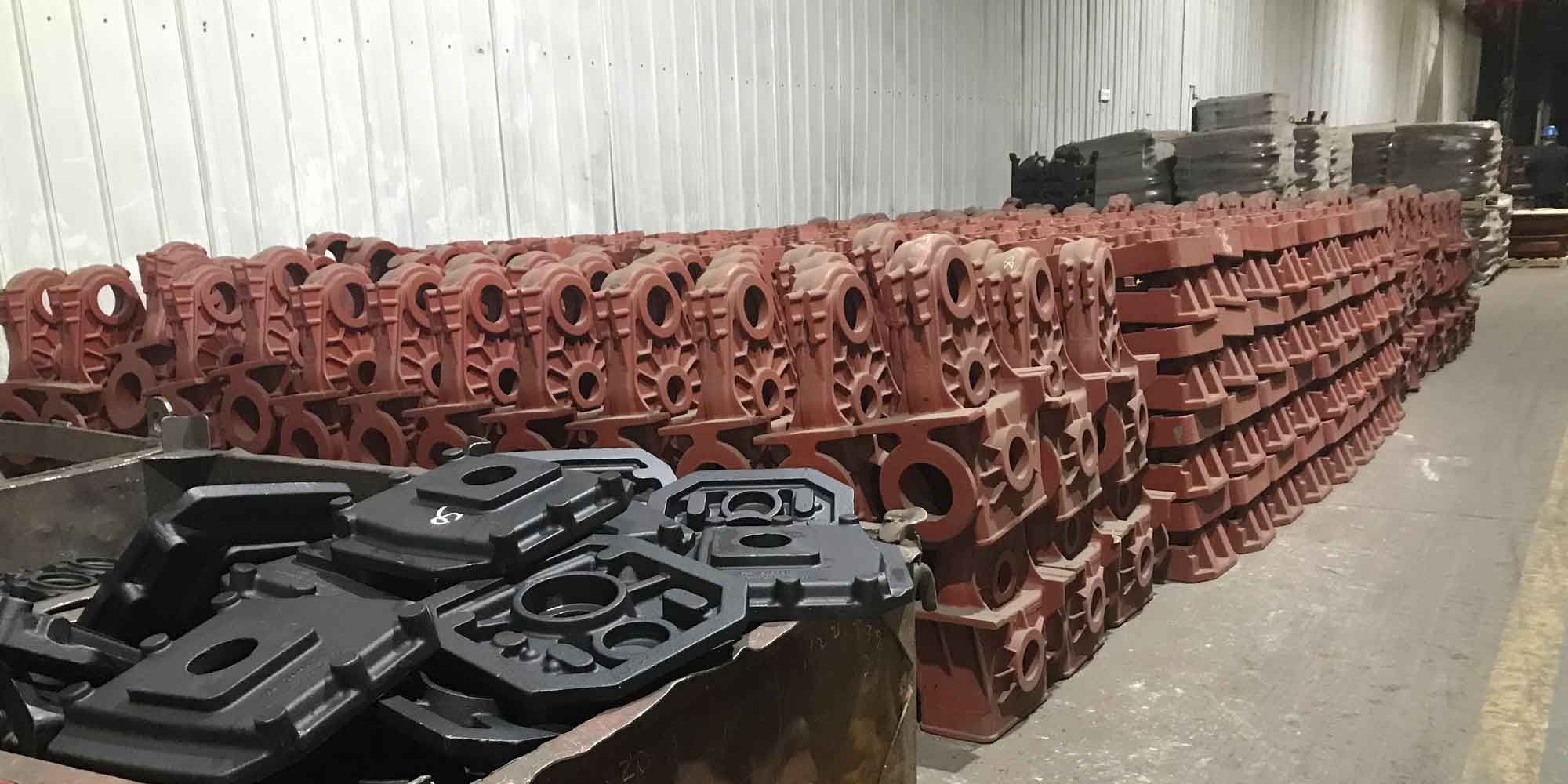
Quality control in steel casting heat treatment is paramount to ensure component reliability. Our study demonstrates that mechanical properties such as yield strength and impact energy are insensitive to moderate variations in holding time, provided the minimum threshold for austenitization is met. This robustness is attributed to the alloy design of E-grade steel casting, which promotes a homogeneous microstructure even with shorter heat exposure. However, we recommend regular monitoring of microstructural features, such as grain size and inclusion content, to prevent deviations. Non-destructive testing methods, like ultrasonic inspection, can complement mechanical tests to verify the integrity of steel casting couplers post-treatment. Furthermore, statistical process control (SPC) techniques can be applied to furnace parameters to maintain consistency across production runs.
In comparison to other steel casting grades, E-grade offers a balanced combination of strength and toughness, making it ideal for railway applications. The optimization of quenching heating time is part of a broader trend toward precision heat treatment in the steel casting industry. Advanced simulation tools, such as finite element analysis (FEA), can model temperature distributions and phase transformations in complex castings, enabling further refinements. For example, we can use FEA to predict the heating curve for a coupler with non-uniform thickness, optimizing zone temperatures in the continuous furnace. This digital twin approach minimizes trial-and-error and accelerates process development for steel casting components.
The role of alloying elements in steel casting cannot be overstated. Elements like chromium and molybdenum in E-grade steel casting retard the diffusion of carbon, allowing for longer transformation times but also enhancing hardenability. This means that even with shortened heating, sufficient austenitization occurs due to the synergistic effects of composition. The relationship between alloy content and holding time can be quantified using regression models. For instance, we might express the optimal holding time \( t_{\text{opt}} \) as a function of carbon equivalent (CE) and thickness:
$$ t_{\text{opt}} = \alpha \cdot \text{CE} \cdot d + \beta $$
where CE is calculated as \( \text{C} + \frac{\text{Mn}}{6} + \frac{\text{Cr} + \text{Mo} + \text{V}}{5} + \frac{\text{Ni} + \text{Cu}}{15} \), and \( \alpha \) and \( \beta \) are constants derived from experimental data. For our E-grade steel casting, with CE approximately 0.5, this model could predict holding times for similar materials, aiding in standardization across steel casting production lines.
Looking ahead, the integration of Industry 4.0 technologies into steel casting heat treatment offers exciting possibilities. IoT sensors can monitor furnace atmospheres and part temperatures in real-time, adjusting holding times dynamically based on actual conditions. Machine learning algorithms can analyze historical data to optimize schedules for different steel casting batches, further reducing energy use. Our research lays the groundwork for such smart manufacturing initiatives by establishing baseline data on quenching heating durations. As the demand for high-performance steel casting components grows in sectors like rail, automotive, and energy, efficient heat treatment will remain a key competitive advantage.
In conclusion, our investigation into the quenching heating time for E-grade steel casting railway couplers reveals that the traditional empirical rule of 1 hour per 25 mm of section thickness is overly conservative. Through laboratory and field experiments, we determined that a holding time of 145 minutes in a continuous furnace, corresponding to a production cycle of 21 minutes, is sufficient to achieve the required mechanical properties and microstructure. This optimization reduces energy consumption by approximately 25% while increasing throughput, without compromising quality. The findings underscore the importance of evidence-based process design in steel casting manufacturing, paving the way for more sustainable and efficient industrial practices. Future work should explore the applicability of these results to other steel casting grades and geometries, leveraging advanced modeling techniques to generalize the approach.