
In my extensive experience within the manufacturing industry, I have observed that steel castings are fundamental to the advancement of rail transit systems. The strategic initiative “Made in China 2025” emphasizes rail transit equipment as a key sector for development, highlighting that core components, such as steel castings, are often the bottleneck for innovation and quality enhancement. As a critical part of this ecosystem, steel castings must meet stringent safety and reliability standards. With increasing train speeds, more complex operational conditions, and higher demands for passenger comfort and economic efficiency, product design requirements have evolved significantly. This places considerable pressure on the casting process, which is at the forefront of production, necessitating elevated standards in material properties, internal and external quality, and dimensional accuracy of steel castings.
Rail transit equipment encompasses a variety of products that rely heavily on steel castings. These include coupler buffer devices with components like coupler bodies, mounting seats, coupler tail seats, and centering brackets; bogie systems with axle box bodies, center pins, and center pin seats; and braking systems with axle-mounted brake discs, wheel-mounted brake discs, and brake calipers. Most of these steel castings feature intricate structures, often thin-walled box-like designs with uneven wall thickness and significant variations. They endure complex loads, including tensile and compressive forces, longitudinal impact loads, and in some cases, substantial thermal loads and shocks from braking. This results in high temperature gradients, inducing significant thermal stress. Therefore, these steel castings must exhibit excellent high-temperature mechanical properties, thermal conductivity, low elastic modulus, low thermal expansion coefficient, and high thermal fatigue strength to ensure longevity and performance.
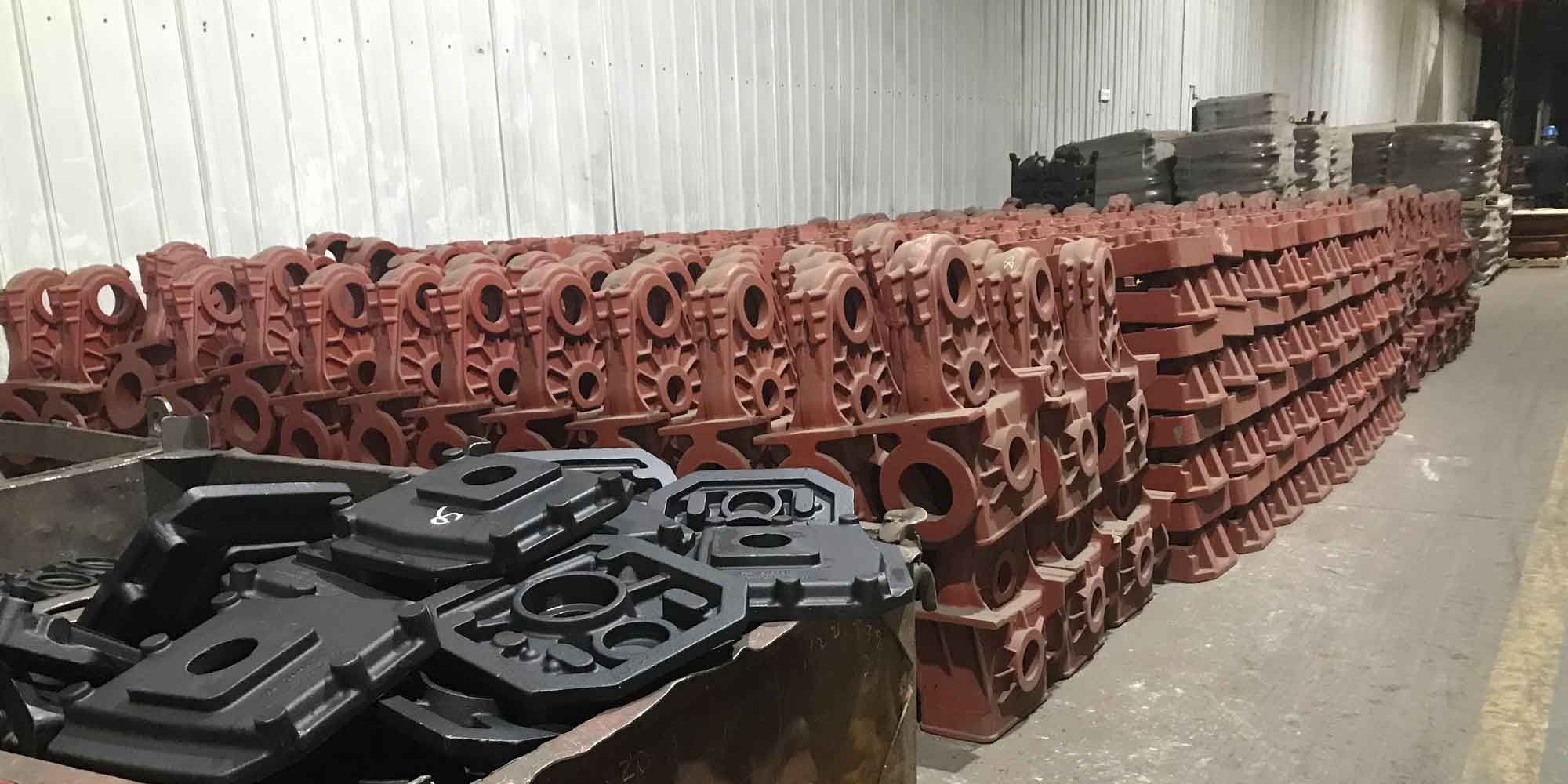
From my perspective, the technical requirements for steel castings in rail transit are multifaceted and increasingly rigorous. To systematically address these, I will break them down into key categories, often utilizing tables and formulas for clarity. The performance of steel castings is not just about meeting basic standards; it involves a deep integration of material science, process engineering, and quality management.
Technical Requirements for Steel Castings
The specifications for steel castings have expanded beyond conventional chemical composition control. Below, I outline the primary requirements, which I frequently encounter in projects.
Material Requirements
To enhance fatigue life, material specifications for steel castings now include strict controls on gas content, mechanical properties, non-metallic inclusions, and low-temperature impact toughness. For instance, some products mandate oxygen content ≤ 0.010%, hydrogen content ≤ 0.0003%, and nitrogen content ≤ 0.015%. Mechanical properties may require tensile strength ≥ 1050 MPa with elongation ≥ 8%, while non-metallic inclusions like Type II and Type IV must not exceed Grade 1. Additionally, low-temperature impact toughness at -40°C often requires Akv ≥ 27 J. I summarize these in Table 1 to illustrate the diversity of requirements across different steel castings.
| Property | Requirement | Example Product | Impact on Performance |
|---|---|---|---|
| Gas Content (O₂) | ≤ 0.010% | Brake Discs | Reduces porosity and improves fatigue resistance |
| Gas Content (H₂) | ≤ 0.0003% | Coupler Bodies | Prevents hydrogen-induced cracking |
| Tensile Strength | ≥ 1050 MPa | Axle Box Bodies | Ensures structural integrity under high loads |
| Elongation | ≥ 8% | Center Pins | Enhances ductility and fracture toughness |
| Low-Temperature Impact | Akv ≥ 27 J at -40°C | Bogie Components | Maintains toughness in cold environments |
In my work, I often use formulas to relate these material properties to performance. For example, the relationship between stress (σ), strain (ε), and Young’s modulus (E) is given by Hooke’s Law: $$ \sigma = E \epsilon $$ This fundamental equation helps in designing steel castings to withstand operational stresses. Additionally, for thermal stress considerations, I apply: $$ \sigma_{\text{thermal}} = E \alpha \Delta T $$ where α is the coefficient of thermal expansion and ΔT is the temperature gradient. This is crucial for steel castings exposed to braking thermal loads.
Internal Quality Requirements
The internal quality of steel castings directly impacts rail safety, typically assessed through radiographic (RT) and ultrasonic testing (UT). Most rail transit steel castings require RT, with defects not exceeding Level 2 for Classes A, B, and C per ASTM E446, and no defects from Classes D, E, F, G allowed. For brake discs, UT standards like TB 2980 specify that within 8 mm of the friction surface, no shrinkage porosity is permitted, and within 12 mm, defects larger than 2 mm equivalent flat-bottomed holes are unacceptable. I emphasize that consistent internal quality in steel castings is achieved through rigorous process controls, which I will detail later.
Surface Quality Requirements
Surface defects not only affect aesthetics but also reduce the service life of steel castings. Visual inspection and magnetic particle testing (MT) are standard. Visual criteria may allow dispersed non-crack defects up to 1.5 mm in diameter and 2 mm deep, with no more than 3 per 100 cm², spaced at least 10 mm from edges. Some machined surfaces prohibit pores ≥ 1 mm. MT often requires key areas to meet Grade 1 per GB/T 9444 for thicknesses ≤ 16 mm. Notably, some steel castings forbid any weld repair post-heat treatment, demanding high stability in casting quality.
Dimensional Requirements
Dimensional tolerances for steel castings generally follow GB/T 6414 DGT11, but critical dimensions have tighter specs. For example, a wall thickness of 22 mm might have tolerances of (-0.5, +0.8) mm. Geometrical tolerances like flatness and coaxiality are also specified, posing challenges for casting process stability. In my practice, I use statistical process control (SPC) to monitor dimensions, with formulas for process capability indices: $$ C_p = \frac{USL – LSL}{6\sigma} $$ and $$ C_{pk} = \min\left(\frac{USL – \mu}{3\sigma}, \frac{\mu – LSL}{3\sigma}\right) $$ where USL and LSL are upper and lower specification limits, μ is the mean, and σ is the standard deviation. These indices help ensure steel castings meet precise dimensional requirements.
Key Points in Quality Control of Steel Castings
Based on my involvement in numerous projects, I believe quality control for steel castings must be holistic, covering planning, implementation, evaluation, and continuous improvement. Below, I delve into each stage, incorporating tables and formulas to summarize best practices.
Quality Planning Phase
This phase sets the foundation for producing high-quality steel castings. I always advocate for collaborative design and process optimization.
Product Structure Design: Early engagement between designers and casting engineers is vital. We optimize local structures for manufacturability without compromising function, enhancing the feasibility of steel castings. For instance, adding fillets or adjusting wall thickness can reduce stress concentrations, calculated using: $$ \sigma_{\text{max}} = K_t \sigma_{\text{nom}} $$ where K_t is the stress concentration factor and σ_nom is the nominal stress.
Casting Process Design: I rely on simulation software like MAGMA, ProCAST, FLOW-3D, or AnyCasting to analyze flow fields, temperature fields, and solidification. This predicts defects in steel castings and optimizes schemes. The heat transfer during solidification can be modeled with Fourier’s law: $$ q = -k \nabla T $$ where q is heat flux, k is thermal conductivity, and ∇T is temperature gradient. Process reviews involve cross-functional teams to finalize details like machining allowances, gating systems, risers, chills, and filters. Standardization, such as using universal risers, improves consistency for steel castings.
Casting Mold Design: Mold design must ensure ease of assembly, disassembly, and sand core production. Verification involves dimensional checks and trial molds. Key attributes include material, dimensions, and error-proofing for loose pieces. I often use design of experiments (DOE) to optimize mold parameters, with regression models: $$ Y = \beta_0 + \sum \beta_i X_i + \epsilon $$ where Y is response (e.g., dimensional accuracy), X_i are factors, and β_i are coefficients.
Implementation Phase
During production, controlling process parameters is critical for steel castings. I oversee several key areas:
Sand Mold Quality Control: Raw sand properties (chemical composition, grain shape, moisture) and process parameters (strength, sand flow, binder addition) are monitored per shift. Statistical analysis helps correlate environmental factors with sand strength. For example, the green strength (σ_s) can be expressed as: $$ \sigma_s = f(C, T, t) $$ where C is clay content, T is temperature, and t is time.
Melting Quality Control: Raw materials (scrap steel, alloys), furnace lining, ladle quality, and stopper rods influence steel castings. Melt composition, deoxidation, pouring temperature (T_pour), and speed are controlled. The superheat ΔT is: $$ \Delta T = T_{\text{pour}} – T_{\text{liquidus}} $$ Optimal ΔT ensures proper fluidity and reduces defects in steel castings.
Heat Treatment Quality Control: Process routes, temperatures, holding times, and loading methods affect mechanical properties, microstructure, and distortion of steel castings. Furnace temperature uniformity and thermocouple calibration are essential. The kinetics of phase transformations can be described by the Avrami equation: $$ X = 1 – \exp(-kt^n) $$ where X is transformed fraction, k is rate constant, and n is exponent.
Weld Repair Quality Control: Defects in steel castings are often repaired by welding, based on qualified procedures. Parameters like weld material, groove design, and current are specified. Repair records are maintained to ensure traceability.
| Process Stage | Parameter | Target Range | Monitoring Frequency |
|---|---|---|---|
| Sand Molding | Green Strength | 0.2-0.4 MPa | Per shift |
| Melting | Pouring Temperature | 1550-1600°C | Per heat |
| Heat Treatment | Austenitizing Temperature | 850-950°C | Per batch |
| Welding | Heat Input | 1-2 kJ/mm | Per repair |
Evaluation and Improvement Phase
Post-production, we assess steel castings to drive improvements. This involves testing, problem-solving, and risk management.
Testing and Inspection Control: Casting is a special process, so quality is verified via attached, separately cast, or sample test bars. We establish batch rules to ensure representativeness. Statistical analysis, such as hypothesis testing, confirms consistency: $$ t = \frac{\bar{x} – \mu_0}{s/\sqrt{n}} $$ where t is test statistic, \bar{x} is sample mean, μ_0 is target mean, s is sample standard deviation, and n is sample size. Traceability and unique identification are crucial for steel castings.
Quality Issue Handling: Defects in steel castings are analyzed using tools like cause-and-effect diagrams and SPC. The 8D methodology or PDCA cycles facilitate continuous improvement. For example, reducing porosity in steel castings might involve optimizing gating ratios, calculated as: $$ \text{Gating Ratio} = A_{\text{sprue}} : A_{\text{runner}} : A_{\text{gate}} $$ Typical ratios like 1:2:1.5 are used for steel castings.
Type Testing and Certification: Critical steel castings undergo type testing, CRCC certification, and in-service validation to confirm compliance.
Process Quality Management Requirements
To sustain quality in steel castings, we implement robust management systems.
Change Management: Any change affecting steel castings (e.g., sand type, gating design, equipment) requires revalidation. First-article inspection may be needed, with verification of quality characteristics.
Nonconforming Product Management: We classify steel castings by criticality and define handling procedures in specifications. This reflects organizational maturity.
Quality and Safety Risk Management: A documented process identifies risks in steel castings production, with controls tailored to safety impacts. Tools like FMEA (Failure Mode and Effects Analysis) are used, with risk priority numbers (RPN): $$ \text{RPN} = S \times O \times D $$ where S is severity, O is occurrence, and D is detection. Regular reviews ensure effectiveness.
Conclusion
In my view, the quality control of steel castings for rail transit hinges on integrated process management. By embedding quality requirements into every stage—planning, execution, monitoring, evaluation, and improvement—we can establish effective workflows that ensure product excellence. From collaborative design and simulation-based process optimization to stringent material and dimensional controls, each aspect contributes to the reliability of steel castings. As we advance, leveraging tools like SPC, DOE, and risk management will further enhance consistency. Ultimately, a commitment to continuous improvement in steel castings production will drive the transition from speed to quality in rail transit, supporting safer and more efficient transportation systems globally. Through persistent efforts in refining these practices, I am confident that steel castings will continue to meet the evolving demands of the industry, underpinning the success of modern rail networks.
To summarize, steel castings are not just components; they are the backbone of rail transit safety and performance. By adhering to rigorous quality control frameworks, we can produce steel castings that withstand extreme conditions and contribute to sustainable mobility. The journey involves constant learning and adaptation, but with a focus on material science, process innovation, and holistic management, the future of steel castings in rail transit looks promising.