
The pursuit of efficiency and precision in metal casting continuously drives innovation in process materials. In the realm of lost foam casting (LFC), the coating applied to the expendable polystyrene pattern is not merely a barrier; it is a critical functional interface that dictates the final quality of the metal component. This role becomes even more pronounced when casting challenging alloys such as high manganese steel. Characterized by its exceptional work-hardening ability, high toughness, and significant wear resistance, high manganese steel is indispensable for components subjected to extreme impact and abrasion, like crusher jaws, liner plates, and railway crossings. However, its high melting temperature and reactive nature, particularly its tendency to interact with silica (SiO2), present significant challenges during the casting process. Traditional refractory coatings based on silica sands often lead to severe burn-on and penetration defects in high manganese steel castings due to chemical interactions, compromising surface finish and increasing cleaning costs.
My research was initiated to address this specific problem by formulating a cost-effective, water-based coating tailored for the lost foam casting of high manganese steel components. The core objective was to identify a refractory aggregate resistant to the alloy’s chemical attack while developing a binder system capable of withstanding the thermal shock and mechanical stresses of the process. The solution emerged from an unconventional source: ferrochromium slag, a by-product from ferrochrome production. This material, when processed into a fine powder, forms the backbone of our coating—a high-chromium corundum. Its inherent properties make it an ideal candidate for protecting high manganese steel castings during the crucial moment of metal-foam replacement.
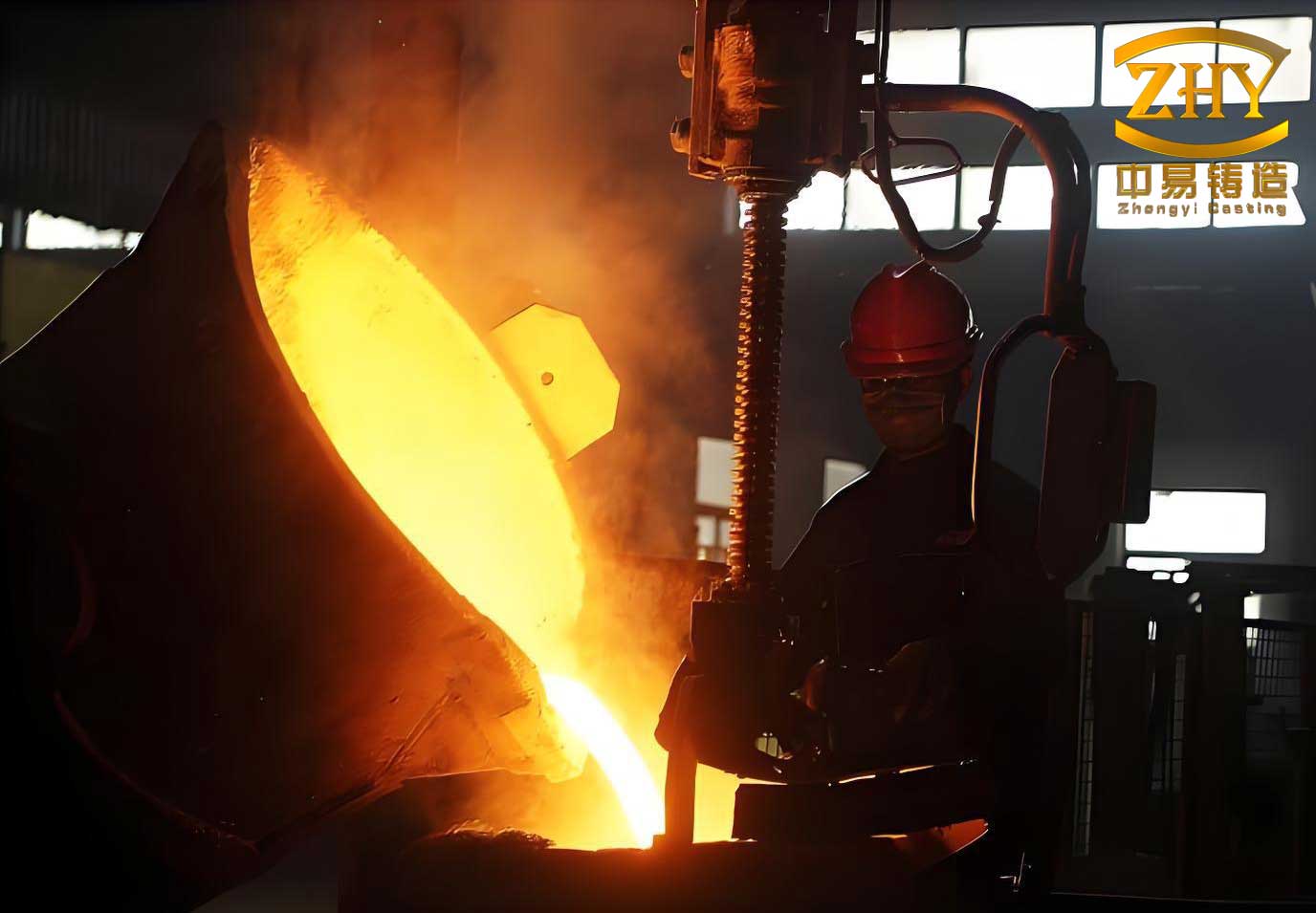
The performance of a lost foam coating is multifaceted. It must exhibit excellent suspension stability to prevent settling during application and storage, possess adequate permeability to allow the rapid evacuation of pyrolysis gases from the decomposing foam, and develop sufficient dry and hot strength to resist erosion from the flowing metal. Furthermore, it must have good thixotropy for easy application without sagging, especially on complex geometries common in high manganese steel casting. To systematically optimize these interdependent properties, I designed an experiment focusing on the coating’s key constituents: the refractory aggregate, the binder system, and the suspension agent.
1. Coating Constituents and Rationale
The formulation was built upon several key components, each selected for its specific functional contribution to the final performance required for successful high manganese steel casting.
1.1 Refractory Aggregate: High-Chromium Corundum
The primary filler is high-chromium corundum, derived from processed ferrochromium slag. Its chemical and physical properties are summarized below and form the foundation for its suitability.
| Property | Value / Description | Significance for High Manganese Steel Casting |
|---|---|---|
| Primary Composition | Al2O3 > 85%, Cr2O3 > 10% | High Al2O3 provides basic refractoriness. Cr2O3 enhances slag resistance and stability at high temperatures. |
| Melting Point | 1830 – 2000 °C | Far exceeds the pouring temperature of high manganese steel (~1500°C), ensuring no melting. |
| Density | 3.68 g/cm3 | Contributes to the overall coating density, aiding in suspension stability. |
| Thermal Expansion Coefficient | ≈ 4.5 x 10⁻⁶ /°C | Approximately half that of quartz sand, reducing stress and cracking in the coating during heating. |
| Chemical Nature | Neutral | Minimizes chemical reaction with the reactive high manganese steel melt, preventing burn-on. |
| Thermal Conductivity | ~ Twice that of quartz | Promotes faster heat transfer, potentially aiding in more uniform foam decomposition. |
| Cost Factor | ~1/3 the cost of zircon flour | Makes the coating economically viable for industrial production of high manganese steel castings. |
1.2 Binder System: Composite Organic-Inorganic
A dual-binder approach was adopted to provide strength throughout the casting process. Oxidized starch was selected as the primary organic (low-temperature) binder. It provides excellent green strength after drying and burns out cleanly during metal pouring, contributing to coating permeability. A phosphate-based compound (e.g., aluminum dihydrogen phosphate) was chosen as the inorganic (high-temperature) binder. It undergoes chemical reactions upon heating to form strong ceramic bonds, providing the necessary hot strength to resist metal冲刷 during the filling of the high manganese steel casting.
1.3 Suspension Agent and Additives
High-quality sodium bentonite was used as the principal suspension agent, leveraging its ability to form a stable colloidal gel in water. Minor additions were made to fine-tune the coating: a surfactant (e.g., sodium dodecyl sulfate) to improve wettability on the hydrophobic polystyrene foam, a defoamer (n-caprylic acid) to eliminate entrapped air during mixing, and calcium fluoride (CaF2) as a fluxing agent to promote sintering and improve the surface finish of the final high manganese steel casting.
2. Experimental Methodology and Performance Metrics
The coating was prepared using a standardized ball-milling procedure to ensure homogeneity. The dry constituents (high-chromium corundum, bentonite, CaF2) were mixed first, followed by the gradual addition of liquid binders (oxidized starch solution, phosphate solution), additives, and water. The slurry was milled for 4 hours. Its performance was then quantitatively assessed using the following methods.
2.1 Suspension Stability
Measured by the static settling method. 100 mL of well-stirred coating slurry was poured into a graduated cylinder and left undisturbed for 24 hours. The suspension stability (ζ) is calculated as the percentage of the settled volume relative to the total volume:
$$ \zeta = \left(1 – \frac{V_s}{100}\right) \times 100\% $$
where $V_s$ is the volume of clear supernatant liquid (in mL) after 24 hours. A higher ζ indicates better resistance to settling.
2.2 Permeability
Dry coating permeability was measured using a direct-reading permeability meter (STZ type). A standard sand specimen was coated to a thickness of approximately 2 mm, dried, and then tested. The permeability number (P) is derived from the time taken for 2000 cm³ of air to pass through the sample under a standard pressure. While the exact apparatus-dependent calculation is complex, the principle involves Darcy’s law for flow through a porous medium:
$$ Q = \frac{k A \Delta P}{\mu L} $$
where $Q$ is volumetric flow rate, $k$ is permeability (the measured parameter), $A$ is cross-sectional area, $\Delta P$ is pressure drop, $\mu$ is air viscosity, and $L$ is coating thickness.
2.3 Coating Strength (Dry)
Surface strength was evaluated using a sand abrasion test. A uniform coating was applied to a glass plate, dried, and placed at a 45° angle beneath a sand-fall apparatus (e.g., a standard flow cup). Sand of specific granulometry (e.g., AFS 50) was allowed to fall until the coating was worn through to expose the glass. The total weight ($W_{abrade}$) of sand used is the quantitative measure of coating strength.
2.4 High-Temperature Crack Resistance
A coated sand core (φ50 mm) was placed in a furnace at 1200°C for 2 minutes, then removed and inspected visually for cracks or peeling. Performance was rated on a scale from 1 (excellent, no cracks) to 5 (severe cracking/spalling).
2.5 Thixotropy
Using a rotational viscometer (NDJ-1 type), the apparent viscosity ($\eta$) of the coating was measured at a constant shear rate over time. A thixotropic loop can also be generated by measuring viscosity while increasing and then decreasing the shear rate. The area within the loop is indicative of the degree of thixotropy, which is crucial for brushability and sag resistance in high manganese steel casting applications with complex patterns.
3. Optimization via Orthogonal Experiment
To determine the optimal balance of key components affecting suspension, permeability, and strength, a four-factor, three-level orthogonal array L9(3^4) was employed. The factors and levels are shown in Table 1.
| Level | A: Bentonite | B: Oxidized Starch | C: Phosphate | D: CaF2 (Flux) |
|---|---|---|---|---|
| 1 | 2 | 1 | 4 | 3 |
| 2 | 3 | 2 | 5 | 3.5 |
| 3 | 4 | 3 | 6 | 4 |
The high-chromium corundum content was kept constant as the base (adjusted to 100% with other additions). The experimental design and results for the three key response variables are presented in Table 2.
| Expt. No. | A | B | C | D | Suspension ζ (%) | Permeability P | Strength W (g) |
|---|---|---|---|---|---|---|---|
| 1 | 1 (2%) | 1 (1%) | 1 (4%) | 1 (3%) | 91.5 | 0.80 | 920 |
| 2 | 1 | 2 (2%) | 2 (5%) | 2 (3.5%) | 92.1 | 0.92 | 1000 |
| 3 | 1 | 3 (3%) | 3 (6%) | 3 (4%) | 92.8 | 0.81 | 860 |
| 4 | 2 (3%) | 1 | 2 | 3 | 94.2 | 1.10 | 1230 |
| 5 | 2 | 2 | 3 | 1 | 94.2 | 1.01 | 780 |
| 6 | 2 | 3 | 1 | 2 | 93.8 | 1.30 | 980 |
| 7 | 3 (4%) | 1 | 3 | 2 | 93.0 | 0.93 | 900 |
| 8 | 3 | 2 | 2 | 3 | 94.0 | 0.95 | 1200 |
| 9 | 3 | 3 | 1 | 1 | 94.2 | 1.05 | 1180 |
The range analysis was performed on the results to determine the primary and secondary order of factors influencing each property and to identify the optimal level combination. The mean effect of each factor level ($K_{ij}$, where i is factor, j is level) was calculated. For example, the mean suspension for A at level 2 ($K_{A2}$) is the average of suspension values from experiments 4, 5, and 6: (94.2+94.2+93.8)/3 = 94.07%. The range R for each factor is the difference between its maximum and minimum $K_{ij}$ value. A larger R indicates a greater influence on the response variable. The analysis led to the following observations crucial for formulating the coating for high manganese steel casting:
- Suspension: Bentonite (A) was the most influential factor. Suspension improved significantly from level 1 to level 2, with a lesser gain at level 3. The optimal level for suspension alone was A3 or A2.
- Permeability: The composition of the binder system and the flux played complex roles. A lower phosphate content (C1) combined with mid-level flux (D2) tended to give higher permeability, as seen in Expt. 6.
- Strength: The phosphate binder (C) was the dominant factor for dry strength. Level C2 (5%) provided the highest average strength. Excessive bentonite (A3) or oxidized starch (B3) could sometimes reduce strength, likely by creating too much organic material that burns out.
Considering the comprehensive requirements for a robust lost foam coating capable of handling the thermal and mechanical demands of high manganese steel casting, a balanced optimum was identified. The combination A2B2C2D1 (3% bentonite, 2% oxidized starch, 5% phosphate, 3% CaF2) offered an excellent compromise: very high suspension (>94%), good permeability (~1.0), and superior dry strength (>1200g). This formulation was selected as the benchmark for further comprehensive testing.
4. Comprehensive Properties of the Optimized Coating
The coating formulated according to the A2B2C2D1 ratio was subjected to a full suite of performance evaluations. The results confirmed its suitability for the lost foam production of high manganese steel castings.
| Property | Test Method | Result / Description | Implication for High Manganese Steel Casting |
|---|---|---|---|
| Density | Weight/Volume | 1.80 g/cm³ | Ideal for dipping and coating control. |
| pH Value | pH Meter | 9.0 | Mildly alkaline, compatible with common additives and stable. |
| Suspension (24h) | Static Settling | 97% | Excellent, minimizes waste and ensures consistent application properties. |
| Dry Permeability | STZ Permeability Meter | 1.72 | High, ensuring rapid gas evacuation during foam decomposition. |
| Dry Strength | Sand Abrasion Test | 1237 g (avg) | High, prevents damage during handling and sand filling. |
| High-Temp Crack Resistance | 1200°C, 2 min | Grade 1 (No cracks) | Excellent thermal shock resistance, vital for integrity during metal pour. |
| Application & Sagging | Brush, Dip, Spray | Excellent on flat, convex, concave surfaces. No sagging. | Versatile for complex geometries typical in high manganese steel casting. |
4.1 Thixotropic Behavior
The rheological property is critical. The coating exhibited pronounced thixotropy. When subjected to a constant shear rate, its apparent viscosity decreased significantly over time, as shown conceptually in the following relation and curve:
$$ \eta(t) = \eta_{\infty} + (\eta_0 – \eta_{\infty}) e^{-t/\lambda} $$
where $\eta_0$ is the initial high-shear viscosity, $\eta_{\infty}$ is the equilibrium viscosity under constant shear, and $\lambda$ is a time constant. This behavior means the coating flows easily under the shear of a brush or during dipping (low $\eta$), but quickly regains its structure and resists sagging once applied to the vertical surfaces of a foam pattern for a high manganese steel casting (high $\eta$ at rest). This allows for the application of a single, thick coat (0.5-1.5 mm) in one pass on many patterns, streamlining the process.
5. Production Validation and Broader Applicability
The ultimate test for any foundry material is its performance on the production floor. The optimized coating was employed in the lost foam casting of actual high manganese steel components, including liner plates, hammer heads, and jaw plates. The application process involved dipping or brushing, followed by drying at temperatures below 50°C to prevent pattern distortion. Typically, one or two coats were sufficient to achieve the required thickness.
The results were consistently positive. The castings produced exhibited smooth, clean surfaces with sharp definition of edges and contours. There was no evidence of metal penetration or burn-on, a common problem when using silica-based coatings with high manganese steel. The dimensional accuracy was high, and finishing operations were minimized due to the excellent as-cast surface. This directly translates to lower production costs and higher quality for high manganese steel castings.
An interesting and economically significant finding was the coating’s versatility. While developed specifically for the challenging high manganese steel alloy, it also performed flawlessly when used for carbon steel castings. The neutral, refractory nature of the high-chromium corundum and the robust binder system provided equally good results, suggesting its potential as a universal water-based coating for lost foam casting of ferrous alloys.
6. Conclusion
This development project successfully engineered a high-performance, water-based coating specifically designed for the lost foam casting of high manganese steel components. By utilizing high-chromium corundum—a cost-effective by-product—as the principal refractory, the coating achieves excellent chemical inertness against the reactive manganese steel melt. The composite binder system of oxidized starch and phosphate provides a balanced strength profile from the dry stage through the high-temperature pouring phase. Through systematic orthogonal experimentation, an optimal formulation was determined that harmonizes exceptional suspension stability (97%), adequate permeability (1.72), high dry strength (>1200g), and outstanding thermal crack resistance.
The coating’s pronounced thixotropic behavior allows for efficient, single-pass application on complex patterns, enhancing productivity. Industrial trials have validated its effectiveness, producing high manganese steel castings with superior surface finish, dimensional accuracy, and no burn-on defects. Furthermore, its successful application to carbon steel castings underscores its potential as a versatile and economical choice for a wide range of ferrous lost foam casting applications, offering foundries a reliable solution that combines performance with cost-effectiveness.