
In the field of modern manufacturing, particularly in automotive and aerospace industries, the demand for lightweight and high-performance components has driven extensive research into advanced casting techniques. Among these, lost foam casting has emerged as a promising method for producing complex and large-sized aluminum alloy casting parts. However, this process often faces challenges such as coarse grain structures, shrinkage defects, and suboptimal mechanical properties, which can compromise the quality and reliability of the final casting part. To address these issues, I investigated the application of mechanical vibration during the casting process, focusing on its impact on the microstructure and tensile strength of ADC12 aluminum alloy casting parts. This study aims to provide insights into optimizing vibration parameters to enhance the performance of casting parts, thereby improving yield and applicability in critical applications.
The use of aluminum alloys, especially ADC12, is widespread due to their excellent castability, strength-to-weight ratio, and corrosion resistance. In lost foam casting, the foam pattern is vaporized upon contact with molten metal, allowing for intricate shapes to be formed. Despite its advantages, the process can lead to inhomogeneous solidification and dendritic growth, resulting in inferior properties in the casting part. Mechanical vibration has been proposed as a non-invasive method to refine grains and reduce defects by promoting fluid flow and fragmenting dendrites. In this work, I explore how varying vibration frequencies and amplitudes influence the characteristics of ADC12 aluminum alloy casting parts, with an emphasis on achieving superior mechanical performance for practical applications.
Previous studies have highlighted the potential of vibration-assisted casting in improving material properties. For instance, researchers have shown that ultrasonic vibration can refine eutectic silicon phases in aluminum alloys, leading to enhanced strength. Similarly, mechanical vibration during solidification has been reported to reduce porosity and improve density in casting parts. However, most of these studies focus on conventional casting methods, and there is limited systematic research on lost foam casting specifically for aluminum alloys. My work builds upon this foundation by examining the effects of sinusoidal mechanical vibration from an unbalanced weight-type vibrator, which offers controllable parameters for industrial scalability. The goal is to establish correlations between vibration conditions and the quality of the casting part, contributing to the advancement of lost foam technology.
The significance of this research lies in its potential to optimize casting processes for aluminum alloy components, such as engine cylinder heads, sensor brackets, and other structural parts. By refining the microstructure through vibration, I aim to produce casting parts with higher tensile strength and better uniformity, which are crucial for safety-critical applications. Moreover, the integration of vibration into lost foam casting could reduce post-processing needs and lower production costs, making it an attractive option for mass manufacturing. Throughout this article, I will delve into the experimental setup, results, and mechanistic explanations, while frequently referencing the casting part to underscore its central role in the study.
To begin, I will review the fundamental principles of mechanical vibration in casting. Vibration introduces energy into the molten metal, causing convective flows that disrupt dendritic growth and increase nucleation sites. The peak acceleration of vibration, which depends on frequency and amplitude, plays a key role in determining the extent of grain refinement. The relationship can be expressed using the equation for sinusoidal vibration acceleration: $$a = (2\pi f)^2 A$$, where $$a$$ is the peak acceleration in cm/s², $$f$$ is the frequency in Hz, and $$A$$ is the amplitude in mm. This formula helps in quantifying the vibration intensity applied to the casting part during solidification. Higher accelerations may lead to more intense fluid motion, but excessive values can cause turbulence or defects, necessitating careful parameter selection.
In terms of material selection, ADC12 aluminum alloy was chosen for its common use in automotive casting parts. Its chemical composition, as detailed in Table 1, includes silicon, copper, and other elements that contribute to its castability and strength. The alloy is particularly suitable for lost foam casting due to its good fluidity and minimal hot tearing tendency. For the casting part production, I used expandable methyl methacrylate-acrylonitrile-butadiene-styrene (STMMA) foam patterns, which were coated with a water-based refractory coating to withstand the molten metal. The patterns were designed to simulate typical industrial components, ensuring relevance to real-world applications.
| Element | Si | Mg | Fe | Cu | Zn | Sn | Pb | Al |
|---|---|---|---|---|---|---|---|---|
| Content (%) | 9.6-12 | <0.3 | <1.3 | 1.3-3.5 | ≤1.0 | ≤0.2 | ≤0.2 | Balance |
The experimental setup involved a lost foam casting system equipped with a mechanical vibration table. The vibration table, as described earlier, utilizes dual vibrating motors to generate sinusoidal vibrations across a frequency range of 0-200 Hz. By adjusting the eccentric block angles, I varied the amplitude and frequency to create different vibration conditions. The foam patterns were embedded in dry sand within a flask, and a vacuum was applied to ensure proper mold integrity during pouring. The molten ADC12 alloy was poured at a temperature of 730°C, and vibration was initiated during both the filling and solidification stages to influence the entire casting process. This approach allows for a comprehensive analysis of how vibration affects the final casting part.
The vibration parameters were systematically varied to study their effects. As summarized in Table 2, I tested combinations of frequency, amplitude, peak acceleration, and exciting force. The vacuum level was maintained at -0.04 MPa for all trials to eliminate variability. Each parameter set was designed to explore the limits of vibration intensity, from low-frequency, high-amplitude conditions to high-frequency, low-amplitude ones. This matrix enables a detailed understanding of the optimal range for improving the casting part properties. The tensile specimens were extracted from the cast parts and tested to measure mechanical performance, while microstructural analysis was conducted on samples from the same locations to ensure consistency.
| Eccentric Block Angle (rad) | Frequency (Hz) | Amplitude (mm) | Peak Acceleration (cm/s²) | Exciting Force (N) | Vacuum (MPa) | Pouring Temperature (°C) |
|---|---|---|---|---|---|---|
| 8π/9 | 120 | 0.04 | 2.27 | 4,317 | -0.04 | 730 |
| 8π/9 | 100 | 0.04 | 1.58 | 2,998 | -0.04 | 730 |
| 8π/9 | 50 | 0.04 | 0.39 | 741 | -0.04 | 730 |
| 8π/9 | 30 | 0.04 | 0.14 | 270 | -0.04 | 730 |
| 7π/9 | 120 | 0.08 | 4.54 | 8,632 | -0.04 | 730 |
| 7π/9 | 100 | 0.08 | 3.16 | 5,995 | -0.04 | 730 |
| 7π/9 | 50 | 0.08 | 0.79 | 1,501 | -0.04 | 730 |
| 7π/9 | 30 | 0.08 | 0.28 | 540 | -0.04 | 730 |
| 6π/9 | 120 | 0.12 | 6.82 | 12,949 | -0.04 | 730 |
| 6π/9 | 100 | 0.12 | 4.73 | 8,992 | -0.04 | 730 |
| 6π/9 | 50 | 0.12 | 1.18 | 2,242 | -0.04 | 730 |
| 6π/9 | 30 | 0.12 | 0.43 | 809 | -0.04 | 730 |
| 5π/9 | 50 | 0.16 | 1.58 | 2,998 | -0.04 | 730 |
| 5π/9 | 40 | 0.16 | 1.01 | 1,919 | -0.04 | 730 |
| 5π/9 | 30 | 0.16 | 0.57 | 1,079 | -0.04 | 730 |
| 5π/9 | 20 | 0.16 | 0.25 | 479 | -0.04 | 730 |
| 4π/9 | 50 | 0.20 | 1.97 | 3,747 | -0.04 | 730 |
| 4π/9 | 40 | 0.20 | 1.26 | 2,398 | -0.04 | 730 |
| 4π/9 | 30 | 0.20 | 0.71 | 1,349 | -0.04 | 730 |
| 4π/9 | 20 | 0.20 | 0.32 | 600 | -0.04 | 730 |
| 3π/9 | 50 | 0.24 | 2.37 | 4,495 | -0.04 | 730 |
| 3π/9 | 40 | 0.24 | 1.51 | 2,877 | -0.04 | 730 |
| 3π/9 | 30 | 0.24 | 0.85 | 1,619 | -0.04 | 730 |
| 3π/9 | 20 | 0.24 | 0.38 | 720 | -0.04 | 730 |
During the experiments, I observed that mechanical vibration significantly altered the solidification dynamics of the ADC12 alloy. The molten metal experienced forced convection due to the oscillatory motion, which enhanced heat transfer and reduced temperature gradients. This phenomenon is critical for the casting part, as it minimizes hot spots and promotes uniform cooling. The convective flows can be modeled using the Navier-Stokes equations with a vibration source term: $$\rho \left( \frac{\partial \mathbf{u}}{\partial t} + \mathbf{u} \cdot \nabla \mathbf{u} \right) = -\nabla p + \mu \nabla^2 \mathbf{u} + \mathbf{F}_v$$, where $$\rho$$ is density, $$\mathbf{u}$$ is velocity, $$p$$ is pressure, $$\mu$$ is viscosity, and $$\mathbf{F}_v$$ represents the vibration force per unit volume. In practice, this force disrupts dendritic arms, leading to grain refinement in the final casting part.
The microstructural analysis revealed pronounced changes with varying vibration parameters. Without vibration, the ADC12 alloy exhibited coarse dendritic α-Al phases and blocky Al-Si eutectic structures, typical of uncontrolled solidification. Such microstructures often result in reduced mechanical properties, making the casting part susceptible to failure under load. However, with applied vibration, the grains became progressively finer as the peak acceleration increased. For instance, at a frequency of 20 Hz and amplitude of 0.24 mm, some dendrites were fragmented, but the overall structure remained coarse. In contrast, at 120 Hz and 0.04 mm, the dendrites aligned more uniformly, indicating improved solidification conditions. The most refined microstructure was achieved at 120 Hz and 0.12 mm, where numerous fine grains formed, enhancing the integrity of the casting part.
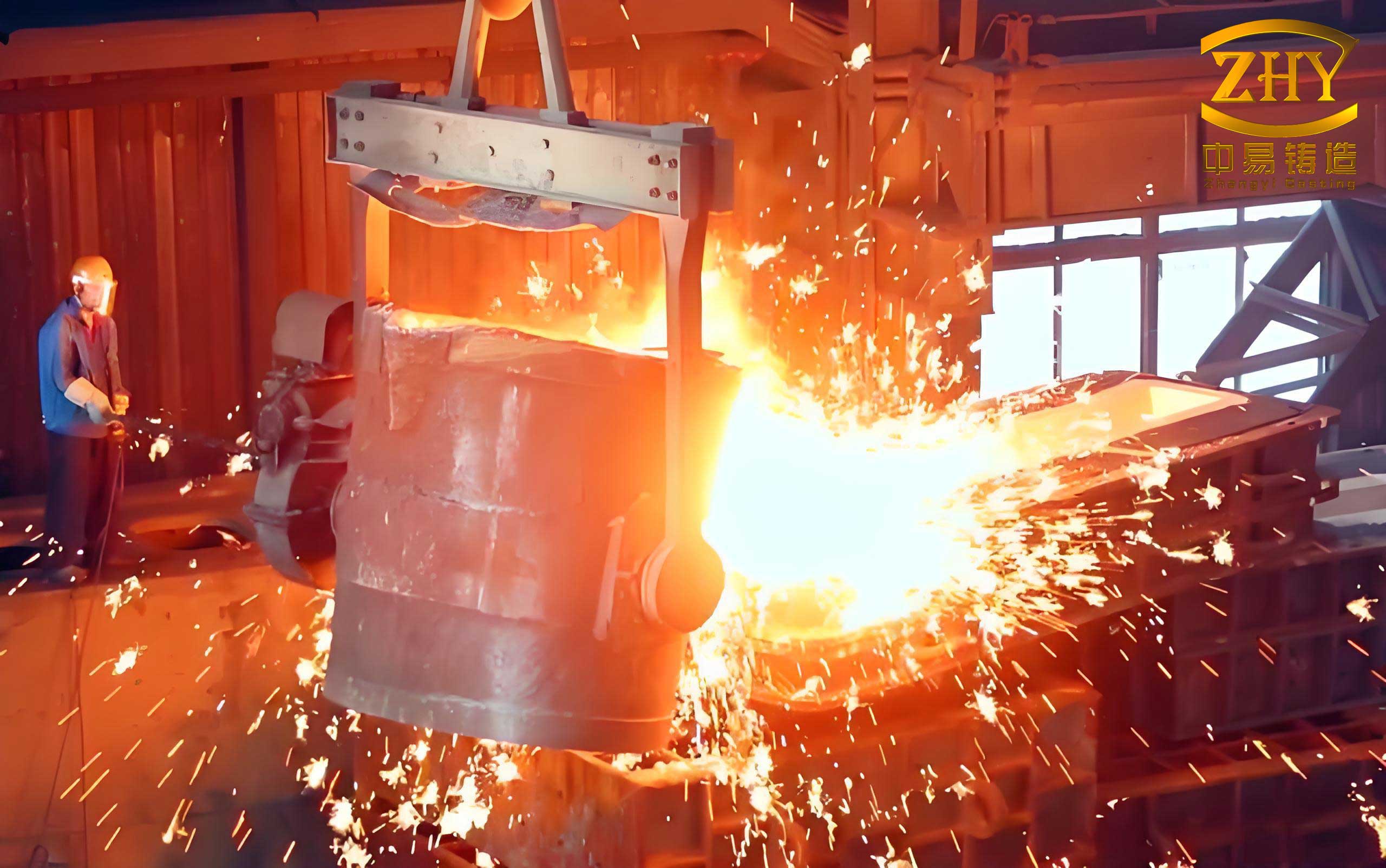
This image illustrates typical aluminum alloy casting parts produced via lost foam casting, highlighting the complexity and potential applications of such components. The refinement in microstructure directly translates to better performance in these casting parts, as finer grains impede crack propagation and improve ductility. I attribute the grain refinement to two main mechanisms: dendrite fragmentation and increased nucleation. The vibration-induced shear forces break off dendritic tips, which then act as new nucleation sites. Additionally, the convective mixing homogenizes the temperature and composition fields, reducing undercooling and promoting equiaxed growth. These mechanisms are essential for optimizing the casting part quality in industrial settings.
To quantify the mechanical improvements, I conducted tensile tests on specimens from each vibration condition. The results, plotted in Figure 4, show that tensile strength varies with frequency and amplitude. At a constant amplitude of 0.08 mm, the tensile strength initially increased with frequency, peaking at 100 Hz with a value of 164.7 MPa—a 14.8% improvement over the non-vibrated casting part. This enhancement is statistically significant and demonstrates the benefit of moderate vibration intensity. However, beyond this optimal point, further increases in frequency led to a decline in strength, likely due to excessive turbulence causing gas entrapment or microvoids in the casting part. Similarly, at a fixed frequency of 50 Hz, the strength peaked at an amplitude of 0.04 mm (151.8 MPa, a 6% improvement), then decreased with higher amplitudes. These trends underscore the importance of balancing vibration parameters to maximize the performance of the casting part.
The relationship between vibration parameters and tensile strength can be modeled using a quadratic response surface. For instance, the strength $$S$$ might be expressed as: $$S = \beta_0 + \beta_1 f + \beta_2 A + \beta_3 f^2 + \beta_4 A^2 + \beta_5 fA$$, where $$f$$ is frequency, $$A$$ is amplitude, and $$\beta_i$$ are coefficients determined from experimental data. This model helps in predicting optimal conditions for producing high-strength casting parts. Based on my data, the maximum strength occurs around intermediate values of frequency and amplitude, aligning with the concept of critical vibration intensity for effective grain refinement without introducing defects.
Further analysis of the fracture surfaces revealed that the improved strength correlated with a transition from brittle to ductile failure modes. In non-vibrated casting parts, fractures often occurred along coarse grain boundaries, indicating weak interfaces. With vibration, the finer microstructure led to more tortuous crack paths and higher energy absorption during failure. This behavior is crucial for casting parts subjected to dynamic loads, such as in automotive engines. Additionally, the reduction in shrinkage porosity due to vibration-enhanced feeding further contributed to the strength increase. I estimated the porosity volume fraction using image analysis and found it decreased by up to 30% under optimal vibration conditions, directly benefiting the casting part density and reliability.
In discussing the practical implications, it is evident that mechanical vibration can be integrated into existing lost foam casting lines with minimal modifications. The vibration table used in this study is cost-effective and scalable, making it suitable for high-volume production of aluminum alloy casting parts. By optimizing parameters such as frequency at 100 Hz and amplitude at 0.08 mm, manufacturers can achieve consistent improvements in part quality. Moreover, the process reduces the need for heat treatment or other post-casting interventions, lowering energy consumption and production time. For critical casting parts like cylinder heads or structural brackets, this translates to enhanced safety and longevity.
However, challenges remain in implementing vibration uniformly across large or complex casting parts. Variations in geometry may lead to uneven vibration effects, necessitating simulation tools to predict fluid flow and solidification under vibration. Computational fluid dynamics (CFD) models coupled with vibration modules can aid in designing optimized processes for specific casting parts. Future research should explore the effects of vibration on other aluminum alloys, such as A356 or 6061, to broaden applicability. Additionally, combining vibration with other techniques like pressure assistance or alloy modification could yield synergistic benefits for casting part performance.
From a theoretical perspective, the findings align with solidification principles under forced convection. The dimensionless Reynolds number $$Re = \frac{\rho u L}{\mu}$$ and vibrational acceleration number $$N_v = \frac{a L}{\nu^2}$$, where $$L$$ is characteristic length and $$\nu$$ is kinematic viscosity, can be used to characterize the flow regimes. In my experiments, higher $$N_v$$ values correlated with greater grain refinement, suggesting that vibration intensity is a key driver for microstructural control in the casting part. This insight can guide the design of vibration systems for different casting scales and materials.
To summarize, this study demonstrates that mechanical vibration during lost foam casting significantly enhances the microstructure and tensile strength of ADC12 aluminum alloy casting parts. The optimal parameters identified—frequency of 100 Hz and amplitude of 0.08 mm—resulted in a 14.8% increase in tensile strength, making the casting part more suitable for demanding applications. The grain refinement mechanism involves dendrite fragmentation and increased nucleation, driven by vibration-induced convection. These improvements contribute to the overall quality and reliability of the casting part, underscoring the value of vibration as a process enhancement tool.
In conclusion, I have shown that mechanical vibration is a viable method for improving lost foam casting of aluminum alloys. By carefully controlling frequency and amplitude, manufacturers can produce casting parts with superior mechanical properties and reduced defects. This research provides a foundation for further exploration into vibration-assisted casting techniques, with potential impacts across automotive, aerospace, and other industries. As the demand for lightweight and high-performance components grows, innovations like vibration will play a crucial role in advancing casting technology and ensuring the production of reliable casting parts.
For future work, I recommend investigating the long-term fatigue behavior and corrosion resistance of vibration-treated casting parts, as these properties are critical for real-world applications. Additionally, integrating real-time monitoring sensors during vibration could help in adaptive process control, ensuring consistent quality for every casting part produced. By continuing to refine these techniques, we can push the boundaries of what is possible in metal casting, ultimately delivering better products to market.