
In the field of advanced manufacturing, the performance of casting parts is critically influenced by their geometric design and post-processing treatments. As a researcher focused on materials engineering, I have extensively studied compacted graphite iron (CGI), particularly RuT450, which is widely used in heavy-duty engine components like cylinder blocks. The complexity of these casting parts often results in varying wall thicknesses, leading to differences in cooling rates during solidification. This, combined with heat treatment processes, significantly impacts the microstructure and mechanical properties. In this article, I will delve into how casting thickness and heat treatments, such as stress relief annealing and natural aging, affect the vermicular rate, residual stress, hardness, and tensile strength of CGI. My goal is to provide insights that can optimize the machining and performance of these critical casting parts.
The importance of CGI stems from its superior properties compared to gray cast iron, including higher strength and thermal conductivity, making it ideal for high-temperature applications. However, the manufacturing of casting parts like engine blocks involves intricate shapes with thickness variations, which can cause inhomogeneities in material properties. Understanding these variations is essential for ensuring reliability and durability. Through my experiments, I have analyzed samples extracted from different thickness sections of CGI cylinder blocks, employing techniques like 3D laser microscopy, scanning electron microscopy (SEM), and X-ray stress analysis. The findings highlight the interplay between casting thickness, heat treatment, and material behavior, offering a foundation for improving the design and processing of casting parts.
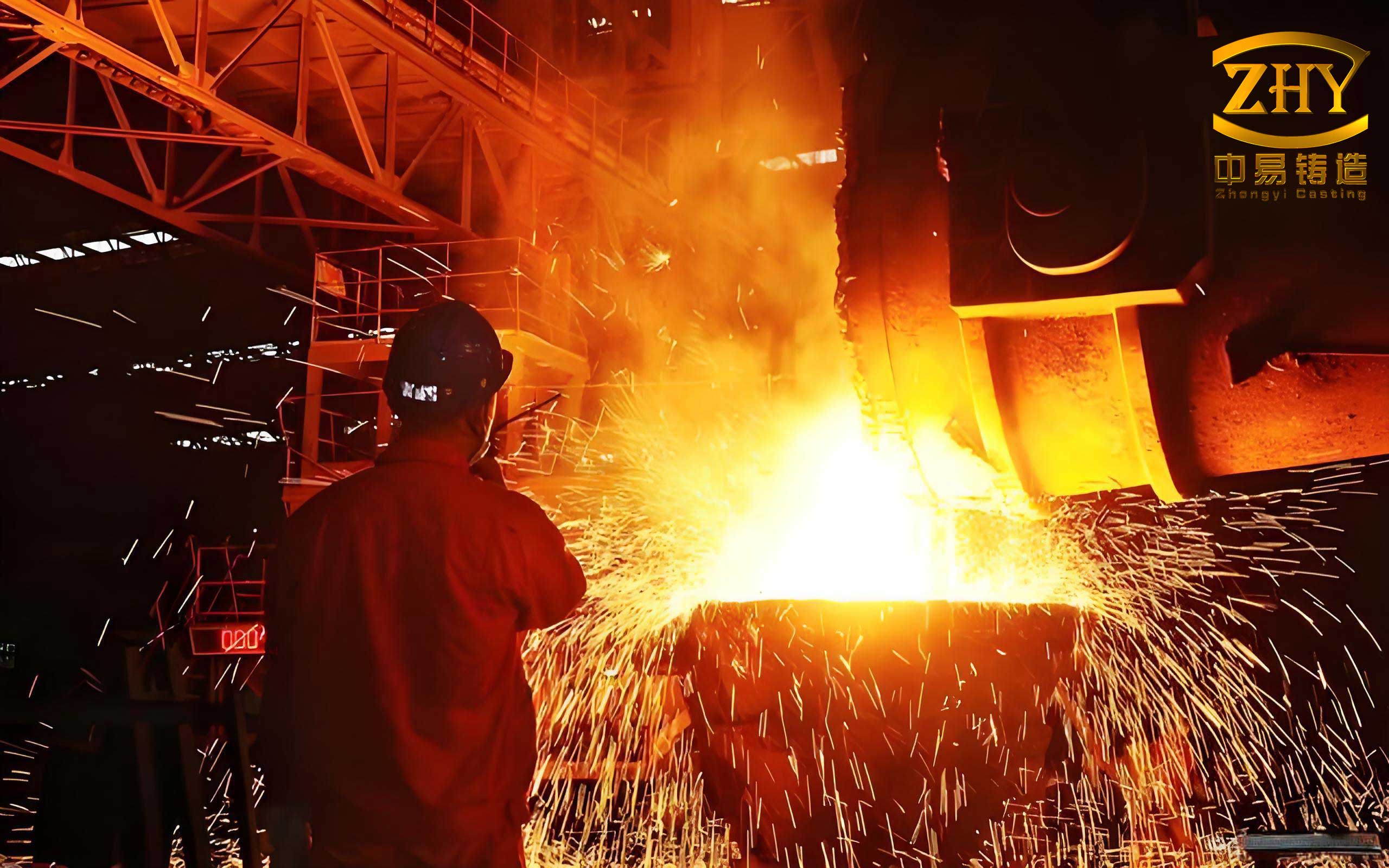
To begin, let me outline the experimental approach. The material under investigation is RuT450 compacted graphite iron, commonly used in automotive casting parts. Samples were obtained from sections with thicknesses ranging from 10 mm to 40 mm, representing typical variations in engine blocks. These casting parts were produced via sand casting, and their chemical composition was verified to meet industrial standards, with elements like Cu, Sn, Si, Mg, and rare earths playing key roles in graphite morphology and matrix structure. For microstructure analysis, I prepared polished and etched specimens, observing graphite forms and matrix constituents using optical microscopy and SEM. The vermicular rate was quantified according to standard methods, while mechanical properties were assessed through Brinell hardness tests and tensile experiments. Additionally, I evaluated residual stress using X-ray diffraction and applied heat treatments: stress relief annealing at 600°C for 1 hour, and natural aging for periods up to 12 months. This comprehensive methodology allows for a detailed exploration of how casting parts behave under different conditions.
The microstructure of CGI is a defining factor in its performance. In my observations, the graphite in RuT450 primarily exhibits a vermicular (worm-like) morphology, with minor amounts of spheroidal and compacted graphite. The matrix consists predominantly of pearlite, with ferrite forming around graphite nodules, creating a “bull’s-eye” structure. As casting thickness increases, the cooling rate decreases, leading to notable changes in graphite morphology. Specifically, thinner casting parts cool faster, resulting in a higher proportion of spheroidal graphite and shorter vermicular graphite, whereas thicker casting parts allow for more complete growth of vermicular graphite. This can be summarized by the relationship between cooling rate (CR) and vermicular rate (VR), which I approximate with a linear model: $$ VR = a – b \cdot CR $$ where \( a \) and \( b \) are material constants. For instance, in my samples, the vermicular rate increased from 81.3% at 10 mm thickness to 91.8% at 40 mm thickness, indicating that thicker casting parts promote higher vermicularity due to slower solidification.
To quantify these trends, I have compiled data on microstructure parameters across different thicknesses, as shown in Table 1. This table highlights how casting thickness influences graphite morphology and matrix composition, which in turn affects mechanical properties. The increase in vermicular rate with thickness is a key finding, as it underscores the importance of design considerations for casting parts.
| Casting Thickness (mm) | Vermicular Rate (%) | Pearlite Content (%) | Ferrite Content (%) | Graphite Morphology Notes |
|---|---|---|---|---|
| 10 | 81.3 | 92 | 8 | More spheroidal graphite, shorter vermicular forms |
| 20 | 83.2 | 91 | 9 | Moderate vermicular growth, some spheroidal graphite |
| 30 | 88.9 | 90 | 10 | Predominantly vermicular graphite, less spheroidal |
| 40 | 91.8 | 89 | 11 | Highest vermicular rate, minimal spheroidal graphite |
Heat treatment further modifies the microstructure of casting parts. After stress relief annealing at 600°C, I observed graphitization processes where pearlite partially decomposes into ferrite and cementite, with subsequent graphite precipitation. This leads to finer graphite particles and an increase in ferrite content, particularly around graphite nodules, enhancing the “bull’s-eye” effect. In contrast, natural aging over 6 to 12 months resulted in minimal microstructural changes, primarily affecting residual stress relief. These observations emphasize that annealing can actively alter the matrix of casting parts, whereas aging is a passive process. The microstructural evolution can be described using kinetic equations, such as the Johnson-Mehl-Avrami-Kolmogorov (JMAK) model for phase transformations: $$ f = 1 – \exp(-k t^n) $$ where \( f \) is the transformed fraction, \( k \) is a rate constant, \( t \) is time, and \( n \) is the Avrami exponent. For CGI, this model helps explain how annealing time influences ferrite formation in casting parts.
Residual stress is another critical aspect in casting parts, arising from thermal gradients during solidification. My measurements revealed that as-cast CGI surfaces exhibit compressive residual stresses, which increase with casting thickness. For example, at 40 mm thickness, the compressive stress averaged 106.16 MPa, compared to lower values in thinner sections. This trend can be attributed to the greater thermal inertia in thicker casting parts, leading to more pronounced contraction differences. The relationship between thickness \( T \) and residual stress \( \sigma_{res} \) can be expressed as: $$ \sigma_{res} = \alpha \cdot T + \beta $$ where \( \alpha \) and \( \beta \) are coefficients dependent on material and process parameters. Heat treatments effectively reduce these stresses; annealing lowered residual stress by over 50% in some cases, while natural aging provided gradual relief over months. This stress reduction is vital for machining casting parts, as it minimizes distortion and improves dimensional accuracy.
Table 2 summarizes the residual stress data before and after treatments, illustrating how casting thickness and heat treatment interact to influence stress states. Such data is crucial for engineers designing casting parts, as it informs decisions on post-casting processes to enhance performance.
| Casting Thickness (mm) | As-Cast Residual Stress (MPa, Compressive) | Residual Stress After Annealing (MPa, Compressive) | Residual Stress After 12 Months Aging (MPa, Compressive) |
|---|---|---|---|
| 10 | 45.2 | 15.3 | 30.1 |
| 20 | 68.7 | 22.4 | 45.8 |
| 30 | 89.5 | 28.9 | 60.2 |
| 40 | 106.2 | 35.1 | 75.4 |
Hardness and tensile strength are key mechanical properties that determine the suitability of casting parts for demanding applications. My experiments show that both properties decrease with increasing casting thickness. For instance, Brinell hardness dropped from approximately 245 HBW at 10 mm to 220 HBW at 40 mm in as-cast conditions. This decline correlates with the higher vermicular rate and lower pearlite content in thicker casting parts, as pearlite contributes to hardness through its lamellar structure. The relationship between hardness \( H \) and thickness \( T \) can be modeled linearly: $$ H = H_0 – \gamma \cdot T $$ where \( H_0 \) is the hardness at zero thickness (theoretical) and \( \gamma \) is a material-specific constant. Heat treatments further reduce hardness; annealing caused a slight decrease due to ferrite formation and stress relief, while aging had a minimal effect. These trends are consistent across both surface and mid-thickness regions of casting parts, though mid-sections generally show lower hardness due to slower cooling and tensile residual stresses.
Tensile strength follows a similar pattern, with thinner casting parts exhibiting higher strength. In my tensile tests, the ultimate tensile strength (UTS) decreased from 518.26 MPa at 10 mm to 502.54 MPa at 40 mm. This can be explained by the stress concentration effects of vermicular graphite, which are more pronounced in thicker casting parts, and the reduced pearlite content. Annealing slightly lowered UTS, as seen in 40 mm samples where it dropped to 487.11 MPa, but it also increased ductility, as evidenced by fracture surface analysis showing more ductile dimples. The stress-strain behavior can be described by constitutive equations, such as the Hollomon law: $$ \sigma = K \epsilon^n $$ where \( \sigma \) is true stress, \( \epsilon \) is true strain, \( K \) is the strength coefficient, and \( n \) is the strain-hardening exponent. For CGI, this model helps capture the plastic deformation characteristics of casting parts under load.
To provide a comprehensive overview, Table 3 consolidates the mechanical properties data, highlighting how casting thickness and heat treatment impact hardness, tensile strength, and elastic modulus. This information is essential for selecting appropriate thicknesses and treatments for specific casting parts in engineering designs.
| Casting Thickness (mm) | Condition | Brinell Hardness (HBW) | Ultimate Tensile Strength (MPa) | Yield Strength (MPa) | Elastic Modulus (GPa) |
|---|---|---|---|---|---|
| 10 | As-Cast | 245 | 518.26 | 385.69 | 115.48 |
| 20 | As-Cast | 235 | 515.73 | 385.41 | 116.59 |
| 30 | As-Cast | 228 | 507.45 | 384.12 | 114.62 |
| 40 | As-Cast | 220 | 502.54 | 382.08 | 116.46 |
| 40 | Annealed (600°C, 1h) | 215 | 487.11 | 383.28 | 113.82 |
| 10 | Aged 12 Months | 242 | 515.0 | 384.5 | 115.0 |
| 40 | Aged 12 Months | 218 | 500.0 | 381.0 | 116.0 |
The fracture morphology of CGI provides additional insights into its mechanical behavior. In as-cast conditions, fracture surfaces predominantly show cleavage facets and river patterns, indicative of brittle transgranular fracture. This is characteristic of casting parts with high pearlite content and vermicular graphite, where cracks initiate at graphite tips. After annealing, the presence of dimples suggests improved ductility, aligning with the slight reduction in strength. This transition can be quantified using fracture toughness parameters, though further study is needed for CGI. The interplay between graphite morphology and matrix strength in casting parts can be expressed as: $$ \sigma_f = \sigma_m \cdot (1 – V_g) + \sigma_g \cdot V_g $$ where \( \sigma_f \) is the fracture strength, \( \sigma_m \) is the matrix strength, \( \sigma_g \) is the graphite contribution, and \( V_g \) is the graphite volume fraction. This model underscores how optimizing casting parts requires balancing these factors.
From a practical standpoint, the implications of this research are significant for industries relying on casting parts, such as automotive and machinery manufacturing. The findings suggest that thicker casting parts, while offering higher vermicular rates, may require careful heat treatment to mitigate residual stresses and maintain mechanical properties. For example, in engine blocks, varying thicknesses across sections can lead to inhomogeneous performance, but controlled annealing can homogenize properties and improve machinability. Moreover, the efficiency of annealing over natural aging makes it a preferable choice for mass production of casting parts, reducing inventory time and enhancing productivity.
To further elucidate the relationships, I have derived empirical equations based on my data. For vermicular rate as a function of thickness, the best-fit line is: $$ VR(\%) = 80.5 + 0.3 \cdot T $$ where \( T \) is in mm. For residual stress, the as-cast compressive stress follows: $$ \sigma_{res} (MPa) = 40 + 1.65 \cdot T $$ These equations, while simplified, offer quick estimates for designing casting parts. Additionally, the hardness-thickness correlation can be expressed as: $$ HBW = 250 – 0.75 \cdot T $$ ensuring that engineers can predict property changes in casting parts with different dimensions.
In conclusion, my investigation into RuT450 compacted graphite iron reveals that casting thickness and heat treatment profoundly influence microstructure and mechanical properties. Thicker casting parts exhibit higher vermicular rates but lower hardness and strength, while annealing effectively reduces residual stresses and modifies the matrix, albeit with slight property reductions. Natural aging provides gradual stress relief but is less efficient. These insights are crucial for optimizing the manufacturing and performance of casting parts in critical applications. Future work could explore advanced heat treatment cycles or alloy modifications to further enhance the properties of casting parts, ensuring they meet the evolving demands of modern engineering.
Throughout this study, the focus has been on casting parts, emphasizing their role in material performance. By integrating microstructural analysis with mechanical testing, I have provided a framework for understanding and improving CGI components. As casting technology advances, such knowledge will be invaluable for developing lighter, stronger, and more durable casting parts, ultimately driving innovation in sectors like transportation and energy. The continuous evolution of casting parts underscores their importance in industrial progress, and I hope this contribution aids in their ongoing optimization.