
In the demanding environment of coal mining, the reliable operation of machinery is paramount. Among the critical components of a shearer, the guide shoe stands out as a vital casting part. These casting parts serve the dual function of supporting the machine’s weight and guiding it along the rack of the armored face conveyor. Their failure directly leads to costly production stoppages and poses significant safety risks. Our extensive failure analysis of scrapped units has consistently highlighted that beyond structural or assembly issues, the intrinsic quality of the casting parts themselves is the predominant root cause of premature failures such as fractures. This article details our comprehensive approach to analyzing the defects in these critical casting parts and the systematic improvements implemented in design, manufacturing, and quality control to enhance their performance and longevity.
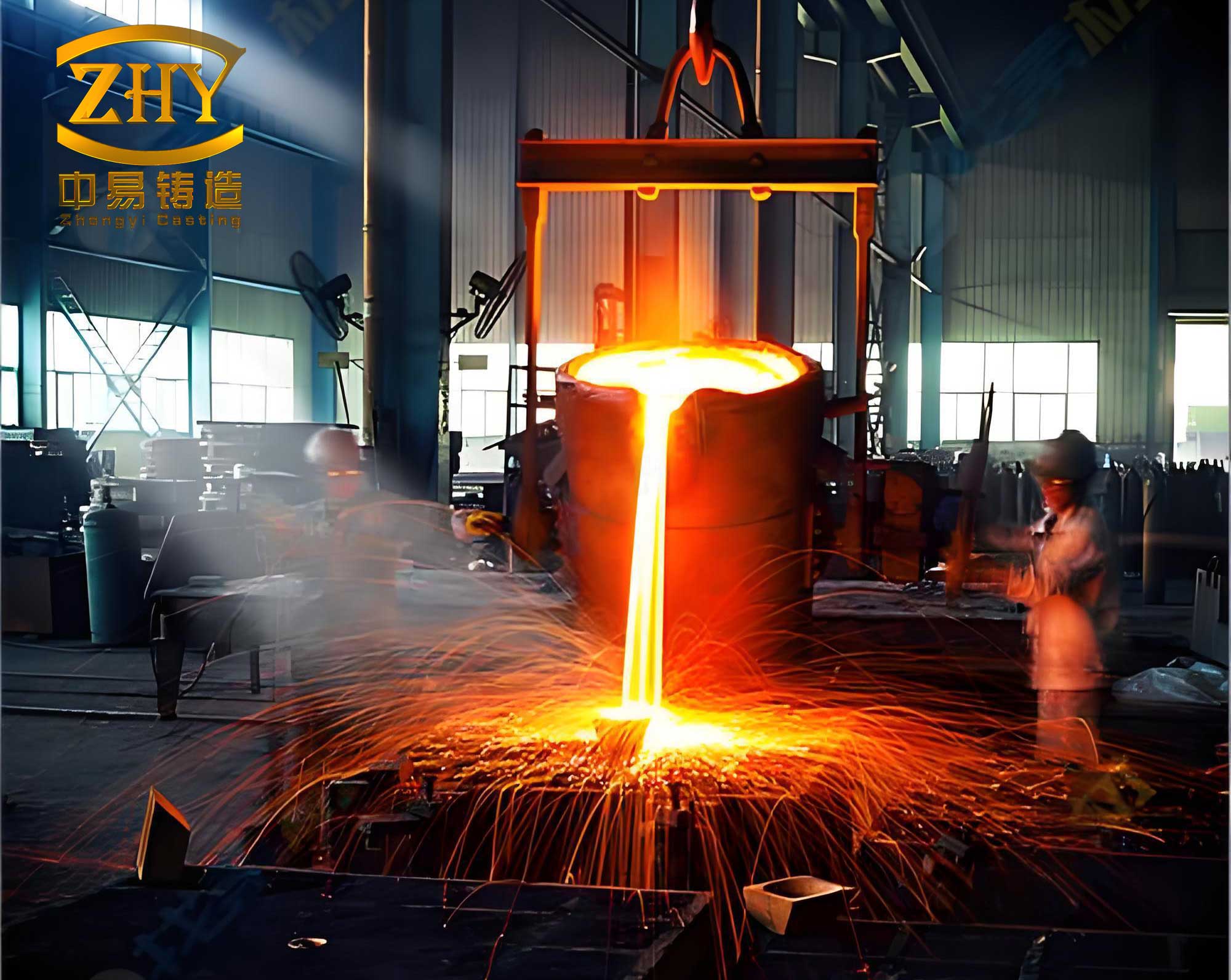
The guide shoe is a substantial casting part, typically produced via sand casting. Its dimensions are approximately 800 mm x 500 mm x 600 mm with a mass around 300 kg. Wall thicknesses average 40 mm, with localized sections reaching up to 80 mm. Common material specifications for these casting parts include ZG42CrMo, ZG40Cr, and ZG35CrMnSi alloy steels, with a wear-resistant overlay welded onto the guiding surface. Our post-mortem investigations consistently identify three primary failure modes: severe wear, crack initiation and propagation, and catastrophic fracture. The most vulnerable areas are invariably the bottom hook and the guiding side walls.
The bottom hook bears the brunt of direct contact with the conveyor rack, enduring intense abrasive wear and repetitive impact loads. Conditions worsen during inclined mining or when hard rock intrusions are present. The side walls are subjected to significant lateral forces and torsional stresses during cutting operations, making them susceptible to crack initiation from stress concentrations, often exacerbated by impact from coal and rock. A fracture in this casting part is a critical event. We concluded that while operational loads are severe, deficiencies in the casting’s internal soundness, mechanical properties from improper heat treatment, and problematic geometric transitions are the primary contributors to failure.
Root Cause Analysis of Casting Part Defects
The journey to improve these casting parts begins with a thorough understanding of failure origins. We categorize the root causes into several interconnected domains.
1. Structural Stress Concentrations: The original design often featured sharp transitions between thin and thick sections. Furthermore, certain fillets were machined away during processing and then re-machined to final dimensions. This practice creates two major issues: first, it removes the beneficial as-cast radius, and second, it introduces machining stresses and potential micro-cracks at the re-cut edge, creating a perfect initiation site for fatigue cracks. The stress concentration factor ($K_t$) for such a re-entrant feature can be significantly higher than for a smooth, as-cast transition.
2. Intrinsic Casting Defects: The quality of the casting part blank is foundational. Common defects found included:
- Shrinkage Porosity and Cavities: These occur in isolated hot spots, like the thick sections of the side walls or the hook, due to inadequate feeding during solidification. They drastically reduce the effective load-bearing area and act as stress risers.
- Gas Porosity and Inclusions: Entrapped air or slag inclusions weaken the material’s continuity and can initiate cracks under cyclic loading.
- Hot Tears and Cold Cracks: These are cracks formed during or shortly after solidification, often due to excessive thermal stress or constrained contraction, severely compromising structural integrity from the outset.
3. Suboptimal Material and Metallurgy: Inconsistent melt chemistry, high levels of impurities like sulfur (S) and phosphorus (P), and inadequate deoxidation practices lead to poor baseline material properties. The target materials like ZG42CrMo rely on precise chemistry for their hardenability and toughness.
4. Inconsistent Heat Treatment: Heat treatment is the most critical process for developing the required mechanical properties in these alloy steel casting parts. Inconsistent practices were a major culprit:
- Improper Austenitizing: Incorrect temperature or time leads to insufficient dissolution of carbides or grain growth.
- Non-uniform Quenching: Inadequate agitation or unsuitable quenchant (oil, polymer) resulted in soft spots, high residual stresses, or even quenching cracks.
- Inaccurate Tempering: Failure to achieve the correct tempering temperature to balance hardness and toughness left the parts either too brittle or too soft.
The relationship between ultimate tensile strength ($\sigma_u$), yield strength ($\sigma_y$), and hardness (HB) for quenched and tempered steels can be approximated by:
$$
\sigma_u (MPa) \approx 3.5 \times HB
$$
$$
\sigma_y (MPa) \approx 0.8 \times \sigma_u
$$
Inconsistent heat treatment leads to a wide scatter in these key properties.
| Defect Type | Location | Primary Manufacturing Cause | Effect on Performance |
|---|---|---|---|
| Shrinkage Cavity | Thick sections (Hook, Side wall junctions) | Poor feeding/gating design, insufficient risers | Reduces fatigue strength, acts as crack initiator |
| Gas Porosity | Random, often near surfaces | High moisture in molds/cores, poor venting, improper deoxidation | Reduces dynamic load capacity, weakens weld repair areas |
| Hot Tear | High stress concentration areas during cooling | High pouring temperature, restrictive mold/core design | Severe structural weakness, often leads to in-service fracture |
| Inclusions (Slag/Sand) | Random, often in upper sections | Poor slag control during tapping/pouring, mold erosion | Creates localized stress points, reduces toughness |
Comprehensive Improvement Strategy for Casting Parts
Our improvement strategy is holistic, targeting every stage from design to final inspection for these critical casting parts.
1. Structural and Design Optimization
We redesigned critical transition areas. Instead of machining away cast fillets, we implemented concave design features that allow the as-cast radii to be preserved in the final part. The transitions are merely polished smooth. This eliminates the stress-concentrating effect of a machined sharp corner and the associated machining stresses. The new design inherently reduces the risk of solidification-related shrinkage in thick sections and improves fatigue life. The modified stress concentration factor $K_t’$ for the optimized geometry is significantly lower than the original $K_t$.
2. Foundry Process Optimization
We overhauled the casting process for these casting parts:
- Gating and Risering System: Redesigned using simulation software to ensure directional solidification towards strategically placed risers. This minimizes shrinkage defects in critical sections.
- Process Control: Strictly defined and monitor pouring temperature ($T_p$), which for these low-alloy steels is now maintained within a narrow band:
$$
T_p = T_{liquidus} + 40^\circ C \text{ to } 70^\circ C
$$
Cooling rates in the mold are controlled to prevent thermal shock. - Mold/Core Quality: Upgraded sand bonding systems and core venting to reduce gas-related defects.
3. Material and Melting Control
Consistent chemistry is non-negotiable. We enforce strict charge makeup, use advanced furnace lining practices, and employ ladle metallurgy for precise final adjustments and inclusion control. Spectroscopic analysis is performed on every heat. The target ranges for key elements in a typical ZG42CrMo casting part are:
| Element | C | Si | Mn | Cr | Mo | P (max) | S (max) |
|---|---|---|---|---|---|---|---|
| Target Range | 0.39-0.45 | 0.20-0.40 | 0.60-0.90 | 0.90-1.20 | 0.20-0.30 | 0.020 | 0.015 |
4. Precision Heat Treatment
We developed and validated a rigorous two-stage heat treatment protocol for these casting parts:
Stage 1: Normalizing. The goal is to refine the as-cast grain structure and homogenize the microstructure.
$$
\text{Normalizing Cycle: Heat to } 890^\circ C \pm 10^\circ C, \text{ hold for } t_h \geq 5 \text{ hours, Air Cool (AC)}
$$
Where $t_h$ is determined by the maximum section thickness of the casting part.
Stage 2: Quenching and Tempering (Q&T). This develops the final mechanical properties.
$$
\text{Austenitizing: } 860^\circ C \pm 10^\circ C, \text{ hold for } t_h \geq 4 \text{ hours}
$$
$$
\text{Quenching: Rapid immersion in agitated PAG polymer solution.}
$$
The cooling rate ($\frac{dT}{dt}$) during quenching is critical to avoid pearlite formation and achieve martensite. We aim for a rate exceeding the critical cooling rate for the specific alloy.
$$
\text{Tempering: } 620^\circ C \pm 10^\circ C, \text{ hold for } t_h \geq 6 \text{ hours, Air Cool (AC)}
$$
Tempering relieves quench stresses and precipitates carbides for toughness. The final hardness (HB) correlates directly to the tempering temperature ($T_{temp}$) via an equation of the form:
$$
HB = A – B \cdot \ln(T_{temp})
$$
where A and B are material constants.
| Process | Temperature (°C) | Soaking Time (Hours, min) | Cooling Medium | Key Objective |
|---|---|---|---|---|
| Normalizing | 890 ± 10 | 5 + (0.25 per 25mm over 100mm) | Still Air | Grain refinement, homogeneity |
| Austenitizing (for Q&T) | 860 ± 10 | 4 + (0.20 per 25mm over 100mm) | – | Complete austenitization |
| Quenching | – | Rapid transfer & immersion | Agitated PAG Solution (10-15% concentration) | Achieve martensitic structure |
| Tempering | 620 ± 10 | 6 + (0.30 per 25mm over 100mm) | Still Air | Stress relief, toughness, final hardness |
5. Controlled Repair Welding Procedure
For repairable defects in the casting part blank, we enforce a strict welding protocol:
- Defect Removal: Complete removal of the defect by machining/grinding, verified by Magnetic Particle Inspection (MPI).
- Preheating: Local preheat to $260^\circ C \pm 20^\circ C$ using oxy-fuel torches.
- Welding: Use Gas Metal Arc Welding (GMAW) with an 80%Ar/20%CO₂ shield gas and a low-hydrogen filler metal matching the base material strength. Low heat input parameters are used.
- Post-Weld Heat Treatment (PWHT): Immediate local stress relief at $300^\circ C$ for 1.5-2 hours, followed by insulation and slow cooling.
This procedure prevents weld-induced hydrogen cracking and ensures the repaired zone has compatible properties with the base casting part.
6. Enhanced Quality Assurance and Testing
Our quality gate for every casting part now includes:
- Dimensional & Visual Inspection: Against CAD models and strict acceptance criteria for surface defects.
- Non-Destructive Testing (NDT): 100% MPI for surface cracks. Critical sections undergo 100% Ultrasonic Testing (UT) to detect internal flaws like shrinkage or inclusions. Acceptance standards are based on echo amplitude and flaw size relative to critical defect size ($a_c$), derived from fracture mechanics:
$$
a_c = \frac{1}{\pi} \left( \frac{K_{IC}}{\sigma \cdot Y} \right)^2
$$
where $K_{IC}$ is material toughness, $\sigma$ is applied stress, and $Y$ is a geometry factor. - Mechanical Property Verification: Coupons cast from the same heat are subjected to tensile, impact, and hardness tests to verify the heat treatment outcome.
| Inspection Category | Method/Standard | Key Parameters / Acceptance Criteria |
|---|---|---|
| Chemical Composition | Optical Emission Spectrometry | Must conform to specified ranges (as per Table 2) |
| Surface Integrity | Visual, Magnetic Particle Inspection (MPI) | No cracks, hot tears. Limited, small non-linear indications allowed per area. |
| Internal Soundness | Ultrasonic Testing (UT) to ASTM A609 | No indications exceeding DAC (Distance Amplitude Curve) 50% in critical zones; smaller indications recorded. |
| Mechanical Properties (from coupons) | Tensile Test (ASTM A370), Charpy Impact, Hardness | $\sigma_y \geq 650$ MPa, $\sigma_u \geq 850$ MPa, Impact $\geq 40$ J @ 20°C, Hardness 280-320 HB. |
| Dimensional Accuracy | 3D Scanning / CMM | All critical mating and wear surfaces within drawing tolerance (typically IT12-IT13). |
Conclusion
The reliability of heavy-duty mining equipment hinges on the quality of its foundational components. Through a systematic program targeting the root causes of failure in guide shoe casting parts—encompassing design for manufacturability, precision-controlled foundry and heat treatment processes, rigorous material management, and a comprehensive quality assurance regime—we have achieved a demonstrable improvement in the consistency and performance of these critical casting parts. The optimized structural details mitigate stress concentrations, the refined metallurgy and heat treatment ensure high and uniform mechanical properties, and the stringent inspection protocols guarantee that only casting parts meeting the highest standards of internal and external quality are released for service. This holistic approach not only extends the service life of the guide shoes but also enhances the overall operational availability and safety of the mining machinery. The methodologies and control strategies developed are directly applicable to the quality enhancement of other high-stress, critical casting parts within the mining and heavy equipment sectors.