
In the field of precision manufacturing, investment casting stands out as a critical method for producing complex, high-integrity casting parts, particularly for aerospace components like turbine blades. This article details my firsthand experience and systematic approach in developing an optimized investment casting process for third-stage moving blades, which are essential casting parts in gas turbine engines. The primary challenges revolved around achieving complete filling of thin sections, eliminating surface defects, and ensuring internal soundness in these casting parts. Through iterative testing and analysis, we refined the wax molding, shell building, and melting practices to enhance the quality and reliability of these critical casting parts.
The third-stage moving blade, as a key casting part, has an overall envelope dimension of 240 mm × 77 mm × 76 mm. Its airfoil section exhibits a progressive thickness increase from the shroud toward the tenon side, promoting directional solidification—a favorable characteristic for casting parts. However, the sealing teeth at the shroud are extremely thin, with the thinnest area measuring approximately 0.02 mm. This geometrical feature poses a significant risk of misrun or incomplete filling during metal pouring, making it a focal point for process improvement for such delicate casting parts.
The initial process scheme was designed based on standard investment casting practices. For wax pattern production, the main concerns were ensuring complete filling of the thin sealing teeth and preventing shrinkage depression at the tenon. We experimented with various injection parameters to address these issues. The wax injection parameters tested are summarized in Table 1.
| Scheme | Wax Cylinder Temp. (°C) | Wax Line Temp. (°C) | Injection Nozzle Temp. (°C) | Injection Time (s) | Injection Flow Rate (mL/s) | Injection Pressure (bar) |
|---|---|---|---|---|---|---|
| 1 | 78 | 75 | 75 | 200 | 60 | 20 |
| 2 | 78 | 75 | 75 | 200 | 60 | 23 |
| 3 | 78 | 75 | 75 | 200 | 60 | 25 |
Among these, Scheme 3, with the highest injection pressure, yielded wax patterns with fully formed sealing teeth, while the others showed incomplete filling. The patterns were then assembled into clusters using a side-gating system, with six casting parts per cluster, to optimize metal feeding and yield. The shell-building process followed a conventional sequence, as outlined in Table 2.
| Layer | Slurry Material & Mesh | Slurry Viscosity (s) | Stucco Material & Mesh |
|---|---|---|---|
| 1 | Zircon flour, 200 mesh | 36 | Zircon sand, 100 mesh |
| 2 | Mullite flour, 200 mesh | 15 | Mullite sand, 30-60 mesh |
| 3-8 | Mullite flour, 200 mesh | 12 | Mullite sand, 16-30 mesh |
| 9 | Mullite flour, 200 mesh | 10 | – |
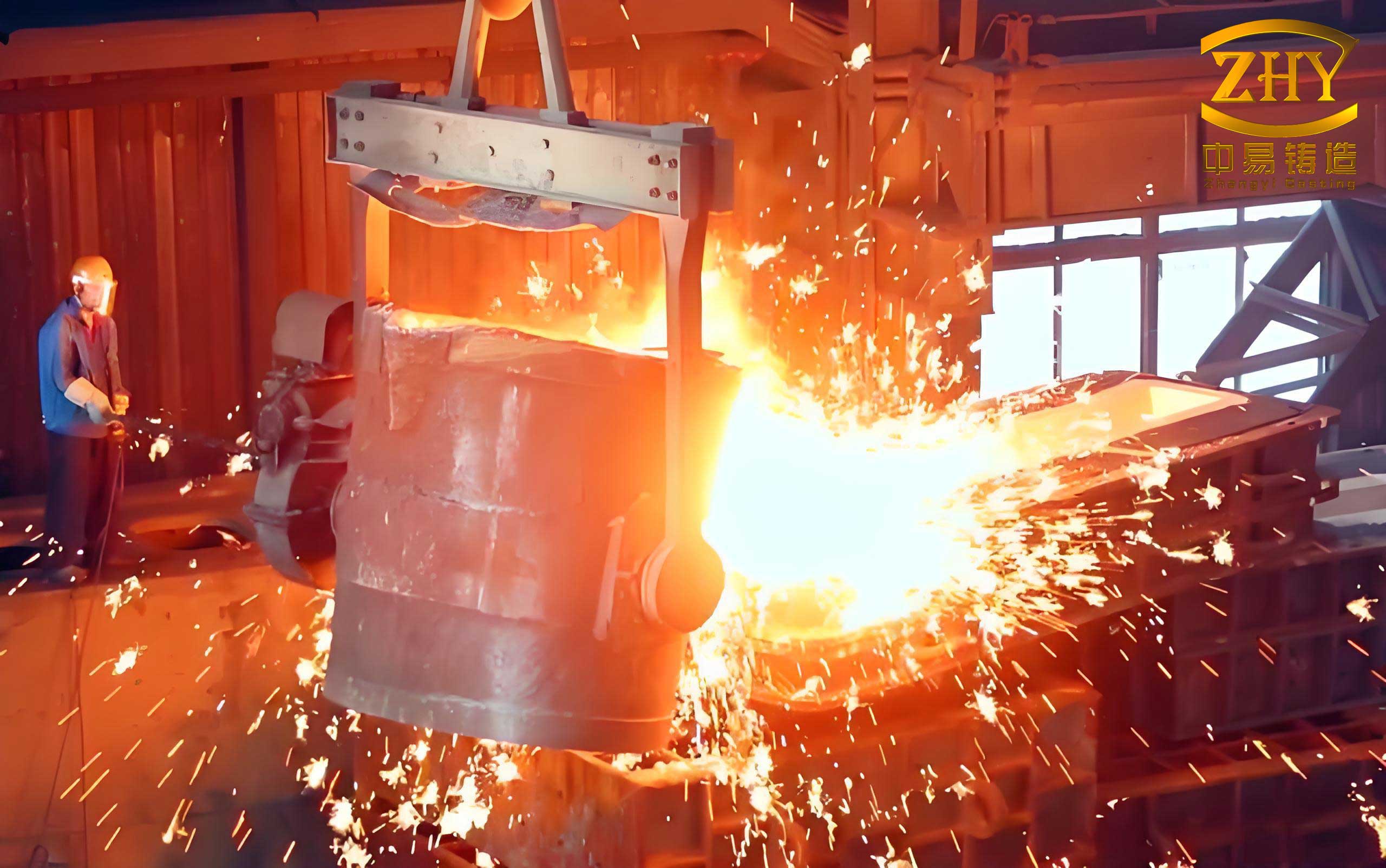
For melting and pouring, the clusters were invested with insulation blankets—6 mm thick on the airfoil—preheated to 1100 ±10 °C, held for over 2 hours, and poured at 1460 ±10 °C. This setup aimed to control solidification for these nickel-based superalloy casting parts.
Upon inspection of the initial castings, several defects were evident. The sealing teeth showed misruns, indicating incomplete filling. The surface of the casting parts exhibited metal fins or veining. Fluorescent penetrant inspection revealed non-metallic inclusions, primarily from shell materials. Radiographic inspection identified micro-porosity in the airfoil near the platform region. These defects are unacceptable for high-performance casting parts, necessitating a root-cause analysis and process optimization.
The misrun at the thin sealing teeth was attributed to insufficient fluidity of the molten metal at the end of filling. The thermal gradient and solidification front can be modeled using the Chvorinov’s rule for solidification time:
$$t_f = B \left( \frac{V}{A} \right)^n$$
where \(t_f\) is the local freezing time, \(B\) is a mold constant, \(V\) is volume, \(A\) is surface area, and \(n\) is an exponent often taken as 2. For thin sections, the modulus \((V/A)\) is very small, leading to rapid freezing. To ensure filling, the metal must reach this area before solidification initiates. The flow can be analyzed using the Reynolds number:
$$Re = \frac{\rho v D_h}{\mu}$$
where \(\rho\) is density, \(v\) is velocity, \(D_h\) is hydraulic diameter, and \(\mu\) is viscosity. For thin sections, \(D_h\) is small, which can lead to laminar flow and increased pressure drop. The pressure required to fill a thin section can be derived from the Hagen-Poiseuille equation for laminar flow in a channel:
$$\Delta P = \frac{128 \mu L Q}{\pi D_h^4}$$
where \(\Delta P\) is pressure drop, \(L\) is flow length, and \(Q\) is volumetric flow rate. This highlights the sensitivity to channel dimensions; the extremely thin sealing teeth require higher pouring pressure or temperature to overcome this pressure drop and avoid misruns in these casting parts.
The metal fins on the surface were traced back to the primary shell layer. Using 200-mesh zircon flour resulted in slurry with a high specific gravity, leading to settling and poor suspension. This caused a low binder-to-powder ratio in the applied coat, creating microscopic voids or “ant holes” in the shell surface after dewaxing and firing. During pouring, molten metal penetrates these voids, forming fins on the casting parts. The quality of the shell surface can be related to the slurry viscosity and particle packing density. A simple model for critical particle size for good packing is given by:
$$d_{crit} = k \cdot \frac{\eta}{\Delta \rho \cdot g}$$
where \(d_{crit}\) is a critical diameter, \(k\) is a constant, \(\eta\) is slurry viscosity, \(\Delta \rho\) is density difference between powder and binder, and \(g\) is gravity. Using finer flour reduces settling and improves packing.
The non-metallic inclusions identified by fluorescent inspection originated from shell debris, cracked pouring cups, and insufficient shell cleaning. The inclusions can be modeled as particles transported by the molten metal. The probability of an inclusion being trapped in the casting parts depends on flow velocity and particle size, following Stokes’ law for settling velocity:
$$v_s = \frac{2 (\rho_p – \rho_m) g r^2}{9 \mu}$$
where \(v_s\) is settling velocity, \(\rho_p\) is particle density, \(\rho_m\) is metal density, \(g\) is gravity, and \(r\) is particle radius. Heavier or larger particles settle faster, but turbulent flow can re-entrain them into the casting parts.
The micro-porosity near the platform was a solidification-related defect. The original insulation scheme left a gap between the 6 mm blanket on the airfoil and the platform, effectively isolating the tenon’s feeding path from the airfoil. This disrupted directional solidification, creating a hot spot and shrinkage porosity. The solidification sequence and thermal gradients are governed by the heat transfer equation:
$$\frac{\partial T}{\partial t} = \alpha \nabla^2 T + \frac{\dot{q}}{\rho c_p}$$
where \(T\) is temperature, \(t\) is time, \(\alpha\) is thermal diffusivity, \(\dot{q}\) is internal heat generation rate (e.g., latent heat), \(\rho\) is density, and \(c_p\) is specific heat. Proper insulation maintains a positive temperature gradient toward the feeder, avoiding isolated liquid pools that lead to porosity in casting parts.
Based on this analysis, we implemented targeted optimizations. To address misruns, the pouring temperature was increased from 1460 ±10 °C to 1490 ±10 °C, enhancing fluidity. The pouring speed was controlled to be under 2 seconds to maintain a turbulent front for better filling of thin sections in these casting parts. The relationship between fluidity length \(L_f\) and superheat \(\Delta T\) can be approximated by:
$$L_f \propto \frac{\Delta T \cdot v_{pour}}{K}$$
where \(v_{pour}\) is pouring velocity and \(K\) is a constant encompassing thermal properties. Higher \(\Delta T\) directly increases \(L_f\), helping fill extreme thin sections.
To eliminate metal fins, the primary slurry material was changed from 200-mesh to 325-mesh zircon flour. This finer powder improved slurry stability, reduced settling, and resulted in a denser, more uniform primary coat without micro-voids. The optimized shell-building parameters are summarized in Table 3.
| Layer | Slurry Material & Mesh | Slurry Viscosity (s) | Stucco Material & Mesh | Key Change |
|---|---|---|---|---|
| 1 | Zircon flour, 325 mesh | 30-35 | Zircon sand, 100 mesh | Finer flour for better packing |
| 2 | Mullite flour, 200 mesh | 14-16 | Mullite sand, 30-60 mesh | Adjusted viscosity |
| 3-8 | Mullite flour, 200 mesh | 11-13 | Mullite sand, 16-30 mesh | Consistent application |
| 9 | Mullite flour, 200 mesh | 9-11 | – | Seal coat |
To reduce inclusions, several procedural changes were made. Shells were thoroughly cleaned after pre-firing, and pouring cups were sealed and stored upside-down to prevent contamination. During final firing, cups were covered with a plate to avoid fallout. The effectiveness of cleaning can be quantified by the reduction in particulate count, aiming for near-zero foreign particles per unit area on the shell surface facing the casting parts.
To mitigate micro-porosity, the insulation scheme was modified. The 6 mm blanket on the airfoil was extended to connect continuously with the platform, eliminating the gap. This ensured a thermal link, allowing the tenon to act as an effective feeder for the airfoil section, promoting directional solidification. The modified scheme is illustrated in Table 4, comparing thermal resistance.
| Scheme | Airfoil Insulation | Platform Junction | Thermal Resistance at Junction (Approx.) | Expected Solidification Sequence |
|---|---|---|---|---|
| Original | 6 mm blanket | Gap (no insulation) | High (air gap) | Disrupted, isolated hot spot |
| Optimized | 6 mm blanket | Continuous 6 mm blanket | Low (uniform insulation) | Directional from tip to tenon |
The thermal resistance \(R\) of an insulation layer is given by:
$$R = \frac{L}{k}$$
where \(L\) is thickness and \(k\) is thermal conductivity. By making the insulation continuous, the overall thermal profile is smoothed, reducing local hot spots that cause porosity in casting parts.
After implementing these optimizations, the casting parts showed remarkable improvement. The sealing teeth were completely filled, with no misruns. Surface inspection revealed no metal fins, indicating a sound primary shell. The surface quality of these precision casting parts was consistently good. Fluorescent inspection indicated a drastic reduction in non-metallic inclusions, with most casting parts passing the criteria. Radiographic inspection confirmed the elimination of micro-porosity in the airfoil near the platform, demonstrating internal soundness.
To quantify the improvements, we can define a quality index \(Q\) for the casting parts that incorporates key attributes:
$$Q = w_1 \cdot F + w_2 \cdot (1 – S) + w_3 \cdot (1 – I) + w_4 \cdot (1 – P)$$
where \(F\) is filling completeness (0 to 1), \(S\) is surface defect area fraction, \(I\) is inclusion density, \(P\) is porosity volume fraction, and \(w_i\) are weighting factors summing to 1. For the initial process, \(Q\) was low due to high \(S\), \(I\), and \(P\). After optimization, \(F \approx 1\), \(S \approx 0\), \(I\) and \(P\) minimized, resulting in a high \(Q\), indicating superior casting parts.
The success of this optimization underscores the importance of a holistic view in investment casting. Each parameter interlinks with others; for instance, higher pouring temperature improves filling but can increase metal-mold reaction. However, with the finer primary coat, the risk was mitigated. The relationship between pouring temperature \(T_p\) and reaction layer thickness \(\delta\) can be modeled by an Arrhenius-type equation:
$$\delta = A \cdot \exp\left(-\frac{E_a}{R T_p}\right) \cdot t^{1/2}$$
where \(A\) is a pre-exponential factor, \(E_a\) is activation energy, \(R\) is gas constant, and \(t\) is contact time. By reducing shell surface roughness with finer flour, the effective contact area decreases, offsetting potential increase in \(\delta\) from higher \(T_p\).
Furthermore, the wax injection process was stabilized using Scheme 3 parameters, but we also derived an optimal injection pressure window. The required pressure \(P_{inj}\) to fill thin features depends on wax viscosity \(\mu_w\), flow length \(L\), and feature thickness \(h\):
$$P_{inj} \propto \frac{\mu_w L}{h^3}$$
This inverse cubic relationship with thickness explains the sensitivity at the 0.02 mm sealing teeth. For our wax system, 25 bar was sufficient, but for even thinner features, further adjustments would be needed for successful pattern making for casting parts.
In conclusion, the development of a robust investment casting process for third-stage moving blades involved addressing multiple interconnected challenges. The key optimizations included: increasing pouring temperature to 1490 ±10 °C to enhance fluidity for thin sections; using 325-mesh zircon flour for the primary slurry to eliminate shell surface defects and prevent metal fins; implementing rigorous shell handling and cleaning to minimize inclusions; and modifying the insulation scheme to ensure continuous thermal profiling for sound solidification. These measures collectively ensured the production of high-integrity casting parts with excellent surface quality, minimal inclusions, and no internal porosity. This case study highlights how systematic analysis and targeted parameter adjustments, grounded in fundamental principles of fluid dynamics and heat transfer, can resolve complex defects in precision investment casting parts. The methodologies developed here are applicable to other complex casting parts requiring high dimensional accuracy and metallurgical quality.