
As a materials engineer specializing in ferrous alloys, I have long been fascinated by the unique combination of properties offered by ductile iron casting. Among its various derivatives, austempered ductile iron (ADI) stands out for its exceptional strength, toughness, and inherent self-lubricating characteristics derived from its graphite nodules. In my research and industrial experience, optimizing the heat treatment parameters for ADI is crucial to unlocking its full potential, particularly for wear-resistant applications such as gears, sliding guides, and components in power transmission systems. This article delves into a critical aspect of that optimization: the effect of austenitizing temperature on the microstructure, mechanical properties, and, most importantly, the friction and wear performance of ADI. The process of ductile iron casting provides the foundational microstructure, and its subsequent transformation through heat treatment dictates the final service performance. Through this investigation, I aim to provide a comprehensive understanding that can guide the production of more durable and reliable components made from ductile iron casting.
The superiority of ADI stems from its unique ausferritic microstructure—a mixture of acicular ferrite and carbon-enriched retained austenite—alongside spheroidal graphite. This structure results from an austempering heat treatment: austenitization followed by rapid quenching to and holding at an intermediate temperature. While the isothermal quenching temperature’s effects are well-documented, the role of the austenitizing temperature is sometimes undervalued. In my work, I have observed that the initial austenitization step fundamentally sets the stage for all subsequent transformations. It determines the carbon content and homogeneity of the austenite, the stability of the retained phase, and ultimately, the balance between hardness and ductility. Given the widespread use of ductile iron casting in sectors demanding high wear resistance, such as automotive, agriculture, and heavy machinery, a detailed study of this parameter is not just academic but of direct industrial relevance. This paper presents findings from a systematic study where I varied the austenitizing temperature and analyzed its cascading effects on the tribological system of ADI.
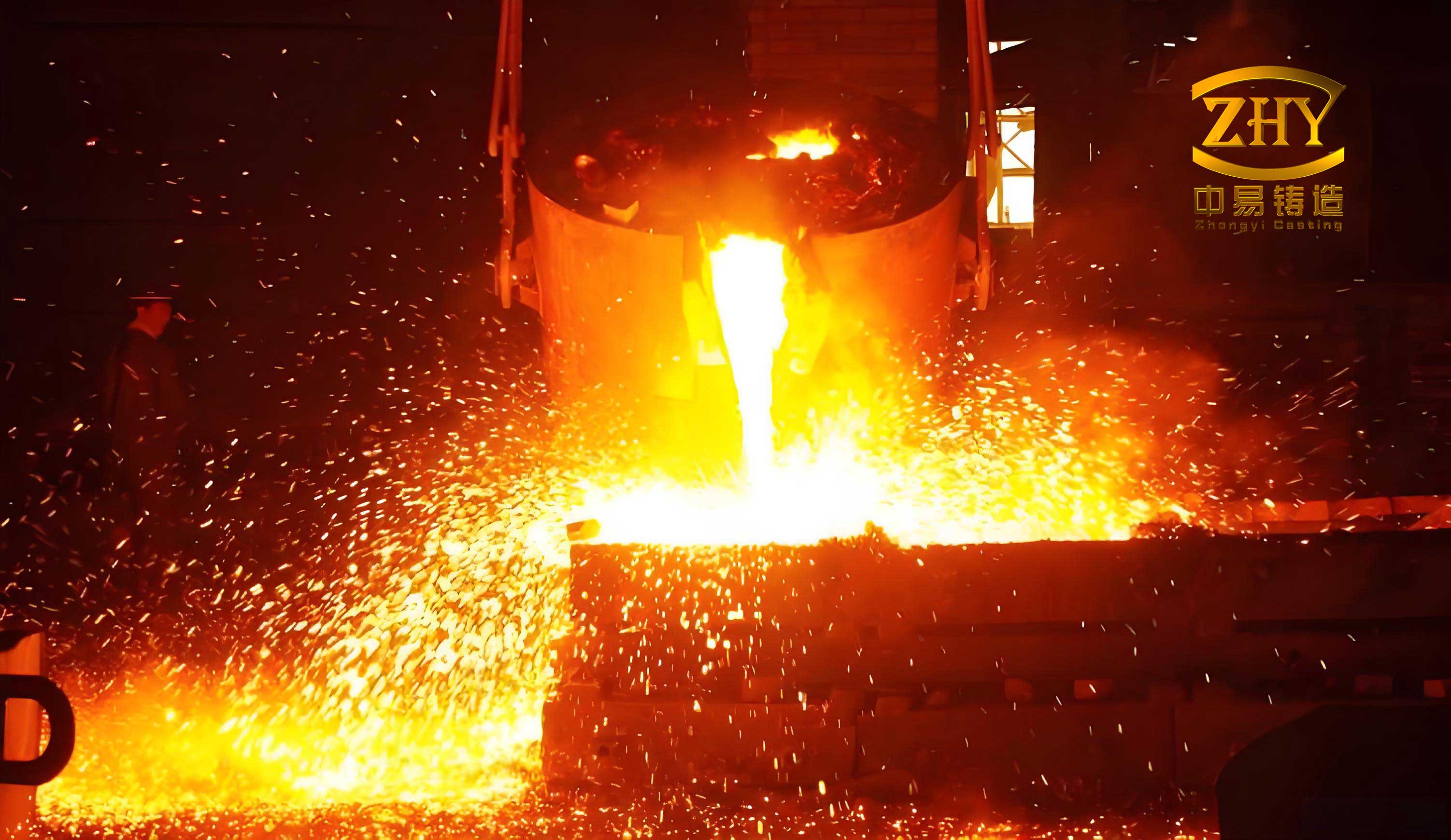
In this investigation, I utilized a continuously cast ductile iron casting of grade QT500-7 with a diameter of 100 mm. Continuous casting was chosen over conventional sand casting to minimize defects like slag inclusions and porosity, which are known to detrimentally affect wear properties. This method also promotes a finer and more uniform distribution of graphite nodules, a key feature for consistent self-lubrication in ductile iron casting. The chemical composition, verified by optical emission spectrometry, was (in wt.%): 3.5 C, 2.4 Si, 0.17 Mn, 0.01 S, 0.05 P, balance Fe. Specimens measuring 20 mm × 10 mm × 70 mm were extracted via wire electrical discharge machining. The core heat treatment involved austenitizing these specimens in a vacuum furnace at three different temperatures: 900°C, 950°C, and 1050°C. All specimens were held at their respective austenitizing temperature for 90 minutes to ensure complete homogenization, a step critical for achieving a consistent austenitic matrix from the ductile iron casting. Subsequently, they were rapidly transferred to a salt bath maintained at 300°C (50% NaNO2 + 50% NaNO3) for isothermal quenching for 90 minutes, followed by air cooling to room temperature.
Metallographic preparation involved standard grinding, polishing, and etching with 4% nital. Microstructural analysis was performed using optical microscopy (OM) and scanning electron microscopy (SEM). I employed image analysis software to quantitatively assess the graphite characteristics—nodule count, size, roundness, and volume fraction—from at least 300 nodules per condition. Phase identification and quantification were achieved through X-ray diffraction (XRD) with a scan range of 35° to 85°. The volume fraction of retained austenite (\(V_\gamma\)) and its carbon content (\(C_\gamma\)) were calculated from the XRD patterns using established methods, such as comparing the integrated intensities of the (200)α, (211)α, (200)γ, (220)γ, and (311)γ peaks. The carbon content in austenite can be estimated from the lattice parameter (\(a_\gamma\)) using the relationship:
$$a_\gamma (\text{in Å}) = 3.578 + 0.033 \times C_\gamma (\text{wt.%})$$
Mechanical properties were evaluated through Vickers hardness tests (9.8 N load, 12 s dwell time) and uniaxial tensile tests. Tribological characterization was conducted using a pin-on-disc tribometer. The ADI specimens acted as the stationary pin, while a tungsten carbide (WC) ball with a hardness of 90 HRA served as the rotating counterface. Tests were run under two applied loads (5 N and 10 N) at a constant sliding speed of 300 rpm for 2000 s, corresponding to a total sliding distance (S) of approximately 500 m. The friction coefficient was recorded in real-time. Post-test, the wear track profiles were analyzed using a 3D optical profilometer to determine the wear volume (V). The specific wear rate (k), a fundamental metric in tribology, was calculated using the Archard-derived formula:
$$k = \frac{V}{F \times S}$$
where F is the applied normal load. This formula succinctly captures the volumetric material loss per unit load and sliding distance. Wear mechanisms were inferred from the examination of wear tracks and debris using SEM and energy-dispersive X-ray spectroscopy (EDS).
Microstructural Evolution with Austenitizing Temperature
The as-received ductile iron casting exhibited a typical ferritic-pearlitic matrix with well-dispersed spheroidal graphite. After the full austempering cycle, the microstructure transformed into the characteristic ausferrite. However, the austenitizing temperature profoundly influenced the final morphology. At 900°C and 950°C, the microstructure consisted of fine, acicular ferrite needles within a continuous matrix of retained austenite, with the graphite nodules evenly distributed. As I increased the austenitizing temperature to 1050°C, the ferrite morphology became noticeably coarser and more elongated, and the amount of blocky, interlath retained austenite significantly increased. This is directly linked to the carbon diffusion from graphite into the austenitic matrix during the high-temperature hold. A higher austenitizing temperature increases the driving force for carbon dissolution, leading to an austenite phase with higher overall carbon content prior to the isothermal quench.
The quantitative data on graphite and matrix phases are summarized in Table 1. The nodule count and graphite volume fraction decreased systematically with increasing austenitizing temperature. This confirms the dissolution of smaller graphite nodules and the outward diffusion of carbon into the matrix, a process intrinsic to the heat treatment of ductile iron casting. The roundness of the graphite remained high (>0.8) across all conditions, indicating that the spheroidal shape was preserved. The XRD analysis revealed a clear trend: the volume fraction of retained austenite increased from approximately 30% at 900°C to over 45% at 1050°C. Concurrently, the carbon content in this retained austenite rose to nearly 1.9 wt.% at the highest temperature. This high-carbon austenite possesses greater thermodynamic stability, which suppresses its decomposition during isothermal holding and cooling, leading to a larger fraction retained at room temperature.
| Austenitizing Temperature (°C) | Graphite Nodule Density (nodules/mm²) | Graphite Volume Fraction (%) | Graphite Roundness (0-1) | Retained Austenite Volume Fraction, \(V_\gamma\) (%) | Carbon in Austenite, \(C_\gamma\) (wt.%) | Estimated Matrix Carbon Content (wt.%) |
|---|---|---|---|---|---|---|
| 900 | ~500 | ~10.5 | 0.82 | 30 ± 2 | 1.65 ± 0.05 | 0.50 ± 0.02 |
| 950 | 462 | 9.2 | 0.81 | 34 ± 2 | 1.75 ± 0.05 | 0.60 ± 0.02 |
| 1050 | 337 | 7.2 | 0.80 | 45 ± 3 | 1.90 ± 0.05 | 0.86 ± 0.03 |
The transformation kinetics during isothermal quenching can be described by the Johnson-Mehl-Avrami-Kolmogorov (JMAK) equation, which relates the transformed fraction (X) to time (t):
$$X(t) = 1 – \exp(-k t^n)$$
where k is a rate constant and n is the Avrami exponent. The higher carbon content in austenite at elevated austenitizing temperatures decreases the driving force for the nucleation of bainitic ferrite (the first stage of the austempering reaction). This effectively reduces the nucleation rate constant (k), leading to fewer ferrite nucleation sites. Consequently, the ferrite that does form grows to a larger size, resulting in the observed coarser, more elongated morphology and larger pools of untransformed, carbon-enriched austenite. This microstructural tailoring is a direct consequence of manipulating the initial state of the ductile iron casting through austenitization.
Mechanical Properties: Hardness, Strength, and Ductility
The changes in microstructure directly translated to significant variations in mechanical properties, as detailed in Table 2. Hardness, yield strength (YS), ultimate tensile strength (UTS), and elongation all exhibited a decreasing trend with increasing austenitizing temperature. The specimen austenitized at 950°C presented an optimal balance, with a hardness of about 508 HV, a YS of 1084 MPa, a UTS of 1354 MPa, and an elongation of 3.2%. In contrast, the specimen treated at 1050°C showed a marked drop in all these properties, with hardness around 433 HV, YS of 835 MPa, UTS of 1028 MPa, and elongation barely reaching 1.5%.
| Austenitizing Temperature (°C) | Vickers Hardness (HV) | Yield Strength, YS (MPa) | Ultimate Tensile Strength, UTS (MPa) | Elongation (%) | Tensile Toughness (Approx. MJ/m³) |
|---|---|---|---|---|---|
| 900 | 525 ± 10 | 1120 ± 20 | 1400 ± 25 | 3.8 ± 0.3 | ~42 |
| 950 | 508 ± 8 | 1084 ± 15 | 1354 ± 20 | 3.2 ± 0.3 | ~38 |
| 1050 | 433 ± 12 | 835 ± 20 | 1028 ± 25 | 1.5 ± 0.2 | ~13 |
The decline in hardness and strength is primarily attributed to two factors: the coarsening of the ferrite phase and the increased volume fraction of soft, retained austenite. The relationship between flow stress (\(\sigma\)) and microstructural parameters can be approximated by Hall-Petch and mixture rule considerations:
$$\sigma_y \approx \sigma_0 + k_y d^{-1/2}$$
where \(\sigma_0\) is the lattice friction stress, \(k_y\) is the strengthening coefficient, and \(d\) is the ferrite grain or sub-grain size. The coarser ferrite laths at high austenitizing temperatures correspond to a larger effective \(d\), reducing the contribution of boundary strengthening. Furthermore, the composite strength of the ADI matrix, considering the softer austenite (\(\sigma_\gamma\)) and harder ferrite (\(\sigma_\alpha\)), can be modeled using a rule of mixtures for a dual-phase material:
$$\sigma_{matrix} \approx V_\gamma \sigma_\gamma + (1 – V_\gamma) \sigma_\alpha$$
As \(V_\gamma\) increases and \(\sigma_\gamma\) remains relatively low due to its high carbon content and FCC structure, the overall matrix strength decreases. The drastic loss in ductility (elongation) at 1050°C is particularly noteworthy. While retained austenite is often associated with improved toughness and ductility via the transformation-induced plasticity (TRIP) effect, this benefit is contingent upon its ability to transform under strain. The very high carbon content (>1.9 wt.%) in the austenite of the 1050°C specimen significantly raises its martensite start temperature (\(M_s\)) to below room temperature and increases its mechanical stability. Consequently, during tensile testing, this stable austenite does not readily transform to martensite to accommodate plastic strain, leading to early void formation and fracture, often initiating at the interfaces between the large blocky austenite regions and the ferrite. This highlights a critical trade-off in the heat treatment of ductile iron casting: achieving high austenite content does not automatically confer better ductility if that austenite is too stable.
Friction and Wear Behavior: A Dual-Load Analysis
The tribological performance of these ADI variants was evaluated under two distinct loads to simulate different severity conditions. The evolution of the friction coefficient over time showed a typical run-in period followed by a steady-state regime. The steady-state friction coefficients and calculated specific wear rates are consolidated in Table 3.
| Austenitizing Temp. (°C) | Steady-State Friction Coefficient (μ) | Specific Wear Rate, k (10⁻⁶ mm³/N·m) | ||
|---|---|---|---|---|
| 5 N Load | 10 N Load | 5 N Load | 10 N Load | |
| 900 | 0.52 ± 0.03 | 0.38 ± 0.02 | 4.8 ± 0.3 | 3.1 ± 0.2 |
| 950 | 0.48 ± 0.03 | 0.35 ± 0.02 | 4.5 ± 0.3 | 2.5 ± 0.2 |
| 1050 | 0.45 ± 0.03 | 0.42 ± 0.03 | 4.6 ± 0.3 | 5.8 ± 0.4 |
Under the lower load (5 N), an interesting trend emerged. The friction coefficient decreased slightly with increasing austenitizing temperature. I attribute this to the lower hardness of the specimens treated at higher temperatures. A softer matrix in a ductile iron casting is more easily penetrated and plowed by the hard counterface, but it also allows for easier smearing and spreading of the graphite nodules that are exuded onto the wear track. This graphite acts as a solid lubricant, forming a tribofilm that reduces metal-to-metal contact and lowers friction. Therefore, at 5 N, the benefit of slightly better graphite film formation for the 1050°C sample marginally outweighed its plowing resistance drawback, resulting in the lowest friction coefficient (0.45). The wear rates at 5 N were very similar for all three conditions (around 4.6 x 10⁻⁶ mm³/N·m), suggesting a complex interplay where the lower friction of the 1050°C sample compensated for its lower hardness in the wear equation.
The scenario changed markedly under the higher load (10 N). Here, the 950°C specimen exhibited the best overall tribological performance: the lowest friction coefficient (0.35) and the lowest wear rate (2.5 x 10⁻⁶ mm³/N·m). The 1050°C specimen, despite its initially promising low-friction behavior at 5 N, performed poorly at 10 N, showing the highest friction (0.42) and a wear rate more than double that of the 950°C sample. This inversion is critical for applications of ductile iron casting under significant contact stresses.
The underlying mechanisms become clear upon examining the wear tracks and debris. For all specimens, the primary wear mechanisms identified were abrasive grooving (micro-plowing) and adhesive wear (material transfer). However, the severity and ancillary processes differed. The wear tracks on the 950°C specimen under 10 N load were relatively smooth with clear evidence of a compacted graphite-rich layer. The higher hardness of this specimen provided better resistance to penetration and plastic deformation. The sufficient but not excessive amount of retained austenite (34%) was mechanically metastable. During the repetitive stress cycles of sliding, this austenite underwent a stress-induced transformation to martensite, a phenomenon confirmed by XRD analysis of the wear track surface which showed a measurable decrease in the austenite peak intensity. This transformation hardens the near-surface region, creating a “white etching layer” that resists further wear, effectively implementing an in-situ surface hardening mechanism. The wear rate can thus be seen as a competition between material removal and surface hardening. The modified Archard equation can conceptually incorporate this:
$$k \propto \frac{1}{H_{eff}} \times \mu_{eff}$$
where \(H_{eff}\) is the effective, potentially evolving surface hardness and \(\mu_{eff}\) is the effective friction coefficient influenced by lubrication.
In contrast, the wear tracks on the 1050°C specimen under 10 N load were wider, deeper, and featured more adhered debris and oxides. EDS analysis confirmed these debris particles were rich in iron and oxygen, indicating severe oxidative wear. The soft matrix (433 HV) underwent extensive plastic deformation and fragmentation. The graphite, while present, was less effective because the severely deformed matrix continuously generated fresh metal debris that mixed with and disrupted the lubricating graphite film. Most importantly, the high-carbon retained austenite (45% at ~1.9 wt.% C) was too stable to undergo significant stress-induced transformation. XRD of its wear track showed less than a 10% reduction in austenite content. Therefore, the beneficial TRIP hardening effect was largely absent. The lack of in-situ hardening, combined with high material removal due to low hardness, led to rapid wear. Furthermore, the hard oxide debris particles acted as third-body abrasives, accelerating the wear process in a feedback loop, which explains the higher friction coefficient as well.
Discussion: Optimizing Ductile Iron Casting for Wear Resistance
The findings from this study underscore that the austenitizing temperature is a powerful lever for tailoring the wear performance of ADI, a premier grade of ductile iron casting. It controls a chain of events: carbon uptake by austenite → austenite stability → ausferrite morphology → mechanical properties → tribological response. The quest for optimal wear resistance is not merely about maximizing hardness or austenite content; it is about engineering a microstructure that can adapt to the tribological stress state.
For the ductile iron casting studied, an austenitizing temperature of 950°C emerged as the most favorable compromise. It produced a microstructure with a fine, interlocking ausferrite that provided high base strength and hardness. The retained austenite was present in a moderate amount (34%) with a carbon content (~1.75 wt.%) that rendered it metastable—sufficiently stable to survive quenching but unstable enough to transform under the applied stresses of wear. This transformation provides several benefits: 1) It consumes energy, thereby improving wear resistance, 2) It increases surface hardness locally, reducing further plastic deformation, and 3) The volume expansion associated with the martensitic transformation can induce compressive stresses, potentially closing micro-cracks. The graphite nodules, still plentiful at this temperature, effectively smeared to form a lubricating film, especially under higher loads where contact pressures force their involvement.
Austenitizing at 900°C yielded higher hardness and strength but slightly less austenite. While its wear performance was good, the marginally lower austenite content might limit the potential for TRIP-assisted toughening under very high stress or impact wear conditions. Conversely, austenitizing at 1050°C, though sometimes considered to maximize austenite for ductility, proved detrimental for both mechanical and tribological properties in this context. It created a coarse, soft microstructure with overly stable austenite that is ineffective for the TRIP effect under sliding wear. This is a crucial insight for designers specifying heat treatment for wear-prone components made from ductile iron casting.
The broader implication for the science of ductile iron casting is that heat treatment windows must be defined with the specific service condition in mind. For pure abrasive wear with minimal impact, a lower austenitizing temperature (leading to higher hardness) might be preferred. For complex wear involving adhesion, fatigue, and higher contact stresses, the adaptive capability provided by transformable austenite becomes vital, pointing to an intermediate austenitizing range. The precise optimal temperature will depend on the specific chemistry of the ductile iron casting, particularly its silicon and manganese content, which influence carbon activity and austenite stability.
Further research could explore the synergy between austenitizing temperature and isothermal quenching temperature/time. Modeling the phase transformation kinetics using thermodynamics (e.g., CALPHAD approach) and linking it to mechanical response via microstructure-based constitutive equations would be a valuable advancement. The governing equation for the growth of bainitic ferrite, considering carbon diffusion, can be expressed as:
$$v = \frac{D_C}{C_{\gamma \alpha} – C_0} \cdot \frac{dC}{dx}$$
where \(v\) is the interface velocity, \(D_C\) is the carbon diffusivity in austenite, \(C_{\gamma \alpha}\) is the carbon concentration in austenite at the ferrite/austenite interface, \(C_0\) is the initial carbon content in austenite, and \(dC/dx\) is the carbon gradient. A higher \(C_0\) (from high austenitizing temperature) reduces the driving force (\(C_{\gamma \alpha} – C_0\)), slowing \(v\) and leading to coarser ferrite, as observed.
Conclusion
Through this detailed investigation into the role of austenitizing temperature on the properties of austempered ductile iron, I have established clear process-microstructure-property-performance linkages. The process of ductile iron casting provides an excellent starting material, but its final destiny is shaped by heat treatment. Increasing the austenitizing temperature from 900°C to 1050°C promotes carbon dissolution from graphite, resulting in austenite with higher carbon content and stability. This leads to a coarser ausferrite, a greater fraction of blocky retained austenite, and a consequent decline in hardness, strength, and ductility. Tribologically, while a lower hardness can aid graphite film formation and reduce friction under mild loads, it becomes a severe disadvantage under higher loads where plastic deformation and debris generation dominate. The key finding is that the high-carbon retained austenite resulting from high-temperature austenitization is too mechanically stable to undergo stress-induced martensitic transformation during wear, thereby nullifying a crucial wear-resistance mechanism inherent to ADI.
Therefore, for components manufactured via ductile iron casting and destined for demanding wear applications, the austenitizing temperature should be carefully controlled. Based on the evidence presented, a temperature of 950°C or lower is recommended to achieve a microstructure that balances adequate hardness with the presence of mechanically metastable retained austenite. This combination ensures good resistance to plastic deformation, effective solid lubrication from graphite, and the adaptive, in-situ surface hardening provided by the TRIP effect. This optimization strategy enhances the longevity and reliability of parts made from this versatile and cost-effective material, solidifying the position of ductile iron casting as a cornerstone for durable engineering components.