
In the field of advanced materials, ductile iron casting has emerged as a critical technology due to its excellent combination of strength, ductility, and wear resistance. Among its variants, austempered ductile iron (ADI), developed in the mid-20th century, stands out for its superior mechanical properties, making it a promising material for various industrial applications such as gears, crankshafts, and wear-resistant components. This article, from my perspective as a researcher, delves into the influence of austempering process parameters—specifically temperature—on the microstructure, mechanical properties, and wear behavior of ADI. By conducting a series of experiments, we aim to provide insights into optimizing ductile iron casting processes for enhanced performance. The significance of this study lies in its potential to guide the selection of heat treatment conditions for ADI components subjected to sliding and rolling wear, thereby improving longevity and efficiency in machinery.
Ductile iron casting involves the production of iron alloys with spherical graphite nodules, which impart high toughness and fatigue resistance. The austempering process, a key heat treatment step, transforms the matrix structure of ductile iron casting into a unique combination of bainitic ferrite and retained austenite, leading to the renowned properties of ADI. This microstructure not only provides high strength and hardness but also contributes to strain hardening and self-lubrication during wear, making ADI ideal for demanding environments. In this work, we focus on varying the austempering temperature to understand its impact on ADI characteristics, with an emphasis on wear mechanisms that govern material loss in service. The findings will be presented through detailed analyses, including microstructural observations, hardness measurements, wear rate calculations, and friction coefficient assessments, all supported by tables and mathematical formulas to summarize data effectively.
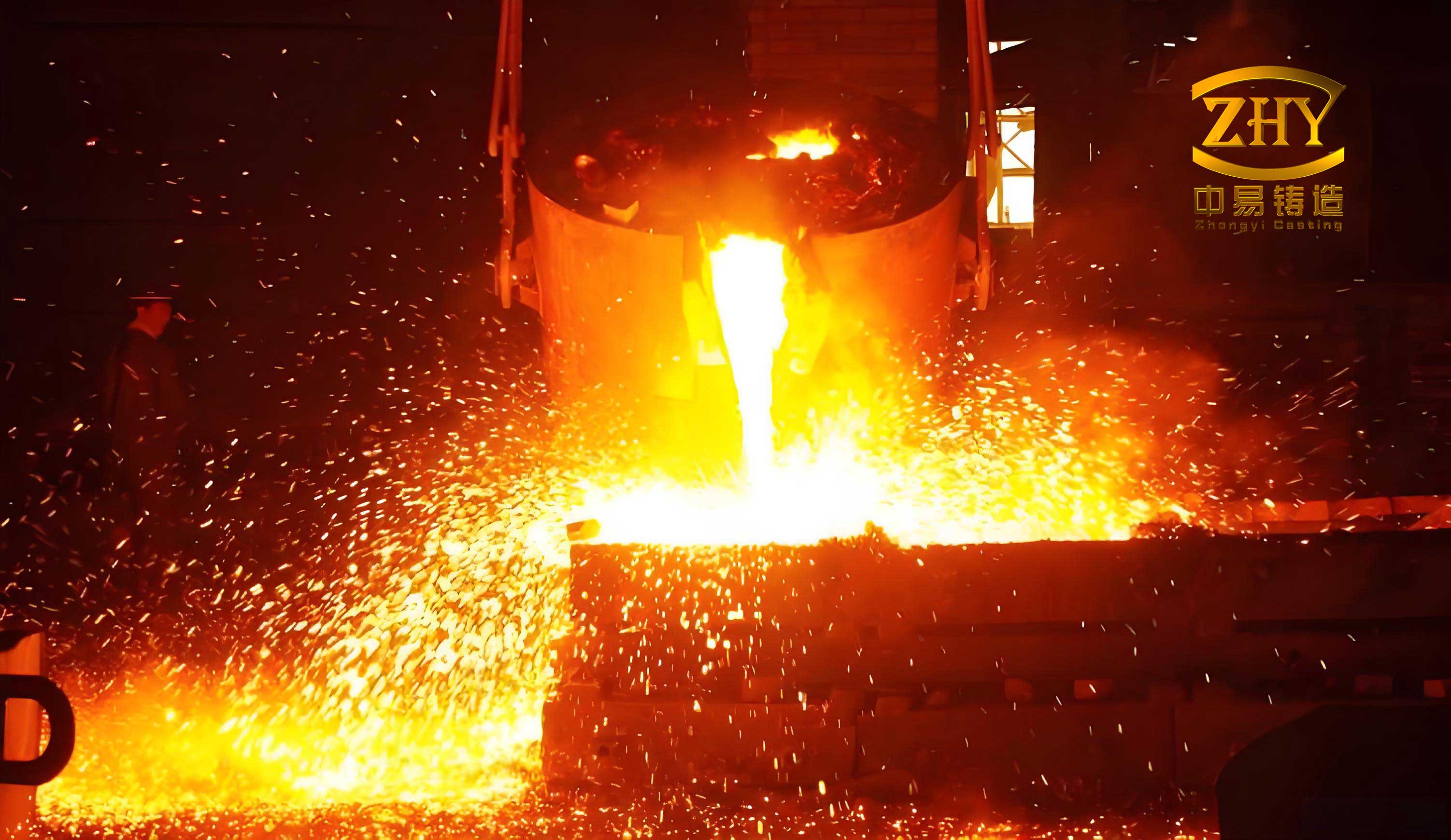
The experimental setup for this study began with the preparation of ductile iron casting samples. The raw materials included pig iron, recycled scrap, steel waste, and alloying elements like molybdenum and copper. Melting was carried out in a medium-frequency induction furnace, with the molten iron maintained at a temperature of approximately 1440°C. For nodularization, a rare-earth magnesium-silicon agent (FeSiMg8Re7) was used via a covered ladle process, followed by inoculation with FeSi75 to promote graphite nucleation. The casting was poured into standard Y-shaped molds at 1350°C, resulting in specimens for subsequent heat treatment. Chemical composition analysis, performed using optical emission spectroscopy, confirmed the following weight percentages: 3.6% C, 2.4% Si, 0.4% Mn, 0.8% Cu, 0.015% S, 0.04% Mg, 0.05% P, 0.1% Mo, and balance Fe. This composition ensures a high-quality ductile iron casting base for austempering.
The heat treatment process involved austenitizing the ductile iron casting samples at 900°C for 90 minutes in a box-type resistance furnace, followed by rapid transfer to a salt bath furnace for austempering. The salt bath consisted of a 50% KNO3 and 50% NaNO2 mixture, maintained at precise temperatures of 290°C, 320°C, 350°C, and 380°C, each held for 90 minutes before air cooling. The transfer time was kept under 5 seconds to minimize temperature fluctuations, and the salt bath temperature was controlled within ±5°C to ensure consistency. This austempering treatment is crucial for developing the desired ADI microstructure in ductile iron casting, as it allows for the isothermal transformation of austenite into bainite and retained austenite.
To evaluate wear resistance, sliding friction tests were conducted using an MMW-1 vertical universal friction and wear testing machine. The ADI samples were machined into cylindrical pins with dimensions of φ4.8 mm × 12.7 mm, while a quenched 45 steel disc (hardness 52–55 HRC) served as the counterface. The test parameters included a load of 150 N, rotational speed of 200 rpm, duration of 3600 s, ambient temperature of 22°C, and humidity of 60–70% RH. Wear rate was calculated based on mass loss, using the formula: $$ \nu = \frac{m_2 – m_1}{l} $$ where \( \nu \) is the wear rate in mg/m, \( m_1 \) and \( m_2 \) are the initial and final masses in mg, respectively, and \( l \) is the sliding distance in meters. This equation provides a quantitative measure of the durability of ductile iron casting under wear conditions.
Microstructural analysis was performed on polished and etched samples using optical microscopy. Hardness measurements were taken with a micro-Vickers hardness tester under a load of 980 N for 15 s, and retained austenite content was determined via X-ray diffraction (XRD) with MDI Jade software, employing the direct comparison method using γ(220) and α(200) peaks. The wear surface morphology was examined using scanning electron microscopy (SEM), and energy-dispersive spectroscopy (EDS) was utilized to analyze chemical composition changes. These techniques allowed for a comprehensive understanding of how austempering temperature affects ductile iron casting properties.
The microstructure of ADI, as observed under different austempering temperatures, revealed significant variations. At 290°C, the matrix consisted of fine acicular lower bainite and a small amount of retained austenite, characteristic of high-hardness ductile iron casting. As the temperature increased to 320°C, the bainite structure coarsened slightly, with more retained austenite present. At 350°C, the transformation led to feathery upper bainite, and at 380°C, the microstructure became predominantly coarse upper bainite with a substantial volume of retained austenite. This evolution is summarized in Table 1, which correlates austempering temperature with microstructural features and hardness. The table highlights that ductile iron casting treated at lower temperatures exhibits finer structures, contributing to enhanced mechanical performance.
| Austempering Temperature (°C) | Microstructure Description | Retained Austenite Content (%) | Hardness (HV100) |
|---|---|---|---|
| 290 | Fine acicular lower bainite with minor retained austenite | 26.4 | 435.6 |
| 320 | Coarsened bainite with increased retained austenite | 30.1 | 385.2 |
| 350 | Feathery upper bainite with significant retained austenite | 34.8 | 332.7 |
| 380 | Coarse upper bainite with high retained austenite | 38.6 | 288.1 |
The relationship between austempering temperature and hardness can be expressed mathematically. Hardness (H) decreases exponentially with increasing temperature (T), which can be modeled as: $$ H = H_0 e^{-kT} $$ where \( H_0 \) is the initial hardness at a reference temperature, and \( k \) is a material constant. For ductile iron casting, this trend underscores the trade-off between hardness and toughness, as higher temperatures promote softer but more ductile microstructures. Similarly, the retained austenite content (γ) increases linearly with temperature, approximated by: $$ \gamma = \gamma_0 + \alpha T $$ where \( \gamma_0 \) is the base content and \( \alpha \) is the coefficient of thermal expansion for austenite formation. These formulas help quantify the effects of heat treatment on ductile iron casting properties.
Wear performance of ADI was evaluated through wear rate measurements, as shown in Table 2. The wear rate increased progressively with austempering temperature, indicating reduced wear resistance. At 290°C, the wear rate was minimal at \( 2.64 \times 10^{-3} \) mg/m, while at 380°C, it peaked at \( 3.34 \times 10^{-3} \) mg/m. This correlation aligns with the hardness data, as lower hardness at higher temperatures facilitates greater material removal during sliding. The wear rate (ν) can be related to hardness (H) through an inverse power law: $$ \nu = \beta H^{-\eta} $$ where \( \beta \) and \( \eta \) are constants dependent on test conditions. This equation emphasizes the importance of maintaining high hardness in ductile iron casting for wear-prone applications.
| Austempering Temperature (°C) | Wear Rate (mg/m) | Steady-State Friction Coefficient (μ) | Wear Mechanisms Identified |
|---|---|---|---|
| 290 | 2.64 × 10⁻³ | 0.806 | Micro-cutting wear, oxidation exfoliation |
| 320 | 2.89 × 10⁻³ | 0.711 | Micro-cutting wear, oxidation exfoliation, furrowing |
| 350 | 3.12 × 10⁻³ | 0.698 | Micro-cutting wear, furrowing, minor oxidation |
| 380 | 3.34 × 10⁻³ | 0.672 | Surface fatigue wear, furrowing |
Friction coefficient analysis revealed that the steady-state friction coefficient decreased with rising austempering temperature, from 0.806 at 290°C to 0.672 at 380°C. This reduction can be attributed to two factors: first, the lower hardness of ductile iron casting at higher temperatures reduces abrasive interactions; second, the increased plasticity allows graphite nodules to exfoliate and act as solid lubricants at the interface. The friction coefficient (μ) can be described by a modified Coulomb’s law: $$ \mu = \frac{F_f}{F_n} $$ where \( F_f \) is the frictional force and \( F_n \) is the normal load. In ductile iron casting, μ is influenced by surface roughness, material properties, and lubrication effects from graphite.
XRD analysis of worn surfaces indicated a significant decrease in retained austenite peaks after wear testing, suggesting strain-induced transformation to martensite. This phase transformation enhances surface hardness through work hardening, as confirmed by post-wear hardness measurements. The hardness increase (ΔH) due to martensite formation can be estimated using: $$ \Delta H = \kappa \cdot \Delta \gamma $$ where \( \kappa \) is a hardening coefficient and \( \Delta \gamma \) is the change in retained austenite content. For ductile iron casting, this self-hardening mechanism improves wear resistance during service, particularly under repetitive loading.
SEM observations of wear surfaces provided insights into the dominant wear mechanisms. At 290°C and 320°C, the surfaces showed smooth regions with shallow grooves and oxidized patches, indicative of micro-cutting and oxidation exfoliation. EDS analysis confirmed high oxygen content (up to 35.5 mass%), supporting the occurrence of oxidative wear. At 350°C, deeper furrows and plastic deformation features were prominent, pointing to micro-cutting and furrowing as primary mechanisms. At 380°C, the surface exhibited fatigue cracks and material spalling, characteristic of surface fatigue wear. These mechanisms are summarized in Table 2, highlighting how austempering temperature shifts wear behavior in ductile iron casting from abrasive to fatigue-dominated modes.
The wear mechanisms can be further explained through mathematical models. For micro-cutting wear, the volume loss (V) per unit distance is given by: $$ V = \frac{K \cdot F_n \cdot d}{H} $$ where K is a wear coefficient, F_n is the normal load, d is the sliding distance, and H is the hardness. Oxidation wear involves the formation of oxide layers, with wear rate dependent on temperature and oxygen diffusion rates. Furrowing wear relates to plastic deformation, modeled using plasticity theory: $$ \varepsilon = \frac{\sigma_y}{E} $$ where ε is strain, σ_y is yield strength, and E is Young’s modulus. Surface fatigue wear involves crack propagation, described by Paris’ law: $$ \frac{da}{dN} = C (\Delta K)^m $$ where da/dN is crack growth rate, ΔK is stress intensity factor range, and C and m are material constants. These equations illustrate the complex interplay of factors in ductile iron casting wear.
In discussion, the results underscore the critical role of austempering temperature in tailoring ADI properties. Lower temperatures (290–320°C) yield fine bainitic structures with high hardness and excellent wear resistance, making them suitable for applications requiring durability against abrasive wear. Higher temperatures (350–380°C) produce coarser structures with increased toughness but reduced wear resistance, ideal for components subjected to impact or fatigue. The transformation of retained austenite to martensite during wear adds a layer of protection, enhancing the longevity of ductile iron casting parts. Compared to conventional ductile iron casting, ADI offers superior performance due to its optimized microstructure, and this study provides a framework for selecting austempering parameters based on service conditions.
From an industrial perspective, the findings have implications for manufacturing processes. For instance, in automotive or machinery sectors, ductile iron casting components like gears or bearings can be heat-treated at specific temperatures to balance hardness and wear resistance. The use of ADI can lead to cost savings by extending component life and reducing maintenance. Future research could explore the effects of other austempering parameters, such as time or cooling rate, or investigate alloying elements like nickel or chromium to further enhance ductile iron casting properties. Additionally, advanced characterization techniques like in-situ wear testing could provide real-time insights into microstructural changes.
In conclusion, this study demonstrates that austempering temperature significantly influences the microstructure, mechanical properties, and wear behavior of austempered ductile iron. As temperature increases from 290°C to 380°C, the microstructure coarsens, retained austenite content rises, hardness declines, wear rate increases, and friction coefficient decreases. Wear mechanisms evolve from micro-cutting and oxidation exfoliation at lower temperatures to surface fatigue and furrowing at higher temperatures. These insights empower engineers to optimize ductile iron casting processes for specific applications, leveraging ADI’s unique combination of strength and wear resistance. By integrating experimental data with mathematical models, we can predict and improve the performance of ductile iron casting in diverse industrial settings, contributing to advancements in material science and engineering.
To encapsulate the key relationships, Table 3 presents a summary of formulas derived from this study, applicable to ductile iron casting analysis. These equations facilitate quantitative assessments of heat treatment effects and wear performance, aiding in the design of durable components.
| Parameter | Formula | Description |
|---|---|---|
| Wear Rate | $$ \nu = \frac{m_2 – m_1}{l} $$ | Calculates mass loss per unit sliding distance |
| Hardness vs. Temperature | $$ H = H_0 e^{-kT} $$ | Exponential decay of hardness with increasing austempering temperature |
| Retained Austenite Content | $$ \gamma = \gamma_0 + \alpha T $$ | Linear increase in retained austenite with temperature |
| Wear Rate vs. Hardness | $$ \nu = \beta H^{-\eta} $$ | Inverse power law relating wear rate to material hardness |
| Friction Coefficient | $$ \mu = \frac{F_f}{F_n} $$ | Basic definition from Coulomb’s law |
| Hardness Increase from Martensite | $$ \Delta H = \kappa \cdot \Delta \gamma $$ | Estimates hardness gain due to strain-induced transformation |
| Micro-Cutting Wear Volume | $$ V = \frac{K \cdot F_n \cdot d}{H} $$ | Models volume loss in abrasive wear scenarios |
| Crack Growth in Fatigue Wear | $$ \frac{da}{dN} = C (\Delta K)^m $$ | Paris’ law for fatigue crack propagation |
Ultimately, the versatility of ductile iron casting is enhanced through controlled austempering, and ADI represents a pinnacle in iron-based material development. By continuing to refine heat treatment protocols and understand wear mechanisms, we can unlock new potentials for ductile iron casting in high-performance applications, driving innovation across industries. This research contributes to that ongoing effort, providing a detailed examination of temperature effects and their practical implications for material scientists and engineers working with advanced ductile iron casting technologies.