
In my research and development work within the foundry industry, addressing the escalating demands for corrosion resistance in industrial components has been a primary focus. Valves, especially butterfly valves deployed in harsh environments such as chemical processing plants, wastewater systems, and seawater-cooled power stations, are particularly susceptible to degradation. While duplex stainless steels offer excellent corrosion resistance, their high cost, lengthy production cycles, and maintenance challenges present significant economic and logistical hurdles for many enterprises. This scenario compelled my team and I to explore alternative materials that combine cost-effectiveness, manufacturability, and superior performance. Our attention turned to ductile iron casting, a material celebrated for its remarkable combination of strength, ductility, and castability. The core objective of this investigation was to develop and optimize a high-performance, low-nickel-chromium (NiCr) alloyed ductile iron casting specifically engineered for butterfly valve bodies and discs, achieving a breakthrough in corrosion resistance without compromising mechanical properties.
The fundamental appeal of ductile iron casting lies in its unique microstructure. Through spheroidization and inoculation treatments, graphite precipitates in a spherical form within the metallic matrix, drastically reducing the stress-concentration effects typical of flake graphite in gray iron. This transformation bestows upon ductile iron casting a mechanical profile often comparable to carbon steel, earning it the moniker of “iron with the nature of steel.” However, for aggressive service environments, the standard ferritic or pearlitic grades of ductile iron casting require enhancement. Corrosion in cast iron primarily proceeds via electrochemical mechanisms, where micro-galvanic cells are established between the graphite nodules (cathodic sites) and the surrounding metal matrix (anodic sites). Improving corrosion resistance, therefore, involves strategies to homogenize the microstructure, elevate the electrochemical potential of the matrix, and promote the formation of stable, protective surface films. Alloying with elements like nickel and chromium offers a potent pathway to achieve these goals, making advanced ductile iron casting a compelling candidate for critical valve applications.
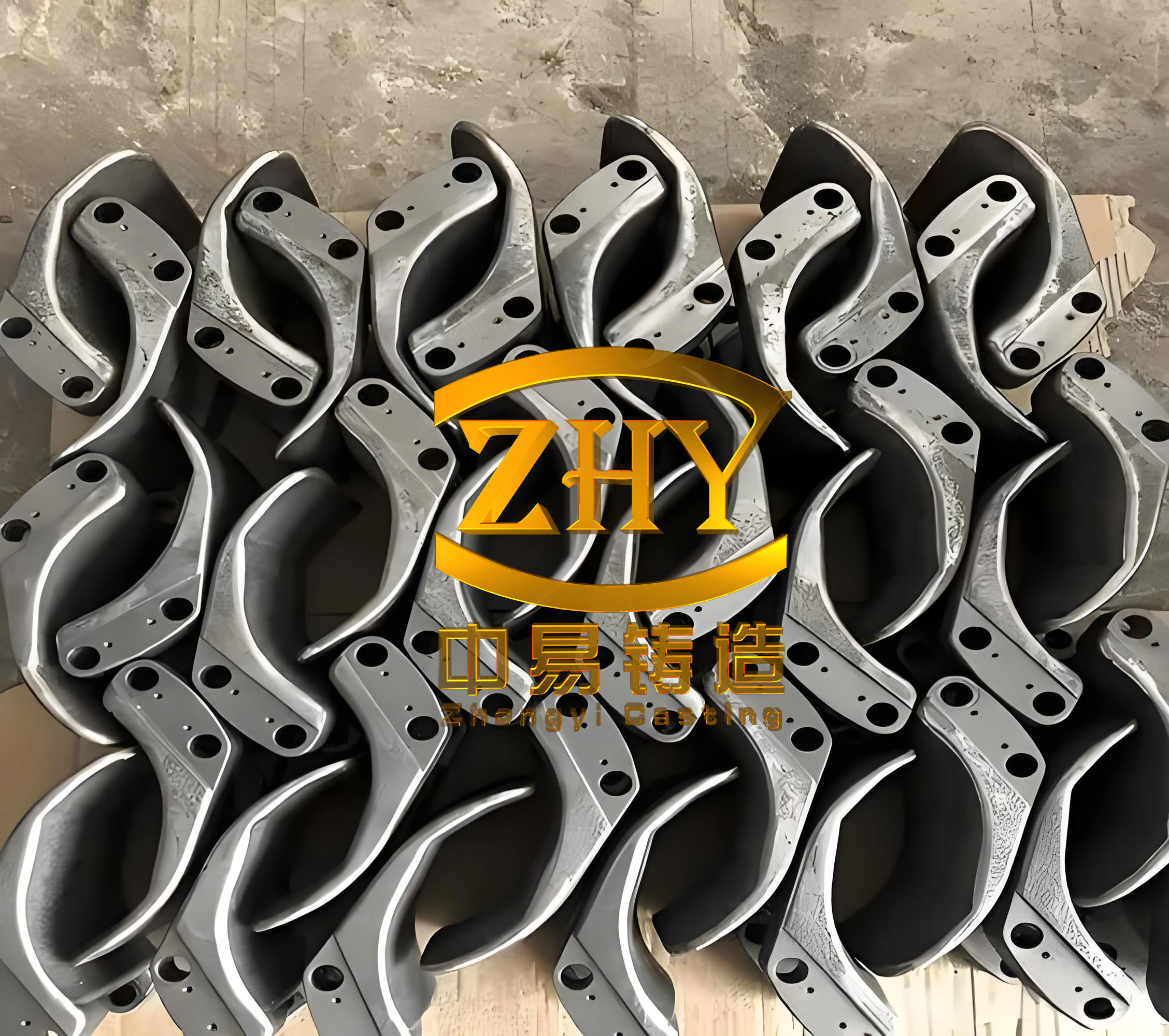
The development program was initiated with a specific product target: large-scale butterfly valve bodies and discs. The castings, with masses approaching 8 tons, substantial wall thicknesses exceeding 60mm, and diameters up to 3400mm, presented a significant metallurgical challenge. The technical requirements were stringent. The material had to be an alloyed ductile iron casting with superior mechanical properties: a minimum tensile strength of 450 MPa, yield strength of 310 MPa, elongation greater than 3%, and a hardness range of 160-260 HB. Metallurgically, the microstructure demanded a graphite spheroidization grade ≥90% (equivalent to 2级), carbide content ≤1%, and a predominantly ferritic matrix. Most critically, the corrosion rate in a 3.5% NaCl solution (simulating seawater) had to be ≤0.25 mm/year. Furthermore, the finished and assembled valve had to withstand a hydrostatic pressure test of 2.4 MPa for 30 minutes without leakage.
The cornerstone of this project was the precise design of the chemical composition for the ductile iron casting. Each element was carefully considered for its role in facilitating solidification, matrix formation, and corrosion inhibition. Carbon and silicon are the primary graphitizing elements. A higher carbon equivalent promotes fluidity and graphite formation but risks graphite flotation. Silicon significantly strengthens ferrite and enhances ductility; however, excessive levels can induce brittleness. Manganese, a pearlite stabilizer, was kept low to minimize segregation at grain boundaries. Phosphorus and sulfur, detrimental to toughness and corrosion resistance, were strictly controlled. The strategic addition of nickel and chromium was pivotal. Nickel, being austenite-stabilizing and having low affinity for carbon, dissolves in the ferrite matrix, refining the microstructure and increasing its electrode potential. It also aids in forming a more adherent passive film. Chromium, a strong carbide former, was added in modest amounts to further elevate the corrosion resistance by contributing to a chromium-rich oxide layer, without forming excessive hard carbides that could impair machinability. The designed composition window is summarized in Table 1.
| Element | Target Range | Key Function in Ductile Iron Casting |
|---|---|---|
| C | 3.4 – 3.8 | Primary graphitizer, ensures fluidity and graphite nodule formation. |
| Si | 2.2 – 2.8 | Promotes ferrite formation, increases yield strength and ductility. |
| Mn | ≤ 0.3 | Minimized to reduce segregation and preserve toughness. |
| P | ≤ 0.04 | Strictly limited to avoid brittle phosphide networks. |
| S | ≤ 0.025 | Minimized to reduce Mg consumption and improve corrosion resistance. |
| Ni | 2.0 – 4.0 | Enhances corrosion resistance, refines matrix, increases electrode potential. |
| Cr | 0.2 – 0.5 | Improves passivation and corrosion resistance via oxide film formation. |
| Mg | 0.03 – 0.06 | Essential for graphite spheroidization in ductile iron casting. |
| RE (Rare Earth) | 0.02 – 0.04 | Aids in spheroidization, controls trace element effects. |
The melting and processing of this specialized ductile iron casting were executed with meticulous control. We employed a medium-frequency induction furnace for melting. The charge consisted of high-purity Q10 pig iron, selected low-sulfur carbon steel scrap, high-carbon graphite recarburizer, electrolytic nickel plates, nickel-iron alloy, and high-carbon ferrochromium. The charging sequence was optimized to ensure efficient dissolution and homogeneity. After the bath reached a temperature of 1400-1430°C, a sample was taken for spectroscopic analysis to fine-tune the alloying elements. The melt was then superheated to 1500-1530°C and held for 5-10 minutes to ensure complete dissolution and homogeneity while reducing gas content.
The pivotal step in producing sound ductile iron casting is the post-inoculation treatment. We utilized the sandwich method within a preheated ladon (300-500°C). A light rare-earth, medium-magnesium ferrosilicon alloy was placed in the well of the ladle as the nodulizing agent, with a addition rate of 1.3-1.6%. Alongside it, a blend of silicon-barium-calcium and 75% ferrosilicon inoculant was added, totaling 1.0-1.3%. When the base iron temperature dropped to 1450-1480°C, it was poured into the ladle to initiate the violent nodulizing reaction. During the pour, additional inoculant was added in stages to enhance the inoculation effect. After treatment, slag was thoroughly removed. To counteract fading, a final stream inoculation was performed during casting at 1350-1380°C using fine-grained (0.2-0.5mm) silicon-barium-calcium inoculant at a rate of 0.13-0.14%. This multi-stage inoculation strategy was crucial for achieving a high nodule count, small graphite size, and a uniform matrix in the final ductile iron casting, directly influencing both mechanical and corrosion properties.
Following casting and fettling, the valve components underwent a critical heat treatment to optimize their microstructure and properties. Given the requirement for good ductility and machinability, a ferritic matrix was desired. We performed a low-temperature graphitizing annealing treatment. The castings were heated to 720±10°C, held for 10-12 hours, and then furnace-cooled. This prolonged annealing allows for the decomposition of any pearlitic carbides and the stabilization of ferrite, resulting in a microstructure comprising over 70% ferrite with the balance being pearlite, while ensuring the carbide content remained below the 1% threshold. This heat treatment is essential for unlocking the full ductility potential of the ductile iron casting.
The evaluation of the developed ductile iron casting commenced with metallographic and mechanical testing on separately cast test blocks. The microstructure, as revealed by optical microscopy, was exemplary. The graphite nodularity consistently exceeded 90%, corresponding to a rating of 2, with a nodule size of grade 6. The matrix was predominantly ferritic with a minimal, well-dispersed pearlite fraction, and carbides were virtually absent. This uniform and controlled microstructure is the foundation for the material’s performance. The mechanical properties derived from tensile and hardness tests are presented in Table 2. The results significantly surpassed the minimum requirements, demonstrating the excellent strength-ductility balance achieved in this NiCr alloyed ductile iron casting. The high elongation value of 16% is particularly noteworthy, indicating superior toughness for a cast material.
| Property | Specification Requirement | Average Test Result |
|---|---|---|
| Yield Strength (Rp0.2) | ≥ 310 MPa | 420 MPa |
| Tensile Strength (Rm) | ≥ 450 MPa | 560 MPa |
| Elongation (A) | ≥ 3% | 16% |
| Hardness (HB) | 160 – 260 | 208 HB |
The paramount validation for this application was the assessment of corrosion resistance. We conducted full-immersion tests according to standard gravimetric methods. Coupons were machined from the test blocks, thoroughly cleaned in acetone, dried, and accurately weighed. They were then fully immersed in a quiescent 3.5% NaCl aqueous solution at ambient temperature. Tests were run for durations of 72 hours and 168 hours using parallel samples to ensure statistical reliability. After exposure, the specimens were cleaned of corrosion products, dried, and re-weighed. The corrosion rate was calculated using the standard formula:
$$ v_{corr} = \frac{K \times \Delta W}{A \times T \times D} $$
where:
- \( v_{corr} \) is the corrosion rate (mm/year),
- \( K \) is a constant (8.76 × 10⁴ for mm/year when \( \Delta W \) is in grams, \( A \) in cm², \( T \) in hours, and \( D \) in g/cm³),
- \( \Delta W \) is the weight loss (g),
- \( A \) is the exposed surface area (cm²),
- \( T \) is the exposure time (hours),
- \( D \) is the density of the ductile iron casting (approximately 7.1 g/cm³).
The detailed results from two separate heats (QT1 and QT2) are consolidated in Table 3. The data reveals exceptional consistency and performance. The average corrosion rate for both time intervals was approximately 0.065 mm/year, which is less than one-fourth of the specified maximum limit of 0.25 mm/year. Statistical analysis (using a simple t-test assumption) confirmed no significant difference (P > 0.05) between the 72-hour and 168-hour rates, indicating the formation of a stable protective layer that effectively stifled further corrosion. The variation between the two production heats was minimal (<5%), underscoring the robustness and reproducibility of the developed process for this ductile iron casting.
| Heat Batch | Sample ID | Exposure Time (h) | Initial Weight (g) | Final Weight (g) | Weight Loss (g) | Corrosion Rate (mm/year) |
|---|---|---|---|---|---|---|
| QT1 | 1 | 72 | 35.6566 | 35.6458 | 0.0108 | 0.066 |
| 2 | 72 | 35.3440 | 35.3327 | 0.0113 | 0.069 | |
| 3 | 72 | 35.4596 | 35.4489 | 0.0107 | 0.066 | |
| 4 | 168 | 34.6551 | 34.6286 | 0.0265 | 0.069 | |
| 5 | 168 | 35.8876 | 35.8618 | 0.0258 | 0.067 | |
| 6 | 168 | 32.7184 | 32.6949 | 0.0235 | 0.062 | |
| QT2 | 1 | 72 | 34.5422 | 34.5319 | 0.0103 | 0.064 |
| 2 | 72 | 35.2375 | 35.2296 | 0.0079 | 0.065 | |
| 3 | 72 | 35.1325 | 35.1219 | 0.0106 | 0.065 | |
| 4 | 168 | 34.7622 | 34.7385 | 0.0237 | 0.063 | |
| 5 | 168 | 35.0206 | 34.9967 | 0.0239 | 0.063 | |
| 6 | 168 | 34.1457 | 34.1221 | 0.0236 | 0.062 | |
| Average Corrosion Rate (All Samples) | 0.065 mm/year | |||||
The success of this NiCr alloyed ductile iron casting can be rationalized through metallurgical principles. The addition of nickel plays a multifaceted role. Firstly, it elevates the corrosion potential of the ferrite matrix, reducing the driving force (potential difference) for the micro-galvanic corrosion between the graphite and the matrix. This effect can be conceptually related to the mixed-potential theory, where the open-circuit potential \( E_{corr} \) of an alloy shifts in the noble direction with alloying. Secondly, nickel promotes the formation of a more stable, adherent, and less porous oxide film on the surface, acting as a physical barrier. Chromium, even in small amounts, significantly contributes to this passivation layer. The protective film is likely a complex mixed oxide of iron, nickel, and chromium, with its stability governed by factors like the Pilling-Bedworth ratio and ionic defect structure. The homogeneity of the ferritic matrix, achieved through careful composition control and annealing, minimizes microstructural heterogeneity, thereby reducing the number of active anodic sites. The spherical graphite morphology inherent to ductile iron casting is also beneficial compared to flake graphite, as it presents a lower surface area for cathodic reactions and less continuity for crack propagation.
From a practical application standpoint, the finished valve components machined without issue, benefiting from the consistent microstructure and hardness of the ductile iron casting. The ultimate validation was the successful hydrostatic pressure test of the fully assembled butterfly valve at the client’s site, where it held 2.4 MPa for 30 minutes with zero leakage. This performance, coupled with the quantitative corrosion data, unequivocally demonstrates that the developed material meets and exceeds the demanding requirements for service in corrosive media.
The economic implications are substantial. Compared to duplex stainless steel valves, the cost of raw materials for this NiCr ductile iron casting is significantly lower—estimated at a fraction of the cost per ton. The production cycle for large, complex castings in ductile iron is generally shorter than the forging and machining cycle for equivalent stainless steel parts. Furthermore, the good machinability and weldability (with appropriate procedures) of this grade of ductile iron casting simplify maintenance and repair operations in the field. This development opens a viable, high-performance alternative for a wide range of corrosion-prone applications beyond butterfly valves, including pump casings, marine hardware, and chemical processing equipment.
In conclusion, this comprehensive research and development effort has successfully yielded a high-performance NiCr alloyed ductile iron casting tailored for severe-service butterfly valves. Through strategic alloy design targeting 2-4% Ni and 0.2-0.5% Cr, meticulous control of melting and inoculation processes to ensure superior graphite morphology, and an optimized low-temperature annealing heat treatment, we achieved an exceptional balance of properties. The resulting ductile iron casting exhibits tensile strength over 550 MPa, elongation around 16%, and, most critically, a corrosion rate in 3.5% NaCl solution of merely 0.065 mm/year. This represents a four-fold improvement over the required threshold. The consistency of results across production heats confirms the robustness of the manufacturing protocol. This advancement not only provides a technically superior and cost-effective solution for the valve industry but also reinforces the potential of engineered ductile iron casting as a versatile material capable of meeting the challenges of modern corrosive environments. The journey of optimizing and applying this ductile iron casting has been a testament to the power of metallurgical science in solving real-world engineering problems.