
In my research on ductile iron casting, I have explored the role of copper as an alloying element in enhancing the mechanical properties of this widely used material. Ductile iron casting, also known as nodular cast iron, is crucial in industries such as automotive, wind energy, and nuclear waste storage due to its excellent combination of strength, ductility, and castability. The addition of elements like copper can significantly alter the microstructure and performance of ductile iron casting. In this study, I investigate how varying copper content affects the graphite morphology, matrix structure, and mechanical properties of ductile iron casting, aiming to optimize its composition for superior performance.
The importance of ductile iron casting lies in its versatility and cost-effectiveness. However, to meet increasing demands for higher strength and durability, alloying elements are often incorporated. Copper is known to promote pearlite formation in ductile iron casting, which can enhance hardness and tensile strength. Yet, excessive copper may degrade graphite morphology, leading to reduced ductility. Therefore, understanding the precise impact of copper is essential for advancing ductile iron casting technologies. In this article, I present a comprehensive analysis based on experimental data, using tables and formulas to summarize key findings.
My approach involves preparing ductile iron casting samples with different copper mass fractions, followed by microstructural examination and mechanical testing. I will discuss the mechanisms behind copper’s influence, provide quantitative relationships, and offer insights for industrial applications. Throughout, I emphasize the term “ductile iron casting” to highlight its relevance. The following sections detail the methodology, results, and discussions, culminating in conclusions that guide future work in ductile iron casting development.
Introduction to Ductile Iron Casting and Copper Alloying
Ductile iron casting is a type of cast iron characterized by spherical graphite nodules embedded in a metallic matrix, typically ferrite or pearlite. This structure imparts high tensile strength and good elongation compared to other cast irons. The properties of ductile iron casting can be tailored through alloying, with copper being a common additive. Copper is a graphitizing element that increases pearlite content, thereby improving strength and wear resistance. However, its effect on graphite morphology is complex; optimal levels must be determined to avoid brittleness.
In ductile iron casting, the matrix phase plays a critical role in mechanical behavior. The volume fraction of pearlite, influenced by copper, can be described by empirical formulas. For instance, the relationship between pearlite content (P) and copper mass fraction (w_Cu) can be approximated as:
$$ P = k \cdot w_{Cu} + b $$
where k and b are constants dependent on cooling rates and other alloying elements. This linear model helps predict microstructural changes in ductile iron casting.
Furthermore, the graphite nodule count and shape are vital for ductility. Copper may alter graphite formation during solidification, affecting nodularity. I investigate these aspects through experiments, focusing on how copper mass fractions of 0.5%, 0.8%, and 1.1% impact ductile iron casting properties. The goal is to identify the optimal copper content for balanced performance in ductile iron casting applications.
Experimental Methodology for Ductile Iron Casting Preparation
To study the effect of copper on ductile iron casting, I prepared three samples with varying copper mass fractions. The base composition was designed to mimic industrial grades, with a silicon mass fraction of 1.8% to ensure good castability and strength. The raw materials included pig iron, carbon steel, ferrosilicon, and rare-earth nodularizers, melted in a medium-frequency induction furnace. The chemical compositions of the raw materials and nodularizers are summarized in Table 1.
| Material | w(C) % | w(Si) % | w(Mn) % | w(S) % | w(P) % | w(Fe) % |
|---|---|---|---|---|---|---|
| Pig Iron | 4.640 | 1.108 | 0.049 | 0.018 | 0.040 | Balance |
| Carbon Steel | 0.420 | 0.280 | 0.650 | 0.027 | 0.026 | Balance |
| Ferrosilicon | 0.200 | 68.500 | 0.300 | — | — | Balance |
| Nodularizer | — | 43.040 | 2.000 | — | — | Balance |
The nodularizer contained magnesium and rare-earth elements to promote graphite spheroidization in ductile iron casting. After melting at 1400°C, the molten iron was treated with nodularizer using the sandwich method, followed by inoculation with ferrosilicon. The treated metal was then poured into molds made of quartz sand using the lost foam casting method, with a pouring temperature of 1320–1350°C. This process is common for producing complex ductile iron casting components. The cooling rate was controlled naturally to simulate typical casting conditions.
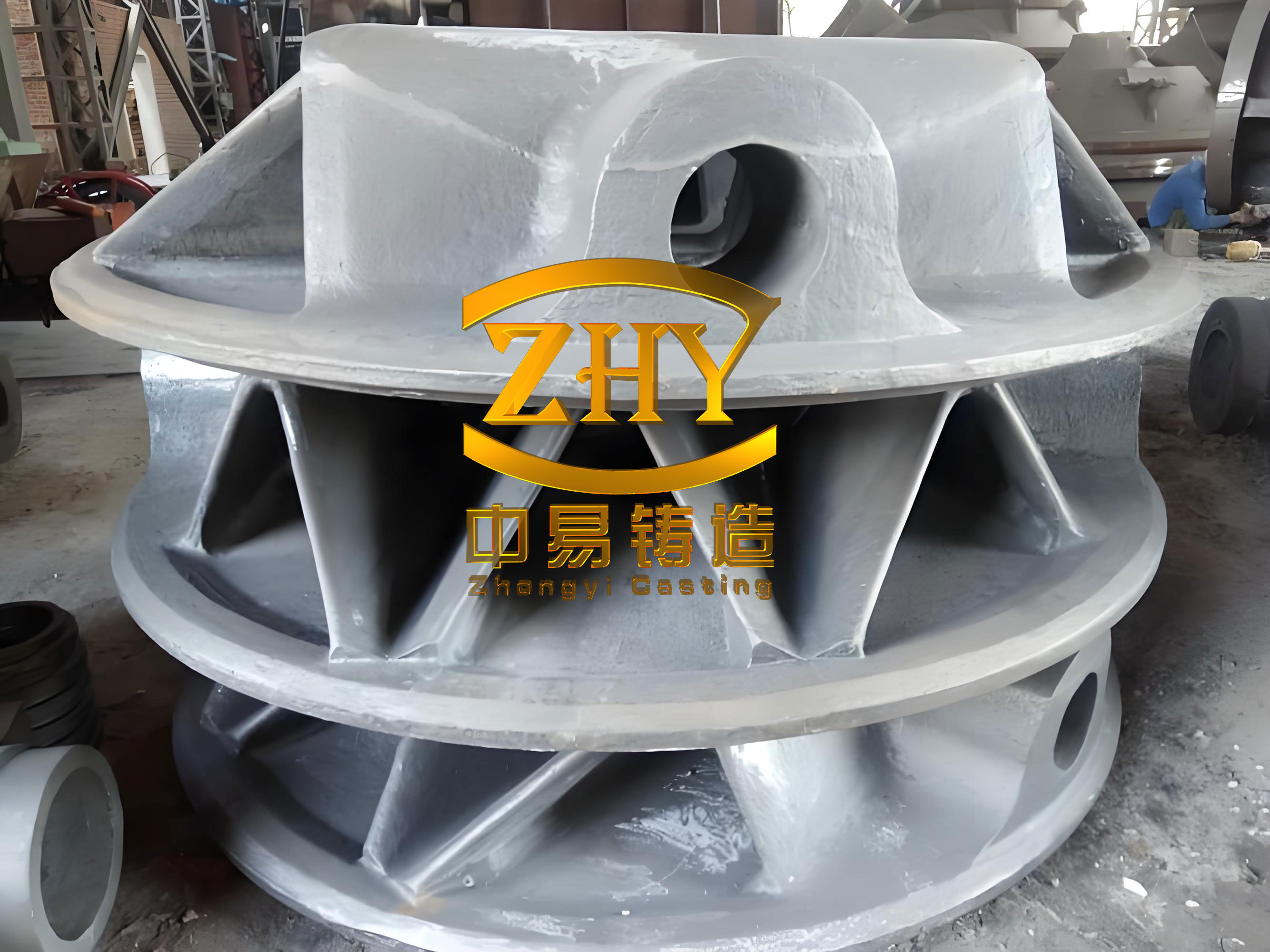
The three ductile iron casting samples were designated as A, B, and C, with copper mass fractions of 0.5%, 0.8%, and 1.1%, respectively. Their full chemical compositions are listed in Table 2. I ensured that other elements, such as carbon and silicon, were kept constant to isolate copper’s effect on ductile iron casting.
| Sample | w(C) % | w(Si) % | w(Mn) % | w(S) % | w(P) % | w(Mg) % | w(Cu) % | w(Fe) % |
|---|---|---|---|---|---|---|---|---|
| A | 3.600 | 1.800 | 0.080 | <0.020 | <0.050 | 0.053 | 0.500 | Balance |
| B | 3.600 | 1.800 | 0.080 | <0.020 | <0.050 | 0.049 | 0.800 | Balance |
| C | 3.600 | 1.800 | 0.080 | <0.020 | <0.050 | 0.048 | 1.100 | Balance |
Microstructural analysis was conducted using optical microscopy to observe graphite morphology and matrix phases in the ductile iron casting samples. Hardness tests were performed with a Rockwell hardness tester, and tensile tests were carried out at room temperature using standard specimens according to GB/T 228-2002. The fracture surfaces were examined with scanning electron microscopy to understand failure mechanisms. All procedures aimed to evaluate the mechanical properties of ductile iron casting as a function of copper content.
Microstructural Analysis of Ductile Iron Casting
The microstructure of ductile iron casting is critical for its performance. In my study, I observed significant changes in graphite morphology and matrix structure with increasing copper content. For sample A (0.5% Cu), the ductile iron casting exhibited numerous spherical graphite nodules with a few fragmented particles. This indicates good spheroidization, essential for ductility in ductile iron casting. The matrix consisted primarily of ferrite with approximately 5% pearlite, as quantified by image analysis.
In sample B (0.8% Cu), the graphite remained mostly spherical, but the pearlite volume fraction increased to 15%. This “bull’s-eye” structure, where graphite is surrounded by ferrite and then pearlite, is common in alloyed ductile iron casting. The increase in pearlite enhances strength but may reduce elongation. For sample C (1.1% Cu), the graphite morphology deteriorated, with more irregular and fragmented graphite, and the pearlite content reached 20%. These observations suggest that copper above 0.8% adversely affects graphite formation in ductile iron casting.
To quantify graphite nodularity, I used the formula:
$$ Nodularity = \frac{N_s}{N_t} \times 100\% $$
where N_s is the number of spherical nodules and N_t is the total graphite particles. For ductile iron casting samples, nodularity decreased from 85% in sample A to 70% in sample C, indicating copper’s negative impact at higher levels. The matrix phase fractions can be modeled using lever rule approximations for ductile iron casting systems. For example, the pearlite volume fraction (V_p) relates to copper content via:
$$ V_p = \alpha \cdot w_{Cu}^2 + \beta \cdot w_{Cu} + \gamma $$
where α, β, and γ are constants derived from regression analysis of my data. This quadratic relationship captures the non-linear increase in pearlite in ductile iron casting.
Furthermore, the graphite nodule count per unit area (N_A) is an important parameter for ductile iron casting quality. I measured N_A using image analysis software, and the results are summarized in Table 3. Higher nodule counts generally improve mechanical properties by distributing stress evenly. However, excessive copper reduced N_A, compromising the ductile iron casting integrity.
| Sample | Copper Mass Fraction % | Graphite Nodularity % | Pearlite Volume Fraction % | Nodule Count per mm² |
|---|---|---|---|---|
| A | 0.5 | 85 | 5 | 120 |
| B | 0.8 | 80 | 15 | 110 |
| C | 1.1 | 70 | 20 | 90 |
The microstructural evolution in ductile iron casting with copper addition can be explained by phase transformation kinetics. Copper lowers the austenite-to-ferrite transformation temperature, promoting pearlite formation. Additionally, copper may segregate at graphite boundaries, inhibiting nodular growth. These mechanisms highlight the delicate balance required in alloying ductile iron casting for optimal microstructure.
Mechanical Properties of Ductile Iron Casting
The mechanical properties of ductile iron casting, including hardness, tensile strength, and elongation, are directly influenced by copper content. My experiments revealed that hardness increases with copper, due to higher pearlite content. The hardness (H) can be expressed as a function of pearlite volume fraction (V_p) for ductile iron casting:
$$ H = H_f + (H_p – H_f) \cdot V_p $$
where H_f is the hardness of ferrite (~80 HB) and H_p is the hardness of pearlite (~250 HB). Using my data, I derived empirical constants for ductile iron casting samples. For instance, sample A had a hardness of 825 MPa, which rose to 905 MPa for sample B and 950 MPa for sample C. This trend aligns with the increased pearlite in ductile iron casting.
Tensile strength also improved with copper up to 0.8%, but further addition yielded diminishing returns. The tensile strength (σ_t) of ductile iron casting can be modeled using a rule of mixtures:
$$ \sigma_t = \sigma_f \cdot V_f + \sigma_p \cdot V_p + \sigma_g \cdot V_g $$
where σ_f, σ_p, and σ_g are the strengths of ferrite, pearlite, and graphite phases, respectively, and V_f, V_p, V_g are their volume fractions. Graphite contributes negligibly to strength but affects stress concentration. For my ductile iron casting samples, σ_t values were 283 MPa (A), 340 MPa (B), and 365 MPa (C). The non-linear increase reflects both pearlite enhancement and graphite degradation in ductile iron casting.
Elongation, a measure of ductility, decreased with copper content. In ductile iron casting, elongation (ε) is sensitive to graphite morphology and matrix phases. I propose a formula:
$$ \varepsilon = \varepsilon_0 \cdot \exp(-k \cdot V_p) \cdot Nodularity $$
where ε_0 is the base elongation for pure ferritic ductile iron casting, and k is a constant. My data showed elongation dropping from 10% (A) to 8% (B) and 7% (C), indicating increased brittleness in copper-alloyed ductile iron casting. The complete mechanical properties are summarized in Table 4.
| Sample | Hardness (MPa) | Tensile Strength (MPa) | Elongation (%) | Impact Energy (J) |
|---|---|---|---|---|
| A | 825 | 283 | 10 | 25 |
| B | 905 | 340 | 8 | 20 |
| C | 950 | 365 | 7 | 15 |
Fracture toughness is another key property for ductile iron casting. I estimated it using the relationship:
$$ K_{IC} = \sigma_t \sqrt{\pi a} $$
where a is the critical flaw size, derived from fracture surface analysis. For ductile iron casting, K_{IC} decreased with higher copper, due to increased pearlite and irregular graphite. This underscores the trade-off between strength and toughness in alloyed ductile iron casting.
Fracture Surface Analysis of Ductile Iron Casting
Examining fracture surfaces provides insights into the failure mechanisms of ductile iron casting. For sample A (0.5% Cu), the ductile iron casting exhibited a mixed ductile-brittle fracture, with cleavage facets and dimples. Dimples form around graphite nodules during microvoid coalescence, typical of ductile fracture in ductile iron casting. The presence of ferrite allowed plastic deformation, contributing to higher elongation.
In sample B (0.8% Cu), the ductile iron casting showed quasi-cleavage fracture, with river patterns and fewer dimples. This indicates a shift towards brittle behavior, as pearlite increased. Graphite clusters acted as stress concentrators, initiating cracks. For sample C (1.1% Cu), the ductile iron casting displayed brittle cleavage fracture, with extensive cleavage planes and minimal dimples. Irregular graphite particles exacerbated crack propagation, reducing ductility.
The fracture mode transition in ductile iron casting can be quantified using the brittle fracture index (BFI), defined as:
$$ BFI = \frac{A_c}{A_t} $$
where A_c is the area of cleavage facets and A_t is the total fracture area. For my ductile iron casting samples, BFI increased from 0.3 (A) to 0.6 (B) and 0.8 (C), confirming increased brittleness with copper. This analysis highlights the importance of microstructure control in ductile iron casting for fracture resistance.
Moreover, the role of graphite in ductile iron casting fracture is critical. Spherical graphite blunts cracks, whereas irregular graphite sharpens them. The stress intensity factor (K) for a crack near graphite can be approximated as:
$$ K = Y \sigma \sqrt{\pi c} $$
where Y is a geometric factor, σ is applied stress, and c is crack length. In ductile iron casting with poor graphite morphology, K increases, promoting fracture. Thus, optimizing copper content is vital for maintaining good graphite shape in ductile iron casting.
Discussion on Copper’s Role in Ductile Iron Casting
Copper influences ductile iron casting through multiple mechanisms. Firstly, it stabilizes pearlite by slowing down ferrite formation. The effect can be described using the Avrami equation for phase transformation in ductile iron casting:
$$ X = 1 – \exp(-k t^n) $$
where X is the transformed fraction, k is a rate constant dependent on copper content, t is time, and n is the Avrami exponent. Copper increases k for pearlite, leading to higher volume fractions in ductile iron casting.
Secondly, copper affects graphite nucleation and growth in ductile iron casting. It may segregate at the graphite-matrix interface, altering surface energy. The Gibbs-Thomson equation relates graphite nodule size (r) to copper concentration (C_Cu):
$$ r = \frac{2 \gamma V_m}{RT \ln(S)} + \delta \cdot C_{Cu} $$
where γ is interfacial energy, V_m is molar volume, R is gas constant, T is temperature, S is supersaturation, and δ is a constant. Higher copper reduces r, leading to finer but more irregular graphite in ductile iron casting.
Thirdly, copper solid-solution strengthens the ferrite matrix in ductile iron casting. The strengthening contribution (Δσ_ss) follows the Labusch model:
$$ \Delta \sigma_{ss} = G \cdot \varepsilon^{3/2} \cdot c^{1/2} $$
where G is shear modulus, ε is mismatch parameter, and c is copper concentration. This adds to the overall strength of ductile iron casting.
However, excessive copper causes graphite degeneration in ductile iron casting, as seen in sample C. This may be due to increased undercooling or changes in eutectic reaction. The eutectic temperature (T_e) of ductile iron casting decreases with copper, per the linear equation:
$$ T_e = T_{e0} – m \cdot w_{Cu} $$
where T_{e0} is the eutectic temperature without copper, and m is a slope. Lower T_e promotes carbide formation, degrading graphite in ductile iron casting.
Optimizing copper content in ductile iron casting requires balancing these effects. My data suggests 0.8% Cu as optimal for ductile iron casting, offering high strength without severe ductility loss. This aligns with industrial practices where ductile iron casting is alloyed with 0.5-1.0% Cu for applications like crankshafts and gears.
Conclusions and Future Perspectives for Ductile Iron Casting
In this study, I have demonstrated that copper significantly impacts the microstructure and mechanical properties of ductile iron casting. At 0.8% copper mass fraction, ductile iron casting achieves a favorable balance of spherical graphite and increased pearlite, resulting in enhanced hardness and tensile strength while maintaining reasonable ductility. Higher copper levels degrade graphite morphology, leading to brittle fracture in ductile iron casting. These findings provide guidelines for alloy design in ductile iron casting production.
Future work on ductile iron casting could explore combined alloying with copper and other elements, such as nickel or molybdenum, to further improve properties. Additionally, advanced characterization techniques, like in-situ microscopy, could elucidate copper’s role in solidification of ductile iron casting. Modeling approaches, including computational thermodynamics, can predict microstructural evolution in ductile iron casting under varying copper contents.
In summary, ductile iron casting remains a versatile material, and copper alloying offers a pathway to tailor its performance. By understanding the intricate relationships between composition, structure, and properties, we can advance ductile iron casting technologies for demanding applications. I encourage continued research on ductile iron casting to unlock its full potential in engineering systems.