
From my practical experience in foundry operations, the application of furan resin sand has revolutionized the production of gray cast iron components. Traditional methods like clay sand molding and oil sand molding often suffer from low dimensional accuracy, high scrap rates, low productivity, and intense labor demands. As global competition intensifies, the demand for high-quality gray cast iron castings has surged, necessitating advanced molding technologies. Furan resin sand offers a promising solution, significantly enhancing the quality and efficiency of gray cast iron casting processes. However, its implementation comes with challenges that require careful management. In this article, I will delve into the intricacies of using furan resin sand for gray cast iron, covering its advantages, limitations, production methodologies, and defect mitigation strategies, all while incorporating key insights through tables and formulas to summarize critical data.
The superiority of furan resin sand in gray cast iron casting stems from its unique properties. It exhibits excellent flowability, ease of compaction, adjustable demolding times, high hardened strength, and minimal mold wall movement during pouring and solidification. These characteristics translate into castings with elevated dimensional precision, often one to two grades higher than those produced with clay or oil sands. Specifically, for gray cast iron, this means: (1) improved dimensional accuracy and clear external contours, with a smooth surface finish and high overall quality; (2) elimination of drying cycles, shortening production time and saving energy; (3) reduced labor intensity due to easy compaction and knockout, facilitating mechanization; and (4) recyclability of used sand, promoting environmental sustainability and resource conservation. The enhanced performance is particularly evident in complex gray cast iron parts, where graphite expansion during solidification can be harnessed to minimize shrinkage defects.
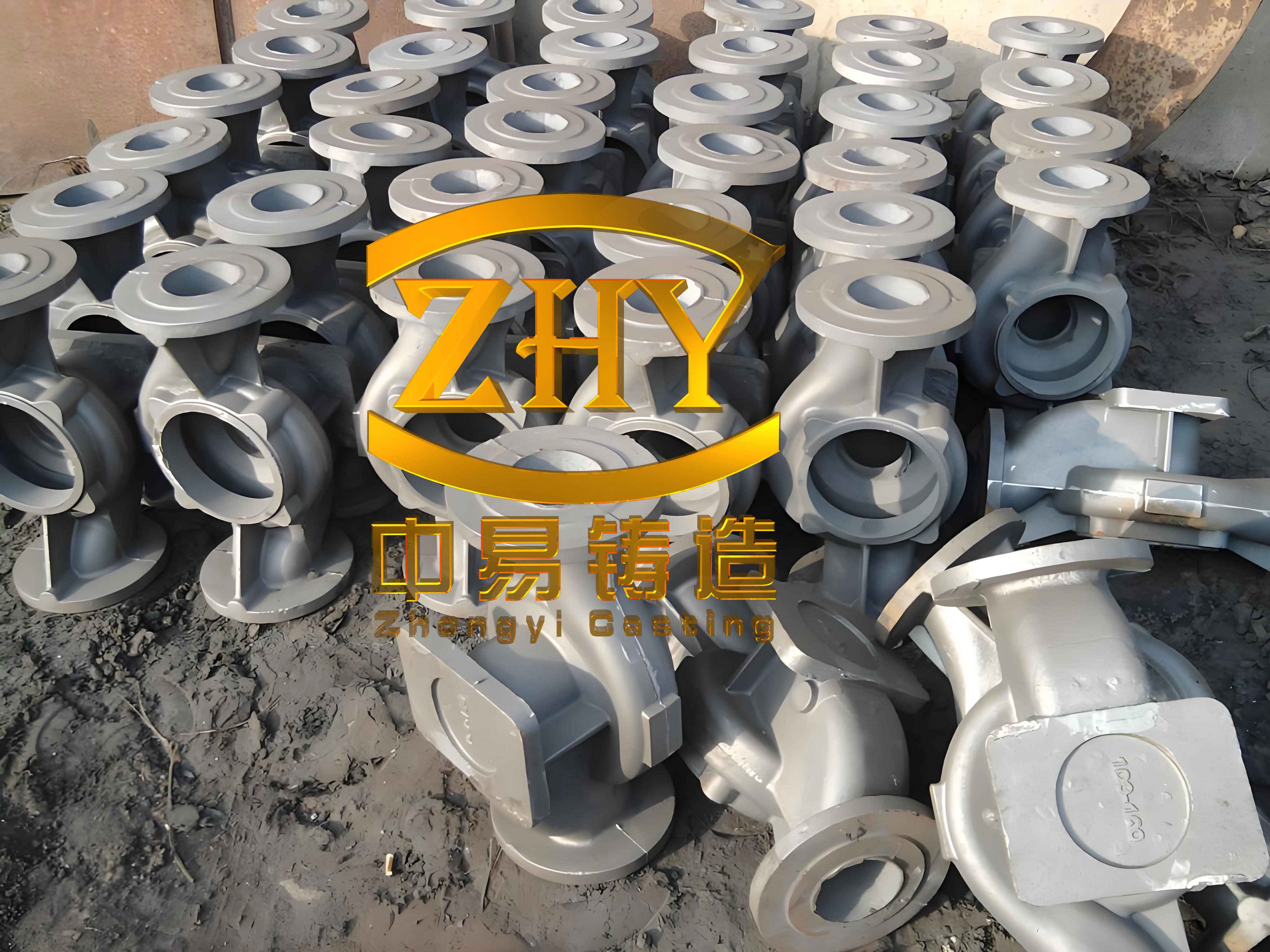
Despite these benefits, furan resin sand has drawbacks that must be addressed. It demands high-quality raw sand, can emit irritating odors during production, and incurs higher costs. Additionally, resin viscosity issues in cold weather may lead to poor sand mixing and sticking, while subcutaneous pores and pinholes often appear near cores in thin-walled gray cast iron castings. These limitations necessitate optimized process controls to fully exploit the potential of furan resin sand in gray cast iron applications.
The production process for furan resin sand in gray cast iron casting involves several critical steps. First, raw materials must be carefully selected. The base sand should have high silica content, low clay content, and low acid demand value to ensure optimal performance. Furan resin is chosen based on nitrogen content—low-nitrogen or nitrogen-free resins are preferred for gray cast iron to minimize gas defects. The catalyst, typically an organic sulfonic acid solution, controls curing speed, and a silane coupling agent can be added to enhance sand strength. A standard sand mixture might include 0.8% to 1.5% resin by sand weight, with catalyst at 20% to 70% of resin weight, adjusted seasonally. Mixing sequence is crucial: in batch mixers, sand is added first, followed by catalyst after startup, mixed for 1–2 minutes, then resin is incorporated and discharged immediately.
Hardening kinetics depend on factors like sand temperature, ambient conditions, and catalyst type. The curing rate can be modeled using an Arrhenius-type equation to relate temperature to hardening time:
$$ t_h = A \cdot e^{\frac{E_a}{RT}} $$
where \( t_h \) is the hardening time, \( A \) is a pre-exponential factor, \( E_a \) is the activation energy, \( R \) is the gas constant, and \( T \) is the temperature in Kelvin. For practical control, sand temperature should be maintained between 20°C and 35°C. The curing characteristic, defined as the ratio of hardening time to demolding time, ideally ranges from 0.3 to 0.5, indicating efficient固化. This ratio is vital for scheduling in gray cast iron foundries to balance productivity and quality.
Mold design considerations for gray cast iron include increased draft angles compared to clay sand, due to reduced mold wall yield during demolding. Pattern design should minimize loose pieces, favoring cores where possible. Flask dimensions can be optimized with a sand-to-metal ratio of 30–100 mm, reducing costs. The gating and risering systems leverage the high rigidity of furan resin sand: for gray cast iron, which benefits from graphitization expansion, risers can be minimized while incorporating overflow vents and air vents. A trapezoidal cross-section for runners and wide gates improves slag trapping and filling capacity. Compaction via vibration tables ensures mold integrity, and coating application should be delayed by at least 15 minutes after demolding to avoid moisture interference. In humid conditions, surface drying is essential before pouring. Notably, the insulating properties of furan resin sand may lower the effective grade of gray cast iron by 0.5 to 2 levels, requiring adjustments based on section thickness and part size.
To summarize key material specifications and process parameters, I present the following tables. Table 1 outlines the requirements for raw sand in furan resin sand systems for gray cast iron casting:
| Parameter | Requirement for Gray Cast Iron | Impact on Performance |
|---|---|---|
| SiO₂ Content | >90% | Ensures high refractoriness and reduces burn-on |
| Clay Content | <0.5% | Minimizes resin consumption and improves strength |
| Acid Demand Value | <5 mL | Reduces catalyst usage and optimizes curing |
| Grain Shape | Subangular to Rounded | Enhances flowability and compaction density |
| Temperature Range | 20–35°C | Maintains consistent hardening kinetics |
Table 2 provides typical resin sand formulations for gray cast iron casting, adjusted for seasonal variations:
| Component | Summer Proportion (Weight %) | Winter Proportion (Weight %) | Remarks for Gray Cast Iron |
|---|---|---|---|
| Base Sand | 98.0–98.5 | 97.5–98.0 | High-silica sand, pre-washed if necessary |
| Furan Resin | 0.8–1.0 | 1.0–1.5 | Low-nitrogen type to reduce gas defects |
| Catalyst (Sulfonic Acid) | 0.16–0.35 | 0.35–0.7 | Concentration adjusted for temperature |
| Coupling Agent (Silane) | 0.02–0.05 | 0.02–0.05 | Improves bond strength and durability |
| Additives (e.g., Iron Oxide) | 0–0.5 | 0–0.5 | Used to prevent pinholes in gray cast iron |
Common defects in gray cast iron castings produced with furan resin sand include burn-on, gas porosity, and odor issues. Burn-on occurs when resin decomposes around 500°C, creating voids that allow metal penetration. This can be mitigated by increasing mold compaction, using chromite sand or chills in thick sections, applying refractory coatings, and lowering pouring temperatures. Gas porosity, often subcutaneous or as pinholes, arises from nitrogen and hydrogen released during resin decomposition. The nitrogen content in resins, derived from urea, is a primary culprit. Strategies involve using washed sand to reduce resin addition to around 2.5%, opting for low-nitrogen resins, and incorporating iron oxide powder into the sand mix. The effectiveness of iron oxide can be quantified by its role in reducing gas formation:
$$ G_{reduction} = k \cdot [Fe_2O_3] \cdot e^{-\frac{Q}{RT}} $$
where \( G_{reduction} \) is the reduction in gas volume, \( k \) is a constant, \( [Fe_2O_3] \) is the iron oxide concentration, \( Q \) is the activation energy for gas suppression, and \( T \) is the pouring temperature. For gray cast iron, this helps maintain dense microstructures free from voids.
Odor emissions stem from free formaldehyde in furfuryl alcohol-based resins. Selecting low-nitrogen or nitrogen-free resins minimizes this issue, improving workplace conditions. Table 3 summarizes defect causes and countermeasures specific to gray cast iron:
| Defect Type | Primary Causes in Gray Cast Iron | Preventive Measures | Key Formula or Parameter |
|---|---|---|---|
| Burn-on (Sticky Sand) | Resin degradation at ~500°C, low compaction | Increase mold density; use chromite sand; apply coatings; lower pouring temperature by ΔT = 20–30°C | Penetration depth: \( d = \sqrt{\frac{2 \gamma \cos \theta \cdot t}{\mu}} \) where \( \gamma \) is surface tension, \( \theta \) contact angle, \( t \) time, \( \mu \) viscosity |
| Subcutaneous Pores/Pinholes | Nitrogen/hydrogen from resin decomposition, high urea content | Use washed sand; reduce resin to ≤2.5%; add iron oxide powder (1–2% by sand weight); optimize gating | Gas evolution rate: \( \frac{dV}{dt} = C \cdot [N] \cdot e^{-\frac{E}{RT}} \) with [N] as nitrogen content |
| Irritating Odor | Free formaldehyde in high-furfuryl alcohol resins | Switch to low-N or N-free resins; ensure ventilation; monitor resin quality | Formaldehyde emission index: \( I_{CH_2O} = f(\text{furfuryl alcohol %}) \) minimized for gray cast iron grades |
| Dimensional Inaccuracy | Insufficient hardening or mold wall movement | Control sand temperature (20–35°C); adjust catalyst ratio; use vibration compaction; increase draft angles | Dimensional tolerance: \( \Delta L = \alpha \cdot L \cdot \Delta T + \beta \cdot \sigma \) where \( \alpha \) thermal expansion, \( \beta \) mold yield factor |
The economic and environmental aspects of furan resin sand for gray cast iron casting are significant. While initial costs are higher, the savings from reduced scrap, energy efficiency, and sand reclamation justify the investment. The recyclability of sand can be expressed through a reclaimability ratio:
$$ R_r = \frac{m_{reclaimed}}{m_{total}} \times 100\% $$
where \( R_r \) is the reclaimability percentage, \( m_{reclaimed} \) is the mass of reclaimed sand, and \( m_{total} \) is the total sand mass. For gray cast iron operations, achieving \( R_r > 90\% \) is feasible with proper regeneration systems, reducing waste and raw material consumption.
In terms of mechanical properties, gray cast iron castings made with furan resin sand often exhibit improved tensile strength and hardness due to finer graphite structures and reduced inclusions. The relationship between mold rigidity and graphite formation can be approximated by:
$$ \lambda = \frac{E_{mold}}{E_{cast}} \cdot \frac{dG}{dt} $$
where \( \lambda \) is a graphite refinement factor, \( E_{mold} \) is the mold modulus, \( E_{cast} \) is the casting modulus, and \( \frac{dG}{dt} \) is the graphite growth rate. Higher mold rigidity from furan resin sand suppresses mold wall movement, promoting uniform solidification in gray cast iron.
Future trends in furan resin sand for gray cast iron casting include the development of bio-based resins to reduce environmental impact and enhanced catalysts for faster curing at lower temperatures. Additionally, digital simulations of mold filling and solidification can optimize gating designs for gray cast iron components, minimizing defects. The integration of Industry 4.0 technologies, such as real-time monitoring of sand properties, will further enhance consistency. For instance, sensors can track sand temperature and humidity, adjusting resin additions automatically via feedback loops:
$$ \text{Resin dosage} = k_1 \cdot T_{sand} + k_2 \cdot H + k_3 $$
with \( T_{sand} \) as sand temperature, \( H \) as humidity, and \( k_1, k_2, k_3 \) as calibration constants specific to gray cast iron production lines.
In conclusion, furan resin sand is a transformative technology for gray cast iron casting, offering superior quality, efficiency, and sustainability. By understanding its advantages—such as high dimensional accuracy and recyclability—and addressing limitations like gas porosity and odor through optimized materials and processes, foundries can significantly enhance their competitiveness. The use of tables and formulas, as demonstrated, aids in summarizing critical data for practical application. As the industry moves toward greener and smarter manufacturing, furan resin sand will continue to play a pivotal role in advancing gray cast iron casting, enabling the production of high-integrity components for diverse sectors like automotive, machinery, and infrastructure. Continuous innovation in resin chemistry and process control will further solidify its position as a cornerstone of modern foundry practice for gray cast iron.