
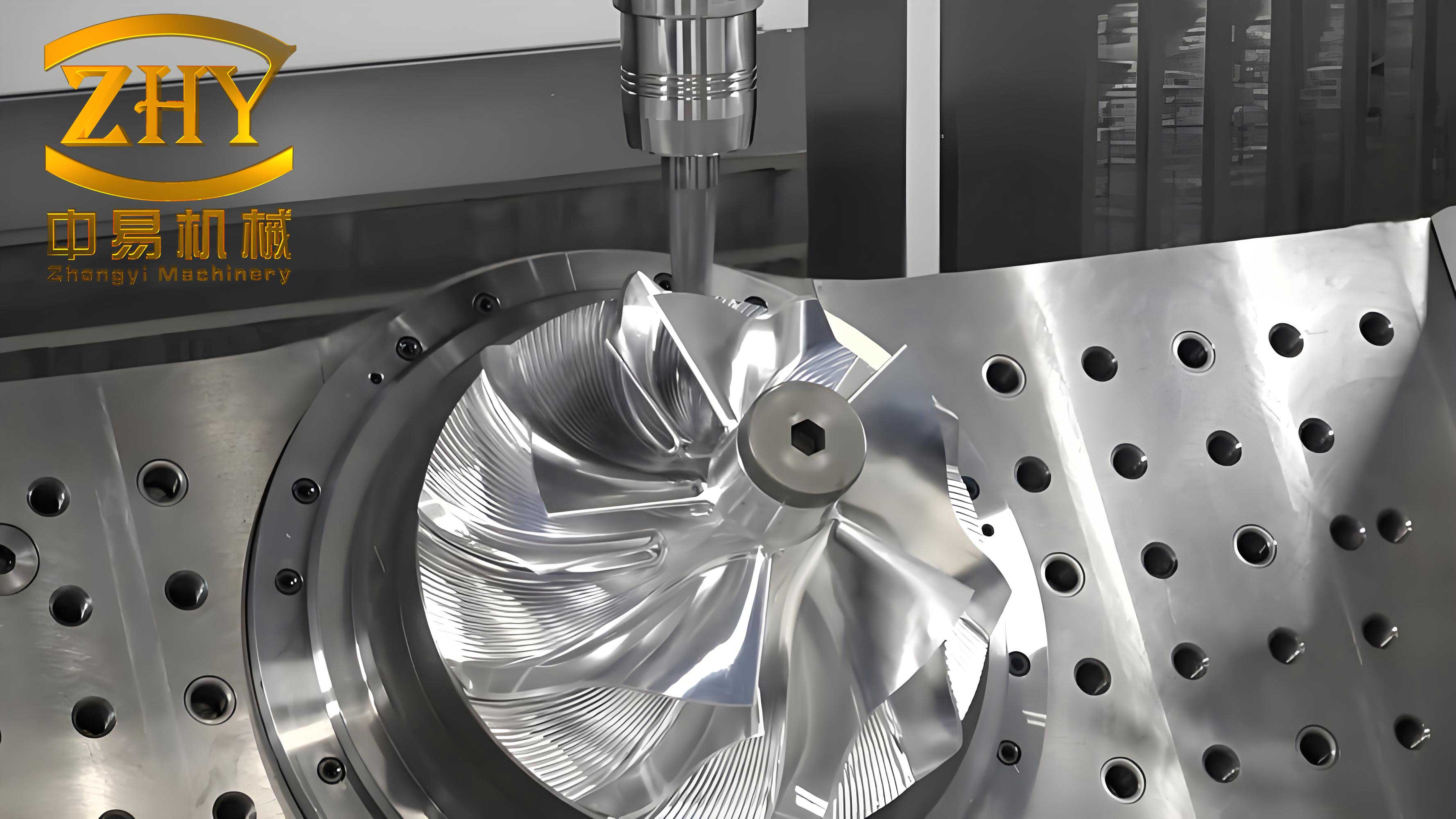
The advancement into the 21st century has been marked by rapid technological progress, product upgrades, and the continuous push of national key projects and local investments. This environment has significantly elevated the demand for machine tool products across all sectors of the national economy. Consequently, machine tool technology itself is undergoing swift development. Domestically and internationally, numerous large-scale, high-precision, and sophisticated CNC machine tools have been developed. These machines represent the sole means for machining critical components such as impellers, blades, marine propellers, heavy-duty generator rotors, steam turbine rotors, and large diesel engine crankshafts. Their performance holds decisive influence over a nation’s aerospace, military, scientific research, precision instrumentation, and high-end medical equipment industries. The large castings for such machine tools primarily include bedways, columns, worktables, crossbeams, headstock housings, and tailstock bodies. Among these, the column is a critical component, providing essential support for the headstock and facilitating its Z-axis movement. This function imposes stringent requirements on the column casting, necessitating superior rigidity and thermal stability.
In my experience, the design of these columns often employs an A-frame structure. This design philosophy aims to thoroughly eliminate偏移和摆动 (deflection and oscillation) generated during the machining process, thereby guaranteeing the final machining accuracy of the machine tool. The quality requirements are exceptionally rigorous. The guide rail surfaces on the column must exhibit high guiding accuracy, excellent wear resistance, and sufficient stiffness. Simultaneously, the casting itself must achieve high dimensional accuracy. Critical surfaces, especially the guide rails, are impermissible to have casting defects such as shrinkage cavities, shrinkage porosity, cracks, blowholes, or slag inclusions. These flaws would severely compromise the wear resistance and stiffness of the column, directly impacting its service life. In severe cases, they could lead to a loss of control in the machining center, resulting in significant safety incidents.
The production of such high-duty machine tool castings presents a formidable foundry challenge. The structural complexity, coupled with the demanding material specifications for ductile iron, requires a meticulously designed and controlled casting process. This article delves into a comprehensive analysis of the structure and the key casting process developed for a large column machine tool casting, addressing the inherent difficulties and outlining the solutions implemented to ensure quality.
Structural Analysis and Technical Specifications of the Machine Tool Casting
The column casting in discussion is a component for a high-end CNC machine tool. Its maximum contour dimensions are 2,296 mm in length, 1,598.5 mm in width, and 672 mm in height. The casting features three guide rails and exhibits variable wall thickness. The average wall thickness is approximately 35 mm, with the thickest sections reaching up to 78 mm. The material specification is ductile iron grade QT600-3, which demands a specific combination of high strength and reasonable ductility.
The quality requirements for this machine tool casting extend far beyond standard mechanical properties. There are strict regulations concerning casting defects and appearance quality. The casting must undergo non-destructive testing including ultrasonic and magnetic particle inspection. Crucially, the repair of any casting defect by welding is not permitted. The geometric tolerances for the guide rail surfaces, such as flatness, straightness, and parallelism, must be within a tight 0.5 mm band. Dimensional tolerances for the entire casting must conform to the ISO 8062-CT11 grade. The as-cast weight is substantial, at approximately 3,266 kg. Furthermore, the cooling protocol is specified: the casting must be retained within the mold until its temperature falls below 280°C, and no further handling is allowed until it cools to ambient temperature.
The chemical composition and mechanical property requirements for the QT600-3 grade are summarized in the table below:
| Property / Element | Specification |
|---|---|
| Tensile Strength (Rm) | ≥ 600 MPa |
| Yield Strength (Rp0.2) | ≥ 370 MPa |
| Elongation (A) | ≥ 3 % |
| Carbon (C) | 3.5 – 3.9 % |
| Silicon (Si) | 2.0 – 2.1 % |
| Manganese (Mn) | 0.3 – 0.8 % |
| Phosphorus (P) | < 0.08 % |
| Sulfur (S) | < 0.03 % |
Analysis of Casting Process Difficulties
Designing a robust process for this machine tool casting requires preemptively addressing several key challenges intrinsic to its geometry and material:
- A-Frame Structure with Heavy Sections: The A-shaped design, while beneficial for stiffness, incorporates heavy mounting feet at both ends. These sections are thick to accommodate fastening bolts, creating significant thermal masses (hot spots) that are highly prone to shrinkage porosity and potential misruns if not properly fed.
- Ductile Iron Solidification Characteristics: Ductile iron solidifies in a mushy or pasty manner, with a prolonged eutectic solidification time. In thick sections, the temperature difference between the surface and the center is large, leading to a substantial difference in solidification timing. This can result in isolated liquid pools in the center that are cut off from feed metal, forming shrinkage porosity. The process must actively manage this temperature gradient.
- Variable Wall Thickness and Long Rails: The combination of uneven wall thickness and long, continuous guide rail surfaces complicates directional solidification. Achieving a sound, defect-free structure in the critical guide rail areas demands a carefully balanced gating and feeding system.
The foundational approach to mitigate these issues involves promoting directional solidification towards designated feeders or risers. For this specific machine tool casting, the strategy combined a semi-choked bottom gating system with strategically placed chills and overflow channels to ensure soundness in critical areas.
Casting Process Design Philosophy
Selection of Pouring Position and Parting Line
The guiding principle for determining the pouring position is the critical surface requirement. For this machine tool casting, the guide rail surfaces are paramount. To ensure their highest possible quality—free from sand inclusions, gas holes, slag, and shrinkage defects—they must be oriented downwards during pouring. This positioning utilizes the natural density of the molten metal to minimize turbulence and slag entrapment on these vital surfaces. Consequently, a horizontal pouring position (flat casting) with a two-part mold (cope and drag) was selected. The parting line was conveniently placed along the largest planar surface of the casting, which also corresponds to a non-critical area, simplifying molding.
Determination of Foundry Allowances
Accurate allowances are critical for the final machining of a precision machine tool casting. The factors influencing these allowances are numerous, including alloy type, casting method, production scale, and equipment capability. For this large, high-precision casting, the allowances were selected based on historical data and the specified ISO tolerance grade.
$$ \text{Machining Allowance (Critical Guide Rail)} = 10 \text{ mm} $$
$$ \text{Machining Allowance (General Surfaces)} = \text{Per ISO 8062-CT11} $$
The patternmaker’s contraction (shrinkage) allowance, accounting for the total dimensional change from solidification and cooling, was determined through empirical validation on similar castings to be 1%. A pattern draft of 0 to +2 mm was applied, with a negative draft (taper) of -2/+3 mm on internal ribs and core prints. A pattern compensation of +3 mm was added to the ends of the guide rails to counteract potential distortion.
Design of the Gating and Feeding System
The primary objective of the gating system is to fill the mold cavity smoothly, minimizing turbulence, oxidation, and sand erosion, while also contributing to the desired temperature gradient for solidification. For this heavy-sectioned machine tool casting, a bottom-gating (basin-runner) system was chosen. This design helps maintain a calm metal flow and supports a favorable thermal gradient from the top (which solidifies last) towards the bottom gates.
The system was designed as semi-choked, meaning the cross-sectional area is smallest at the ingates. This helps prevent initial aspiration and promotes a rapid fill of the mold cavity. The minimum total cross-sectional area of the ingates ($\sum F_{\text{min}}$) was calculated using the Bernoulli-based formula for pressurized systems:
$$ \sum F_{\text{min}} = \frac{G}{\rho \cdot t \cdot \mu \sqrt{2gH_p}} $$
Where:
- $G$ = Total weight of metal poured through ingates (~3,266 kg + gating system weight).
- $\rho$ = Density of molten ductile iron (~7,000 kg/m³).
- $t$ = Required pouring time (empirically determined based on casting weight and section thickness).
- $\mu$ = Discharge coefficient for the gating system (empirical, accounting for friction and turbulence losses).
- $g$ = Acceleration due to gravity (9.81 m/s²).
- $H_p$ = Mean effective metallostatic pressure head.
For cast iron, this formula can be simplified to:
$$ \sum F_{\text{min}} = \frac{G}{0.31 \cdot t \cdot \mu \sqrt{H_p}} $$
Based on this calculation, the minimum total ingate area required was found to be approximately 30.2 cm². To achieve this, five ceramic tubes with an internal diameter of 30 mm were selected as ingates. Following established ratios for semi-choked systems to ensure proper pressure distribution and slag trapping, the sprue and runner dimensions were scaled accordingly. The area ratios for the system were designed as:
$$ \sum F_{\text{sprue}} : \sum F_{\text{runner}} : \sum F_{\text{ingate}} = 1 : 3.1 : 0.78 $$
Thus, a sprue with a 70 mm diameter ceramic tube was used, feeding into a runner with a cross-sectional area of 120 cm², which bifurcated to feed the five ingates positioned under the heavy sections and guide rails.
Application of Chills and Overflow Technology
To directly address the challenge of shrinkage in the thick mounting feet and guide rail sections, external chills were employed. Chills, typically made of cast iron or steel, are high-thermal-conductivity materials placed in the mold wall adjacent to the casting’s hot spots. They act as heat sinks, rapidly extracting heat from the molten metal, thereby increasing the local solidification rate and promoting directional solidification towards the feeding gates or risers.
For this machine tool casting, multiple chills (designated as #3 and #4 type chills in the core boxes) were strategically placed around the heavy foot sections. Additionally, #4 type chills were placed along the length of the guide rail areas in the drag (bottom mold). This arrangement created a controlled temperature field, ensuring these thick sections solidified in a controlled sequence, connected to the liquid metal source via the ingates until the very end.
Overflow wells, also known as flow-offs or blind risers, were incorporated at the ends of the guide rails and other high-point locations away from the ingates. These are small, open cavities connected to the casting. Their purpose is twofold: first, to act as a trap for the first, often colder and oxidized, metal to enter a section; second, and more importantly for ductile iron, to provide a reservoir of hot metal that feeds back into the casting during the critical eutectic expansion phase, countering the subsequent shrinkage and enhancing feed metal pressure. This combination of chills and overflows is a powerful technique for ensuring the internal soundness of complex machine tool castings.
| Process Parameter | Selected Value / Method | Purpose / Rationale |
|---|---|---|
| Pouring Position | Horizontal, Guide Rails Down | Maximize quality of critical guide rail surfaces. |
| Parting Line | Along Largest Planar Surface | Simplify molding and pattern making. |
| Pattern Contraction | 1.0% | Account for total solidification & cooling shrinkage of ductile iron. |
| Gating System Type | Semi-Choked, Bottom-Gated | Minimize turbulence, support thermal gradient for directional solidification. |
| Ingate Calculation Basis | $$ \sum F_{\text{min}} = \frac{G}{0.31 \cdot t \cdot \mu \sqrt{H_p}} $$ | Determine minimum cross-section for controlled fill time and metal velocity. |
| Chill Application | External Chills at Feet & Guide Rails | Increase local cooling rate, prevent isolated hot spots, promote directional solidification. |
| Overflow Wells | Placed at ends of rails and high points | Trap cold/oxidized metal, provide hot metal reservoir for feeding during eutectic expansion. |
Production Process Control for the Machine Tool Casting
Pattern and Core Box Manufacture
The patterns and core boxes were constructed from seasoned red pine and multi-layer board to ensure adequate strength and rigidity, preventing deformation during handling and molding. All surfaces were finished to a high standard (approximately Ra 1.6 μm equivalent) and sealed with paint. Draft angles, contraction allowances, and machining allowances were accurately incorporated. Core prints and alignment keys were precisely machined to ensure correct core assembly in the mold.
Molding and Core Making
The entire mold was produced using a furan resin-bonded sand process, known for its good dimensional accuracy, collapsibility, and surface finish—essential for a high-quality machine tool casting. The chills were thoroughly cleaned, preheated, and accurately positioned in the drag mold and within specific core boxes as per the process layout. The ceramic tube assembly for the gating system was carefully set in place. Cores were produced with adequate venting channels, using wax strings or perforated cores to ensure gases could escape freely during pouring. Proper core reinforcement was used to prevent sagging or breaking during handling.
Mold Assembly (Closing)
Prior to closing the mold, a meticulous inspection was conducted: core vents and mold vents were verified for通畅 (openness); the integrity of sand molds and cores was checked for cracks or loose sand; all core prints were properly sealed with core paste to prevent metal penetration. Cores were sequentially positioned and firmly secured. The cope and drag were then aligned using guide pins. The parting line was sealed with a refractory paste and a sand bead to prevent run-outs. A final check, often involving a trial closure with lead wires to check wall thickness, was performed before the final, permanent closure.
Melting, Pouring, and Solidification Control
The melting was conducted in a medium-frequency induction furnace to ensure precise temperature and composition control. The base iron chemistry was adjusted to fall within the lower range of the specification to facilitate successful nodularization. The tapping temperature was maintained above 1,500°C to account for temperature losses during treatment and transfer.
A sandwich method was used for ductile iron treatment. A pre-weighed amount of magnesium-ferrosilicon nodulizing alloy (typically 1.8-2.0% of the iron weight) was placed in the bottom of a preheated treatment ladle, covered with a layer of steel punchings, and then the base iron was poured into the ladne. This process induces the spheroidization of graphite. Immediately after nodulization, a post-inoculation was performed by adding a controlled amount of foundry-grade ferrosilicon to the metal stream during transfer to the pouring ladle. This step is crucial for promoting a uniform graphite structure and preventing chill (carbide formation) in thin sections of the machine tool casting.
The pouring was carried out swiftly and steadily to maintain the thermal gradient. The prescribed cooling protocol was strictly followed: the casting was left in the closed mold for a minimum of 72 hours to allow for very slow cooling through the eutectoid transformation range, minimizing residual stresses which are critical for the stability of a precision machine tool casting.
Cleaning and Initial Inspection
After the extended cooling period, the mold was broken down, and the casting was removed. The gating and overflow systems were removed by flame cutting, followed by grinding. The casting was then shot blasted to clean the surface. A preliminary visual and dimensional inspection was conducted. Representative test coupons cast from the same ladle of iron were machined and tested to verify that the mechanical properties (tensile strength, yield strength, elongation) and microstructure (nodularity, nodule count, pearlite/ferrite ratio) met the QT600-3 specifications for this critical machine tool casting.
Results and Conclusion
The implementation of the described integrated casting process proved highly successful. The produced machine tool castings exhibited excellent surface quality with no visible defects. Dimensional accuracy was confirmed to be within the stringent ISO CT11 tolerance limits. Most importantly, non-destructive testing via ultrasonic and magnetic particle inspection revealed no internal defects such as shrinkage cavities, porosity, or cracks in the critical guide rail and load-bearing sections. The mechanical properties and microstructure consistently met the requirements of grade QT600-3.
This case underscores that the production of high-integrity, large machine tool castings in ductile iron is achievable through a holistic approach. It requires:
- A Deep Structural and Thermal Analysis: Identifying potential defect-prone areas based on geometry and material behavior.
- A Synergistic Process Design: Intelligently combining pouring position, a controlled gating system, and active thermal management tools like chills and overflows. The formula $$ \sum F_{\text{min}} = \frac{G}{0.31 \cdot t \cdot \mu \sqrt{H_p}} $$ provides a scientific basis for the initial gating design, which is then refined empirically.
- Rigorous Process Control: From pattern making and mold assembly to precise melting, treatment, and controlled solidification.
The successful outcome validates the process strategy of using a semi-choked bottom gating system augmented with chills and overflow technology to manage the solidification of complex, heavy-sectioned ductile iron castings. The experience gained provides a valuable reference framework and accumulates practical know-how for the manufacture of other high-quality, high-performance machine tool castings, which remain foundational components in advanced manufacturing infrastructure.