
As an engineer deeply immersed in the manufacturing sector, I have witnessed firsthand the pivotal role that machine tool casting plays in the industrial landscape. The durability, precision, and stability of machine tools are fundamentally rooted in the quality of their cast components. In this article, I will delve into the multifaceted world of machine tool casting, exploring its materials, processes, design principles, and quality assurance methods. My aim is to provide a comprehensive overview that underscores the critical importance of this field, supported by empirical data, tables, and mathematical formulations. Throughout this discussion, the term machine tool casting will be frequently emphasized to highlight its centrality in modern manufacturing.
The journey of a machine tool casting begins with material selection. Typically, cast iron—especially gray iron, ductile iron, and compacted graphite iron—is the material of choice due to its excellent damping capacity, wear resistance, and cost-effectiveness. However, advancements have introduced steel and aluminum alloys for specific applications. To illustrate the properties, consider the following table comparing common materials used in machine tool casting:
| Material Type | Tensile Strength (MPa) | Damping Capacity | Thermal Conductivity (W/m·K) | Typical Applications in Machine Tools |
|---|---|---|---|---|
| Gray Cast Iron | 150-400 | High | 45-52 | Beds, frames, and bases |
| Ductile Cast Iron | 400-900 | Moderate | 30-40 | Gears, housings |
| Carbon Steel Casting | 400-1200 | Low | 40-50 | Heavy-duty components |
| Aluminum Alloy | 200-400 | Very Low | 120-240 | Lightweight structures |
The selection of material directly impacts the performance of the machine tool casting. For instance, the damping capacity, which reduces vibrations during machining, can be quantified using the loss factor η. For cast iron, this is often expressed as:
$$ \eta = \frac{E”}{E’} $$
where \( E’ \) is the storage modulus and \( E” \) is the loss modulus. In practice, the damping behavior of a machine tool casting is crucial for achieving high surface finish and accuracy. From my experience, optimizing the material composition through alloying elements like silicon or chromium can enhance these properties, making the machine tool casting more resilient under dynamic loads.
Moving to the casting process, several techniques are employed to manufacture machine tool castings, with sand casting being the most prevalent due to its versatility for large parts. The process involves creating a mold from sand mixed with binders, into which molten metal is poured. The fluid dynamics of the molten metal flow can be described by the Navier-Stokes equations, simplified for incompressible flow:
$$ \rho \left( \frac{\partial \mathbf{v}}{\partial t} + \mathbf{v} \cdot \nabla \mathbf{v} \right) = -\nabla p + \mu \nabla^2 \mathbf{v} + \mathbf{f} $$
where \( \rho \) is density, \( \mathbf{v} \) is velocity, \( p \) is pressure, \( \mu \) is dynamic viscosity, and \( \mathbf{f} \) represents body forces. In the context of machine tool casting, controlling the flow is essential to avoid defects like porosity or cold shuts. Precision casting methods, such as investment casting, are used for complex geometries, ensuring dimensional accuracy that is vital for the assembly of machine tools. The table below summarizes key casting processes for machine tool casting:
| Casting Process | Tolerance (mm) | Surface Roughness (μm) | Typical Size Range | Suitability for Machine Tool Casting |
|---|---|---|---|---|
| Sand Casting | ±1.5 to ±3 | 12.5-25 | Up to several meters | High for large beds and frames |
| Investment Casting | ±0.1 to ±0.5 | 1.6-6.3 | Small to medium | Moderate for intricate parts |
| Die Casting | ±0.05 to ±0.2 | 0.8-3.2 | Small to medium | Low due to material limitations |
| Centrifugal Casting | ±0.5 to ±1 | 6.3-12.5 | Cylindrical shapes | Specialized for rolls or sleeves |
In my work, I have often relied on simulation software to model the filling and solidification stages, predicting potential defects before physical production. This proactive approach saves costs and improves the reliability of the machine tool casting. The solidification time \( t_s \) for a casting can be estimated using Chvorinov’s rule:
$$ t_s = C \left( \frac{V}{A} \right)^n $$
where \( V \) is volume, \( A \) is surface area, \( C \) is a constant dependent on mold material and metal properties, and \( n \) is an exponent typically around 2. For a machine tool casting with thick sections, such as a bed, optimizing \( V/A \) is critical to prevent shrinkage cavities.
Design considerations for machine tool casting extend beyond geometry to include thermal management and structural integrity. The stiffness of a casting is paramount to resist deformation under cutting forces. Using finite element analysis (FEA), I often evaluate stress distributions. The fundamental equation for linear elasticity is:
$$ \sigma_{ij} = C_{ijkl} \epsilon_{kl} $$
where \( \sigma_{ij} \) is stress tensor, \( C_{ijkl} \) is stiffness tensor, and \( \epsilon_{kl} \) is strain tensor. For isotropic materials like cast iron, this simplifies to Hooke’s law: \( \sigma = E \epsilon \), with \( E \) as Young’s modulus. In practice, ribbing and wall thickness variations are designed to enhance stiffness without adding excessive weight. The following table outlines key design parameters for a typical machine tool casting:
| Design Parameter | Recommended Range | Impact on Performance | Optimization Technique |
|---|---|---|---|
| Wall Thickness (mm) | 10-50 | Affects weight and cooling rate | Uniform distribution to avoid hot spots |
| Rib Height-to-Thickness Ratio | 5:1 to 10:1 | Increases stiffness and damping | Topology optimization algorithms |
| Fillet Radius (mm) | 5-20 | Reduces stress concentration | FEA-based stress analysis |
| Draft Angle (degrees) | 1-3 | Facilitates mold removal | Standardized per casting process |
Thermal effects are another critical aspect, as machine tools generate heat during operation. The temperature rise \( \Delta T \) in a casting can lead to thermal expansion, affecting accuracy. The linear expansion is given by:
$$ \Delta L = \alpha L_0 \Delta T $$
where \( \alpha \) is the coefficient of thermal expansion, and \( L_0 \) is the original length. For cast iron, \( \alpha \approx 10.5 \times 10^{-6} \, \text{K}^{-1} \). In high-precision machine tool casting, thermal symmetry is designed to minimize distortion, often through internal cooling channels or material selection.
Quality control in machine tool casting involves both destructive and non-destructive testing (NDT). From my perspective, NDT methods like ultrasonic testing and radiography are indispensable for ensuring internal soundness. The attenuation of ultrasound in a casting can be modeled as:
$$ I = I_0 e^{-\mu x} $$
where \( I \) is intensity, \( I_0 \) is initial intensity, \( \mu \) is attenuation coefficient, and \( x \) is distance. Defects such as porosity or inclusions can be detected by variations in \( \mu \). Additionally, dimensional verification using coordinate measuring machines (CMMs) ensures that the machine tool casting meets specified tolerances. Statistical process control (SPC) charts are used to monitor production consistency, with control limits defined as:
$$ \text{UCL} = \bar{X} + A_2 \bar{R}, \quad \text{LCL} = \bar{X} – A_2 \bar{R} $$
where \( \bar{X} \) is the sample mean, \( \bar{R} \) is the average range, and \( A_2 \) is a constant. This mathematical approach helps in maintaining the high standards required for machine tool casting.
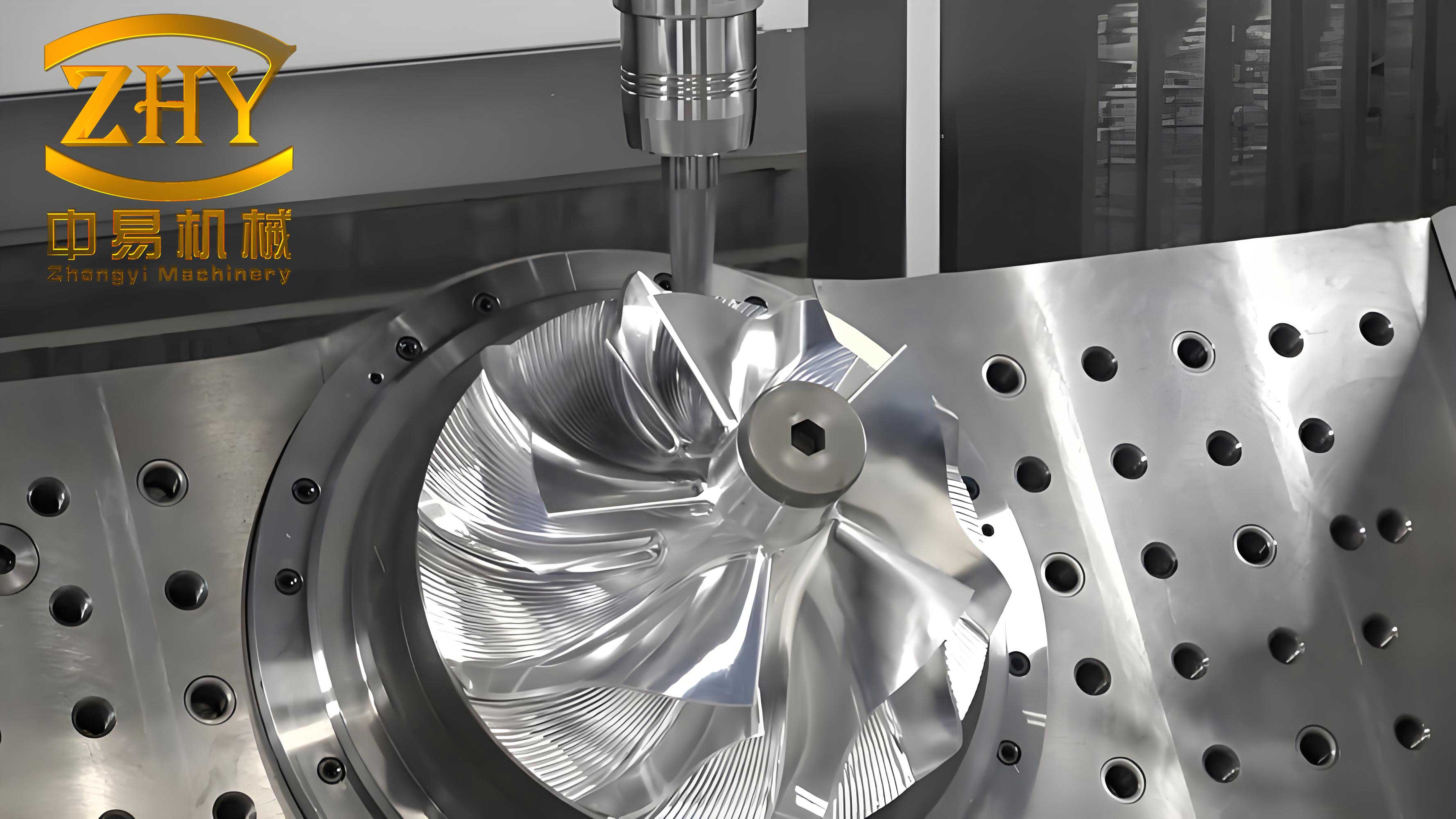
The visual representation above illustrates a typical machine tool casting, showcasing its complex geometry and robust structure. In my projects, such castings form the backbone of milling machines and lathes, where precision is non-negotiable. The integration of advanced materials and processes continues to evolve the field of machine tool casting. For example, the use of composite materials or additive manufacturing for molds is gaining traction, allowing for faster prototyping and customized designs.
Looking at applications, machine tool casting is ubiquitous in industries ranging from automotive to aerospace. The table below highlights specific use cases:
| Industry | Component Example | Key Requirements | Role of Machine Tool Casting |
|---|---|---|---|
| Automotive | Engine block machining beds | High damping, thermal stability | Provides vibration absorption for fine finishing |
| Aerospace | Wing spar machining fixtures | Lightweight yet stiff | Enables precise contouring of critical parts |
| Energy | Turbine blade grinding bases | Corrosion resistance, durability | Ensures long-term accuracy in harsh environments |
| General Machinery | Press frames | High load-bearing capacity | Forms the structural core for heavy-duty operations |
From a sustainability perspective, machine tool casting also contributes to resource efficiency. Recycling of scrap metal and optimization of melting energy are areas where I have focused efforts. The energy consumption \( E \) for melting can be approximated as:
$$ E = m \left( c_p \Delta T + L_f \right) / \eta $$
where \( m \) is mass, \( c_p \) is specific heat, \( \Delta T \) is temperature increase, \( L_f \) is latent heat of fusion, and \( \eta \) is furnace efficiency. By improving \( \eta \) through better insulation or process control, the environmental footprint of machine tool casting can be reduced.
In conclusion, machine tool casting is a cornerstone of precision manufacturing, blending material science, engineering design, and rigorous quality control. As technology advances, I anticipate further innovations such as smart castings with embedded sensors for real-time monitoring. The mathematical models and tables presented here underscore the depth of this field. Ultimately, every high-performance machine tool relies on the integrity of its cast components, making machine tool casting an indispensable discipline in modern industry. Through continuous research and application, we can push the boundaries of what is possible, ensuring that machine tool casting remains at the forefront of manufacturing excellence.
Reflecting on my experiences, I have seen how incremental improvements in casting processes can lead to significant gains in machine tool performance. Whether it’s through alloy development, simulation-enhanced design, or advanced NDT, the pursuit of perfection in machine tool casting is a never-ending journey. I encourage fellow engineers to embrace these tools and methodologies, as they hold the key to unlocking new levels of precision and reliability in industrial equipment. The future of machine tool casting is bright, driven by digitalization and sustainable practices, and I am excited to be part of this evolving landscape.