
In the manufacturing of precision machine tools, the quality of cast components, especially those involving sliding guides such as beds and tables, is paramount. The evaluation of machine tool accuracy hinges not only on the precision achieved during final inspection but also on intrinsic quality factors like stability, durability, and service life. The latter often becomes apparent only after extended use, making it less emphasized than immediate precision metrics. The strength, hardness, internal stress, wear resistance, and machinability of these critical machine tool casting parts profoundly impact both the realization of accuracy and the long-term performance. While conventional gray iron, high-strength inoculated iron, or wear-resistant iron have been employed, they frequently fall short in meeting the comprehensive performance requirements. This gap underscores the urgent need for developing high-quality cast iron with balanced properties tailored for machine tool casting applications.
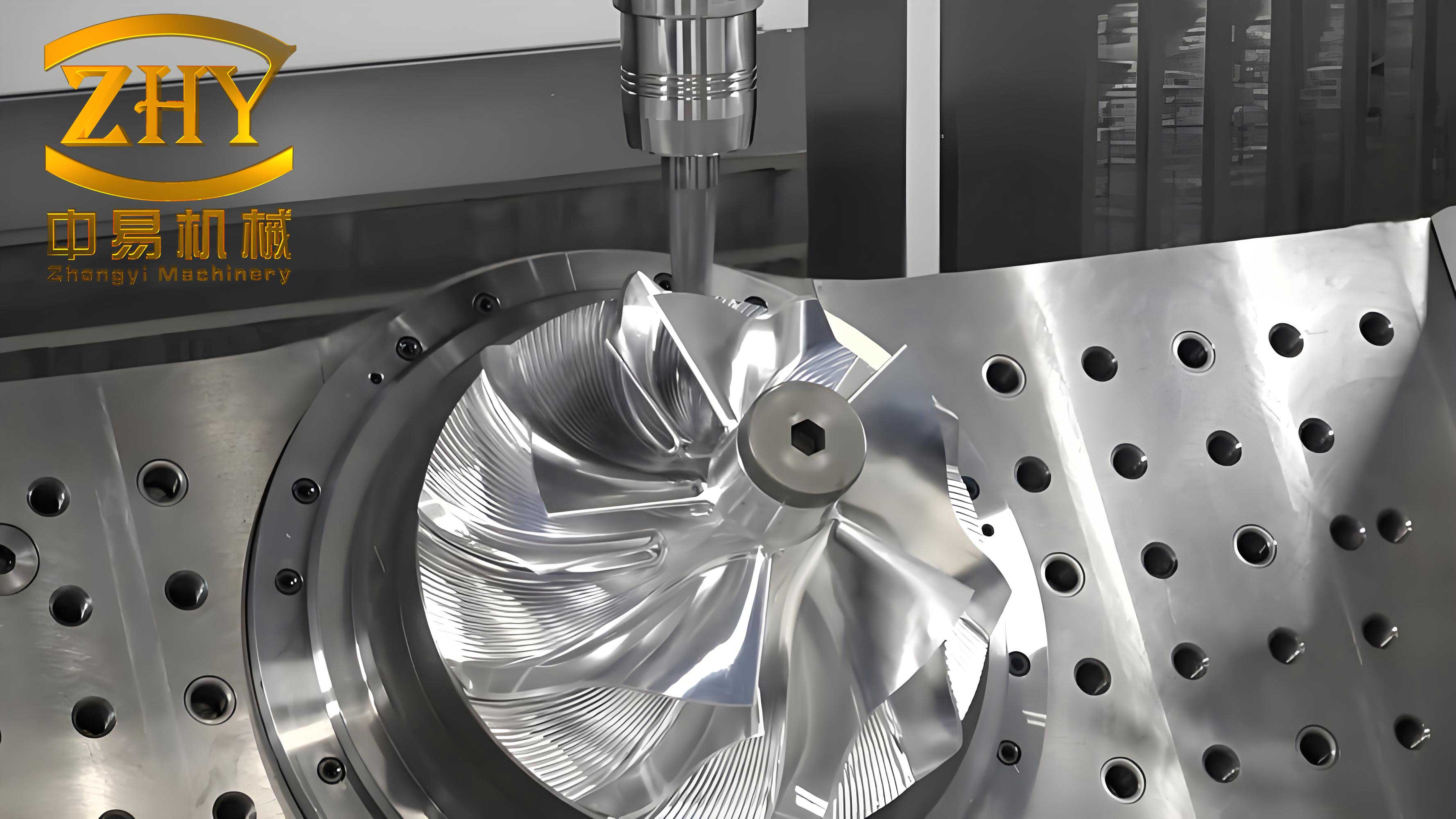
From my perspective, the pursuit of superior machine tool casting materials must prioritize “fitness for use,” as emphasized in quality management. A cast iron with high strength or wear resistance alone cannot be deemed优质 unless it holistically satisfies the operational demands of machine tools. Historically, efforts in the machine tool industry have focused on wear-resistant variants like high-phosphorus, phosphorus-copper-titanium, vanadium-titanium, and boron cast irons. However, these often exhibit poor刮削 and grinding machinability, non-uniform microstructure, high section sensitivity, significant internal stress, and inferior casting properties. For instance, comparative tests on刮削 performance revealed that low-boron cast iron required approximately 30% more time than standard gray iron, while high-phosphorus and boron cast irons demanded over 50% additional time. This highlights the inadequacy of单一-property enhancements and calls for a shift toward comprehensive性能 optimization.
The concept of high-quality cast iron for machine tool casting finds a benchmark in materials like Mechanite cast iron, developed nearly a century ago. Mechanite represents a family of cast irons produced through advanced inoculation processes, rather than mere compositional adjustments or alloying for specific traits. Over decades, it has evolved into a series with diverse grades catering to varied engineering needs, particularly in普通 engineering classes where grades are defined by tensile strength. The progression of Mechanite illustrates key advancements: the shift from simple硅钙 inoculants to复合孕育剂 containing multiple micro-alloying elements, refined classification of grades with precise application scopes, and显著 improvements in comprehensive properties such as reduced section sensitivity, enhanced hardness uniformity, higher elastic modulus, and lower linear shrinkage. For machine tool casting applications, grades analogous to Mechanite’s GC-25 or类似, emphasizing high strength, good toughness, excellent wear resistance, low section sensitivity, and machinability, are most relevant.
To elucidate the properties of such high-quality cast irons for machine tool casting, consider the following table summarizing key grades and their characteristics:
| Grade Designation | Tensile Strength (MPa) | Hardness Range (HB) | Elastic Modulus (GPa) | Key Features | Recommended for Machine Tool Casting |
|---|---|---|---|---|---|
| G-10 | 250-300 | 180-220 | 105-115 | Good machinability, moderate strength | General bases, housings |
| G-20 | 300-350 | 190-230 | 110-120 | Balance of strength and wear resistance | Beds, tables, pressure parts |
| G-25 | 350-400 | 200-240 | 115-125 | High strength, low section sensitivity, excellent wear resistance | Sliding guide beds, critical components |
| G-30 | 400-450 | 210-250 | 120-130 | Very high strength, hardenability | Heavy-duty parts,替代 steel |
| G-35 (Low-Alloy) | 450-500 | 220-260 | 125-135 | Alloy-enhanced, high integrity | Large sections, high-stress areas |
The performance of these machine tool casting materials can be related to compositional factors through empirical formulas. For example, the carbon equivalent (CE), which influences castability and microstructure, is often calculated as:
$$CE = C + \frac{Si + P}{3}$$
where C, Si, and P are weight percentages. For high-quality cast iron, controlling CE within a narrow range (e.g., 3.6-3.8) is crucial to ensure consistent properties. Additionally, the tensile strength (\(\sigma_t\)) may correlate with hardness (HB) and composition via relationships like:
$$\sigma_t \approx k \times HB + \beta \times (Ceq – CE_0)$$
where \(k\) and \(\beta\) are material constants, and \(Ceq\) is a modified carbon equivalent. For machine tool casting grades targeting wear resistance, the hardness uniformity across cast sections is vital, often expressed as the difference between maximum and minimum hardness on a guideway. Advanced grades achieve deviations as low as 10-15 HB, compared to 30-50 HB in conventional irons.
In developing such优质铸铁 for machine tool casting, several technical requirements must be rigorously met. First, molten iron temperature must exceed 1500°C, ideally reaching 1520-1550°C, to eliminate遗传性 from pig iron, refine graphite, and enhance inoculation efficacy. This is supported by research indicating that overheating above 1450°C fully negates hereditary effects. Second, oxidation losses during melting must be minimized, with FeO loss below 0.5% and Si loss under 10%, as excessive oxidation impairs inoculation. Third, charge composition and base iron chemistry require tight control, with variations in C and Si kept within ±0.1% to ensure stable performance. Fourth,复合孕育剂 are indispensable; these contain tailored combinations of elements like Si, Ca, Al, Sr, Ba, Zr, and rare earths to refine matrix,改善 graphite distribution, reduce section sensitivity, and延缓孕育衰退. The synergy among micro-alloying elements can be modeled using interaction coefficients. For instance, the effect of Cr on promoting pearlite and hardness can be counteracted by Ni, as described by:
$$H_{eq} = H_0 + \alpha_{Cr} \cdot [Cr] + \alpha_{Ni} \cdot [Ni] + \alpha_{CrNi} \cdot [Cr][Ni]$$
where \(H_{eq}\) is equivalent hardness, and \(\alpha\) terms represent influence coefficients. Fifth, lowering mold shakeout temperature to below 500°C helps mitigate thermal gradients and internal stress in varying section thicknesses, indirectly benefiting the综合性能 of the machine tool casting.
The implementation of these requirements demands strategic measures across the production chain. Raw material stability is foundational; consistent pig iron with low trace element fluctuations and increased steel scrap usage (e.g., 30-50% in charge) are essential to dilute遗传性 and control composition. The table below outlines key material specifications for producing high-quality machine tool casting iron:
| Material | Specification | Target Composition Range | Remarks |
|---|---|---|---|
| Pig Iron | Low S, P (<0.05% each) | C: 3.8-4.2%, Si: 1.5-2.0% | Minimize hereditary effects |
| Steel Scrap | Clean, low-alloy | C: <0.2%, Si: <0.3% | Increase to 40-50% of charge |
| Foundry Coke | Fixed carbon >90%, ash <10% | S: <0.8%, moisture <5% | Critical for high temperature |
| Inoculants | 复合孕育剂 (e.g., Si-Ca-Ba-Zr) | Si: 65-75%,添加元素 as needed | Tailored for grade requirements |
Melting process control is equally critical. Coke-to-iron ratio should be optimized around 1:8 to 1:10; excessive ratios above 1:6 may compromise铁水 quality despite higher temperatures. Using优质铸造焦 with fixed carbon >90% enables temperatures >1500°C at reasonable ratios. Furnace selection leans toward cupolas for economic reasons, but with enhancements like twin-wind systems (e.g., dual-row tuyeres) to concentrate combustion and raise temperature by 30-50°C while reducing coke consumption by 10-15%.辅助 techniques such as oxygen enrichment (adding 2-3% O2) can boost temperature by 50-80°C, and blast dehydration to maintain humidity below 5 g/m³ prevents temperature drops of 20-30°C and reduces oxidation. For precise control, instrumentation like wind量 regulators,炉气 analyzers, and thermal analysis units are vital. The latter allows rapid determination of C, Si, and CE within minutes, using relationships derived from cooling curves, such as:
$$CE = A \cdot T_{eutectic} + B \cdot \Delta T + C$$
where \(T_{eutectic}\) is the eutectic temperature, \(\Delta T\) is undercooling, and A, B, C are calibration constants.
Inoculation practices must be adapted to the复合孕育剂. The effectiveness can be quantified by the inoculation fading time, which depends on temperature and composition. An empirical model for fading time (\(t_f\)) might be:
$$t_f = t_0 \cdot \exp\left(-\frac{E_a}{RT}\right) \cdot \prod_i (1 + \gamma_i [X_i])$$
where \(E_a\) is activation energy, R is gas constant, T is treatment temperature, and \(\gamma_i\) are coefficients for elements like Ca or Sr that retard fading. For machine tool casting, treatment at 1450-1480°C with复合孕育剂 additions of 0.3-0.6% yields optimal graphite morphology (Type A, size 4-5) and pearlitic matrix with fine carbides.
Furthermore, the relationship between mechanical properties and microstructure can be expressed via Hall-Petch-type equations for cast iron. For example, yield strength (\(\sigma_y\)) relates to graphite nodule count (\(N_g\)) and pearlite interlamellar spacing (\(\lambda\)):
$$\sigma_y = \sigma_0 + k_y \cdot N_g^{-1/2} + \frac{k_p}{\lambda}$$
where \(\sigma_0\), \(k_y\), and \(k_p\) are material constants. This underscores the importance of inoculation in refining structure for machine tool casting performance.
To illustrate the economic and technical trade-offs, consider the following analysis of melting parameters for machine tool casting iron production:
| Parameter | Conventional Practice | Optimized for Quality | Impact on Machine Tool Casting |
|---|---|---|---|
| Molten Iron Temperature | 1420-1450°C | 1500-1550°C | Refines graphite, reduces defects |
| Coke Ratio (Coke:Iron) | 1:6 to 1:7 | 1:8 to 1:10 | Balances temperature and oxidation |
| Si Loss During Melting | 15-20% | <10% | Improves inoculation response |
| Charge Steel Scrap Proportion | 20-30% | 40-50% | Enhances uniformity, lowers CE |
| Inoculant Type | FeSi75 (simple) | 复合孕育剂 (multi-element) | Boosts综合性能, reduces sensitivity |
| Blast Humidity Control | None or manual | Dehumidified to <5 g/m³ | Increases temperature, cuts oxidation |
The pursuit of high-quality machine tool casting materials also involves addressing broader industry challenges. For instance, the availability of consistent foundry coke remains a bottleneck; substituting with inferior fuels may save energy but compromises铁水 quality, leading to higher scrap rates and diminished product integrity. Thus, a holistic view of societal经济效益 is needed: investing in优质焦炭 and efficient melting practices can lower life-cycle costs through improved casting yield and superior machine tool performance. Innovations like oxygen-enriched blast or waste-heat recovery for hot blast (up to 500°C) offer avenues to maintain quality while conserving premium coke. These aspects align with the imperative to advance machine tool casting technologies for global competitiveness.
In summary, the development of综合性能良好的优质铸铁 for machine tool casting is a multifaceted endeavor requiring high-temperature, low-oxidation molten iron, precise compositional control, and advanced复合孕育剂. The integration of robust process controls, proper instrumentation, and tailored material specifications is essential to achieve properties like high strength, excellent wear resistance, low section sensitivity, and good machinability. As the machine tool industry evolves, continuous research into inoculation mechanisms, micro-alloying synergies, and sustainable melting practices will further elevate the quality of machine tool casting components, ensuring they meet the stringent demands of precision and durability. This journey not only enhances product intrinsic quality but also strengthens the foundation of mechanical manufacturing worldwide.