
In the world of precision manufacturing, the foundation upon which accuracy and productivity are built is often unseen. As a foundational component, I, the machine tool casting, am the structural backbone of virtually every milling machine, lathe, grinder, and machining center. My role is not merely to be a housing or a base; it is to provide the deterministic mechanical environment that enables the cutting tool and workpiece to interact with micron-level precision. The performance of the entire machine tool system—its static stiffness, dynamic damping, thermal stability, and long-term geometric accuracy—is fundamentally governed by my properties. The science and engineering behind machine tool castings encompass a deep understanding of metallurgy, solid mechanics, heat transfer, and advanced foundry practices. In this exploration, I will detail my intrinsic characteristics, the principles governing my behavior, and the sophisticated processes that bring me to life, consistently emphasizing my central role in manufacturing technology.
The journey begins with my material essence. The vast majority of machine tool castings are ferrous, with gray cast iron, ductile iron, and mechanite-type graded irons being the most prevalent. The choice is not arbitrary but is dictated by a unique combination of properties crucial for machine tool applications. Let us consider the fundamental material science. The properties of cast iron are largely governed by the form in which carbon exists within the iron matrix—as graphite flakes, nodules, or combined as cementite (Fe3C). The classic iron-carbon phase diagram provides the foundational framework.
$$ \text{Fe} + \text{C} \rightleftharpoons \text{Fe}_3\text{C} \quad \text{(Cementite)} $$
$$ \text{C (in melt)} \rightarrow \text{Graphite (flakes or nodules)} + \text{Austenite} \rightarrow \text{Pearlite/Ferrite Matrix} $$
The critical differentiator is the cooling rate and the presence of inoculants. Gray iron, with its graphite flakes, excels in one key area: damping capacity. The flake graphite creates internal interfaces that dissipate vibrational energy through friction, a property quantified by the damping coefficient or the logarithmic decrement. This is paramount for suppressing chatter and ensuring smooth cutting operations. The mechanical properties, however, are anisotropic and lower in tensile strength compared to other grades. The following table summarizes the primary classes of cast iron used for machine tool castings.
| Material Type | Key Microstructural Feature | Primary Advantages for Machine Tools | Typical Applications |
|---|---|---|---|
| Gray Cast Iron (e.g., Class 35, 40) | Flake Graphite in Pearlitic Matrix | Excellent Damping Capacity, Good Castability, Wear Resistance | Bases, Beds, Headstocks, Large Housing |
| Ductile (Nodular) Iron | Spheroidal Graphite in Ferritic/Pearlitic Matrix | High Strength & Toughness, Good Fatigue Resistance, Moderate Damping | Columns, Saddles, High-Stress Components, Gears |
| Compacted Graphite Iron (CGI) | Vermicular/Compacted Graphite | Balance of Strength (like Ductile) and Damping/Thermal Conductivity (like Gray) | High-performance Engine Blocks, Emerging use in Precision Machine Frames |
| Alloyed Cast Irons (Ni-Resist, etc.) | Flake or Nodular Graphite with Ni, Cr, Mo additions | Enhanced Wear, Corrosion, and Thermal Resistance | Components for harsh environments or specialized machines |
Beyond the base iron, alloying elements are judiciously added to tailor my properties. Chromium and molybdenum increase strength, hardness, and promote a pearlitic matrix, enhancing wear resistance and thermal stability. Nickel refines the graphite structure and improves uniformity of properties in thick sections. Copper can strengthen the matrix and improve corrosion resistance. The interplay of these elements is carefully balanced in the chemical composition, often represented by the Carbon Equivalent (CE) value, which predicts microstructure and castability:
$$ \text{CE} = \%\text{C} + \frac{\%(\text{Si} + \text{P})}{3} $$
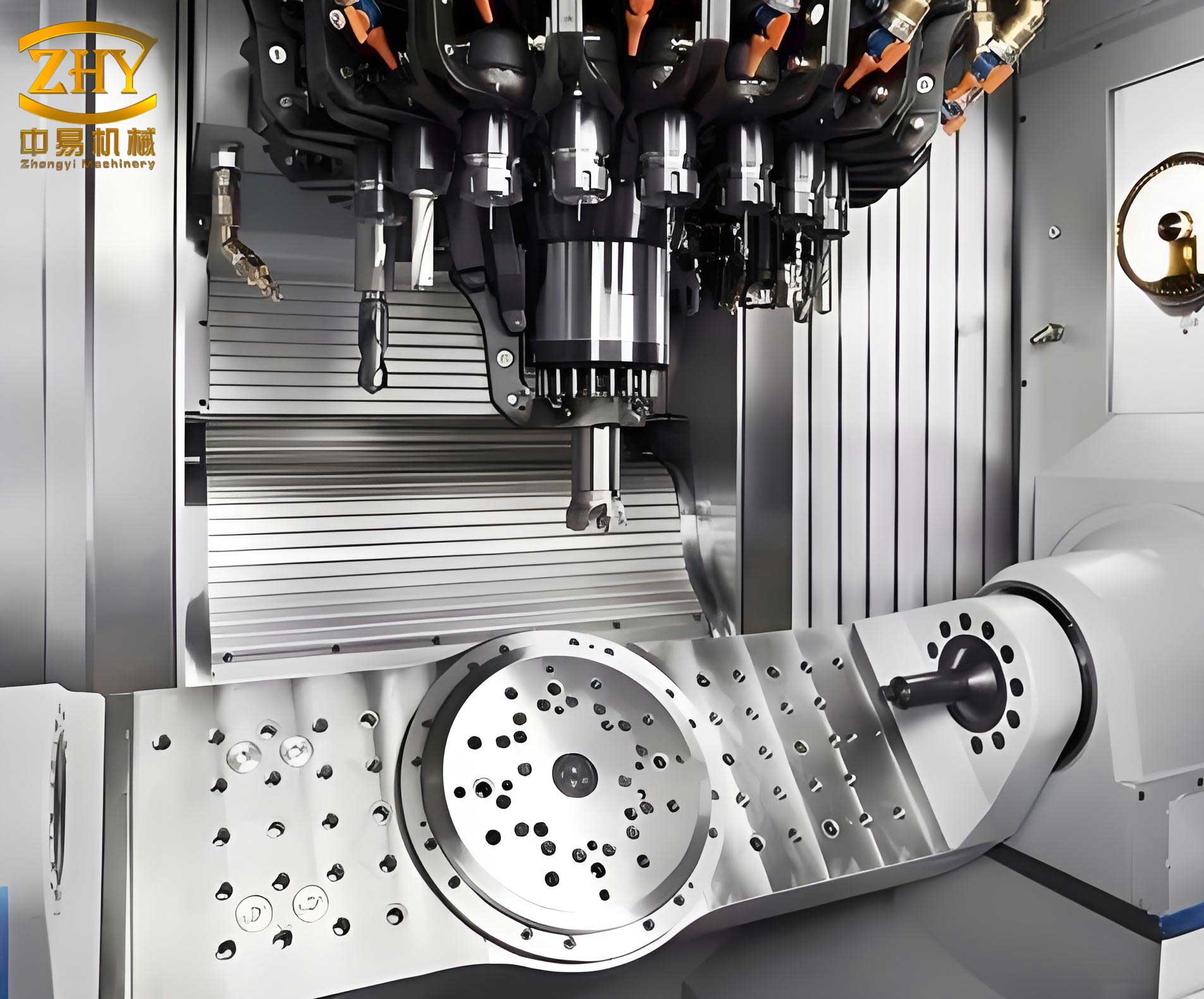
My creation is an art governed by rigorous science. The process chain for producing high-integrity machine tool castings is extensive. It starts with pattern making, where allowances for shrinkage and machining are meticulously calculated. The molding process itself is critical. While traditional green sand molding is used for simpler shapes, self-setting resin sands (e.g., furan, phenolic urethane) are the industry standard for the complex, high-tolerance shapes typical of machine tool castings. These binders provide excellent dimensional accuracy and surface finish. For the most demanding applications, lost foam or precision sand casting with zircon sand is employed.
Melting is typically done in induction or cupola furnaces, allowing precise control over temperature and chemistry. Inoculation and nodularization (for ductile iron) are time-sensitive treatments performed during tapping or pouring to control graphite morphology. The pouring temperature, $T_p$, is critical and is chosen based on the section thickness $s$ and fluidity requirements:
$$ T_p = T_{liquidus} + \Delta T_{superheat} \quad \text{where} \quad \Delta T_{superheat} \propto \frac{1}{\sqrt{s}} $$
After solidification, I undergo a series of thermal treatments to relieve stresses and stabilize my microstructure. Stress relieving is non-negotiable; it involves heating me to a temperature below the transformation range (typically 500-600°C), holding for several hours, and then slowly cooling. This process reduces the residual stresses locked in during uneven cooling, which would otherwise cause distortion during subsequent machining or in service. The kinetics of stress relaxation can be approximated by:
$$ \sigma_t = \sigma_0 \cdot e^{-kt} $$
where $\sigma_t$ is the stress at time $t$, $\sigma_0$ is the initial stress, and $k$ is a temperature-dependent rate constant following an Arrhenius relationship. For high-precision machine tool castings, artificial aging or natural aging over months may be employed for ultimate dimensional stability.
The performance of a machine tool is directly linked to my physical and mechanical characteristics. Let’s quantify these critical parameters. First, damping capacity. As mentioned, this is my ability to dissipate vibrational energy. It can be measured via the loss factor $\eta$ or the specific damping capacity $\psi$. For gray iron, $\psi$ can be as high as 20-30%, whereas for ductile iron it is typically 2-6%. This is why critical structural members like beds are almost exclusively made from high-damping gray iron.
Second, thermal stability. During machining, internal heat from motors, friction, and the cutting process itself causes temperature gradients. My dimensional response is governed by the coefficient of thermal expansion (CTE, $\alpha$) and thermal conductivity ($k$). A low CTE and high conductivity are desired to minimize thermal distortion. The thermal displacement $\Delta L$ of a feature over a length $L$ due to a temperature change $\Delta T$ is:
$$ \Delta L = \alpha \cdot L \cdot \Delta T $$
Thermal diffusivity, $D = k / (\rho c_p)$, where $\rho$ is density and $c_p$ is specific heat, indicates how quickly I can equilibrate temperature internally, reducing harmful gradients.
Third, static and dynamic stiffness. Static stiffness, the resistance to elastic deformation under load, is given by $K = F/\delta$, where $F$ is force and $\delta$ is deflection. My contribution comes from my elastic modulus $E$ and my geometric design. Dynamic stiffness involves my natural frequencies and mode shapes. To avoid resonance with excitation forces (e.g., from spindle rotation or cutting), my first natural frequency $f_n$ must be as high as possible. For a simplified model, $f_n \propto \sqrt{E / \rho} \cdot (1 / L^2)$, highlighting the importance of a high specific modulus ($E/\rho$) and robust ribbing to increase effective stiffness.
The following table contrasts key performance parameters for typical machine tool casting materials.
| Property | Gray Cast Iron | Ductile Iron | Compacted Graphite Iron | Structural Steel (Welded) |
|---|---|---|---|---|
| Density, $\rho$ (g/cm³) | 7.1 – 7.3 | 7.0 – 7.3 | 7.1 – 7.3 | 7.85 |
| Tensile Strength (MPa) | 250 – 400 | 400 – 900 | 350 – 550 | 360 – 800 |
| Elastic Modulus, $E$ (GPa) | 105 – 140 | 165 – 180 | 140 – 160 | 210 |
| Specific Modulus, $E/\rho$ (GPa·cm³/g) | 14.8 – 19.2 | 23.6 – 24.7 | 19.7 – 21.9 | 26.8 |
| Damping Capacity, $\psi$ (%) | 20 – 30 | 2 – 6 | 10 – 15 | ~1 – 2 |
| Coeff. of Thermal Expansion, $\alpha$ (10⁻⁶/K) | 10.5 – 12.0 | 11.0 – 12.5 | 11.0 – 12.0 | 11.5 – 13.0 |
| Thermal Conductivity, $k$ (W/m·K) | 46 – 52 | 29 – 36 | 36 – 42 | 45 – 50 |
The design of machine tool castings is an exercise in optimal material distribution. The goal is to maximize stiffness and damping while minimizing mass and cost. This leads to complex, often organic-looking structures with internal rib networks. Modern design leverages Topology Optimization (TO) and Finite Element Analysis (FEA). The TO problem for a machine tool casting can be stated as finding the material density distribution $\rho(\mathbf{x})$ that minimizes compliance (maximizes stiffness) subject to a volume constraint:
$$ \min_{\rho} \quad C(\rho) = \mathbf{U}^T \mathbf{K}(\rho) \mathbf{U} $$
$$ \text{subject to:} \quad \int_V \rho(\mathbf{x}) \, dV \leq V_{\text{target}}, \quad 0 < \rho_{\min} \leq \rho(\mathbf{x}) \leq 1 $$
where $C$ is compliance, $\mathbf{U}$ is the displacement vector, and $\mathbf{K}$ is the stiffness matrix dependent on the density field. The resulting “bone-like” structure is then interpreted into a castable geometry with uniform wall thicknesses, draft angles, and proper fillet radii to avoid stress concentrations and solidification issues. FEA is subsequently used to verify static stiffness, modal response, and thermal distortion under operational loads.
Manufacturing challenges are abundant. Ensuring soundness in thick-to-thin section transitions requires careful control of solidification through chills and risers, guided by solidification simulation software (e.g., using the Fourier heat equation with a latent heat source term $L$):
$$ \rho c_p \frac{\partial T}{\partial t} = \nabla \cdot (k \nabla T) + \rho L \frac{\partial f_s}{\partial t} $$
where $f_s$ is the solid fraction. Residual stress management, as discussed, is paramount. Furthermore, the machinability of machine tool castings is a key consideration. The presence of hard spots (chill zones) or sand inclusions can ruin cutting tools. Consistent microstructure and controlled hardness are essential. Post-casting, non-destructive testing (NDT) like ultrasonic testing, radiography, and resonant frequency analysis are used to detect internal flaws that could compromise my integrity.
My application dictates specific design and material choices. For a high-speed machining center column, which must resist bending moments from the spindle and moving assemblies, a ductile iron or a high-grade gray iron with dense ribbing is chosen. For a surface grinder bed, where extreme vibration damping and thermal stability are needed for surface finish, a high-carbon equivalent gray iron is standard. In large gantry mills, the base is often a massive gray iron casting designed with internal chambers for coolant circulation to manage thermal loads.
The future of machine tool castings is intertwined with advancements in digital manufacturing and material science. The integration of additive manufacturing (3D printing) of sand molds and cores allows for previously impossible internal geometries, optimizing coolant channels and rib structures directly from TO results. The development of new metal matrix composites or controlled-hybrid structures, where different materials (e.g., high-damping iron and high-stiffness composite) are combined in a single casting process, holds promise. Furthermore, the integration of sensors (fiber optics, vibration sensors) directly into the casting during the foundry process—creating “smart” machine tool castings—is an emerging frontier for condition monitoring and predictive maintenance.
In conclusion, I, the machine tool casting, am a product of sophisticated interdisciplinary engineering. My performance is a direct result of the careful selection of metallic alloys, the precise control of solidification and heat treatment processes, and the intelligent application of structural optimization principles. The quest for higher precision, greater productivity, and improved energy efficiency in manufacturing continually pushes the boundaries of what is possible in the design and production of machine tool castings. From the humble yet critical bed of a manual lathe to the complex, optimized structure of a five-axis machining center, I remain the indispensable, quiet enabler of modern manufacturing prowess.