
In the pursuit of lightweighting across aerospace, aviation, and automotive industries, magnesium alloys have garnered significant attention due to their low density and high specific strength. Among these, Mg-Al series alloys, such as ZM5, are widely utilized for structural components. This study focuses on the casting process of ZM5 alloy gear shell castings, integrating structural analysis, numerical simulation via ProCAST, and practical experimentation to optimize manufacturing parameters. The objective is to produce high-integrity shell castings that meet stringent design specifications, including mechanical properties, dimensional accuracy, and internal quality. Throughout this investigation, the term “shell castings” will be emphasized to underscore their structural role and manufacturing challenges.
The gear shell casting under examination features complex geometry with functional requirements for housing mechanical components. Its design necessitates precise control over wall thickness, internal cavities, and mounting features, making the casting process critical to performance. As shell castings often involve thin to medium sections with localized thick regions, defects like shrinkage porosity and slag inclusion can arise, compromising structural integrity. Therefore, a systematic approach combining simulation and empirical validation is adopted to refine the process, ensuring reliable production of these essential components.
To begin, the structural analysis of the gear shell casting reveals dimensions of approximately 160 mm × 100 mm × 80 mm, with wall thickness ranging from 15 to 25 mm. The geometry includes multiple lightening holes on the bottom surface and mounting bosses, which introduce thermal gradients during solidification. A prominent elongated boss on the front face, measuring 20 mm in length and 55 mm in height, acts as a potential hot spot, predisposing the shell castings to shrinkage defects. The bottom surface requires extensive machining for installation, mandating high internal quality to avoid subsurface flaws that could emerge during post-processing.
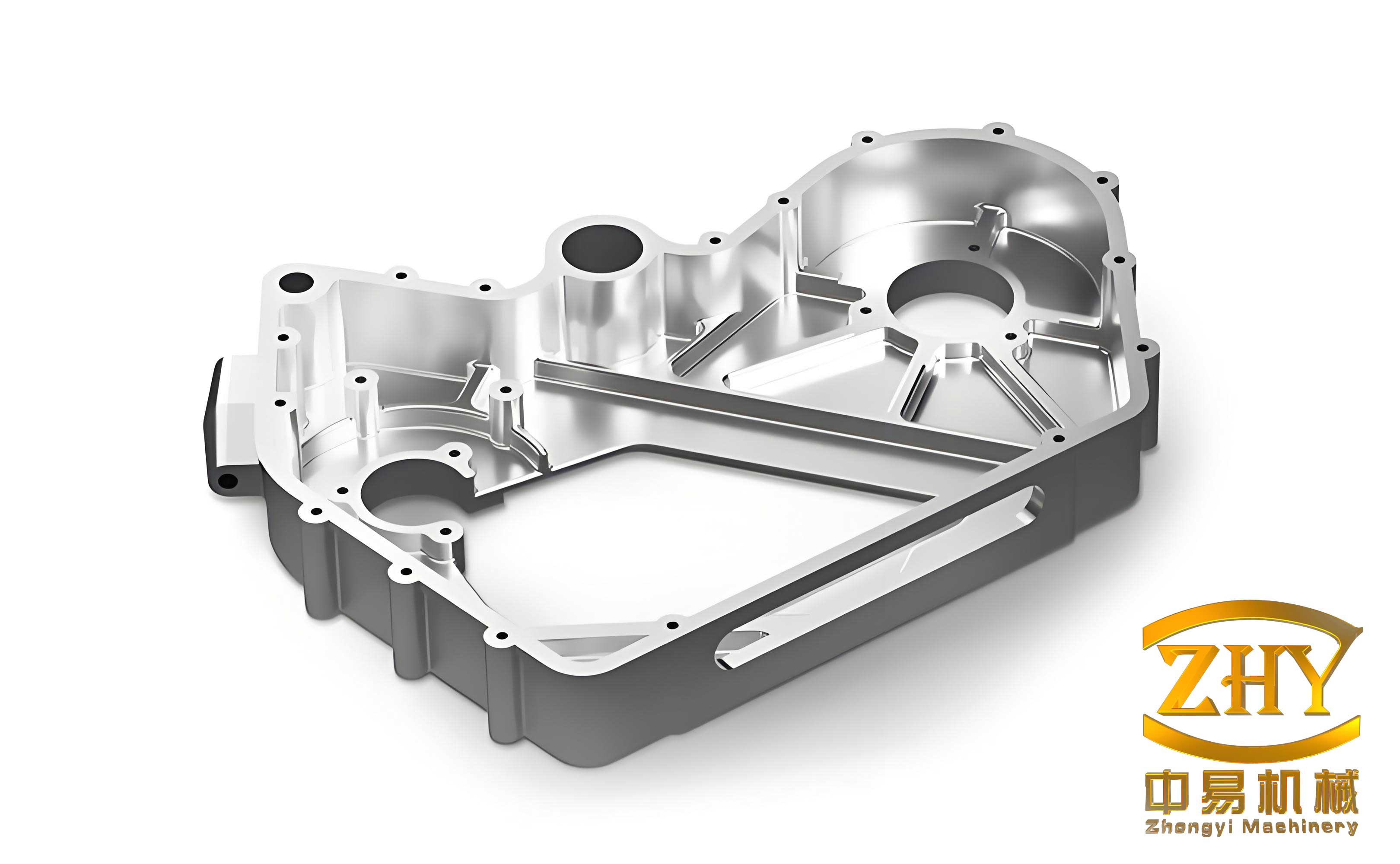
Technical specifications for the shell castings mandate ZM5 alloy composition, followed by T6 heat treatment. Mechanical properties must satisfy: tensile strength ≥234 MPa, yield strength ≥110 MPa, elongation ≥3%, and hardness ≥66 HB. Dimensional tolerances conform to GB/T 6414-99 CT11 grade, while internal quality adheres to Class II per GB/T 13820-1992, requiring minimal porosity, gas holes, or inclusions. These criteria set a high bar for the casting process, necessitating meticulous design and optimization to achieve consistent results in shell castings production.
In designing the casting process, several factors were considered to ensure manufacturability and quality. The mold was produced using green sand casting with a split pattern to accommodate undercuts from lightening holes, avoiding core assembly complexities that could affect dimensional accuracy. A two-cavity layout was adopted to improve yield, with each shell casting positioned symmetrically within the mold. Shrinkage allowance was set at 1.3% to account for the contraction characteristics of ZM5 alloy in sand molds, and machining allowances of 3–4 mm were applied to critical surfaces to facilitate post-casting processing.
The gating system was engineered to promote smooth filling and directional solidification. A vertical sprue leads into a horizontal runner, which branches into two slit gates per shell casting, ensuring even metal distribution. A riser is placed between the gates to enhance feeding in the initial stages. Calculated parameters include a pouring temperature of 700°C and a pouring time of 6 seconds, based on the total casting weight of approximately 2 kg per piece. The runner is positioned in the drag to leverage slag trapping, while the gates are designed to minimize turbulence, critical for magnesium alloys prone to oxidation. The overall layout aims to produce sound shell castings with minimal defects.
To validate the process, numerical simulation was conducted using ProCAST, a finite element method-based software for modeling casting phenomena. The simulation domain incorporated the mold, cores, and gating system, with material properties assigned for ZM5 alloy and sand. Governing equations for fluid flow and heat transfer were solved, including the Navier-Stokes equations for incompressible flow:
$$ \rho \left( \frac{\partial \mathbf{v}}{\partial t} + \mathbf{v} \cdot \nabla \mathbf{v} \right) = -\nabla p + \mu \nabla^2 \mathbf{v} + \mathbf{f} $$
where \( \rho \) is density, \( \mathbf{v} \) is velocity, \( p \) is pressure, \( \mu \) is dynamic viscosity, and \( \mathbf{f} \) represents body forces. The energy equation accounts for latent heat release during solidification:
$$ \rho c_p \frac{\partial T}{\partial t} = \nabla \cdot (k \nabla T) + Q_L $$
with \( c_p \) as specific heat, \( T \) as temperature, \( k \) as thermal conductivity, and \( Q_L \) as latent heat source. The simulation predicted filling patterns, solidification sequences, and defect formation, providing insights into the behavior of shell castings under the proposed process.
Filling simulation results indicated complete mold filling within 6 seconds, with metal advancing steadily from the gates upward, avoiding excessive turbulence that could entrain gas or oxides. The temperature distribution during filling showed minimal premature cooling, supporting the chosen pouring parameters. However, solidification analysis revealed prolonged cooling in the elongated boss region, identifying it as the last area to solidify. Defect prediction algorithms, based on thermal gradients and feeding mechanisms, flagged this zone as susceptible to shrinkage porosity, a common issue in thick sections of shell castings. The simulation output is summarized in Table 1, highlighting key thermal parameters.
| Parameter | Value | Unit |
|---|---|---|
| Total Filling Time | 6.0 | s |
| Pouring Temperature | 700 | °C |
| Solidification Start Time | 12.5 | s |
| Solidification End Time | 45.2 | s |
| Hot Spot Temperature (Boss) | 500 | °C at gate closure |
| Predicted Shrinkage Volume | 0.15 | cm³ |
The solidification time can be approximated using Chvorinov’s rule, which relates cooling time to geometry:
$$ t_f = C \left( \frac{V}{A} \right)^n $$
where \( t_f \) is solidification time, \( V \) is volume, \( A \) is surface area, \( C \) is a mold constant, and \( n \) is an exponent typically around 2. For the boss region, the high \( V/A \) ratio results in extended solidification, exacerbating shrinkage risks in shell castings. The simulation thus provided a quantitative basis for process refinement, aligning with industry practices for optimizing shell castings production.
Following simulation, actual casting trials were conducted to correlate virtual predictions with physical outcomes. The mold was prepared using green sand with proper venting, and ZM5 alloy was melted under protective atmosphere to prevent oxidation. Pouring was performed at 700°C over 6 seconds, and the resulting shell castings were extracted after cooling. Visual inspection revealed two primary defects: shrinkage porosity in the elongated boss and slag inclusions near the gate junctions. The shrinkage manifested as subsurface cavities, consistent with simulation forecasts, while slag appeared as black streaks with associated microporosity, attributed to inadequate filtration during molding.
These defects underscore the challenges in producing defect-free shell castings, especially when dealing with variable wall thickness and aggressive filling. The shrinkage defect arises from inadequate feeding during the final stages of solidification, where liquid metal cannot compensate for volumetric contraction. The governing equation for shrinkage formation considers the pressure drop in the feeding path:
$$ \Delta P = \frac{8 \mu L Q}{\pi r^4} $$
where \( \Delta P \) is pressure drop, \( \mu \) is viscosity, \( L \) is flow length, \( Q \) is flow rate, and \( r \) is channel radius. As gates solidify early, the pressure drop impedes feeding, promoting porosity in shell castings. The slag defect, meanwhile, results from turbulent flow entraining non-metallic particles, highlighting the need for improved gating design.
Based on these findings, the casting process was optimized through three key modifications: adoption of ceramic filters, addition of local chills, and increase in pouring temperature. Ceramic filters with fine pores were integrated into the runner to capture slag and smooth metal flow, reducing inclusion defects in shell castings. Local chills, made of copper, were placed against the elongated boss and bottom surfaces to accelerate cooling, modifying the solidification sequence to promote directional feeding. The pouring temperature was raised to 710°C to counteract the flow resistance introduced by filters, ensuring complete filling without extending pouring time. These adjustments aimed to enhance the quality and consistency of shell castings.
The optimized process was simulated again in ProCAST to verify improvements. Results showed reduced thermal gradients in the boss region, with solidification time decreasing by approximately 20%. Defect prediction indicated minimal shrinkage, confirming the efficacy of chills. The filtration effect was modeled by adjusting viscosity parameters, demonstrating cleaner metal flow. Subsequent casting trials produced shell castings with visibly improved surface finish and no evident slag lines. Radiographic inspection (X-ray) revealed only Grade 1 shrinkage per ASTM standards, meeting the Class II internal quality requirement for shell castings.
Chemical composition analysis was performed on samples from the optimized shell castings using optical emission spectroscopy. Results, averaged over multiple points, are presented in Table 2, confirming compliance with ZM5 alloy specifications. The primary alloying elements—Al, Zn, and Mn—fall within prescribed ranges, ensuring material consistency essential for mechanical performance in shell castings.
| Element | Standard Requirement | Measured Value 1 | Measured Value 2 | Measured Value 3 | Average |
|---|---|---|---|---|---|
| Aluminum (Al) | 7.5–9.0 | 7.8 | 8.2 | 7.8 | 7.93 |
| Zinc (Zn) | 0.2–0.8 | 0.36 | 0.33 | 0.31 | 0.33 |
| Manganese (Mn) | 0.15–0.5 | 0.23 | 0.34 | 0.28 | 0.28 |
| Magnesium (Mg) | Balance | Balance | Balance | Balance | Balance |
Mechanical properties were evaluated on specimens machined from the shell castings after T6 heat treatment (solution treatment and aging). Tensile tests were conducted per ASTM E8, and hardness measurements followed ASTM E10. The results, summarized in Table 3, exceed the minimum specifications, demonstrating the robustness of the optimized process for producing high-performance shell castings. The data variability is within acceptable limits, indicating process stability.
| Property | Requirement | Sample 1 | Sample 2 | Sample 3 | Average |
|---|---|---|---|---|---|
| Tensile Strength (MPa) | ≥234 | 274 | 292 | 271 | 279 |
| Yield Strength (MPa) | ≥110 | 144 | 154 | 145 | 147.7 |
| Elongation (%) | ≥3 | 5.0 | 6.0 | 5.5 | 5.5 |
| Hardness (HB) | ≥66 | 76 | 73 | 82 | 77 |
Dimensional accuracy was assessed using coordinate measuring machines (CMM), comparing cast dimensions to CAD models. All critical features, including mounting bosses and lightening holes, fell within CT11 tolerance bands, validating the mold design and shrinkage allowance. Surface roughness measurements indicated values below 12.5 μm, suitable for subsequent machining. These outcomes confirm that the optimized process yields shell castings with precise geometry and finish, meeting industrial applications.
The success of this study hinges on the integration of simulation and experimentation, a methodology increasingly vital for complex shell castings. ProCAST simulations provided predictive insights into defect formation, guiding targeted modifications. The use of ceramic filters improved metal cleanliness, a factor quantified by reduced inclusion counts in microscopic analysis. The addition of chills altered the solidification dynamics, which can be modeled via the heat transfer coefficient at the mold-metal interface:
$$ q = h (T_m – T_c) $$
where \( q \) is heat flux, \( h \) is interfacial heat transfer coefficient, \( T_m \) is metal temperature, and \( T_c \) is chill temperature. By increasing \( h \) locally, chills accelerated cooling, reducing the vulnerability of shell castings to shrinkage. The raised pouring temperature, while marginally increasing thermal stress, compensated for filter-induced pressure drops, as described by the Bernoulli equation modified for porous media:
$$ P_1 + \frac{1}{2} \rho v_1^2 = P_2 + \frac{1}{2} \rho v_2^2 + \Delta P_{\text{filter}} $$
where \( P \) is pressure, \( v \) is velocity, and \( \Delta P_{\text{filter}} \) is pressure loss across the filter. This balance ensured complete filling without defects in the shell castings.
Further analysis considered the microstructure of the shell castings, which influences mechanical properties. ZM5 alloy typically exhibits α-Mg matrix with β-Mg₁₇Al₁₂ precipitates. Heat treatment promotes dissolution and aging, enhancing strength. Micrographs revealed fine, uniform precipitates in optimized castings, whereas initial trials showed coarse structures near defective zones. The Hall-Petch relationship explains grain size strengthening:
$$ \sigma_y = \sigma_0 + k_y d^{-1/2} $$
where \( \sigma_y \) is yield strength, \( \sigma_0 \) is friction stress, \( k_y \) is a constant, and \( d \) is grain diameter. The optimized process likely refined grains due to faster cooling, contributing to superior properties in shell castings.
In discussing broader implications, this research highlights best practices for manufacturing magnesium alloy shell castings. The iterative approach—design, simulate, test, optimize—proves effective for addressing defects like shrinkage and inclusions. For shell castings with complex geometries, numerical simulation is indispensable for predicting hot spots and optimizing feeding systems. The study also underscores the importance of filtration and cooling control, aspects critical for high-integrity shell castings used in demanding applications.
Looking ahead, advancements in additive manufacturing for molds could further enhance the precision of shell castings. Additionally, real-time monitoring during pouring, coupled with machine learning algorithms, may enable adaptive process control, reducing scrap rates. The principles established here—emphasizing simulation-guided optimization—are transferable to other alloy systems and casting formats, reinforcing the viability of shell castings for lightweight structural components.
In conclusion, the casting process for ZM5 alloy gear shell castings was successfully developed and refined through a combination of structural analysis, ProCAST numerical simulation, and empirical validation. Initial designs produced sound shell castings but with shrinkage porosity in thick sections, as predicted by simulation. Optimization via ceramic filters, local chills, and adjusted pouring temperature eliminated major defects, yielding shell castings that meet all chemical, mechanical, dimensional, and internal quality standards. This study demonstrates the efficacy of integrated approaches for producing high-quality shell castings, contributing to the broader adoption of magnesium alloys in lightweight engineering applications. Future work could explore alternative gating designs or advanced heat treatments to further enhance the performance of shell castings.