
In the realm of modern manufacturing, casting processes play a pivotal role in producing complex metal components, particularly shell castings such as engine blocks and differential housings. These shell castings are integral to automotive and machinery applications, demanding high precision, superior surface finish, and internal soundness. My extensive involvement in foundry technology has led me to explore and refine various casting methods, with a focus on lost foam casting and V-process casting. These techniques have revolutionized the production of shell castings, offering significant advantages over traditional sand casting in terms of environmental impact, cost efficiency, and quality. In this article, I will delve into the intricacies of these processes, share insights from practical applications, and provide detailed analyses using tables and formulas to underscore their effectiveness for shell castings.
The challenge with shell castings lies in their intricate geometries, which often include internal cavities, thin walls, and critical stress points. Traditional sand casting methods, while reliable, can result in defects like sand inclusion, porosity, and rough surfaces, especially for complex shell castings. This has driven the adoption of advanced processes like lost foam casting, which utilizes expandable polystyrene patterns, and V-process casting, which relies on vacuum-sealed dry sand molds. Both methods enhance the dimensional accuracy and surface quality of shell castings, making them ideal for high-performance components. Throughout my career, I have implemented these techniques in various projects, observing firsthand how they optimize production for shell castings.
Lost foam casting, also known as full mold casting, involves creating a foam pattern that vaporizes upon contact with molten metal, leaving behind a precise casting. This process is particularly beneficial for shell castings with complex internal features, such as diesel engine cylinder blocks. In one project, we applied lost foam casting to produce a four-cylinder diesel engine block, a quintessential shell casting. The key steps included assembling the foam pattern and gating system into a cluster, coating it with a refractory material, and placing it in a flask filled with dry sand under vacuum. The vacuum ensures the sand retains its shape during pouring, while the foam pattern decomposes to allow metal filling. For shell castings like engine blocks, this method minimizes sand-related defects and improves material utilization.
To illustrate the process parameters, consider the following table summarizing critical aspects of lost foam casting for shell castings:
| Parameter | Typical Range | Impact on Shell Castings |
|---|---|---|
| Foam Density | 20-25 kg/m³ | Affects pattern strength and gas evolution during pouring. |
| Coating Thickness | 0.5-1.5 mm | Prevents metal penetration and ensures surface finish of shell castings. |
| Vacuum Pressure | -0.04 to -0.06 MPa | Maintains mold integrity for complex shell castings. |
| Pouring Temperature | 1350-1400°C for iron | Influences fluidity and defect formation in shell castings. |
| Sand Grain Size | 70-140 mesh | Determines surface detail and stability for shell castings. |
The decomposition of the foam pattern is governed by thermal dynamics, which can be expressed using formulas related to heat transfer. For instance, the rate of foam vaporization in lost foam casting for shell castings can be approximated by:
$$ \frac{dm}{dt} = -k A (T – T_v) $$
where \( dm/dt \) is the mass loss rate, \( k \) is a thermal conductivity coefficient, \( A \) is the surface area of the foam pattern, \( T \) is the metal temperature, and \( T_v \) is the vaporization temperature of the foam. This equation highlights how controlling pouring temperature is crucial for preventing defects in shell castings. Additionally, the solidification time for shell castings in lost foam casting can be estimated using Chvorinov’s rule:
$$ t = C \left( \frac{V}{A} \right)^n $$
where \( t \) is solidification time, \( C \) is a mold constant, \( V \) is the volume of the casting, \( A \) is the surface area, and \( n \) is an exponent typically around 2. For shell castings with varying wall thicknesses, this rule helps design gating systems to ensure uniform cooling.
In the case of diesel engine cylinder blocks, which are critical shell castings, we optimized the process by pre-placing sand cores for dry liners. These cores, made from self-hardening sand or hot box sand, were coated with graphite to prevent burning-on defects. This approach exemplifies how lost foam casting can be adapted for specific shell castings, enhancing internal quality. The benefits of this method for shell castings include reduced labor intensity, lower material consumption, and improved working conditions, as sand handling is minimized. However, challenges such as pattern distortion and gas porosity must be managed through careful process control, especially for large shell castings.
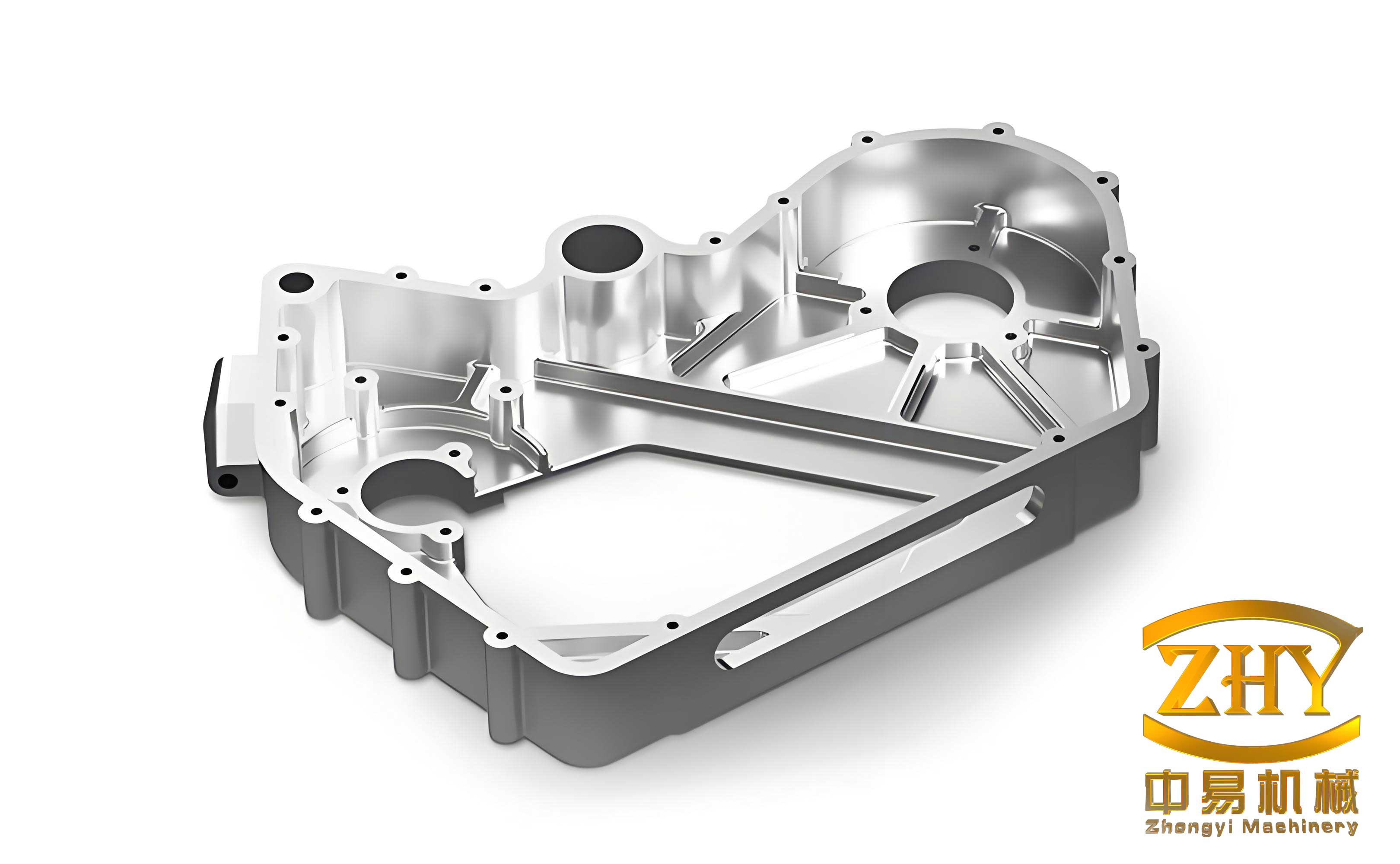
Transitioning to V-process casting, this technique uses a vacuum to seal a plastic film over a sand mold, creating a smooth cavity for pouring. It has gained popularity for producing high-quality shell castings like differential housings, where surface finish and dimensional accuracy are paramount. In a recent project, we replaced resin sand molding with V-process casting for an export differential housing, a complex shell casting. The results were remarkable: the shell castings exhibited superior surface gloss and fewer defects, showcasing the potential of V-process for precision shell castings. The process involves covering a pattern with a heated plastic film, applying vacuum to draw it tightly, filling with dry sand, and sealing with a back film before pouring under sustained vacuum.
For shell castings produced via V-process, the vacuum pressure is critical to prevent mold collapse and ensure detail replication. The following table outlines key parameters for V-process casting of shell castings:
| Parameter | Typical Range | Impact on Shell Castings |
|---|---|---|
| Film Thickness | 0.05-0.10 mm | Affects mold sealing and surface finish of shell castings. |
| Vacuum During Pouring | -0.05 to -0.06 MPa | Prevents sand movement and defects in shell castings. |
| Sand Compactness | 90+ on hardness scale | Ensures dimensional stability for shell castings. |
| Pouring Time | 12-16 seconds for small shell castings | Influences turbulence and gas entrapment in shell castings. |
| Coating Application | Alcohol-based coatings | Enhances surface quality and prevents burn-on in shell castings. |
The fluid dynamics in V-process casting for shell castings can be modeled using Bernoulli’s principle to design gating systems. The pressure difference due to vacuum affects metal flow, which can be expressed as:
$$ \Delta P = \rho g h + \frac{1}{2} \rho v^2 $$
where \( \Delta P \) is the pressure drop from vacuum, \( \rho \) is metal density, \( g \) is gravity, \( h \) is head height, and \( v \) is flow velocity. This formula aids in optimizing gating for shell castings to achieve smooth filling. Moreover, the thermal gradient in V-process molds for shell castings can be analyzed using Fourier’s law of heat conduction:
$$ q = -k \frac{dT}{dx} $$
where \( q \) is heat flux, \( k \) is thermal conductivity of the sand, and \( dT/dx \) is the temperature gradient. This helps in placing chills or risers to control solidification in shell castings, preventing shrinkage.
In our differential housing project, the shell castings were produced with a four-part mold and open gating system. The gating ratio was designed as 1.0:1.25:1.35 for sprue, runner, and ingate areas, respectively, to ensure laminar flow for these shell castings. Chills were used at hot spots to eliminate shrinkage, demonstrating how V-process can be tailored for intricate shell castings. The chemical composition of the ductile iron for these shell castings was tightly controlled, as shown in the table below, to meet mechanical requirements.
| Element | Range | Role in Shell Castings |
|---|---|---|
| C | 3.0-3.8% | Provides strength and fluidity for shell castings. |
| Si | 2.0-2.6% | Promotes graphitization and hardness in shell castings. |
| Mn | 0.5-1.0% | Enhances hardenability and wear resistance of shell castings. |
| P | <0.08% | Minimizes brittleness in shell castings. |
| S | <0.015% | Reduces slag formation in shell castings. |
| Cu/Mo/Ni | Alloying additions | Improve corrosion resistance and strength of shell castings. |
The quality of shell castings from V-process was validated through non-destructive testing and machining. The shell castings showed no internal porosity or shrinkage, with surface finishes surpassing resin sand castings. Dimensionally, these shell castings achieved CT6-9 tolerance grades, comparable to investment casting, which is exceptional for shell castings produced in sand molds. Cost analysis revealed that V-process reduced production costs by approximately 10% per ton for shell castings, thanks to lower sand and binder usage. This economic advantage, combined with environmental benefits from reduced emissions, makes V-process highly suitable for mass-producing shell castings.
Comparing lost foam and V-process casting for shell castings reveals distinct strengths. Lost foam excels for complex internal geometries in shell castings, as it eliminates core assembly, while V-process offers superior surface finish for shell castings with external details. To quantify this, consider the following comparative table:
| Aspect | Lost Foam Casting | V-Process Casting |
|---|---|---|
| Surface Roughness | 10-25 μm for shell castings | 5-15 μm for shell castings |
| Dimensional Accuracy | CT8-10 for shell castings | CT6-9 for shell castings |
| Material Utilization | High (near-net shape for shell castings) | Moderate (requires machining allowance for shell castings) |
| Environmental Impact | Low sand waste, but foam emissions | Very low emissions, dry sand reusable for shell castings |
| Suitable Shell Castings | Engine blocks, manifolds | Differential housings, pump casings |
The choice between processes for shell castings depends on part geometry and production volume. For high-volume shell castings like automotive components, V-process may be preferred due to faster cycle times, whereas lost foam is ideal for prototype shell castings or those with intricate cores. In both cases, simulation software can optimize parameters for shell castings using finite element analysis (FEA). For example, the temperature distribution during solidification of shell castings can be modeled with the heat equation:
$$ \frac{\partial T}{\partial t} = \alpha \nabla^2 T $$
where \( \alpha \) is thermal diffusivity. This aids in predicting hot spots and designing risers for shell castings.
Looking ahead, the future of shell castings production lies in hybrid processes and automation. For instance, combining lost foam with V-process elements could yield even better shell castings by leveraging vacuum assistance in foam decomposition. Additive manufacturing is also emerging for creating patterns or molds directly for shell castings, reducing lead times. In my work, I have experimented with 3D-printed foam patterns for lost foam casting of shell castings, achieving faster iterations. Additionally, real-time monitoring of vacuum and temperature during pouring can enhance quality control for shell castings, using sensors and IoT technology.
The economic and environmental implications of these advanced casting methods for shell castings are profound. By reducing sand and binder consumption, both processes lower the carbon footprint of foundries. For shell castings used in electric vehicles or renewable energy systems, this aligns with sustainability goals. Moreover, the improved quality of shell castings reduces scrap rates and machining costs, contributing to circular economy principles. In one analysis, the total cost of ownership for shell castings produced via V-process was 15% lower than traditional methods over five years, considering energy and waste disposal.
In conclusion, lost foam casting and V-process casting represent significant advancements in the production of shell castings. Through my hands-on experience, I have seen how these techniques address the unique challenges of shell castings, from internal soundness to surface finish. The integration of tables and formulas, as presented here, provides a scientific basis for optimizing these processes for shell castings. As industry demands for lighter, stronger, and more precise shell castings grow, continued innovation in casting technology will be essential. I encourage foundries to adopt these methods for shell castings, as they offer a path to higher efficiency and quality in manufacturing complex metal components.
To further support practitioners, I include a final formula for calculating the yield of shell castings in these processes, which is critical for cost estimation:
$$ \text{Yield} = \frac{W_c}{W_m} \times 100\% $$
where \( W_c \) is the weight of the finished shell casting and \( W_m \) is the total weight of metal poured. For shell castings produced via lost foam or V-process, yields often exceed 90%, showcasing their material efficiency. By embracing these techniques, the foundry industry can continue to produce high-integrity shell castings that meet the evolving needs of modern engineering.